 English
 Deutsch
 Italia
December 16, 2025
Serengeti vs Maasai Mara Which Safari Destination Is Better?
Introduction
Serengeti vs Maasai Mara: Which Safari Destination is Better? This question comes up often when travelers plan an African safari and want to experience extraordinary wildlife, dramatic landscapes and the Great Migration. Both destinations offer exceptional game viewing, support large predator populations and form part of the same wider Mara to Serengeti ecosystem. However they provide different safari experiences because of their size, location, landscapes, seasonal wildlife movements, accessibility and itinerary possibilities.
The Serengeti lies in northern Tanzania and covers approximately 1.5 million hectares. UNESCO recognizes the park for its extraordinary biodiversity and the annual movement of wildebeest, zebras and gazelles across the wider ecosystem. The Maasai Mara National Reserve lies in southwestern Kenya and represents an important northern part of this interconnected wildlife landscape.
The two destinations should not be viewed simply as competitors. Wildlife moves across political borders according to rainfall, grazing conditions, water availability and seasonal patterns. The Great Migration therefore connects Tanzania and Kenya rather than belonging exclusively to one country.
For travelers choosing between them the most useful question is not simply which destination is better. Instead consider what you want from your safari. Your travel month, safari duration, starting point, wildlife interests, accommodation preferences, budget and desire for specific migration experiences can all influence the right destination for you.
In this guide we compare the Serengeti and Maasai Mara across the most important safari factors so you can understand what each destination offers and choose according to your own travel priorities.
Table of contents
- Introduction
- Serengeti vs Maasai Mara: The Main Difference
- Serengeti vs Maasai Mara for the Great Migration
- Which Destination Has Better Wildlife?
- Serengeti vs Maasai Mara for Lions, Leopards and Cheetahs
- Serengeti vs Maasai Mara for River Crossings
- Which Is Better for the Calving Season?
- Serengeti vs Maasai Mara Landscapes and Scenery
- Serengeti vs Maasai Mara for Safari Duration
- Which Destination Is Easier to Access?
- Serengeti vs Maasai Mara for Budget and Value
- Serengeti vs Maasai Mara for Crowds and Privacy
- Which Is Better for Families and First-Time Safari Travelers?
- Should You Visit Serengeti and Maasai Mara on the Same Trip?
- Serengeti vs Maasai Mara: Which Is Better for Photography?
- Serengeti vs Maasai Mara: Which Should You Choose?
- Frequently Asked Questions About Serengeti vs Maasai Mara
- Conclusion
Serengeti vs Maasai Mara: The Main Difference
The biggest difference between the Serengeti and Maasai Mara comes from scale and safari structure. Serengeti National Park covers about 14,750 square kilometers while the Maasai Mara National Reserve covers roughly 1,510 square kilometers. The wider ecosystems surrounding both areas extend beyond their official park and reserve boundaries.
This enormous difference in size affects how travelers experience wildlife. The Serengeti gives visitors an expansive wilderness environment where different regions can offer very different scenery and wildlife experiences. You can explore Central Serengeti around Seronera, travel toward the Western Corridor, visit the northern region around Kogatende or plan around the southern plains during the calving period.
The Maasai Mara provides a more concentrated safari experience. Its open grasslands support abundant wildlife making game drives highly rewarding within a relatively compact area. Travelers with only a few days can therefore experience a strong safari without covering the enormous distances required to explore different Serengeti regions.
The migration also creates an important distinction. The Serengeti supports the migration across much of its annual cycle including the southern calving period and movements through central, western and northern Tanzania. The Maasai Mara becomes especially important during the northern part of the migration cycle particularly when herds enter Kenya during the dry season.
Neither destination automatically suits every traveler. The Serengeti can suit travelers who want scale, longer itineraries and multiple wildlife regions. The Maasai Mara can suit travelers who prefer a compact reserve, shorter safari and strong predator viewing. Your available time and travel plans should therefore guide your decision.
Serengeti vs Maasai Mara for the Great Migration
The Great Migration remains one of the biggest reasons travelers compare the Serengeti and Maasai Mara. However the migration does not represent a single event that happens in one destination at one fixed time. Wildebeest, zebras and gazelles move continuously through the wider ecosystem in response to rainfall, fresh grass, water and seasonal conditions.
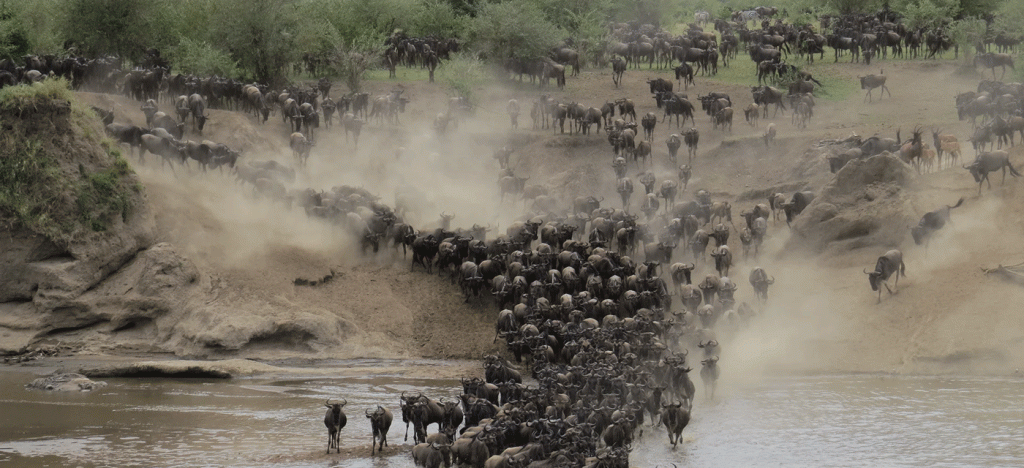
The Serengeti plays a major role throughout this cycle. During the southern calving period large herds gather around the short-grass plains of the southern Serengeti and neighboring Ndutu area. Later many herds move northward and westward as grazing conditions change. The movement can eventually bring large concentrations toward northern Serengeti and the Mara River.
The Maasai Mara becomes especially significant during the northern part of the migration. During the dry season, migrating herds can enter Kenya and spread across the Mara landscape. This period creates opportunities to witness dramatic interactions between large herbivore herds and predators.
The important point is that neither destination guarantees a particular migration event on a specific date. Weather can change the timing and location of the herds. Even during a traditionally strong migration month, the animals may gather in one area, move quickly, remain nearby or delay their movement.
If you want to understand the migration as a complete ecological cycle Serengeti offers a broader experience because much of the annual movement occurs across Tanzania. If your priority involves experiencing the northern migration and potentially witnessing Mara River crossings either northern Serengeti or Maasai Mara can provide an appropriate setting.
Your travel month should therefore come before your choice of park. Once you identify when you can travel you can determine which region offers the most relevant migration experience.
Which Destination Has Better Wildlife?
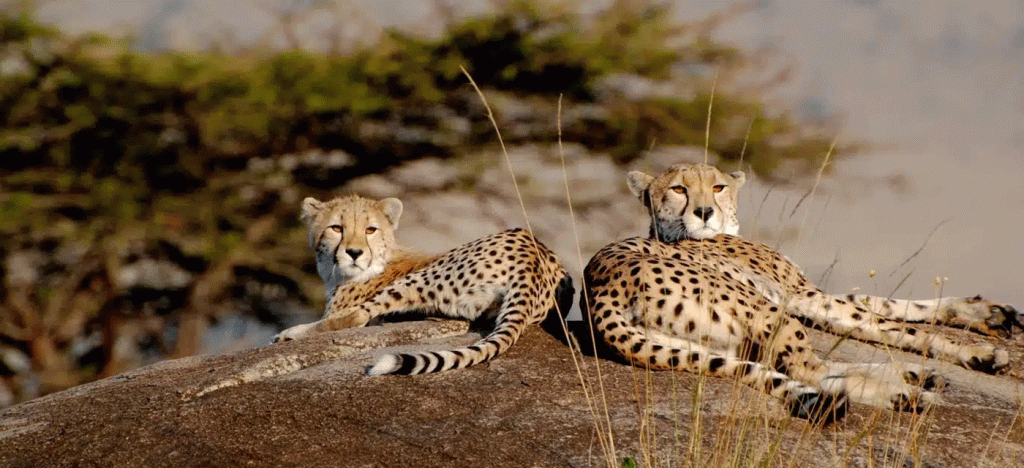
Both the Serengeti and Maasai Mara support remarkable concentrations of African wildlife, including lions, leopards, cheetahs, elephants, buffalo, giraffes, zebras, wildebeest, gazelles, hyenas and many bird species. The difference lies more in how visitors experience that wildlife than in whether one destination contains wildlife and the other does not.
The Maasai Mara’s relatively compact landscape can make wildlife viewing feel immediate. Open grasslands allow visitors to scan large areas and often find herbivores and predators within the same general landscape. The reserve has a strong reputation for lion, cheetah and leopard sightings although no responsible safari operator can guarantee a particular animal encounter.
The Serengeti provides a much larger canvas. Its different regions contain varying combinations of grasslands, woodlands, rivers, kopjes and seasonal habitats. This diversity allows travelers to experience wildlife in different environments during a longer safari.
UNESCO highlights the Serengeti’s exceptional biological diversity and its major predator-prey interactions. The park supports threatened species such as black rhinoceros, elephant, wild dog and cheetah alongside its enormous populations of migratory herbivores.
Your guide also plays an important role in wildlife viewing. Experienced guides interpret animal behavior, tracks, alarm calls, bird activity, prey movements and habitat conditions. A skilled guide can help you understand why animals behave in particular ways rather than simply driving from one sighting to another.
For a compact safari focused heavily on visible predators and plains wildlife, Maasai Mara can provide an excellent experience. For travelers who want broader habitats, seasonal variation and a longer wildlife journey Serengeti provides greater geographic variety.
Serengeti vs Maasai Mara for Lions, Leopards and Cheetahs
Big cats attract many safari travelers and both the Serengeti and Maasai Mara provide strong opportunities to encounter lions, leopards and cheetahs. Instead of choosing a destination solely because someone promises guaranteed sightings, travelers should understand how habitat, season, guide experience and time in the field influence encounters.
The Maasai Mara’s open grasslands create excellent conditions for observing predators. Lions often move across the plains while cheetahs use open areas where they can scan for prey. Leopards can also occur in the reserve although they generally require more patience and careful searching because they often remain less visible.
The Serengeti also supports important populations of large predators. Its diverse habitats provide different opportunities to observe predator behavior. Lions can occur across many regions while cheetahs often favor open plains. Leopards may remain harder to find because they can use wooded areas and riverine habitats that provide cover.
The Serengeti ecosystem has gained international recognition for its major predator-prey interactions. UNESCO specifically identifies the park as supporting one of the world’s important large predator systems.
The length of your safari can also influence your experience. A three-day safari gives you fewer opportunities to search different habitats while a longer itinerary allows your guide to spend more time following tracks and checking different areas.
For travelers primarily interested in big cats both destinations deserve consideration. Maasai Mara can provide concentrated predator viewing while Serengeti offers a much larger ecosystem in which predators interact with migrating and resident prey populations.
Rather than asking which park has the “best” big cats consider whether you prefer concentrated viewing in a smaller reserve or a broader predator experience across a much larger Tanzanian landscape.
Serengeti vs Maasai Mara for River Crossings
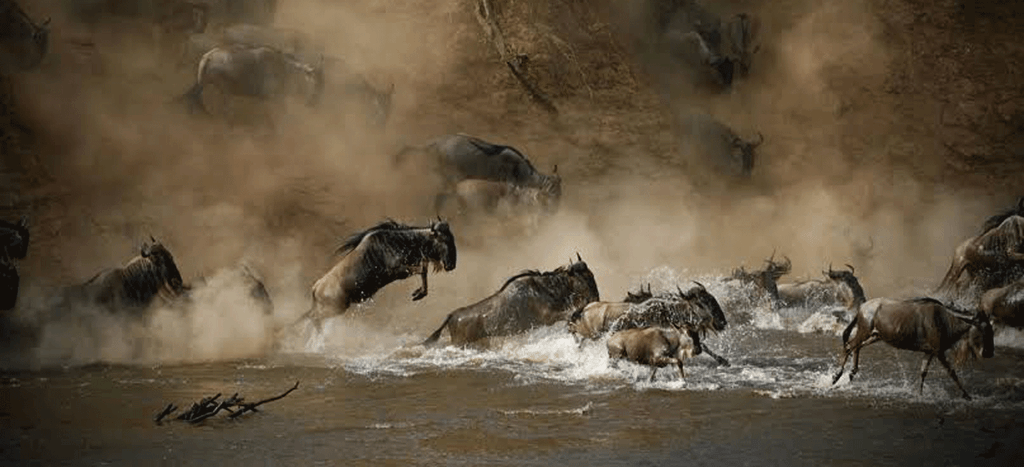
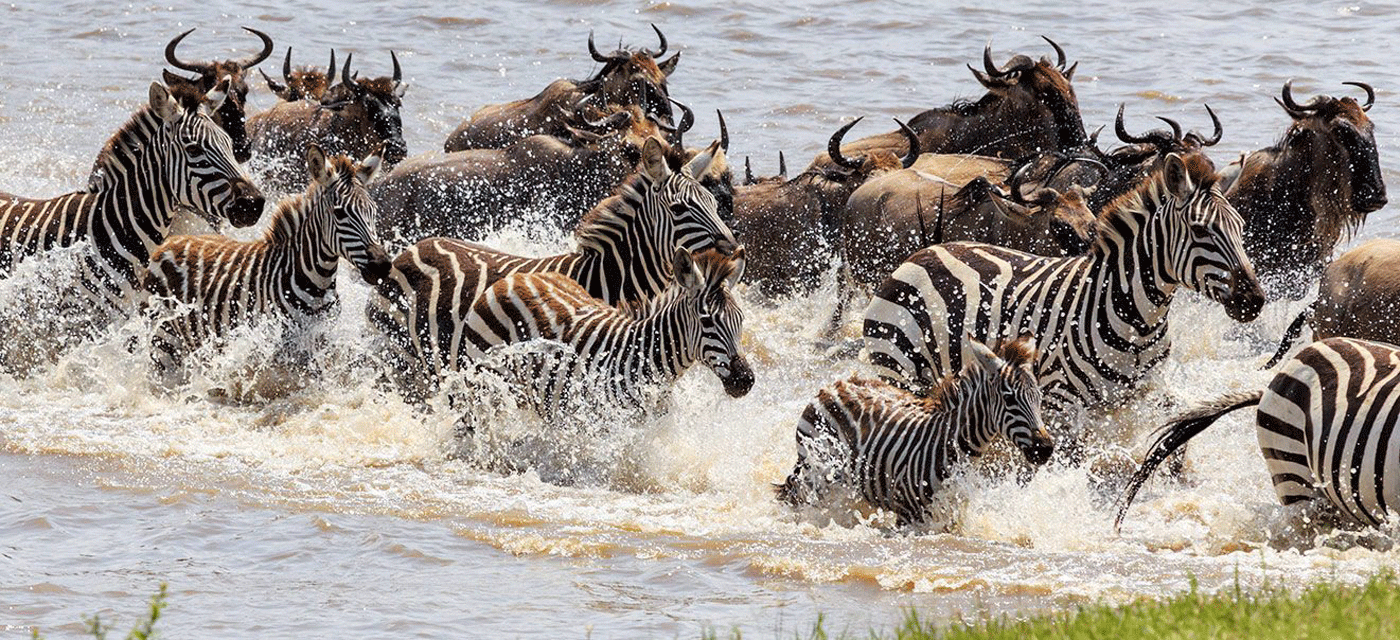
Mara River crossings represent one of the most dramatic experiences associated with the Great Migration. During the northern migration period, large herds may approach rivers, gather along the banks and eventually cross when conditions and animal behavior align.
Both Maasai Mara and northern Serengeti provide access to the Mara River system. This means travelers do not need to assume that only Kenya offers river crossings. Northern Serengeti also contains important crossing areas, particularly around the Kogatende and Lamai regions.
However river crossings remain unpredictable. Wildebeest do not follow a safari schedule. A herd can approach a river and wait for hours or days before crossing. Animals can also begin crossing suddenly, change direction or choose another crossing point.
Weather, water levels, herd location, predator pressure and grazing conditions all influence the movement. Consequently, responsible safari operators should never promise that travelers will definitely see a crossing on a particular day.
Tanzania’s Serengeti National Park has established specific guidelines for viewing Mara River crossings. The guidelines include designated viewing areas and rules designed to reduce pressure on migrating animals and protect the ecosystem.
If river crossings represent your main goal plan several nights in the appropriate region rather than visiting for only one day. Additional time gives you more opportunities to respond when the herds move.
Maasai Mara can provide an excellent setting for travelers who want a Kenya-focused migration safari. Northern Serengeti can provide a similar migration experience while allowing travelers to remain within Tanzania and potentially combine the experience with other northern-circuit destinations.
The most important lesson is patience. The river crossing itself lasts only a short time but finding the right herd and waiting for the animals to commit can require considerable time.
Which Is Better for the Calving Season?
If your safari goal involves newborn wildebeest and the dramatic predator activity associated with calving the Serengeti becomes particularly important. The southern Serengeti and neighboring Ndutu region host major concentrations of migrating wildebeest during the calving period generally around December through March although exact timing changes with rainfall.
During this period the herds gather where fresh grass provides nutritious grazing. Large numbers of calves are born creating an important ecological cycle for the entire ecosystem. Predators respond to the abundance of vulnerable young animals, creating opportunities to observe hunting strategies, territorial behavior and interactions between predators and prey.
The calving season offers a very different atmosphere from the famous river-crossing period. Instead of focusing on dramatic river crossings,travelers can observe vast herds spread across open plains and watch the ecosystem respond to the arrival of newborn animals.
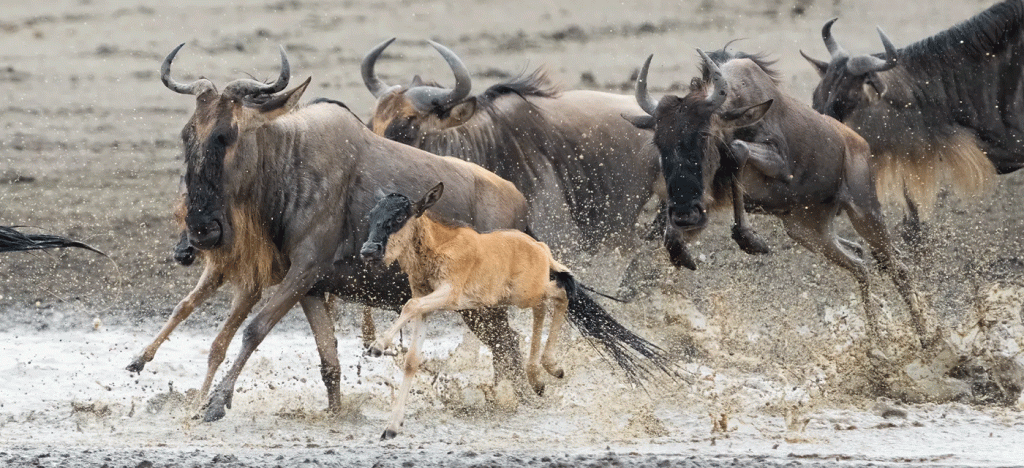
The Maasai Mara does not provide the same role in the annual migration cycle because the main calving grounds lie farther south in the Serengeti and adjacent areas.
Travelers who specifically want to experience calving should therefore plan their itinerary around southern Serengeti and Ndutu rather than choosing Maasai Mara simply because it is famous for the Great Migration.
Serengeti Travels can also structure Tanzania safari itineraries around seasonal migration movements allowing travelers to focus their route on the regions most relevant to their travel dates.
The calving season also demonstrates why comparing Serengeti and Maasai Mara only by the phrase “Great Migration” can create confusion. The migration changes throughout the year. A destination that works exceptionally well for one stage may not provide the same experience during another stage.
For travelers who want newborn animals, predator activity and the beginning of the annual migration cycle southern Serengeti offers a particularly relevant environment.
Serengeti vs Maasai Mara Landscapes and Scenery
Landscape can significantly influence how a safari feels and the Serengeti and Maasai Mara offer distinct visual environments despite their ecological connection.
The Serengeti is famous for expansive plains but the park contains much more than endless grassland. Travelers can encounter rocky kopjes, river systems, wooded areas, seasonal plains and rolling landscapes depending on the region they visit. The huge geographic scale creates a sense of openness that can dominate the safari experience.
The Maasai Mara also features spectacular open grasslands and rolling terrain. The landscape often creates excellent visibility for wildlife viewing while the Mara River and surrounding hills add visual variety.
UNESCO describes the Serengeti as a vast savannah landscape covering approximately 1.5 million hectares and emphasizes the relationship between its plains, wildlife, migration and ecological processes.
The visual character of each destination can therefore appeal to different travelers. Serengeti suits visitors who want expansive wilderness and changing landscapes across a large safari region. Maasai Mara suits visitors who enjoy concentrated open-plains scenery and classic East African safari views.
Photography can also benefit from these differences. Wide Serengeti landscapes provide opportunities for panoramic images of herds, kopjes, sunrise, sunset and distant wildlife. The Mara can create strong compositions featuring wildlife against open grasslands, river scenery and rolling horizons.
Neither landscape needs to replace the other. Travelers who have enough time can experience both and see how the same ecosystem changes across the Tanzania to Kenya border.
Your choice should depend on the type of scenery you want to spend several days experiencing rather than choosing based solely on famous photographs.
Serengeti vs Maasai Mara for Safari Duration
Safari duration can strongly influence which destination fits your plans. The Maasai Mara’s compact nature makes it practical for shorter itineraries while the Serengeti rewards travelers who can spend more time exploring different regions.
A three- or four-day safari can work well in Maasai Mara because travelers can concentrate their game drives within a relatively compact reserve. Visitors can spend multiple game-drive sessions searching for predators, herbivores and seasonal migration activity without needing to cover enormous distances.
The Serengeti can also work for shorter trips particularly when travelers focus on one region. However the park’s size makes longer itineraries valuable because travelers can explore different habitats and seasonal wildlife zones.
A five- to seven-day Tanzania safari can combine Serengeti with destinations such as Ngorongoro Conservation Area or Tarangire National Park creating a broader northern Tanzania experience. Travelers may also extend their journey toward Zanzibar after the safari.
The wider ecosystem means that rushing between multiple regions can reduce the quality of the experience. Instead of trying to cover every famous location travelers can select the region that matches their interests and allow enough time for wildlife viewing.
Maasai Mara works well when time is limited and the traveler wants a focused Kenya safari. Serengeti works especially well when the traveler wants a longer Tanzania itinerary with multiple landscapes and wildlife regions.
The correct duration ultimately depends on your travel goals. A short safari can provide excellent wildlife encounters, while additional days create more flexibility for changing weather, animal movements and photography.
Rather than measuring a safari only by the number of parks visited, consider how much time you want to spend observing wildlife without constantly moving between destinations.
Which Destination Is Easier to Access?
Accessibility can influence your decision especially when you have limited vacation time. The Maasai Mara often fits naturally into Kenya itineraries that begin in Nairobi while Serengeti commonly forms part of northern Tanzania itineraries beginning around Arusha.
Travelers visiting Kenya can combine Nairobi with Maasai Mara and potentially continue toward other Kenyan destinations or the coast. The relatively compact nature of the Mara can make it convenient for shorter trips.
Travelers visiting Tanzania often combine Serengeti with Ngorongoro, Tarangire and other northern-circuit destinations. This creates a broader safari route but may involve longer road transfers between regions.
Travelers can also use scheduled or chartered safari flights to reduce road travel. Air access can become particularly useful when visitors want to maximize time inside the Serengeti rather than spending long periods traveling by road.
The choice of access therefore depends on your wider itinerary. Someone already planning a Kenya holiday may find Maasai Mara naturally fits their route. Someone arriving in Tanzania and planning a northern-circuit safari may find Serengeti integrates more naturally into the trip.
Travelers should also consider where their international flight arrives, how many safari days they have and whether they prefer road travel or internal flights.
A well-designed safari minimizes unnecessary travel while maximizing time in wildlife areas. Instead of choosing a destination first and solving logistics later build the route around your arrival city, travel dates, preferred safari style and departure plans.
Both destinations can provide comfortable and efficient safari experiences when travelers plan transportation carefully.
Serengeti vs Maasai Mara for Budget and Value
Safari costs vary widely in both Tanzania and Kenya because accommodation category, vehicle type, season, guide service, park fees, flight arrangements and safari duration all affect the final price.
The Maasai Mara can work well for travelers seeking a shorter safari because fewer days can reduce the overall trip cost. However accommodation prices can vary substantially, particularly during periods of high demand.
The Serengeti can require a larger budget when travelers choose longer itineraries, premium camps, private vehicles, internal flights or multiple safari regions. At the same time, Tanzania offers different accommodation categories, allowing travelers to design budget, mid-range or luxury safari experiences.
Travelers should avoid comparing destinations solely by the advertised starting price. A cheaper package may include fewer game-drive hours, different accommodation standards, shared transportation or additional transfer costs.
Instead compare the complete package. Check accommodation, meals, park fees, vehicle type, guide services, airport transfers, internal flights and other inclusions before making a decision.
For travelers starting in Arusha Serengeti can form part of a larger northern Tanzania itinerary that combines several destinations. This can provide greater variety without requiring a separate international journey between countries.
For travelers starting in Nairobi with only a few days available Maasai Mara can provide a focused wildlife experience without requiring a long Tanzania itinerary.
Your budget should therefore reflect the experience you want rather than simply the cheapest advertised package. A safari represents time as well as money, so transportation efficiency, guide quality, accommodation location and the number of nights can influence the overall value.
Serengeti vs Maasai Mara for Crowds and Privacy
Visitor density can influence how peaceful a safari feels. Both Serengeti and Maasai Mara can experience busy periods, especially around major wildlife events and popular wildlife areas.
The Serengeti’s enormous size creates opportunities to distribute safari traffic across different regions. Travelers can choose less concentrated areas or travel outside the busiest migration periods to create a quieter experience.
The Maasai Mara has a smaller protected area so certain wildlife sightings and migration locations can attract several vehicles. This becomes especially noticeable when many travelers gather around a high-profile predator sighting or possible river crossing.
Accommodation location can also affect your experience. Staying close to productive wildlife areas can reduce unnecessary driving and give you more time for game viewing.
Travelers seeking greater privacy can consider private vehicles, carefully selected camps, quieter regions and travel dates outside the busiest periods. A knowledgeable local safari operator can help identify locations that match these preferences.
Neither destination guarantees solitude. Wildlife tourism naturally concentrates visitors around exceptional sightings and ethical safari behavior remains important wherever you travel.
The Serengeti may appeal to travelers who value a sense of scale and the possibility of exploring different regions. Maasai Mara may appeal to travelers who want concentrated wildlife viewing within a smaller landscape.
If privacy represents an important part of your safari communicate this requirement before booking. Your operator can then consider accommodation location, vehicle arrangements, route design and seasonal conditions.
The objective should not simply be to avoid every other vehicle. Instead create a safari that balances excellent wildlife opportunities with responsible behavior and enough time to enjoy the landscape without feeling rushed.
Which Is Better for Families and First-Time Safari Travelers?
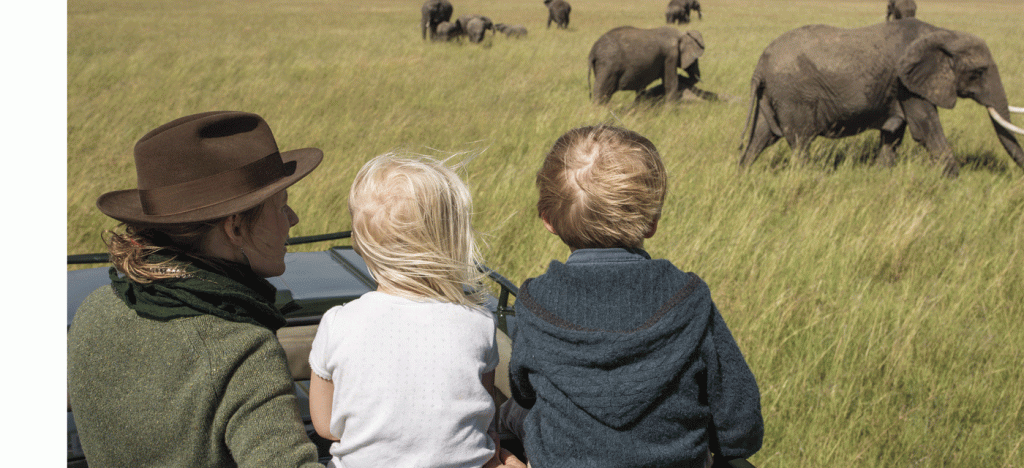
Both Serengeti and Maasai Mara can work well for families and first-time safari travelers when the itinerary matches the travelers’ ages, interests and comfort levels.
The Maasai Mara’s compact size can simplify a shorter family safari. Families can spend several days in the reserve without constantly changing destinations, reducing the amount of time spent on long transfers.
The Serengeti can also provide an excellent family experience especially when families choose a private vehicle and accommodation that suits their needs. A longer Tanzania itinerary can combine wildlife viewing with different landscapes and activities.
Private vehicles provide flexibility because families can adjust game-drive schedules, take breaks and spend longer at sightings that interest them. Families should also discuss child-friendly accommodation and age requirements with their operator before booking.
First-time travelers should remember that safari involves time outdoors, changing weather, early mornings, uneven roads and periods of quiet observation. Children who understand these conditions can often enjoy the experience much more.
Guides also play a major role. An engaging guide can explain animal behavior, tracks, ecosystems and conservation in ways that help young travelers understand what they see.
The choice between Serengeti and Maasai Mara should therefore depend on the family’s wider travel plan. Families traveling through Kenya may find Maasai Mara fits naturally into their route. Families exploring northern Tanzania may find Serengeti integrates better with Ngorongoro and Tarangire.
With appropriate planning both destinations can provide memorable educational wildlife experiences rather than simply becoming a checklist of animals.
Should You Visit Serengeti and Maasai Mara on the Same Trip?
Travelers with enough time and budget can visit both Serengeti and Maasai Mara because the two destinations form parts of the same broader ecosystem. A combined itinerary can reveal how wildlife movements connect Tanzania and Kenya.
However visiting both requires careful planning. Crossing between countries adds transportation and border considerations while moving between safari areas can consume valuable wildlife-viewing time.
A combined itinerary makes particular sense for travelers who want a broader East African safari rather than a single-country experience. They can experience the expansive Serengeti landscape and then continue toward Maasai Mara or structure the route around seasonal migration movements.
Travelers should avoid trying to squeeze both destinations into an extremely short holiday. Spending too little time in each location can create a rushed experience dominated by transfers rather than wildlife viewing.
A longer itinerary provides more flexibility. Travelers can allocate enough nights to each destination and use flights where appropriate to reduce unnecessary road travel.
A combined safari can also help travelers understand the Great Migration more clearly. The animals do not recognize the Kenya–Tanzania border so seeing both sides demonstrates how the wider ecosystem functions as one connected landscape.
However visiting both is not necessary for a successful safari. A well-planned Serengeti safari can provide exceptional wildlife experiences while a carefully designed Maasai Mara safari can deliver an equally memorable introduction to East African wildlife.
Choose both when you genuinely want a cross-border safari experience and have enough time to enjoy each destination rather than treating one as a quick stopover.
Serengeti vs Maasai Mara: Which Is Better for Photography?
Both destinations provide exceptional photography opportunities but the photographic experience changes according to landscape, wildlife behavior, light and season.
The Serengeti offers enormous open landscapes that work particularly well for environmental wildlife photography. Photographers can frame animals against plains, kopjes, dramatic skies and distant horizons. The park’s diverse regions also provide opportunities for different visual styles.
The Maasai Mara provides similarly strong opportunities especially across its open grasslands. Predators can appear against relatively unobstructed backgrounds while rolling terrain and the Mara River can add depth to compositions.
Migration photography creates another distinction. The Serengeti offers opportunities across multiple stages of the annual cycle including calving and herd movement. The Maasai Mara becomes particularly interesting during the northern migration period.
Photographers should remember that wildlife behavior remains unpredictable. A perfect photograph cannot be guaranteed regardless of destination or season.
Good preparation matters. Travelers should understand their camera equipment carry sufficient storage protect equipment from dust and follow guide instructions around wildlife.
Ethical photography also matters. Visitors should avoid pressuring animals for photographs or encouraging guides to drive irresponsibly close to wildlife. Tanzania’s Mara River guidelines specifically emphasize responsible vehicle behavior around crossing points.
The best photographic destination depends on the images you want to create. Serengeti suits photographers who want vast landscapes and a broader range of habitats. Maasai Mara suits photographers who enjoy concentrated wildlife scenes and classic open-plains compositions.
In both destinations patience often produces better photographs than rushing between sightings.
Serengeti vs Maasai Mara: Which Should You Choose?
The decision between Serengeti and Maasai Mara depends on your individual safari priorities. Serengeti provides an enormous Tanzanian wilderness with multiple regions, varied habitats and access to different stages of the Great Migration. Maasai Mara provides a more compact Kenyan safari experience with excellent plains wildlife and important seasonal migration activity.
Choose Serengeti when you want to explore Tanzania spend several days in a large wilderness area, experience the southern calving period follow migration movements across different Tanzanian regions or combine your safari with destinations such as Ngorongoro and Tarangire.
Consider Maasai Mara when you want a shorter Kenya-focused safari, strong predator viewing, open grasslands or a migration-season experience centered around the northern part of the ecosystem.
Consider both when you have enough time to enjoy a cross-border journey and want to experience the wider Mara Serengeti ecosystem from different perspectives.
The Great Migration should also influence your decision. If you travel during the calving period southern Serengeti becomes especially relevant. If you travel during the northern migration period, northern Serengeti and Maasai Mara can both offer opportunities to experience the movement. Exact herd locations always depend on natural conditions.
Ultimately Serengeti and Maasai Mara do not need to compete for the title of the world’s “better” safari destination. They provide different ways to experience one connected ecological system.
Your best choice is the destination that matches your travel dates, available time, preferred wildlife experiences, budget, accommodation style and wider East African itinerary.
Frequently Asked Questions About Serengeti vs Maasai Mara
1. Is Serengeti better than Maasai Mara for a safari?
Serengeti and Maasai Mara offer different safari experiences. Serengeti provides a much larger wilderness area diverse landscapes and opportunities to experience several stages of the Great Migration. Maasai Mara offers a more compact safari environment with open grasslands and strong predator-viewing opportunities.
2. Which is better for the Great Migration, Serengeti or Maasai Mara?
It depends on the time of year. Southern Serengeti is especially important during the calving season while northern Serengeti and Maasai Mara become relevant during the northern migration period. Herd locations can change according to rainfall and natural conditions.
3. Can I see the Great Migration in Serengeti?
Yes. Serengeti plays an important role throughout much of the annual migration cycle, including the southern calving period and movements through central, western and northern Tanzania.
4. Is Maasai Mara good for seeing lions, leopards and cheetahs?
Yes. Maasai Mara’s open grasslands provide opportunities to see lions and cheetahs while leopards can also be found but may require more patient searching.
5. Can I see river crossings in Serengeti?
Yes. Northern Serengeti, particularly around Kogatende and Lamai, provides access to areas associated with Mara River crossings. However crossings are unpredictable and cannot be guaranteed on a particular day.
6. Which is better for the calving season?
Southern Serengeti and the neighboring Ndutu region are particularly important during the calving period, generally around December through March. This period can provide opportunities to see newborn wildebeest and increased predator activity.
7. Which destination is better for a short safari?
Maasai Mara’s compact size can make it practical for shorter safaris. Serengeti can also work for shorter trips when travelers focus on one region although longer itineraries allow visitors to experience more of its diverse landscapes and wildlife areas.
8. Is Serengeti more expensive than Maasai Mara?
Safari costs vary in both destinations depending on accommodation, vehicle type, season, guide services, park fees, flights and safari duration. Travelers should compare the complete package rather than advertised starting prices alone.
9. Can I visit Serengeti and Maasai Mara on the same trip?
Yes. Travelers with enough time and budget can combine both destinations. However, a cross-border itinerary requires careful planning, and spending too little time in each destination can make the trip feel rushed.
10. Which is better for photography, Serengeti or Maasai Mara?
Both offer strong photography opportunities. Serengeti provides expansive landscapes, kopjes and varied habitats while Maasai Mara offers open grasslands wildlife scenes and rolling landscapes. The best fit depends on the type of images you want to create.
11. Which is better for families, Serengeti or Maasai Mara?
Both can work well for families when the itinerary matches the travelers’ ages, interests and comfort levels. Maasai Mara can simplify shorter trips while Serengeti can provide a broader Tanzania itinerary when combined with destinations such as Ngorongoro and Tarangire.
12. Can I see the Big Five in both Serengeti and Maasai Mara?
Both destinations support major African wildlife, including lions, leopards, elephants and buffalo. The article emphasizes that wildlife encounters cannot be guaranteed, so sightings depend on season, habitat, animal movements and guide experience.
Conclusion
The Serengeti vs Maasai Mara comparison becomes much clearer when you look beyond simple rankings. Both destinations form essential parts of the wider Mara Serengeti ecosystem and wildlife moves between them according to natural ecological conditions rather than national borders.
The Serengeti stands out through its enormous scale, diverse landscapes, extensive wildlife areas and important role throughout much of the Great Migration cycle. Its southern plains support the calving season, while its central, western and northern regions provide different wildlife experiences throughout the year.
The Maasai Mara provides a more compact safari environment with open grasslands, abundant wildlife, major predator populations and seasonal access to the northern migration. Its smaller scale can make it particularly practical for travelers with limited time.
Neither destination guarantees specific animal sightings or migration events. Wildlife follows rainfall, food, water and natural behavior. Responsible safari planning therefore requires flexibility.
For a Tanzania-focused safari with longer exploration and multiple destinations Serengeti offers a natural centerpiece. In a shorter Kenya-focused adventure, Maasai Mara can fit efficiently into the itinerary. For travelers with sufficient time visiting both can reveal the full geographic scale of the Mara to Serengeti ecosystem.
For travelers planning a Tanzania safari Serengeti Travels can help create an itinerary around your preferred travel season, wildlife interests, accommodation level and available time. The key is to plan around the experience you want rather than choosing a destination simply because it appears first on a list.
The real question is not simply “Which safari destination is better?” The better question is, “Which safari experience matches what I want to see, when I want to travel and how I want to explore?”
That approach will help you build a safari that feels purposeful, comfortable and memorable.