 English
 Deutsch
 Italia
December 16, 2025
The Ultimately Serengeti Safari Complete Guide
Introduction
The Ultimately Serengeti Safari Complete Guide introduces you to a world of spectacular wildlife, endless golden plains, dramatic landscapes and some of Africa’s most unforgettable natural experiences. Located in northern Tanzania Serengeti National Park covers approximately 1.5 million hectares of savannah and forms part of the wider Serengeti-Mara ecosystem. UNESCO recognizes the park for its extraordinary biodiversity and the remarkable annual movement of wildebeest, zebras and gazelles across the ecosystem.
A Serengeti Safari gives you the opportunity to explore this remarkable wilderness through game drives, wildlife photography, birdwatching, cultural experiences and where available and permitted, hot-air balloon flights. Instead of simply searching for animals you can experience how the entire ecosystem works. Predators follow herbivores, birds respond to seasonal changes and grazing animals continuously move in response to rainfall and fresh grass.
The Serengeti also offers different safari experiences throughout the year. January and February can provide exceptional opportunities around the southern plains during the calving period while June and July can offer migration activity in western and central areas. Later in the year the northern Serengeti becomes particularly important for travelers hoping to witness migration activity around the Mara River. The exact movement changes with rainfall and grazing conditions so no itinerary can guarantee a particular sighting.
With careful planning you can match your Serengeti Safari to your interests, travel dates, accommodation style, budget and preferred level of comfort. This guide explains everything you need to know before planning your journey from the best time to visit and wildlife experiences to safari costs, accommodation, transportation and practical planning advice.
How to Get to the Serengeti
Most international visitors begin their Serengeti Safari from northern Tanzania. Kilimanjaro International Airport provides a major international gateway while Arusha functions as a common base for safari departures.
Road travel offers one of the most popular ways to reach the Serengeti. A typical northern safari can combine the Serengeti with destinations such as Tarangire and the Ngorongoro Conservation Area. The road journey takes time but it also allows travelers to experience changing landscapes and include additional wildlife destinations.
Fly-in safaris provide an alternative for travelers who want to reduce driving time. Domestic flights can connect major airports and safari airstrips allowing visitors to reach different parts of the Serengeti more efficiently.
Your choice should depend on the length of your safari. If you have several days a road itinerary can create a broader northern Tanzania experience. If you have only a few days flying can help maximize time inside the Serengeti.
Travelers should also plan their arrival carefully. If your international flight reaches Tanzania late in the day staying overnight in Arusha before starting the safari can make the journey more comfortable.
TANAPA recommends that travelers plan routes, seasons, permits, accommodation, transport and safety requirements before entering the parks.
Serengeti Travels can arrange road-based and fly-in safari options according to your schedule and preferred travel style.
Why Choose a Serengeti Safari?
A Serengeti Safari offers much more than a conventional wildlife holiday. The park combines enormous landscapes with a remarkably diverse concentration of animals creating opportunities to experience nature on a scale that few destinations can match. UNESCO identifies the Serengeti’s annual migration as one of the world’s outstanding natural spectacles and highlights the park’s important populations of threatened species.
The park’s size also creates different safari experiences. You can explore the central Seronera area for resident wildlife and predator sightings travel toward the Western Corridor during migration periods or head north when seasonal movements bring large herds toward the Mara River region. Southern areas can become especially important during the calving season.
Lions remain one of the Serengeti’s most sought-after animals, while cheetahs, leopards, spotted hyenas, elephants, buffaloes, giraffes, zebras, hippos, crocodiles and numerous antelope species add variety to every game drive. Bird enthusiasts can also discover an impressive range of resident and migratory species.
The Serengeti rewards patience. Your guide may spend several minutes watching animal behavior rather than immediately moving to another sighting. That approach can reveal interactions that you might otherwise miss, including territorial behavior, hunting strategies, courtship, feeding and communication.
Serengeti Travels can help travelers build an itinerary around these different experiences, whether they want a private safari, family adventure, honeymoon journey, migration-focused trip, photography safari or budget-conscious expedition.
The combination of wildlife, scenery, seasonal movement and professional guiding makes the Serengeti a destination where every game drive can feel different.
How Many Days Do You Need for a Serengeti Safari?
The ideal Serengeti Safari length depends on your priorities but spending more than one or two nights allows you to explore a larger area and experience different wildlife conditions.
A three-day Serengeti Safari can work well for travelers with limited time. You can focus on central Serengeti and dedicate substantial time to game drives. However a short itinerary may require longer driving or flights depending on your starting point.
A four- or five-day safari provides greater flexibility. You can combine central Serengeti with another region or spend additional time following seasonal wildlife movements. This duration often works well for first-time visitors who want a deeper experience without creating an extremely long itinerary.
A six- to eight-day itinerary allows you to explore several Serengeti regions and potentially combine the park with Ngorongoro, Tarangire or other destinations. It also gives your guide greater flexibility when searching for wildlife.
Migration-focused safaris often benefit from additional days because animal movements remain unpredictable. Spending several nights in a likely migration zone gives you more opportunities to observe changing behavior.
Your itinerary should also consider driving time. A schedule that places too many destinations into too few days can leave you spending more time on roads than watching wildlife.
The most important factor is balance. Give yourself enough time to enjoy morning and afternoon game drives, rest between activities, photograph landscapes and appreciate the wilderness without constantly rushing to the next destination.
Where Is Serengeti National Park?
Serengeti National Park lies in northern Tanzania and forms part of the larger Serengeti-Mara ecosystem that extends toward Kenya’s Maasai Mara. The park connects naturally with surrounding conservation areas and provides critical habitat for migrating herbivores and their predators.
Most international travelers reach the Serengeti through northern Tanzania. Kilimanjaro International Airport provides an important gateway for safari travelers while Arusha serves as a major safari starting point. Travelers can continue to the Serengeti by road or use scheduled or chartered flights to one of the airstrips serving different areas of the park.
The route you choose can significantly influence your safari experience. A road safari from Arusha allows you to incorporate other destinations such as Tarangire National Park and the Ngorongoro Conservation Area. A fly-in safari reduces driving time and works particularly well for travelers with limited time or those who prefer a more relaxed itinerary.
The Serengeti itself contains several important safari regions. Central Serengeti particularly the Seronera area provides excellent year-round wildlife opportunities because resident animals remain in the region even when migrating herds move elsewhere. The Western Corridor becomes important during particular stages of the migration while the northern Serengeti attracts travelers interested in the seasonal movement toward the Mara River.
Your route should therefore match your travel dates rather than simply following a standard itinerary.
Before booking consider your arrival airport, safari duration, preferred accommodation, desired wildlife experiences and the amount of driving you are comfortable with. A knowledgeable local operator can then design a route that makes practical sense for your available time.
Size of the serengeti
The Serengeti National Park covers approximately 14,750 square kilometers but when combined with surrounding conservation areas and reserves the ecosystem expands to nearly 30,000 square kilometers. This enormous size makes it one of the largest and most ecologically significant protected wildlife landscapes in Africa.
The scale of the Serengeti is one of its defining characteristics. Unlike smaller national parks where wildlife is concentrated in limited zones the Serengeti allows animals to roam freely across vast distances. This freedom of movement is essential for maintaining natural ecological balance. Herbivores can migrate in search of grazing areas while predators follow these movements to hunt and survive.
Because of its size the Serengeti is divided into distinct regions, each with unique environmental conditions. The southern plains are flat open grasslands that support massive grazing herds during the calving season. The central Serengeti known as Seronera contains permanent water sources and supports wildlife year-round. The western corridor features river systems and dense vegetation while the northern Serengeti is more rugged and is famous for river crossings.
This regional diversity ensures that the Serengeti never appears the same in different areas. Travelers moving from one section to another experience entirely different landscapes and wildlife behavior patterns. The large size also plays a crucial role in predator survival. Lions, leopards and cheetahs require large territories to hunt effectively. Without such expansive land predator-prey relationships would become unstable.
For visitors the size of the Serengeti creates both opportunity and challenge. It offers endless exploration but wildlife is spread across large distances requiring careful planning and guidance to maximize sightings. This vastness is what gives the Serengeti its true sense of wilderness and freedom.
Endless plains landscape
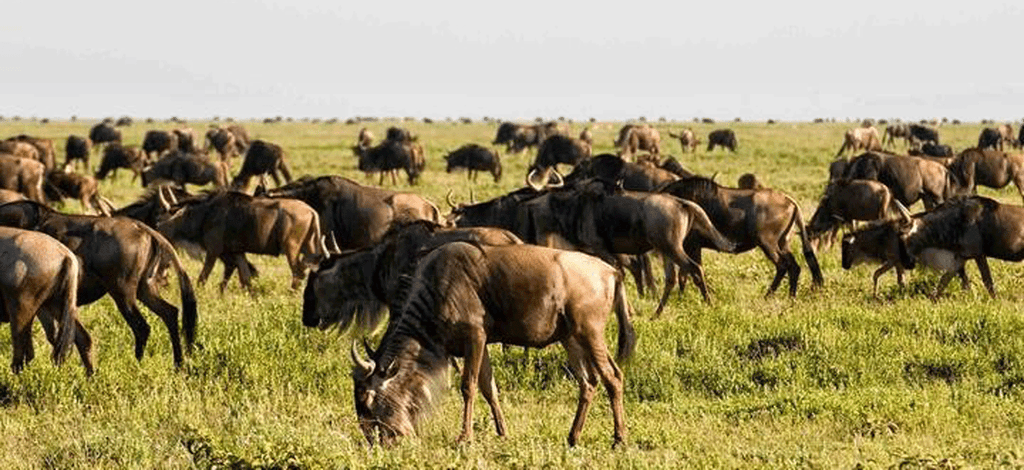
The endless plains of the Serengeti are one of the most iconic natural landscapes in the world. These vast grasslands stretch continuously toward the horizon creating the illusion that the land has no end. This visual effect is not just beautiful but also ecologically significant. These plains are mainly located in the southern Serengeti and are formed from nutrient-rich volcanic soils deposited by ancient eruptions from the Ngorongoro Highlands.
This soil supports short, nutrient-dense grasses that are ideal for grazing herbivores such as wildebeest, zebras and gazelles.The openness of the plains plays a critical role in predator-prey dynamics. Herbivores benefit from wide visibility allowing them to spot predators from a distance. At the same time predators such as cheetahs benefit from open terrain which allows them to use speed and acceleration during hunts.
The plains also influence seasonal migration patterns. During the wet season they become lush feeding grounds that attract massive herds. During the dry season animals move away in search of water leaving the plains quieter but still ecologically active. One of the most important ecological functions of the plains is calving. Thousands of wildebeest give birth here within a short time period creating one of the most concentrated wildlife events on Earth. This attracts predators and ensures continuous ecological interaction.
Visually the plains are also significant. The wide horizon, dramatic skies and golden light create some of the most spectacular natural scenery in Africa. Sunrises and sunsets over the plains are often described as unforgettable due to their simplicity and scale. Despite appearing empty at times, the plains are always active beneath the surface, with constant movement of animals, insects and ecological processes that maintain balance in the ecosystem.
Ecosystem diversity
The Serengeti is one of the most ecologically diverse landscapes in Africa despite its reputation for open plains. It contains multiple habitat types that work together to support a wide variety of wildlife species and ecological interactions. The main ecosystems include open savannah grasslands, acacia woodlands, riverine forests, seasonal wetlands and kopjes (rocky outcrops). Each of these environments plays a different role in supporting animal life.
Open grasslands dominate large areas of the Serengeti and are essential for grazing animals. These areas provide food for massive herds and allow predators to hunt efficiently due to open visibility. Woodlands offer shade and protection particularly for elephants, giraffes and leopards. These areas are denser and provide cover for animals that prefer less exposure.
Riverine forests are found along permanent rivers and remain green throughout the year. These areas attract high concentrations of wildlife especially during dry seasons when water becomes scarce elsewhere. Kopjes are ancient granite rock formations that rise above the plains. They serve as resting areas for lions, hiding places for leopards and nesting sites for birds and reptiles. These formations are critical micro-ecosystems within the larger landscape.
Wetlands and seasonal water bodies also play a vital role in supporting migratory birds, amphibians and aquatic life during rainy seasons.
Serengeti Wildlife: What Can You See?
A Serengeti Safari can introduce you to an extraordinary variety of African wildlife. The exact sightings vary according to location, season, weather and animal behavior, but the ecosystem supports a remarkable range of mammals, birds, reptiles and other species.
Lions rank among the most frequently sought-after predators. You may encounter prides resting beneath trees, moving across open grassland or interacting with other members of the pride. Cheetahs often favor open areas where they can use their speed while leopards frequently remain more concealed around trees and rocky habitats.
Spotted hyenas also play an important role in the ecosystem. Although many travelers initially focus on lions and cheetahs hyenas provide fascinating opportunities to observe social behavior and communication.
Large herbivores dominate many landscapes. Wildebeest and zebra form enormous concentrations during migration periods while buffaloes, giraffes, elephants, hippos and numerous antelope species can appear across different areas.
The Serengeti also supports important birdlife. Raptors, vultures, secretary birds, ostriches, storks, rollers, bee-eaters and many smaller species add another dimension to game drives. During wetter months, migratory birds can increase the diversity of birdwatching opportunities.
UNESCO highlights the park’s high biological diversity and identifies species such as black rhinoceros, elephant, wild dog and cheetah among globally threatened species associated with the area.
No safari can guarantee every animal. Instead focus on experiencing the ecosystem as a whole. Your guide can help you understand tracks, calls, feeding patterns, territorial behavior and seasonal movements, turning individual sightings into a deeper wildlife experience.
Big five wildlife
The “Big Five” in the Serengeti refers to lion, leopard, elephant, buffalo and rhinoceros. These animals were originally classified by early hunters based on how difficult and dangerous they were to track on foot. Today the term has become a major highlight of safari tourism, representing some of the most iconic and ecologically important species in Africa.
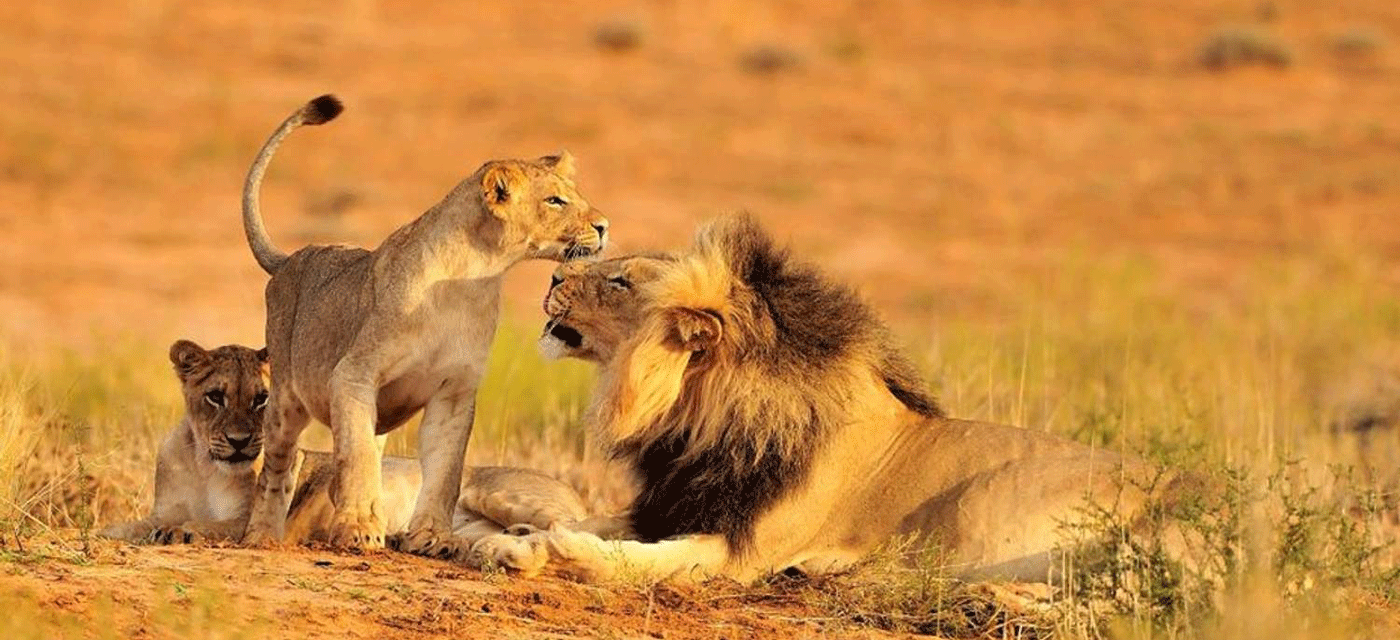
Lions are the most commonly encountered member of the Big Five in the Serengeti. The park holds one of the largest lion populations in the world. These animals live in structured social groups called prides, which consist mainly of related females, their offspring and a small number of dominant males. Lions are apex predators and play a critical role in controlling herbivore populations.
They are often seen resting during the day due to heat but become more active during early morning and late evening hunts. Their behavior is highly social, involving cooperation, territory defense and complex communication.
Leopards are the most elusive of the Big Five. They are solitary, highly adaptable and extremely skilled at camouflage. Unlike lions, leopards prefer dense vegetation, riverine forests and rocky kopjes where they can remain hidden. They are also known for dragging their prey into trees to avoid scavengers. Spotting a leopard requires patience, experience and sometimes luck making each sighting particularly valuable.
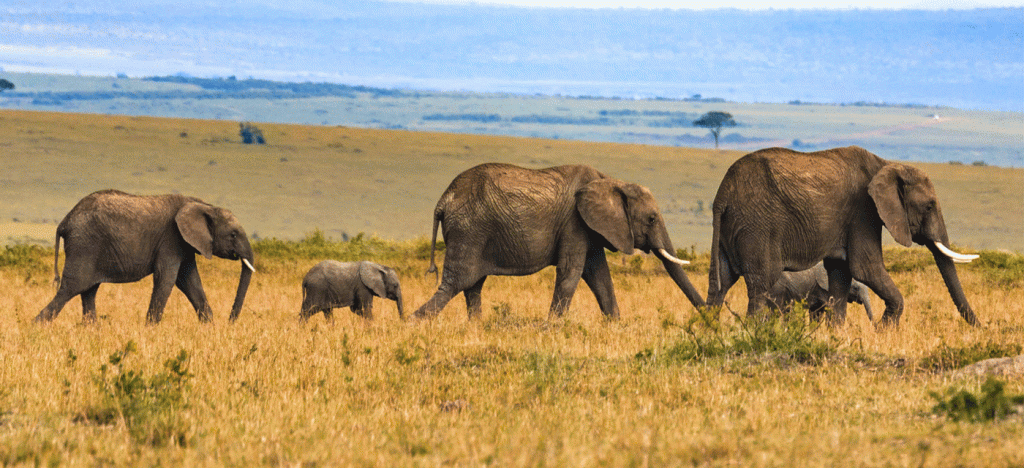
Elephants in the Serengeti are highly intelligent and socially organized. They live in matriarchal herds led by older females who guide the group in search of food and water. These animals have strong memory and emotional bonds often displaying behaviors such as mourning and protection of young members. Elephants significantly shape the landscape by breaking trees, creating pathways and dispersing seeds.
Buffalo are large powerful herd animals known for their unpredictable nature. They often travel in massive groups that can number in the hundreds or thousands. Despite their calm appearance while grazing buffalo are extremely defensive when threatened and are considered one of Africa’s most dangerous animals.
Rhinoceros especially the black rhino, are the rarest members of the Big Five in the Serengeti due to past poaching pressures. Conservation efforts have placed them under strict protection and sightings are rare but highly valued. They are generally solitary and prefer dense vegetation areas. Together the Big Five represent the ecological diversity and balance of the Serengeti each playing a unique role in maintaining the health of the ecosystem.
Understanding the Great Wildebeest Migration
The Great Wildebeest Migration forms one of the defining features of the Serengeti ecosystem. Large herds of wildebeest move continuously through Tanzania and Kenya in response to rainfall, fresh grass and water availability. UNESCO describes the migration as one of the world’s most impressive natural events.
The migration does not follow a perfectly predictable calendar. Rainfall changes from year to year and the animals respond to environmental conditions rather than human schedules. For that reason responsible safari planning should focus on likely migration areas rather than promising an exact sighting.
During January through March many wildebeest gather in the southern ecosystem where calving takes place. The abundance of young animals attracts predators and creates intense wildlife activity.
As conditions change herds begin moving north and west. During parts of June and July travelers may encounter large concentrations in the Western Corridor and central Serengeti.
Later in the year many herds move toward the northern Serengeti and the Mara River region. This creates opportunities to witness dramatic river-crossing behavior. However a river crossing remains a natural event not a scheduled attraction. Herds can remain near a crossing point for hours or days before moving or they may choose a different route.
TANAPA provides specific guidelines for Mara River viewing. Visitors must respect designated viewing areas and vehicle restrictions to protect the ecosystem and maintain responsible wildlife viewing.
A migration-focused Serengeti Safari therefore requires flexibility, patience and realistic expectations. The journey itself becomes part of the experience because you follow the landscape and wildlife rather than a fixed timetable.
Calving season
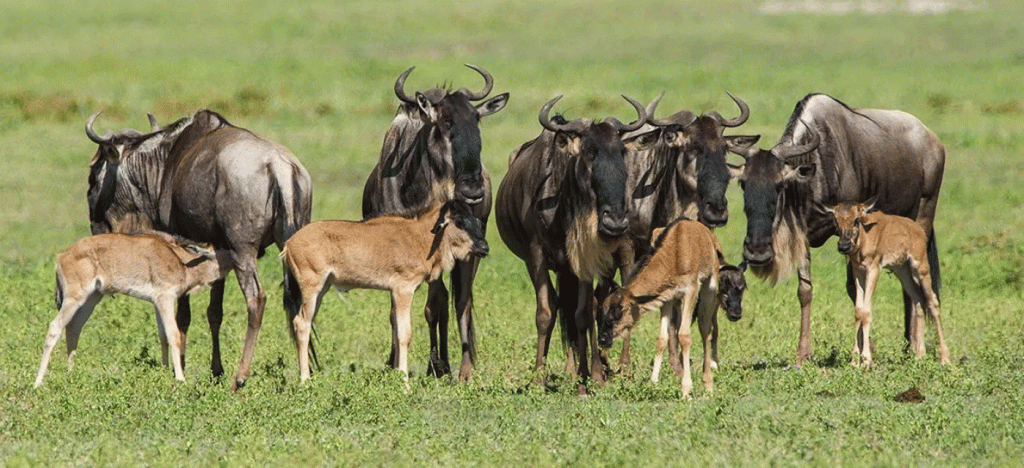
Calving season in the Serengeti occurs between January and March, primarily in the southern plains around the Ndutu region. This period is one of the most important biological events in the entire ecosystem as it marks the birth of hundreds of thousands of wildebeest calves within a very short timeframe.
This synchronized birthing strategy is a survival mechanism developed over thousands of years. By giving birth in a concentrated period wildebeest increase the chances that predators cannot target all newborns. The sheer number of calves creates a “predator saturation” effect, where lions, hyenas and cheetahs can only consume a small portion of available prey.
Calves are usually able to stand within minutes of birth and begin walking shortly after. This rapid development is essential for survival in an environment filled with predators. However the first few days of life remain extremely vulnerable. Calving season also leads to increased predator activity. Lions often follow herds closely while hyenas and cheetahs take advantage of weak or isolated calves. This creates one of the most intense predator-prey interactions in the natural world.
The landscape during this time is filled with life and tension simultaneously. Thousands of births occur daily while survival challenges unfold in real time. For visitors calving season is emotionally powerful. It offers a rare opportunity to witness both the beginning of life and the harsh realities of natural selection within a short period.
River crossings
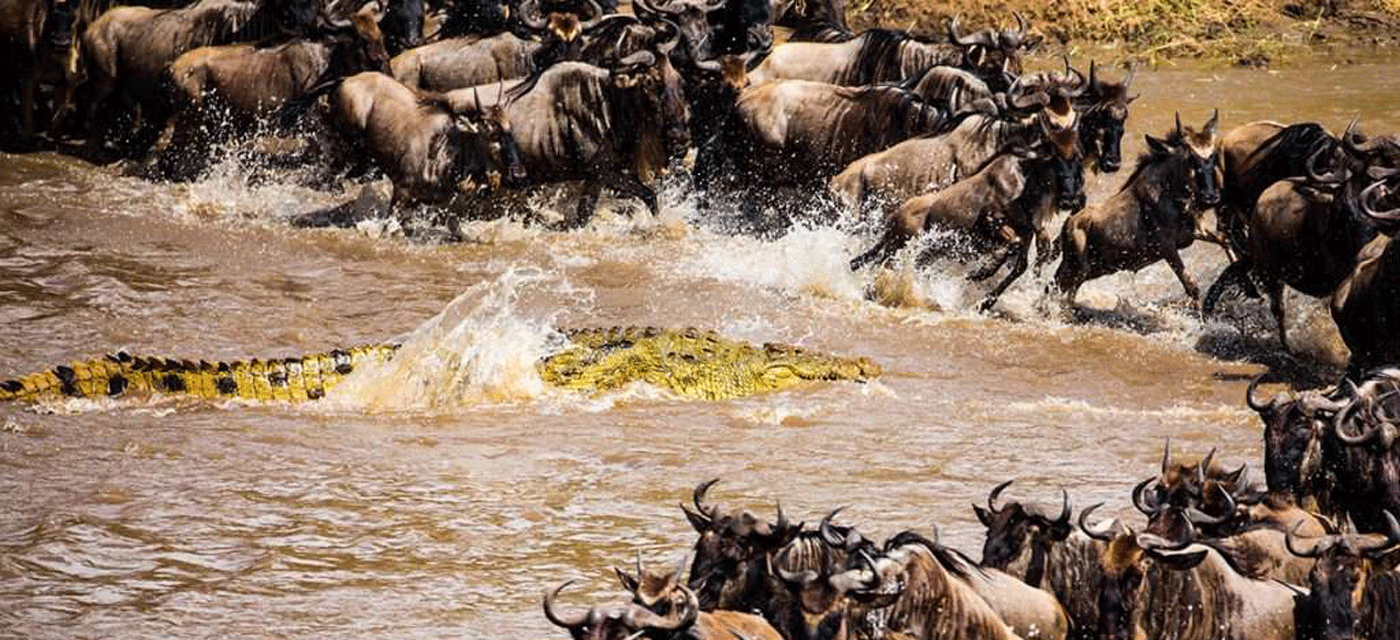
River crossings are among the most dramatic and visually intense events in the Serengeti migration. These crossings primarily occur at the Mara River in the northern Serengeti and the Grumeti River in the western corridor. During these events massive herds gather along riverbanks often hesitating for hours or even days before crossing. The decision to enter the water is driven by instinct, pressure from the herd and environmental conditions.
Once the first animals enter the river, a chain reaction occurs and thousands follow in a chaotic and powerful movement. The rivers are deep fast-moving and inhabited by large Nile crocodiles that wait for opportunities to hunt. The crossing itself is highly dangerous. Some animals drown due to strong currents while others fall prey to crocodiles or become separated from the herd. Despite these risks the migration continues because it is essential for survival.
Each crossing is unpredictable. There is no fixed schedule making it one of the most sought-after yet uncertain safari experiences. Guides often track herd movements closely but exact timing cannot be guaranteed. River crossings represent the raw intensity of survival in the wild. They demonstrate the determination of animals to continue their journey despite life-threatening obstacles.
Predator behavior
Predator behavior in the Serengeti is one of the most fascinating aspects of the entire ecosystem because it reveals the constant balance between survival, strategy and adaptation. The Serengeti supports a high density of predators, including lions, cheetahs, leopards, hyenas and African wild dogs each with distinct hunting styles and ecological roles.
Lions are the dominant social predators. Their behavior is built around cooperation and group strategy. A pride typically consists of related females and a coalition of males. Lionesses do most of the hunting often coordinating attacks on large herbivores such as zebras wildebeest and buffalo. They rely on stealth, teamwork and ambush tactics usually hunting at night or during cooler hours. Their success depends heavily on coordination and territory control and they often defend large areas from rival prides.
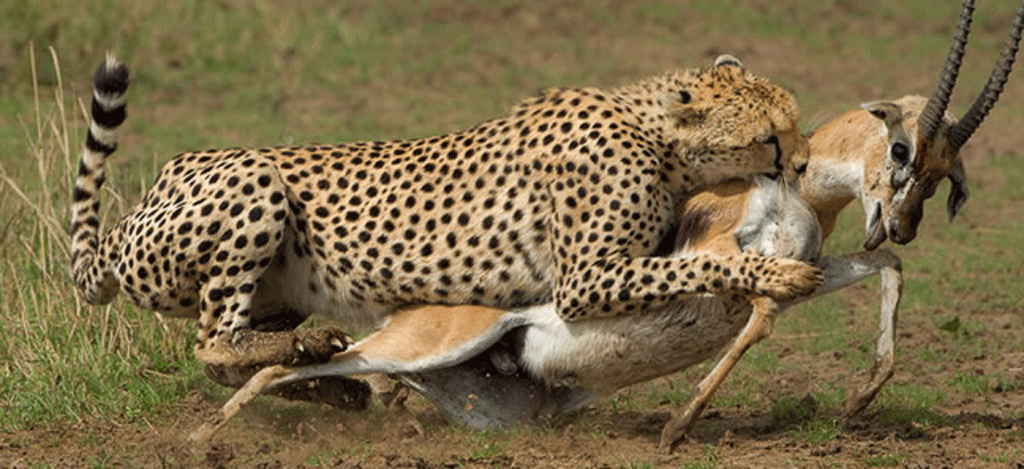
Cheetahs represent the speed specialists of the Serengeti. Unlike lions they hunt alone or in small family groups. Their hunting style is based on short explosive bursts of speed reaching up to 100 km/h in seconds. They depend heavily on open plains where visibility is clear and obstacles are minimal. However cheetahs have lower hunting success compared to other predators and they often lose their kills to stronger animals like lions or hyenas.
Leopards are solitary and highly secretive. Their strength lies in stealth, patience and adaptability. They prefer dense vegetation, riverbanks and kopjes where they can remain hidden. Leopards are also known for their ability to drag prey into trees, protecting their food from scavengers. Their behavior is mostly nocturnal making sightings rare and highly valuable.
Hyenas are often misunderstood but are among the most intelligent and efficient predators in the Serengeti. They live in complex social clans led by dominant females. Hyenas are both skilled hunters and opportunistic scavengers. They often cooperate in groups to overpower prey or steal kills from other predators. Their communication system is highly advanced, involving vocal calls and social hierarchies.
African wild dogs though less commonly seen, are highly efficient pack hunters. They have one of the highest hunting success rates in the animal kingdom due to teamwork and endurance-based chasing strategies. Together these predators create a dynamic system of competition and balance, shaping the entire structure of the Serengeti ecosystem.
Herbivore populations
Herbivores form the foundation of the Serengeti ecosystem supporting all predator species and maintaining ecological balance. The most abundant herbivores include wildebeest, zebras, gazelles, giraffes and various antelope species.
Wildebeest are the most numerous large herbivores and are central to the Great Migration. Their survival strategy is based on numbers, movement and synchronization. By traveling in massive herds they reduce individual risk from predators. They also play a major role in shaping vegetation patterns through grazing.
Zebras often travel alongside wildebeest during migration. Their striped pattern provides camouflage in moving herds and their feeding habits complement wildebeest by consuming different types of grass. This reduces competition and increases ecosystem efficiency.
Gazelles including Thomson’s and Grant’s gazelles are smaller and more agile herbivores. They rely on speed and alertness to escape predators. Their presence is crucial for supporting cheetah populations.
Giraffes are browsers rather than grazers. They feed on acacia trees and help shape vegetation structure in woodland areas. Their long necks allow them to access food sources unavailable to other herbivores. Buffalo are large powerful grazers that move in massive herds. They are important ecosystem engineers, influencing grass growth and predator behavior.
Herbivores are not passive participants in the ecosystem. Their movement, feeding and breeding behaviors directly shape the landscape and influence predator distribution. Without them the Serengeti ecosystem would collapse.
Bird species of serengeti
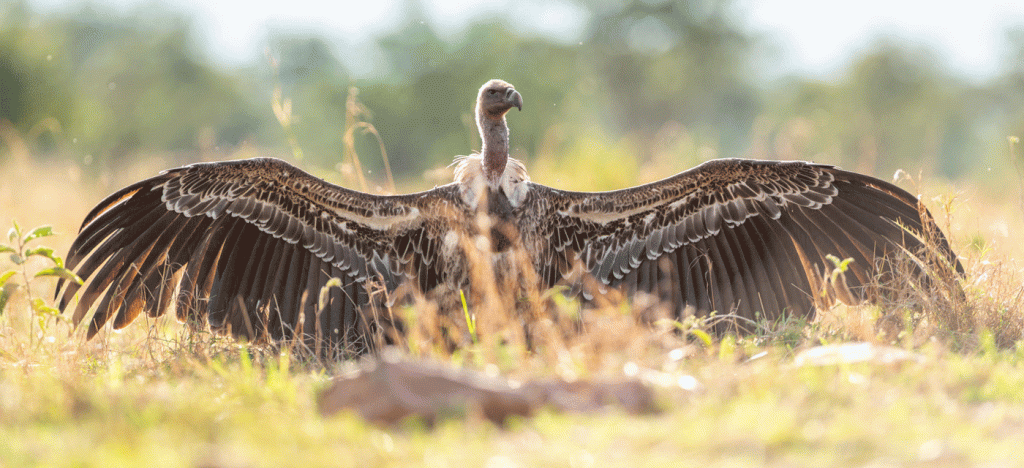
The Serengeti hosts over 500 bird species making it one of the richest avian ecosystems in Africa. Birds occupy nearly every habitat type in the park, from open plains to riverine forests and wetlands. Large birds such as ostriches dominate the open savannah. They are the largest living birds in the world and are often seen moving in pairs or small groups. Their speed allows them to escape predators effectively.
Birds of prey, including eagles, hawks and falcons play a critical role in maintaining ecological balance. They hunt small mammals and birds helping regulate populations. The martial eagle is one of the most powerful aerial predators in the Serengeti. Scavenger birds such as vultures are essential for cleaning the ecosystem. They feed on carcasses left by predators preventing the spread of disease and recycling nutrients back into the environment.
Colorful species like the lilac-breasted roller, bee-eaters and kingfishers add visual diversity to the landscape. These birds are often seen during early morning and late afternoon when light conditions are ideal. Water-dependent species gather around rivers and wetlands, especially during the wet season. Migratory birds also arrive from Europe and Asia during certain months increasing species diversity.
Birdlife adds constant movement and sound to the Serengeti, even when large mammals are not visible. For birdwatchers the Serengeti offers an unmatched variety of species and behaviors.
Best Areas to Explore in the Serengeti
The Serengeti contains several distinct regions, and choosing the right area can significantly improve your safari experience.
Central Serengeti and Seronera provide one of the most reliable year-round wildlife experiences. Permanent water sources support resident animals while the surrounding plains and rocky outcrops create excellent habitats for predators and herbivores. This region works particularly well for first-time visitors who want diverse wildlife rather than a single seasonal event.
The Western Corridor becomes especially interesting during migration periods. The Grumeti ecosystem contains riverine habitats and supports a wide range of wildlife. Travelers visiting during the appropriate period may encounter large herds moving through the region.
Northern Serengeti offers a different atmosphere. The landscape becomes more rugged in places and the region provides access to migration routes associated with the Mara River. Travelers interested in possible river-crossing activity often choose this region during the relevant season.
Southern Serengeti and the Ndutu area become particularly important during calving season. Open plains provide suitable grazing conditions while predator activity can increase around newborn animals.
Your choice should depend on timing. A northern itinerary in February may not provide the same migration experience as a southern itinerary while a southern itinerary during the later dry season may not match your original expectations.
A skilled safari operator can adjust your route according to the seasonal wildlife pattern, accommodation availability, road conditions and your interests.
Game drives experience
Game drives are the primary method of exploring the Serengeti and form the core of most safari experiences. These are conducted in specially designed 4×4 vehicles that allow travelers to access remote areas of the park while observing wildlife safely and comfortably.
Game drives usually take place during early morning and late afternoon hours when animals are most active. These times also provide the best lighting conditions for photography and observation. Midday heat often causes animals to rest in shade reducing visible activity. Each game drive is unpredictable. There is no fixed route or guaranteed sightings. Instead guides rely on experience, communication with other drivers and knowledge of animal behavior to locate wildlife.
One of the most exciting aspects of game drives is the variety of experiences they offer. A single day may include witnessing a lion pride resting on kopjes elephants moving through woodland areas or large herds crossing open plains. Game drives also serve an educational purpose. Professional guides explain animal behavior, ecological relationships and conservation challenges. This helps visitors understand the deeper meaning behind what they observe.
Unlike controlled environments, the Serengeti offers raw unscripted wildlife encounters. This unpredictability is what makes every game drive unique and memorable.
Walking safaris
Walking safaris in the Serengeti offer one of the most intimate and educational ways to experience the African wilderness. Unlike game drives where visitors observe wildlife from a vehicle walking safaris place travelers directly on foot within the ecosystem. This changes the entire perspective of the safari experience shifting focus from large animals to the smaller often overlooked details that form the foundation of the environment.
Walking safaris are always conducted by highly trained armed guides and sometimes accompanied by an armed ranger for safety. These professionals are experts in animal behavior, tracking and environmental awareness. Their role is not only to protect visitors but also to interpret the landscape in a way that reveals hidden ecological connections.
The main focus of walking safaris is not close encounters with dangerous animals but rather understanding the ecosystem at ground level. Visitors learn how to identify animal tracks, dung, feeding signs, insect activity and plant species. Every footprint or broken branch becomes a clue that tells a story about recent wildlife movement.
One of the most valuable aspects of walking safaris is sensory awareness. Without the noise of an engine the environment becomes much more vivid. Sounds of birds, wind moving through grass, distant animal calls and even subtle smells become part of the experience. This creates a deeper emotional and psychological connection to nature.
Walking safaris are usually conducted in designated safe zones where large predators are less concentrated. The goal is not confrontation but observation and education. Visitors may still see animals at a distance but encounters are carefully managed to avoid disturbance.
These safaris also highlight the importance of small ecosystems. Insects, plants, soil composition and micro-habitats all play essential roles in sustaining larger wildlife populations. Understanding these connections helps visitors appreciate that the Serengeti is not just about large mammals but about a fully integrated natural system.
Walking safaris often leave a lasting impression because they transform how people perceive wilderness. Instead of simply observing nature visitors become part of it even if only temporarily.
Hot air balloon safaris
Hot air balloon safaris in the Serengeti offer a completely different perspective of the landscape providing a quiet elevated view of one of the most famous ecosystems in the world. These flights typically begin before sunrise when the air is calm and atmospheric conditions are ideal for balloon navigation.
As the balloon slowly rises the vastness of the Serengeti becomes immediately apparent. From above the endless plains stretch in every direction, revealing patterns of wildlife movement that are impossible to see from the ground. Herds of wildebeest, zebras and elephants appear as flowing shapes across the landscape often moving in synchronized patterns dictated by grazing needs and migration routes.
The experience is remarkably silent. Unlike aircraft or vehicles hot air balloons drift gently with the wind, creating a peaceful and almost surreal sensation of floating above the world. This silence enhances the feeling of detachment from everyday life and deepens the connection to the natural environment below.
Sunrise plays a central role in balloon safaris. As the sun rises, it casts golden light across the plains, illuminating wildlife and landscapes in dramatic contrast. Shadows stretch across the grasslands and the colors of the Serengeti shift from cool blues to warm golds and oranges.
Balloon safaris also offer a unique view of predator-prey interactions. From above it is sometimes possible to observe hunting behavior or herd movement patterns that are not visible at ground level. After landing guests are typically treated to a traditional bush breakfast in the open plains. This experience often includes freshly prepared meals served in a remote setting adding a memorable conclusion to the flight.
Although balloon safaris are among the most expensive safari activities they provide an unmatched visual and emotional experience of the Serengeti’s scale and beauty.
Serengeti Safari Accommodation Options

Accommodation plays an important role in shaping your Serengeti Safari experience. Tanzania offers options ranging from public campsites and simple tented camps to comfortable lodges and high-end luxury camps.
Budget travelers can choose camping-based itineraries that keep accommodation costs lower while maintaining access to the park’s wildlife. These trips can provide an authentic connection with the environment and work particularly well for adventurous travelers.
Mid-range travelers can select permanent or seasonal tented camps and comfortable lodges. These properties often provide private rooms or tents, meals, hot showers and relaxing communal areas while maintaining a strong safari atmosphere.
Luxury travelers can choose premium tented camps and lodges with spacious accommodation, personalized service, private vehicles and additional activities where available.
Location matters as much as room quality. Staying near your preferred wildlife region can reduce unnecessary driving and allow you to spend more time on game drives. During migration seasons accommodation near the expected movement of the herds can become highly desirable.
Rates also change according to season and property. For example published 2026 accommodation rates show different pricing between high and green-season periods demonstrating why travelers should compare dates before confirming their itinerary.
Book early if you plan to travel during popular migration periods especially when you want a specific camp or location.
Serengeti Safari Activities
Game drives form the foundation of most Serengeti Safaris. Morning drives allow you to explore while temperatures remain cooler and many animals remain active. Afternoon drives provide another opportunity to explore as wildlife activity changes throughout the day.
Photography becomes another major activity because the Serengeti offers dramatic landscapes, wildlife behavior, golden light and enormous herds. A guide who understands animal behavior can help position the vehicle responsibly without disturbing wildlife.
Birdwatching adds another layer to the experience. Even travelers who initially focus on large mammals often become interested in raptors, colorful birds, migratory species and smaller creatures once they begin paying attention to the surrounding environment.
Hot-air balloon safaris provide an aerial perspective over the Serengeti where permitted and available. From above travelers can appreciate the scale of the plains, winding rivers, woodland and wildlife below. Balloon activities require advance planning and additional fees.
Cultural experiences can also complement a safari when arranged through appropriate community-based programs. These experiences allow travelers to learn about local traditions, livelihoods, crafts and contemporary community life.
Walking experiences may be available in appropriate areas under professional guidance and applicable regulations. Travelers should always follow their guide’s safety instructions and park rules.
The strongest itinerary does not necessarily include every possible activity. Instead choose activities that match your interests and leave enough time for relaxed game drives.
Serengeti Safari Costs and Budget Planning
The cost of a Serengeti Safari depends on several factors, including trip duration, accommodation level, transportation, season, group size, activities and the number of parks included.
Park fees form one part of the total cost. TANAPA publishes official tariffs and explains that fees vary according to visitor category and park. The authority also states that conservation fees generally have a defined validity period and that government payment systems apply. Travelers should check the current official tariff before booking because fees can change.
Transportation represents another major cost. A private 4×4 safari vehicle provides flexibility and personalized guiding but costs more than joining a shared safari. Fly-in safaris can save driving time but normally add flight expenses.
Accommodation creates another major difference. Budget campsites, mid-range tented camps and luxury lodges can produce significantly different total prices.
Your travel season also affects the budget. Peak migration periods generally create stronger demand for accommodation while greener months can offer different pricing opportunities depending on the property.
When comparing safari quotations do not look only at the headline price. Check whether the package includes park fees, accommodation, meals, airport transfers, vehicle use, guide services, internal flights, concession or camping charges and other required expenses.
A transparent safari quotation should explain what you receive for your money.
Serengeti Travels can build different safari levels around your available budget, helping you choose between budget, mid-range and luxury accommodation while maintaining a strong wildlife experience.
Budget safari experience
Budget safaris in the Serengeti are designed to make wildlife experiences accessible to travelers who want to explore the park without high financial costs. These safaris focus on essential experiences rather than luxury while still providing full access to the Serengeti ecosystem. Accommodation in budget safaris typically involves camping in designated public campsites within or near the park.
These campsites provide basic facilities such as shared bathrooms, cooking areas and designated tent spaces. Travelers usually sleep in dome tents or safari tents provided by tour operators. Meals are often prepared by safari cooks and served in communal settings. The food is simple but nutritious designed to support long days of game drives and outdoor activities. Despite the basic setup many travelers find this style of safari deeply rewarding because of its closeness to nature.
Transportation is usually shared among small groups in 4×4 safari vehicles. This group setup reduces costs but still allows access to the same wildlife areas as more expensive safaris. Game drives follow similar routes and schedules meaning wildlife viewing opportunities remain strong. Budget safaris attract adventurous travelers, students and backpackers who prioritize experience over comfort. These safaris often involve longer travel times, flexible schedules and a more rugged lifestyle.
One of the key advantages of budget safaris is the opportunity for extended stays. Because costs are lower travelers can spend more days in the Serengeti increasing their chances of witnessing rare wildlife events such as hunts or migration movements. Despite limited comfort budget safaris offer one of the most authentic ways to experience the Serengeti. Sleeping close to nature, hearing wildlife at night and experiencing the raw environment create a powerful connection to the wilderness.
Mid-range safari experience
Mid-range safaris offer a balance between affordability and comfort making them one of the most popular choices for Serengeti visitors. These safaris provide better accommodation, improved services and more privacy compared to budget options while still maintaining a strong connection to nature.
Accommodation typically includes permanent lodges or tented camps. These facilities often feature private bathrooms, comfortable beds, dining areas and sometimes even small verandas overlooking the plains. The design often blends natural materials with modern comfort allowing guests to feel immersed in the environment while enjoying essential amenities.
Meals in mid-range safaris are of higher quality and are usually served in organized dining areas. Menus often include a mix of local and international cuisine prepared by trained chefs. This improves the overall safari experience especially after long days of game drives.
Transportation is usually conducted in smaller groups or private vehicles allowing for more personalized wildlife viewing. Guides can adjust schedules based on guest interests increasing flexibility during game drives. Mid-range safaris are ideal for families, couples and travelers who want a comfortable experience without the high cost of luxury safaris. They offer a strong balance between immersion in nature and modern convenience.
One of the key advantages of mid-range safaris is their strategic location. Many lodges are positioned in high wildlife density areas increasing the likelihood of frequent animal sightings without long travel times. Overall mid-range safaris provide a well-rounded experience that combines comfort accessibility and authentic wildlife encounters.
Luxury safari experience
Luxury safaris in the Serengeti represent the highest level of comfort, exclusivity and personalization available in African wildlife tourism. These safaris are designed for travelers who want to experience the wilderness without sacrificing comfort, privacy or service quality. However despite the high level of luxury the core experience remains deeply connected to nature and wildlife.
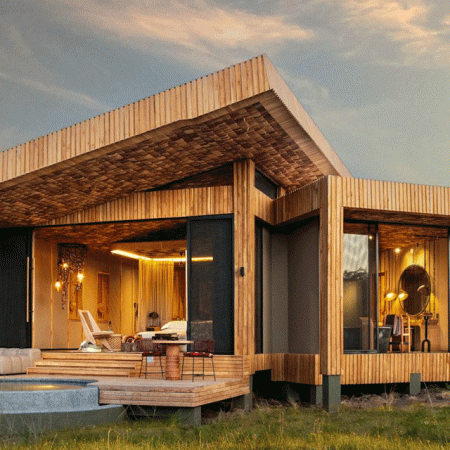
Accommodation is a defining feature of luxury safaris. Guests stay in high-end lodges or exclusive tented camps that are often located in prime wildlife viewing areas. These accommodations are designed with spacious interiors, private decks, elegant furnishings and panoramic views of the plains. Some even include features such as outdoor bathtubs, private plunge pools and personalized butler services.
The design philosophy focuses on blending modern comfort with natural surroundings allowing guests to feel immersed in the wilderness while enjoying hotel-level convenience.Dining is another important aspect. Meals are prepared by professional chefs and often include multi-course menus combining international cuisine with local flavors.
Guests may dine in elegant dining rooms, under the stars in the bush or even in completely private settings arranged specifically for them. The dining experience is designed not just for nourishment but as part of the overall safari atmosphere.Game drives in luxury safaris are typically private meaning guests have exclusive use of a vehicle and guide. This allows complete flexibility in timing, routes and wildlife focus.
Guides are highly experienced and often specialize in tracking specific animals or behaviors enhancing the depth of the experience. Luxury safaris may also include additional experiences such as spa treatments in the wilderness, hot air balloon rides, private bush dinners and photographic safaris tailored to individual interests
The main advantage of luxury safaris is the combination of comfort and immersion. Guests can experience the raw beauty of the Serengeti while enjoying a level of service that removes logistical stress entirely allowing full focus on wildlife and nature.
What to Pack for a Serengeti Safari
Packing correctly can make your Serengeti Safari much more comfortable. Safari travel involves early mornings, warm afternoons, dusty roads, changing weather and long periods outdoors.
Start with lightweight comfortable clothing that allows you to move easily. Neutral colors can help you blend naturally into the environment although you do not need to purchase an entirely new wardrobe for safari.
Bring a warm layer for early morning drives because temperatures can feel cool before sunrise especially during the dry season. A lightweight waterproof jacket can also help during rainy periods.
Comfortable walking shoes or sturdy footwear can prove useful outside the vehicle. Sunglasses, a wide-brimmed hat, sunscreen and insect protection can improve comfort during long days outdoors.
Photography equipment depends on your interests. A camera with a suitable telephoto lens can help capture distant wildlife while extra batteries and memory cards prevent unnecessary interruptions. A power bank can also prove useful although many safari vehicles and accommodations provide charging options.
Pack personal medication, travel documents and essential toiletries in an accessible bag. Keep luggage practical because safari vehicles and small aircraft can have luggage restrictions.
Avoid overpacking. Most safari travelers spend their days in comfortable outdoor clothing rather than formal outfits.
Before departure confirm luggage limits if your itinerary includes internal flights. Small aircraft often impose stricter baggage requirements than international airlines.
A good packing strategy keeps essential items accessible while leaving enough space for souvenirs and personal belongings.
Best time to visit serengeti
The best time for a Serengeti Safari depends on what you want to experience. The park supports excellent wildlife viewing throughout much of the year but seasonal rainfall changes the landscape, animal movements, visitor numbers and road conditions.
January through March can provide exceptional opportunities in the southern Serengeti and nearby Ndutu area during the calving period. Large numbers of wildebeest gather around fresh grazing areas while predators become highly active around vulnerable young animals. Tanzania tourism sources identify late January and February as an important period for witnessing wildebeest calving.
April and May bring the long rains. The landscape becomes lush and green creating beautiful photographic conditions. Some roads can become more challenging and visitor numbers can decrease. Travelers who prioritize scenery, photography, birdlife and quieter safari conditions may appreciate this period.
June and July can offer excellent migration opportunities as herds move through western and central parts of the ecosystem. Later in the year particularly from July through October travelers often focus on northern Serengeti migration activity and possible Mara River crossings. However crossings depend entirely on animal behavior, water levels, weather and grazing conditions so guides cannot guarantee them.
November and December bring greener landscapes and renewed movement toward the southern plains.
Rather than asking for one universally perfect month decide whether you prioritize migration, calving, predators, photography, birdwatching, lower visitor numbers or favorable weather. Then build your safari around that objective.
Maasai culture experience
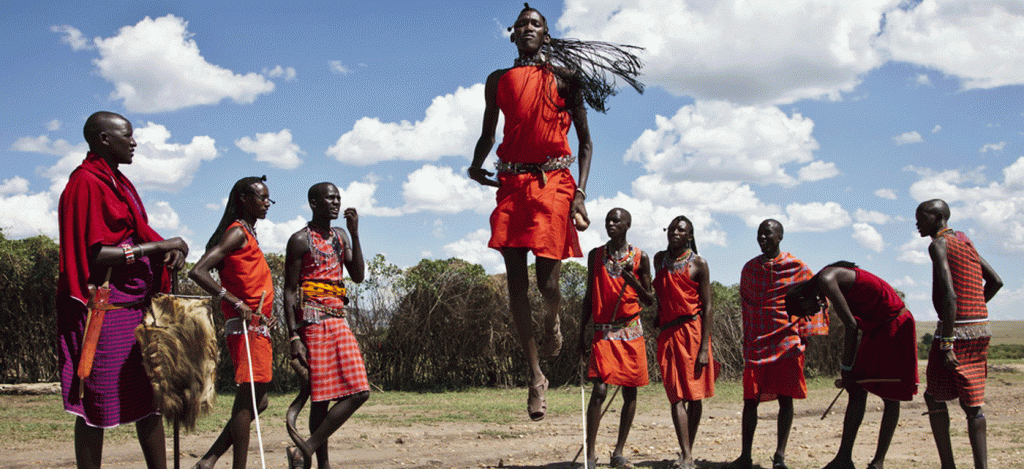
The Maasai people are one of the most iconic indigenous communities in East Africa and play an important cultural role in the Serengeti ecosystem. They have lived in and around this region for centuries maintaining a semi-nomadic pastoral lifestyle centered on cattle herding.
Maasai culture is deeply connected to nature and wildlife. Despite living alongside some of Africa’s most dangerous animals they have traditionally coexisted with wildlife rather than attempting to eliminate it. Their knowledge of the land, seasons and animal behavior has been passed down through generations.
Visiting a Maasai village during a Serengeti safari offers insight into this unique way of life. Visitors are often welcomed into traditional homesteads known as manyattas which are constructed using natural materials such as mud, sticks and cow dung. These structures are designed for both functionality and protection.
One of the most famous aspects of Maasai culture is their traditional dance especially the jumping ceremony known as “adumu,” performed by young warriors. This dance symbolizes strength, endurance and social status within the community. Maasai attire is also distinctive, featuring brightly colored shukas (cloth wraps) and intricate beadwork. Each color and pattern often carries cultural meaning related to age, status or role within the community.
Beyond cultural display the Maasai also contribute to conservation efforts. Many communities participate in eco-tourism initiatives helping protect wildlife while benefiting economically from tourism. Their presence is a reminder that human culture and wildlife conservation can coexist.
Staying Safe During a Serengeti Safari
A Serengeti Safari can remain safe and enjoyable when travelers respect wildlife, park rules and their guide’s instructions. Wild animals remain wild even when they appear calm around safari vehicles.
Always remain inside the vehicle unless your guide specifically confirms that you can leave it in a designated safe area. Never approach animals on foot, attempt to feed wildlife or encourage a driver to move aggressively toward an animal.
Keep your voice low around wildlife and avoid sudden movements that could disturb animals. Your guide understands animal behavior and can determine an appropriate viewing distance.
At camps and lodges follow staff instructions regarding walking after dark. Some properties operate in unfenced wilderness areas where wildlife can move through the surroundings.
TANAPA provides specific regulations for activities such as Mara River migration viewing. During possible crossings vehicles must follow designated arrangements and remain in approved viewing areas rather than approaching animals directly.
Weather can also influence safari safety. Heavy rainfall may affect some roads while strong sun can cause dehydration. Drink enough water and protect yourself from excessive sun exposure.
Listen carefully to your guide during every game drive. Your guide knows the local environment, animal behavior, road conditions and park regulations.
Responsible behavior protects both travelers and wildlife. The goal of a safari should never involve getting dangerously close to an animal simply for a photograph.
Safari etiquette and why serengeti is unique
Proper safari etiquette is essential in the Serengeti not only for visitor safety but also for the protection of wildlife and preservation of natural behavior. The fundamental rule is respect respect for animals, environment and local culture.
Visitors are expected to remain inside safari vehicles unless instructed otherwise by guides. Approaching animals too closely can disrupt their natural behavior and create dangerous situations. Silence is important during wildlife sightings as noise can disturb or alter animal activity.
Littering is strictly prohibited. Everything brought into the park must be taken out, as even small waste can harm animals and disrupt the ecosystem. Photography should be done responsibly, avoiding flash and avoiding interference with animal behavior. Guides play a critical role in maintaining safety and ensuring ethical conduct. Their instructions should always be followed as they understand animal behavior and environmental risks.
What makes the Serengeti truly unique is its scale, ecological integrity and natural authenticity. Unlike many wildlife destinations the Serengeti operates as a fully functional ecosystem without artificial feeding, fencing or human control over animal movement.
The Great Migration alone sets it apart as one of the greatest natural events on Earth. Millions of animals move across vast landscapes in a continuous cycle driven purely by survival needs. The unpredictability of wildlife encounters also adds to its uniqueness. No two safaris are ever the same and every experience depends on natural conditions.
Ultimately the Serengeti is not just a destination but a living system that reveals the raw structure of life on Earth. It represents freedom, survival and ecological balance at the highest level.
Responsible and Sustainable Serengeti Tourism
Responsible tourism helps protect the Serengeti for wildlife, local communities, guides and future visitors. Every traveler can contribute through simple decisions.
Start by respecting park regulations. Remain on approved roads and viewing areas where required, avoid disturbing animals and follow instructions from guides and park authorities.
Do not litter. Carry reusable water bottles where practical and dispose of waste correctly. Avoid removing plants, rocks, feathers or other natural materials from protected areas.
Photography also requires responsibility. Never pressure your guide to chase animals, block another vehicle or approach wildlife inappropriately for a better photograph.
Choose operators that employ professional local guides and support communities around Tanzania’s protected areas. Local employment helps tourism generate benefits beyond accommodation and transport.
Cultural experiences should also respect local people. Ask before taking photographs of individuals and approach cultural interactions as opportunities to learn rather than as staged entertainment.
The Serengeti’s importance extends beyond tourism. UNESCO recognizes the park for its exceptional natural value, biodiversity and major wildlife migration.
Travelers therefore have a role in protecting the ecosystem. Responsible tourism does not mean sacrificing enjoyment. Instead it creates a better safari by encouraging respectful wildlife observation and supporting conservation.
Serengeti Travels can help travelers plan journeys that combine memorable wildlife experiences with responsible safari practices.
Serengeti Safari Photography Tips
The Serengeti provides extraordinary opportunities for wildlife photography but successful images require more than expensive equipment. Patience, light, positioning and animal behavior often matter more than camera price.
Start by understanding the light. Early morning and late afternoon often create attractive natural lighting conditions while also coinciding with active wildlife periods.
Use a suitable telephoto lens if you want close-up wildlife photographs without approaching animals. A wider lens can help capture the surrounding landscape and show animals within their environment.
Keep your camera ready during interesting sightings. Wildlife can change behavior quickly and important moments may last only a few seconds.
Ask your guide about positioning. Experienced guides understand animal behavior and can help you find responsible viewing positions without disturbing wildlife.
Avoid excessive reliance on zooming and cropping. A photograph that includes the animal’s surroundings can communicate the scale of the Serengeti more effectively than a tightly cropped portrait.
Protect your equipment from dust. Keep lenses and cameras covered when you travel along dusty roads and carry cleaning materials designed for camera equipment.
Backup your photographs whenever possible. A portable storage solution or secure cloud backup can protect important images during longer trips.
Most importantly remember to experience the moment without constantly looking through your camera. Some of the most memorable Serengeti experiences happen when you put the camera down and simply observe.
Choosing a Serengeti Safari Operator
Choosing the right safari operator can influence your entire Serengeti experience. Start by examining whether the company provides clear information about its itineraries, accommodation, transportation, inclusions, exclusions and cancellation conditions.
Look for a safari company with experienced local guides. A knowledgeable guide can transform a simple game drive into an educational experience by explaining animal behavior, ecology, landscapes, conservation and local history.
Check whether the company uses suitable safari vehicles. A reliable 4×4 with a pop-up roof, comfortable seating, charging facilities and appropriate safari equipment can make long game drives easier.
Ask questions before booking. Confirm pickup arrangements, accommodation locations, park fees, meals, guide services, transfers, internal flights and optional activities.
You should also check whether the operator creates private or shared safaris. Private trips provide greater flexibility while shared safaris can reduce the cost.
A local Tanzania-based operator can also provide practical knowledge about seasonal wildlife movements, road conditions, accommodation locations and logistics.
Serengeti Travels operates from Arusha and focuses on Tanzania safari experiences, including private safaris, migration trips, budget journeys, mid-range itineraries, luxury experiences and customized routes.
Do not choose an operator solely because it advertises the lowest price. Compare what each quotation actually includes.
A clear itinerary and transparent quotation can help prevent unexpected costs and misunderstandings.
Sample Serengeti Safari Itineraries
A three-day itinerary can focus primarily on central Serengeti. Travelers can depart from Arusha, travel toward the Serengeti, spend time on game drives and return through the northern Tanzania circuit. This option works well for visitors with limited time.
A four-day itinerary can provide more flexibility. You can combine Tarangire or Ngorongoro with Serengeti while still allowing meaningful game-drive time inside the park.
A five-day itinerary can create a deeper Serengeti experience. You can spend multiple nights in different regions or remain longer in one area to follow wildlife activity.
A seven-day itinerary provides even greater flexibility. Travelers can combine several destinations while dedicating multiple days to Serengeti wildlife. This duration works particularly well for travelers who want to photograph wildlife, follow migration movements or explore different landscapes.
Migration-focused itineraries should prioritize the region where the herds are likely to be during your travel dates. Since rainfall determines animal movements your operator should remain flexible rather than promising an exact location months ahead.
For calving-season travelers southern Serengeti and Ndutu can form the central focus. For later migration activity, western or northern regions may become more appropriate.
Your itinerary should also avoid excessive driving. Spending fewer nights in too many destinations can reduce the amount of time you actually spend observing wildlife.
Serengeti Travels can customize safari duration, accommodation, transportation and destinations around your interests and budget.
Serengeti Safari for Couples and Honeymooners
A Serengeti honeymoon safari combines wildlife adventure with peaceful moments in one of Tanzania’s most spectacular landscapes. Couples can enjoy private game drives, comfortable accommodation, sunset experiences, photography and carefully planned romantic moments.
Private safari arrangements allow couples to control their daily schedule more easily. Instead of following a fixed group itinerary you can discuss your preferred departure times, wildlife interests, photography stops and pace with your guide.
Accommodation also shapes the honeymoon experience. Luxury tented camps and lodges can provide private spaces, scenic surroundings, quality dining and personalized service. Mid-range properties can provide comfort while keeping the overall journey more affordable.
The Serengeti works particularly well for couples who want adventure rather than a conventional beach holiday. You can spend the morning searching for predators, enjoy lunch in camp, relax during the afternoon and continue with another game drive later.
Combining Serengeti with Ngorongoro can create a broader northern Tanzania honeymoon. Couples can also extend their journey to Zanzibar if they want to finish their safari with time on the coast.
Timing matters. Couples interested in calving can consider January through March while travelers interested in migration activity can plan around the expected seasonal movements.
A honeymoon safari should maintain a comfortable pace. Avoid filling every day with long drives and activities. Leave enough time to relax, enjoy your accommodation and appreciate the landscape together.
Serengeti Safari for Families
Families can enjoy the Serengeti when they select an itinerary that matches the children’s ages, interests and comfort levels. A well-planned family safari balances wildlife viewing with rest and manageable travel times.
Private safaris often provide families with greater flexibility. Parents can discuss suitable departure times, meal arrangements, breaks and game-drive duration with their guide.
Children can learn about wildlife through observation. Guides can explain tracks, animal behavior, ecosystems, conservation and geography in an age-appropriate way.
Accommodation should provide family-friendly room configurations and suitable facilities. Families should confirm child policies and age requirements before booking because properties can apply different rules.
Avoid creating an itinerary with excessive daily driving. Children may enjoy wildlife more when the journey provides enough time for rest between activities.
Bring comfortable clothing, sun protection, water, snacks where permitted and entertainment for longer transfers.
Parents should also explain safari safety rules before entering the park. Children need to understand why they must remain inside the vehicle, avoid loud noises and listen carefully to the guide.
The experience can become educational as well as adventurous. A child who watches elephants interact, observes lions resting or sees thousands of wildebeest moving across the plains can develop a lasting appreciation for wildlife conservation.
Families should also consider the best season for their interests. Green landscapes, birdlife, calving and migration all provide different experiences.
A carefully paced family Serengeti Safari can create memorable experiences while helping children develop respect for nature.
Frequently Asked Questions About a Serengeti Safari
1. What is the best time to visit the Serengeti?
The best time depends on what you want to experience. January to March is important for calving in the southern Serengeti, while June and July can offer migration activity in western and central areas. July to October can provide opportunities to see migration activity in the northern Serengeti and around the Mara River.
2. How many days do you need for a Serengeti Safari?
A three-day safari can work well for travelers with limited time while four to five days provide more flexibility. A six- to eight-day itinerary allows travelers to explore several regions and potentially combine the Serengeti with destinations such as Ngorongoro and Tarangire.
3. How do you get to the Serengeti?
Travelers can reach the Serengeti by road from Arusha or by domestic flight to one of the safari airstrips. Road safaris allow visitors to combine the Serengeti with other northern Tanzania destinations while flights reduce driving time.
4. Where is Serengeti National Park located?
Serengeti National Park is located in northern Tanzania and forms part of the larger Serengeti-Mara ecosystem which extends toward Kenya’s Maasai Mara.
5. How large is the Serengeti?
Serengeti National Park covers approximately 14,750 square kilometers. The wider Serengeti ecosystem extends to nearly 30,000 square kilometers when surrounding conservation areas and reserves are included.
6. What animals can you see in the Serengeti?
Visitors can see lions, leopards, cheetahs, elephants, buffaloes, rhinoceroses, wildebeest, zebras, giraffes, hippos, hyenas, gazelles, antelopes and many other species. The park also supports more than 500 bird species.
7. Can you see the Big Five in the Serengeti?
Yes. The Serengeti supports the Big Five: lion, leopard, elephant, buffalo and rhinoceros. However, wildlife sightings are never guaranteed and rhino sightings can be particularly uncommon.
8. What is the Great Wildebeest Migration?
The Great Wildebeest Migration is the seasonal movement of large herds of wildebeest and other herbivores through the Serengeti and into Kenya. The animals respond primarily to rainfall, fresh grass and water availability.
9. When is the Serengeti calving season?
Calving season generally occurs between January and March, particularly across the southern Serengeti and Ndutu area. This period attracts large numbers of predators because of the abundance of newborn wildebeest.
10. When can you see river crossings in the Serengeti?
River-crossing activity is generally associated with migration movements in the northern Serengeti around the Mara River and in the western Serengeti around the Grumeti River. The exact timing cannot be guaranteed because crossings depend on natural conditions and animal behavior.
11. Are Serengeti river crossings guaranteed?
No. River crossings are completely natural events. Herds may wait for hours or days before crossing, change direction or use another crossing point.
12. What are the main safari areas in the Serengeti?
The main areas include Central Serengeti and Seronera, the Western Corridor, Northern Serengeti and Southern Serengeti and Ndutu. Each region offers different landscapes and seasonal wildlife opportunities.
13. What is the best area for a first Serengeti Safari?
Central Serengeti, particularly the Seronera area, provides year-round wildlife opportunities and diverse habitats. It can be a practical choice for first-time visitors seeking a broad wildlife experience.
14. What activities can you do in the Serengeti?
Common activities include game drives, wildlife photography, birdwatching, walking experiences where permitted, cultural experiences and hot-air balloon safaris where available and permitted.
15. Are walking safaris safe in the Serengeti?
Walking safaris are conducted under professional guidance and in designated areas. Trained guides and where required armed rangers accompany participants. Travelers should always follow their guide’s safety instructions.
16. What is a Serengeti hot-air balloon safari like?
A hot-air balloon safari usually begins before sunrise and provides an aerial view of the Serengeti’s plains and wildlife. Flights are followed by a bush breakfast and require additional planning and fees.
17. What types of accommodation are available in the Serengeti?
Accommodation ranges from public campsites and budget tented camps to mid-range lodges, permanent tented camps and luxury lodges or exclusive tented camps.
18. How much does a Serengeti Safari cost?
The cost depends on factors such as the number of days, accommodation level, transportation, season, group size, activities and the number of parks included. Travelers should also check whether park fees, meals, transfers, flights and other charges are included.
19. Is a budget Serengeti Safari possible?
Yes. Budget safaris can use designated public campsites and shared 4×4 vehicles to reduce costs. They focus on the essential wildlife experience while offering simpler accommodation and services.
20. What is a mid-range Serengeti Safari?
A mid-range safari combines comfortable accommodation, private or smaller-group arrangements and quality services without the higher costs associated with luxury travel. Options often include comfortable lodges and tented camps with private facilities.
21. What does a luxury Serengeti Safari include?
Luxury safaris can include high-end lodges or tented camps, private vehicles, experienced guides, personalized services, premium dining and optional experiences such as balloon flights or private bush dinners.
22. What should I pack for a Serengeti Safari?
Pack lightweight comfortable clothing, a warm layer for cool mornings, suitable footwear, sunglasses, a hat, sunscreen, insect protection, personal medication, travel documents and photography equipment if required. Check luggage limits if your itinerary includes internal flights.
23. Is the Serengeti safe for tourists?
A Serengeti Safari can be safe when visitors follow park regulations and their guide’s instructions. Stay inside the vehicle unless your guide permits you to leave in a designated area, never approach wildlife and follow safety procedures at camps and lodges.
24. Can families go on a Serengeti Safari?
Yes. Families can enjoy the Serengeti by choosing an itinerary suited to the children’s ages, interests and comfort levels. Private safaris can provide greater flexibility for departure times, breaks, meals and game-drive duration.
25. Is the Serengeti suitable for honeymooners?
Yes. Couples can combine private game drives, comfortable accommodation, scenic landscapes, photography and personalized experiences. The Serengeti can also be combined with Ngorongoro or Zanzibar for a longer honeymoon itinerary.
26. What should I look for when choosing a Serengeti Safari operator?
Check the company’s itineraries, accommodation, transportation, inclusions, exclusions and cancellation conditions. Also consider the experience of its local guides the quality of its safari vehicles and whether its quotations clearly explain all costs.
27. Can Serengeti Safari itineraries be customized?
Yes. Safari duration, accommodation, transportation, destinations and activities can be adjusted according to your interests, available time and budget.
28. What makes the Serengeti unique?
The Serengeti combines vast landscapes, diverse habitats, abundant wildlife, seasonal migration and a functioning natural ecosystem. Its wildlife movements are largely shaped by rainfall, grazing conditions and natural survival patterns.
29. How can I practice responsible tourism in the Serengeti?
Follow park regulations, remain on approved roads and viewing areas, avoid disturbing wildlife, do not litter and respect local communities. Travelers should also avoid pressuring guides to approach animals or chase wildlife for photographs.
30. Can I take photographs during a Serengeti Safari?
Yes. The Serengeti offers excellent opportunities for wildlife and landscape photography. Early morning and late afternoon often provide attractive light while telephoto lenses allow photographers to capture wildlife without approaching animals.
31. Can I guarantee seeing the Great Migration?
No. Migration movements depend on rainfall, grazing conditions, water availability and animal behavior. A well-planned itinerary can target likely migration areas but exact sightings cannot be guaranteed.
32. Why should I spend more than one night in the Serengeti?
Spending several nights gives you more time for game drives, exploration and wildlife observation. It also provides greater flexibility when animal movements change or when you want to explore different areas of the park.
33. Can I combine the Serengeti with other Tanzania destinations?
Yes. A Serengeti Safari can be combined with destinations such as Tarangire National Park and the Ngorongoro Conservation Area. Couples may also extend their journey to Zanzibar.
34. What is the role of local guides on a Serengeti Safari?
Local guides help travelers understand wildlife behavior, ecology, landscapes, conservation and seasonal movements. They also provide practical knowledge about routes, road conditions and responsible wildlife viewing.
35. Why choose Serengeti Travels for a Serengeti Safari?
Serengeti Travels operates from Arusha and provides Tanzania safari experiences including private safaris, migration trips, budget journeys, mid-range itineraries, luxury experiences and customized routes. The company can tailor safari duration, accommodation, transportation and destinations to different travel needs.
Conclusion
A Serengeti safari is one of the most powerful and transformative travel experiences in the world. It goes far beyond traditional tourism offering a direct encounter with one of the oldest and most complete ecosystems on the planet. The Serengeti is not designed for human entertainment it is a functioning natural system where life operates according to instinct, survival and ecological balance.
Throughout the experience visitors witness nature in its purest form. Massive herds move across endless plains, predators hunt according to survival needs and seasonal cycles shape the rhythm of life. The Great Migration alone demonstrates the scale and complexity of this ecosystem showing how millions of animals depend on natural patterns that have existed for thousands of years.
What makes the Serengeti especially impactful is its unpredictability. There are no guarantees in wildlife viewing. Every moment is shaped by natural forces rather than human planning. This uncertainty creates a deeper appreciation for patience, observation and respect for the natural world.
The Serengeti also has a strong conservation and cultural dimension. Tourism plays a vital role in protecting wildlife and supporting local communities such as the Maasai. Responsible travel ensures that this ecosystem continues to exist for future generations. Beyond wildlife the Serengeti changes perception. Many visitors leave with a new understanding of nature realizing how interconnected life truly is. It strips away the artificial pace of modern life and replaces it with a slower more natural rhythm.
In the end a Serengeti safari is not just about seeing animals. It is about experiencing a world where nature still leads, where ecosystems function without interference, and where life unfolds in its most authentic form. It is a reminder of what the planet once was and what must be preserved for the future