 English
 Deutsch
 Italia
December 16, 2025
Serengeti Predators: Where and How to Spot Them on Safari Safely
Introduction
Serengeti Predators: Where and How to Spot Them on Safari Safely offers travelers an exciting way to understand one of Africa’s most remarkable wildlife ecosystems. The Serengeti supports an extraordinary range of predators, including lions, leopards, cheetahs, spotted hyenas and several smaller carnivores. These animals play essential roles in maintaining the balance of the ecosystem by controlling prey populations and competing for food across the vast plains. Lions for example thrive particularly well in open savanna because the landscape gives them opportunities to stalk grazing animals.
A Serengeti safari allows you to observe these predators in their natural environment rather than in controlled surroundings. However wildlife viewing requires patience, responsible behavior and respect for the animals. Predators remain wild animals, even when they appear relaxed around safari vehicles. Your guide should therefore control the vehicle’s position, speed and distance throughout every encounter.
The Serengeti also changes dramatically throughout the year. Seasonal rainfall influences grass growth, prey movements, water availability and predator activity. As wildebeest, zebras, gazelles and other herbivores move across the ecosystem predators adjust their movements to follow available opportunities.
Serengeti Travels helps visitors experience these encounters responsibly by combining knowledgeable local guides with carefully planned game drives. Instead of simply searching for the biggest animal, travelers can learn how predators communicate, hunt, rest, protect their young and interact with competing species.
Understanding predator behavior before your safari makes every sighting more meaningful. You begin to recognize tracks, resting places, prey concentrations, alarm behavior and other clues that help your guide locate wildlife while maintaining a safe distance.
The Main Predators You Can See in the Serengeti
The Serengeti contains several important predators but five species usually attract the greatest attention from safari travelers: lions, leopards, cheetahs, spotted hyenas and African wild dogs where present. Each predator uses a different hunting strategy and prefers different habitats so understanding these differences can significantly improve your wildlife-viewing experience.
Lions represent one of the Serengeti’s most recognizable predators. Unlike many other big cats, lions live socially and often form prides. They commonly use open grasslands where their prey congregates and where they can coordinate hunting behavior. WWF describes lions as apex predators that help regulate herbivore populations within savanna ecosystems.
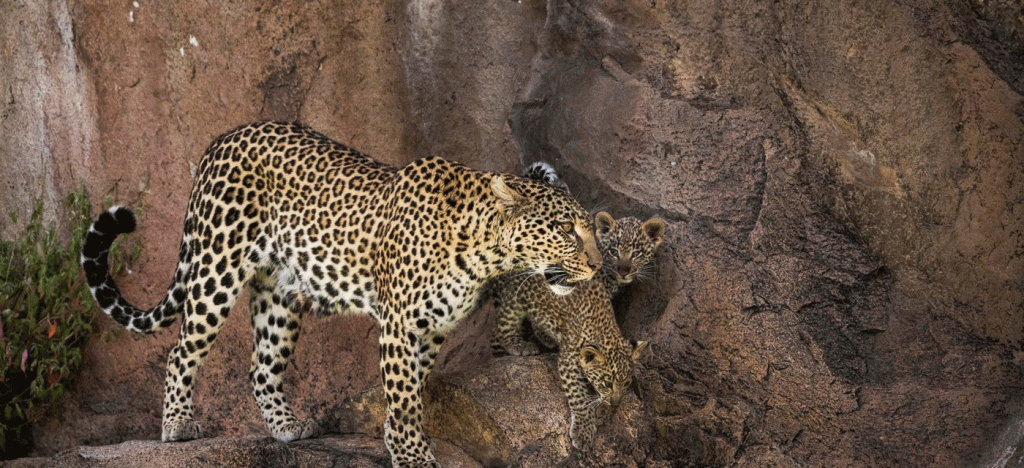
Leopards follow a completely different lifestyle. They often remain solitary and rely heavily on camouflage, patience and cover. Their spotted coats can make them surprisingly difficult to see among rocks, bushes and trees. A leopard resting on a branch may remain almost invisible until your guide identifies its outline.
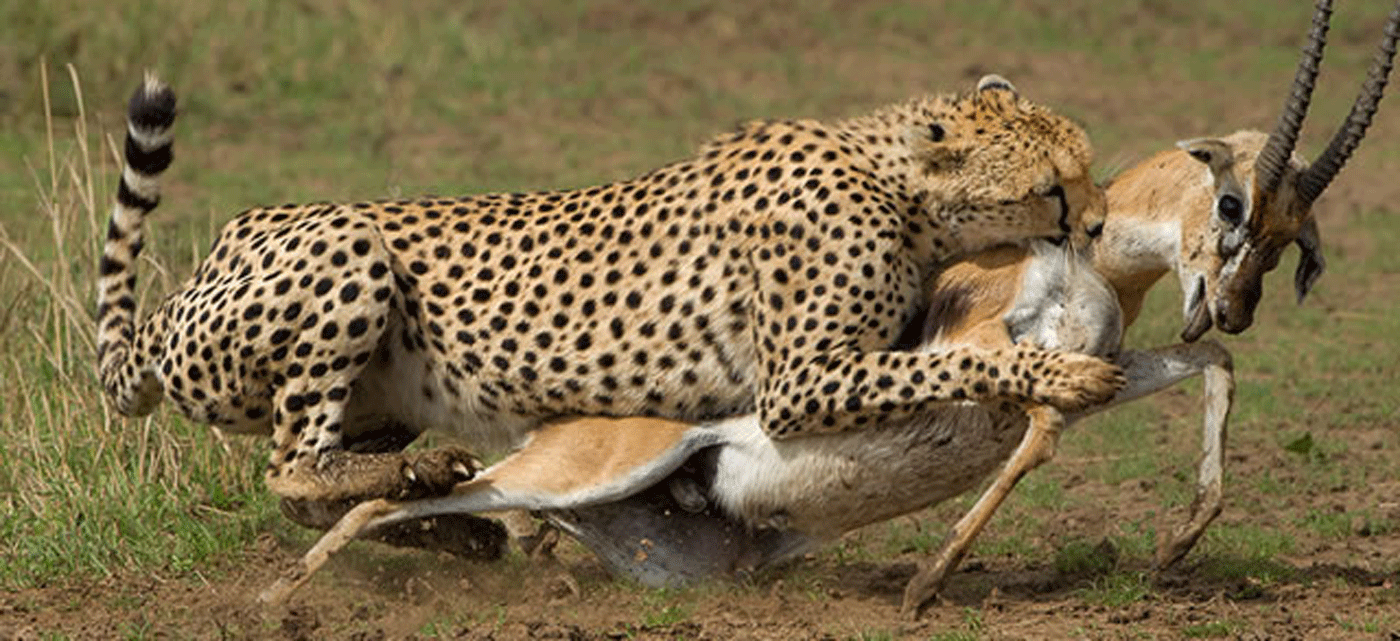
Cheetahs specialize in speed. They generally hunt smaller ungulates and often use open terrain where they can observe potential prey. Their long legs, flexible bodies and specialized paws help them reach remarkable speeds.
Spotted hyenas also deserve far more respect than their traditional “scavenger” reputation suggests. They actively hunt a significant proportion of their food and use powerful jaws and coordinated social behavior to secure prey.
Learning these differences allows you to appreciate predators as individual species rather than simply viewing them as dangerous animals.
Where to Spot Lions in the Serengeti
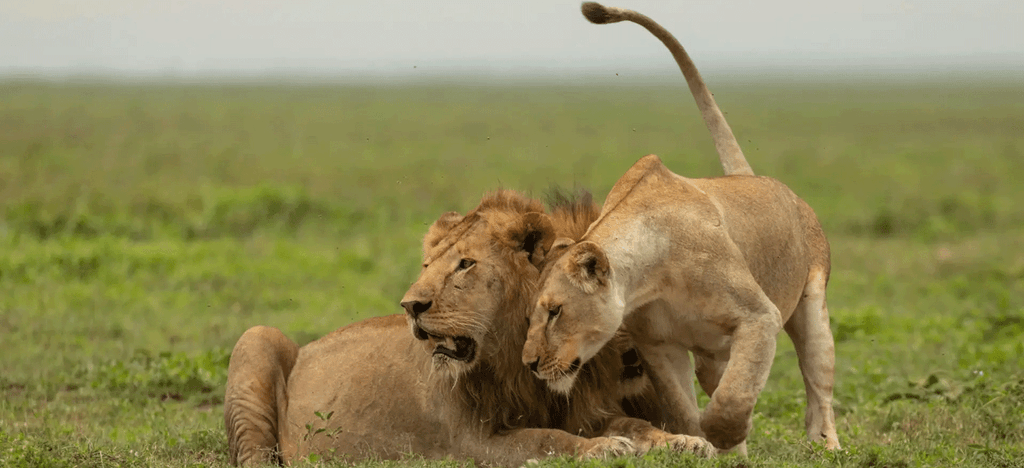
In Serengeti Predators Lions remain among the most sought-after predators on a Serengeti safari and their preference for open savanna often makes them easier to locate than more secretive cats. They can move across extensive territories but certain environmental conditions can make sightings particularly rewarding.
Central Serengeti, especially around the Seronera area provides excellent opportunities to search for lions because the region combines open plains, scattered vegetation, water sources and abundant prey. Lions may rest beneath trees or bushes during warmer periods before becoming more active when temperatures decline.
You may also encounter lions across the Southern Serengeti particularly where seasonal concentrations of wildebeest and other herbivores provide abundant food. During the calving season the presence of vulnerable young prey can create significant predator activity. However wildlife movement remains unpredictable so no responsible operator should promise a guaranteed sighting.
Northern Serengeti also supports lions especially around areas where prey gathers near permanent or seasonal water sources. Rocky outcrops and river systems can provide useful resting and observation points.
The best strategy involves allowing your guide to read the landscape. Lions may leave tracks, vocalize, gather near prey or attract attention from other animals. Zebra and wildebeest sometimes react strongly when predators approach giving experienced guides useful clues.
Lions often spend considerable time resting, so patience matters. A quiet lion under a tree can become remarkably active when temperatures fall or prey approaches.
During your sighting remain inside the safari vehicle unless your guide specifically instructs otherwise. Never attempt to attract a lion’s attention, imitate its sounds, shout toward it or move closer independently. Responsible viewing protects both travelers and wildlife.
Where to Find Leopards in the Serengeti
Leopards provide one of the most rewarding predator sightings because their secretive behavior makes every encounter feel like a discovery. Unlike lions leopards often avoid open areas during the hottest parts of the day and use vegetation, rocky landscapes and trees to remain concealed.
The Central Serengeti offers opportunities to search for leopards around riverine vegetation and wooded areas. The Seronera region contains habitats that can provide suitable cover while scattered trees give leopards places to rest above the ground.
Leopards sometimes climb trees after feeding allowing them to protect food from competing predators. Their ability to remain motionless and blend into branches makes them difficult to detect without an experienced guide. A guide may notice an unusual shape, tail movement or pair of eyes long before passengers recognize the animal.
Northern Serengeti can also provide leopard sightings particularly around areas with vegetation and watercourses. However leopard distribution changes constantly so your guide should search according to current wildlife activity rather than follow a fixed location.
Early morning and late afternoon can provide useful opportunities because predators often become more active when temperatures become cooler. Even so leopards can move at different times and sightings depend on many environmental factors.
When you find one avoid sudden movements and excessive noise. Give the leopard space and allow your guide to position the vehicle responsibly. Do not pressure the driver to move closer simply because another vehicle appears nearer.
The best leopard encounters often happen when travelers slow down and observe behavior rather than concentrating entirely on photography. Watch how the animal scans its surroundings, moves through vegetation, climbs, rests or responds to nearby prey.
Where and How to Spot Cheetahs in the Serengeti
In Serengeti Predators Cheetahs create some of the most exciting wildlife encounters in the Serengeti because they combine remarkable speed with a distinctive hunting strategy. They usually favor relatively open landscapes where they can scan for prey and use their speed during a chase. WWF identifies grasslands among their major habitats and notes that cheetahs commonly hunt smaller ungulates.
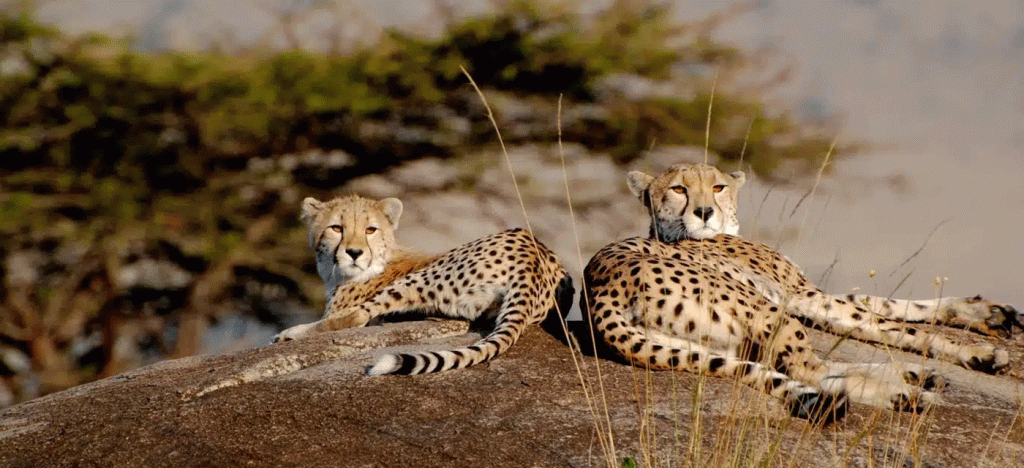
The Southern Serengeti provides important opportunities to search for cheetahs especially across open plains where seasonal concentrations of prey occur. Central Serengeti can also produce sightings particularly around open grassland habitats.
Unlike lions cheetahs generally do not depend on large social groups. Females often live alone or with dependent cubs while males may live alone or form small coalitions. This behavior means you may see a single cheetah sitting quietly on a small rise rather than a large group.
Your guide may scan termite mounds, low ridges, grassland edges and open plains because elevated positions allow cheetahs to survey their surroundings. Other animals can also provide clues. Gazelles may become alert when a predator approaches while birds can sometimes react to activity nearby.
Morning and late afternoon often offer useful opportunities because temperatures become more comfortable and prey becomes active. However cheetah behavior can change according to weather, prey availability and disturbance.
Never ask your driver to chase a cheetah or position the vehicle aggressively during a potential hunt. Such behavior can disturb the animal and interfere with natural wildlife behavior. Instead allow the predator to decide where it moves.
A successful cheetah sighting does not require witnessing a chase. Watching a cheetah observe its surroundings, interact with another individual or care for young can provide an equally memorable experience.
Where to Spot Spotted Hyenas in the Serengeti
In Serengeti Predator Spotted hyenas occupy an important position within the Serengeti ecosystem. Although people often describe them as scavengers, they are capable hunters and obtain much of their food through active predation. WWF notes that spotted hyenas can hunt during both day and night and may kill much of their own prey.
You can encounter hyenas across many Serengeti habitats because they adapt well to grasslands, savannas, shrublands and other environments. Their social structure makes them particularly fascinating to observe. Hyenas live in clans with complex dominance systems and females generally hold higher social status than males.
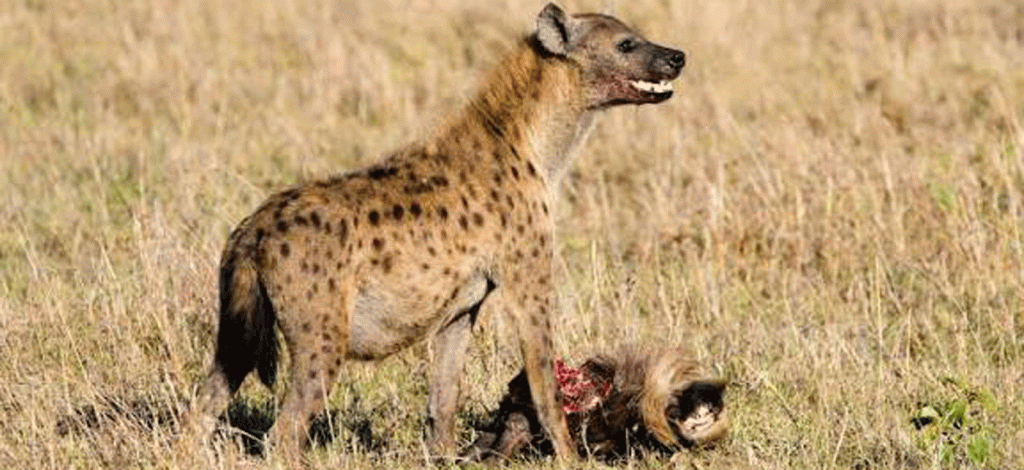
Central Serengeti offers frequent opportunities to observe hyenas particularly around areas where prey concentrations support predator activity. You may also find them near dens where adults care for young. However guides should always prioritize animal welfare and avoid disturbing denning sites.
Hyenas may appear alone while moving through the landscape, while larger gatherings can occur around food, territorial interactions or dens. Their vocal communication adds another dimension to sightings. Calls can help clan members communicate over distance and may indicate activity elsewhere.
The best way to understand hyenas involves observing their behavior rather than waiting for dramatic hunting scenes. Watch how individuals communicate, interact with clan members, move across the landscape or investigate potential food.
Keep your distance and remain inside the vehicle. Never attempt to feed a hyena or encourage it to approach. Human food can alter natural behavior and create dangerous wildlife interactions.
Respect also matters when photographing hyenas. Avoid excessive noise, sudden vehicle movements or attempts to block the animal’s route. A calm safari vehicle allows the animals to continue their natural activities without unnecessary disturbance.
Understanding Predator Behavior Before Your Safari
Understanding predator behavior can transform a normal game drive into a fascinating wildlife lesson. Instead of simply looking for a lion, leopard or cheetah you can begin interpreting what the animal does and why it behaves in a particular way.
Lions often spend long periods resting especially during warmer hours. They conserve energy between hunting opportunities so seeing a sleeping lion does not mean the animal lacks importance. Pay attention to changes in posture, ear movement, alertness and interactions with other pride members.
Leopards usually depend on stealth. Their solitary lifestyle and camouflage can make them difficult to locate. Look carefully at trees, bushes, rocky areas and shaded vegetation while following your guide’s observations.
Cheetahs depend heavily on visual detection. They may sit upright on small elevations while scanning surrounding grassland. Their hunting strategy relies on finding suitable prey and choosing the right opportunity rather than constantly chasing animals.
Hyenas rely heavily on social communication. Clan members may vocalize, gather around food, investigate scents or move between important areas. Their behavior can reveal information about territorial boundaries and social relationships.
Predators also respond to prey behavior. When large herds suddenly become alert, stare toward one direction, bunch together or begin moving rapidly a predator may be nearby.
Your guide can interpret these signs and explain what you are seeing. Ask questions about tracks, alarm calls, habitat, hunting strategies and social behavior. This approach helps you appreciate the entire ecosystem rather than focusing only on dramatic moments.
Remember that predators do not perform for tourists. Their behavior changes naturally according to weather, prey availability, competition, breeding and individual circumstances. The most ethical safari allows wildlife to determine the encounter.
How to Spot Serengeti Predators Safely
Safety should remain the foundation of every predator encounter. Even when an animal appears calm remember that you are observing a wild predator in its natural habitat. The safari vehicle provides an important layer of protection but your behavior still matters.
Always listen to your professional guide. Experienced guides understand animal behavior, vehicle positioning, terrain and park regulations. Follow their instructions whenever you approach predators or other potentially dangerous wildlife.
Remain inside the vehicle unless your guide confirms that leaving is safe and permitted. Never stand up suddenly, lean excessively outside the vehicle or attempt to approach an animal on foot. Even a seemingly relaxed predator can react quickly to unexpected movement.
Keep your voice low. Loud shouting, music or sudden noises can disturb wildlife. Silence also improves your own experience because you can hear animal calls and observe subtle movements.
Never attempt to attract predators toward your vehicle. Do not call, whistle, clap, throw objects or offer food. These actions can interfere with natural behavior and potentially create unsafe situations.
Maintain a respectful distance. Your guide should decide how close the vehicle should approach based on the animal’s behavior, terrain, other vehicles and applicable park rules.
Avoid blocking an animal’s route. If a predator begins walking toward or past the vehicle allow it enough space to move naturally. Do not force it to change direction for photography.
Finally remember that responsible wildlife viewing protects the future of safari tourism. Ethical encounters allow predators to behave naturally while giving travelers meaningful opportunities to observe them.
Best Times to See Predators in the Serengeti
Timing can influence predator sightings because different animals become active at different times of day. Early morning and late afternoon often provide excellent opportunities because temperatures are cooler and many predators become more active.
Morning game drives can reveal lions moving after a night of activity, cheetahs scanning open plains and hyenas returning from nocturnal movements. The softer morning light also creates excellent conditions for wildlife photography without requiring you to disturb the animals.
As the day becomes hotter many predators reduce their activity and seek shade. Lions may rest beneath trees or bushes while leopards can disappear into vegetation. These quieter periods still provide opportunities to observe natural behavior if you remain patient.
Late afternoon often brings another period of increased activity. As temperatures decline, predators may begin moving, hunting, communicating or searching for prey.
Nighttime presents different opportunities but requires specialized arrangements and must follow the rules of the specific protected area or concession. Travelers should never attempt independent night wildlife viewing.
Season also influences predator encounters. During periods when large herbivore populations concentrate in particular areas predators may gather around these food resources. The Great Migration can therefore create dramatic predator-prey interactions although wildlife movement remains unpredictable.
The green season can also provide excellent photographic conditions, with fresh vegetation and young animals adding variety to the landscape. Meanwhile drier periods can make wildlife easier to locate around remaining water sources and open habitats.
Rather than selecting a safari entirely around the promise of one predator sighting consider visiting for several days. More time in the ecosystem gives your guide more opportunities to locate animals and gives you more chances to observe different behaviors.
The Role of Your Safari Guide in Finding Predators
Your safari guide plays a crucial role in helping you find predators while maintaining responsible wildlife-viewing practices. A knowledgeable guide does far more than drive through the park and point at animals.
Guides learn to read tracks, animal movements, vegetation, terrain, bird behavior, prey concentrations and other environmental clues. They may recognize where predators commonly rest or understand how recent wildlife movements could affect your search.
For example a guide may notice fresh tracks crossing a road or observe a group of antelope staring toward dense vegetation. These clues can encourage a careful search without requiring the vehicle to disturb wildlife.
Communication between guides also helps safari vehicles share useful information about sightings. However responsible guides should still avoid creating excessive vehicle congestion around sensitive wildlife encounters.
A good guide also understands when to leave. If a predator becomes visibly disturbed, repeatedly changes direction or shows signs of stress the responsible response involves increasing distance rather than pursuing the animal.
Your guide can also teach you how to distinguish predators. A cheetah’s body shape differs significantly from a leopard’s, while lions and hyenas display completely different social structures and hunting strategies.
At Serengeti Travels travelers can use their safari experience to learn about the ecosystem rather than simply collect photographs. Asking your guide questions can make each sighting more educational.
Before your safari begins tell your guide what interests you most. If you enjoy photography, behavioral observation, conservation or wildlife tracking your guide can explain relevant features during the game drive.
Ultimately the best guide does not simply find animals. They help travelers understand them while keeping both passengers and wildlife safe.
Predator Encounters During the Great Migration
The Great Migration creates one of the Serengeti’s most remarkable predator-prey spectacles. Millions of wildebeest and large numbers of zebras and gazelles move through the greater Serengeti ecosystem in response to seasonal rainfall, fresh grass and water availability.
This movement creates changing opportunities for predators. Lions, cheetahs, hyenas and other carnivores may take advantage of concentrations of prey particularly when vulnerable young animals appear during calving periods.
The Southern Serengeti and Ndutu area can become especially interesting during the calving season. Young wildebeest create opportunities for predators while large herds attract multiple carnivore species.
Later in the year herds move toward the Western Corridor and Northern Serengeti. Predator sightings can change accordingly because carnivores respond to prey distribution rather than following a tourist schedule.
River crossings receive enormous attention but travelers should understand that crossings involve unpredictable wildlife behavior. A predator encounter may happen nearby but nobody can responsibly guarantee a specific hunting event.
The best approach involves viewing migration dynamics as an entire ecosystem. Watch the behavior of the herds, observe birds and other scavengers, look for predators along the edges and allow your guide to explain what happens naturally.
Do not encourage drivers to crowd animals during migration events. Excessive vehicle pressure can interfere with wildlife movement and reduce the quality of the experience for both animals and travelers.
A responsible safari focuses on observation rather than forcing dramatic moments. When predators hunt naturally, give them space and allow the encounter to unfold without interference.
Serengeti Travels can help travelers plan their safari around different migration seasons while considering accommodation preferences, travel time and the areas most relevant to their interests.
How to Photograph Serengeti Predators Responsibly
Photographing predators can create some of the most memorable safari images, but responsible photography should always come before getting a closer picture. The best photograph does not justify disturbing wildlife.
Use a camera with an appropriate zoom lens so you can capture details without asking your driver to move unnecessarily close. A longer lens also helps you photograph animals that remain at a respectful distance.
Keep your movements controlled inside the vehicle. Sudden movements can attract an animal’s attention or disturb its behavior. If you need to change position do so calmly and follow your guide’s instructions.
Avoid using flash around wildlife unless your guide and applicable rules specifically permit it. Flash can disturb animals particularly during sensitive situations.
Pay attention to behavior before taking photographs. A predator looking relaxed can provide a natural portrait while an animal showing signs of disturbance may indicate that you should stop photographing and increase distance.
Try photographing environmental scenes rather than only close-up portraits. Include grasslands, trees, rocky outcrops, prey species or other elements to show where the predator lives.
Patience often produces better results than constant shooting. Wait for natural moments such as a lion standing, a leopard looking through branches or a cheetah surveying the plains.
Do not ask your driver to block another vehicle or chase an animal for a better angle. Ethical photographers understand that wildlife has priority.
Your photographs should document a natural encounter rather than create one. By respecting the animal’s space and behavior you can produce powerful images while contributing to responsible safari tourism.
Common Mistakes to Avoid When Watching Predators
Travelers sometimes make simple mistakes that can reduce both safety and wildlife-viewing quality. Understanding these mistakes before your safari helps you avoid unnecessary problems.
The first mistake involves expecting every predator to remain active throughout the day. Lions may spend hours resting while leopards can remain hidden and cheetahs may move according to prey availability. Patience remains essential.
Another mistake involves asking the driver to move closer whenever another vehicle appears to have a better position. Your guide should determine safe positioning based on animal behavior and the surrounding environment.
Some travelers also make excessive noise. Shouting, calling animals or playing music can disturb wildlife and reduce the natural quality of the encounter.
Never attempt to feed predators. Human food changes natural behavior and can encourage animals to associate vehicles or camps with food.
Avoid leaving the vehicle simply because a predator appears far away. Distances can be deceptive and wild animals can move rapidly. Always follow your guide’s instructions.
Another mistake involves focusing entirely on photography. Looking through a camera for an entire encounter can prevent you from noticing social behavior, vocalizations, environmental clues and interactions with other animals.
Travelers should also avoid assuming that a particular location guarantees a sighting. Wildlife remains wild and unpredictable. Even areas known for predators can produce quiet game drives.
Finally avoid treating predators as entertainment. Every lion, leopard, cheetah or hyena represents a living part of the Serengeti ecosystem. Respecting the animal’s natural behavior creates a better experience and supports responsible conservation tourism.
Why Serengeti Predators Matter to the Ecosystem
Predators perform essential ecological functions within the Serengeti. They influence prey populations, shape animal behavior, compete for resources and contribute to the natural balance of the ecosystem.
Lions for example help regulate herbivore populations. Their presence affects where prey animals move and how they respond to potential threats. WWF describes lions as apex predators that play an important role in maintaining healthy savanna ecosystems.
Cheetahs contribute to the ecosystem through their specialized hunting strategy. They generally target smaller and more vulnerable prey adding another layer to predator-prey relationships.
Spotted hyenas perform both hunting and scavenging roles. Their powerful feeding abilities allow them to process parts of carcasses that many other predators cannot use. WWF also identifies them as important predators rather than simply scavengers.
Leopards contribute through their solitary hunting behavior and ability to use habitats that differ from those preferred by lions and cheetahs.
These predators also demonstrate why large connected landscapes matter. Large carnivores require extensive areas where they can find prey, establish territories, reproduce and move between habitats. Wildlife corridors can help connect important habitats and support predator populations.
When you observe predators during a Serengeti safari you are therefore witnessing more than an exciting wildlife encounter. You are watching ecological relationships that have developed over thousands of years.
Responsible tourism can support conservation by creating economic value around protecting wildlife and natural habitats. Travelers can contribute by choosing responsible safari operators, following park rules, respecting animals and avoiding activities that encourage unnatural wildlife behavior.
Planning a Serengeti Predator Safari With Serengeti Travels
Planning a predator-focused Serengeti safari requires more than choosing a destination and hoping to encounter a lion or cheetah. The length of your safari, season, route, accommodation and preferred wildlife areas can all influence the experience.
A longer safari generally provides more opportunities to explore different habitats and observe changing wildlife activity. A three-day itinerary can produce excellent sightings but additional days give you greater flexibility when predators remain hidden or move to another area.
Serengeti Travels can design private safari itineraries around your interests, whether you want to focus on predators, the Great Migration, photography, family wildlife experiences or a broader Tanzania safari.
The Central Serengeti provides an excellent year-round base for wildlife viewing while Southern Serengeti becomes particularly interesting during the calving period. Northern Serengeti can become important during later migration movements.
Accommodation level also influences the overall experience. Budget, mid-range and luxury options allow travelers to choose according to their priorities and travel budget.
You should also consider arrival and departure logistics. Many safaris begin in Arusha and travelers often benefit from arriving in Tanzania before the safari starts. If you plan to fly home from Kilimanjaro International Airport after the safari leave sufficient time between your safari return and international flight.
Your guide should remain central to the planning process. A professional local guide can adapt the daily game-drive strategy according to current sightings, weather, road conditions and wildlife movement.
Most importantly plan for wildlife rather than guaranteed photographs. The Serengeti rewards patience. Sometimes the most memorable encounter happens when you stop searching for a dramatic scene and simply watch a predator behave naturally.
Frequently Asked Questions About Serengeti Predators
1. What predators can you see in the Serengeti?
The main predators include lions, leopards, cheetahs and spotted hyenas. African wild dogs may also be seen where present. Each species has different hunting strategies, habitats and behaviors.
2. Where is the best place to see lions in the Serengeti?
Central Serengeti particularly around Seronera provides excellent opportunities to see lions because of its open plains, vegetation, water sources and abundant prey. Southern and Northern Serengeti can also offer sightings.
3. Where can you spot leopards in the Serengeti?
The Central Serengeti especially around riverine vegetation and wooded areas near Seronera provides opportunities to search for leopards. Northern Serengeti can also produce sightings around vegetation and watercourses.
4. Where can you see cheetahs in the Serengeti?
Southern Serengeti offers opportunities to search for cheetahs across open plains while Central Serengeti can also produce sightings in open grassland habitats.
5. What is the best time to see Serengeti predators?
Early morning and late afternoon often provide good opportunities because temperatures are cooler and many predators become more active. Predator activity can still vary according to weather, prey availability and other conditions.
6. Is it safe to watch predators during a Serengeti safari?
Yes when travelers follow responsible wildlife-viewing practices. Stay inside the safari vehicle when instructed, listen to your professional guide, keep noise low and maintain a respectful distance from predators.
7. Can you see predators during the Great Migration?
Yes. The movement of wildebeest, zebras and gazelles creates changing opportunities for lions, cheetahs, hyenas and other carnivores. However specific predator encounters cannot be guaranteed.
8. How does a safari guide help find predators?
Experienced guides read tracks, animal movements, vegetation, terrain, bird behavior and prey concentrations. They can also recognize signs such as antelope staring toward vegetation or fresh tracks crossing a road.
9. Can you photograph Serengeti predators safely?
Yes. Use an appropriate zoom lens, remain inside the vehicle, control sudden movements and avoid asking the driver to move unnecessarily close. Responsible photography should never disturb wildlife.
10. Should you leave the safari vehicle when you see a predator?
No. Travelers should remain inside the vehicle unless their guide confirms that leaving is safe and permitted. Distances can be deceptive and wild predators can move quickly.
11. Can you guarantee seeing a lion, leopard or cheetah in the Serengeti?
No. Wildlife remains unpredictable and sightings depend on animal movements, prey availability, weather and other environmental factors. Responsible safari operators should not promise a guaranteed predator sighting.
12. How many days should you spend on a predator-focused Serengeti safari?
A longer safari gives you more opportunities to explore different habitats and observe changing wildlife activity. While a three-day safari can produce excellent sightings additional days provide greater flexibility when predators move or remain hidden.
13. Why are predators important to the Serengeti ecosystem?
Predators help influence prey populations, shape animal behavior, compete for resources and maintain ecological balance. Lions, cheetahs, leopards and spotted hyenas each contribute to the ecosystem in different ways.
14. What should you avoid when watching Serengeti predators?
Avoid feeding animals, making loud noises, calling or attracting predators leaving the vehicle without permission, chasing wildlife or asking the driver to move aggressively for a better photograph.
15. Can Serengeti Travels arrange a predator-focused safari?
Yes. Serengeti Travels can design private safari itineraries around interests such as predators, the Great Migration, photography, family wildlife experiences or broader Tanzania safari experiences.
Conclusion
Serengeti Predators: Where and How to Spot Them on Safari Safely provides travelers with a deeper understanding of one of Africa’s most fascinating wildlife experiences. Lions, leopards, cheetahs and spotted hyenas each occupy different ecological roles and display distinctive behaviors that make every sighting unique.
The best predator safari combines patience, expert guiding, responsible vehicle positioning and respect for wildlife. You can improve your chances of seeing predators by exploring suitable habitats, traveling during productive wildlife periods spending several days in the ecosystem and paying attention to signs such as tracks, prey behavior, and animal vocalizations.
Safety should always remain more important than getting closer to an animal or capturing a dramatic photograph. Stay inside the vehicle when instructed, listen to your guide, avoid sudden movements and loud noises, never feed wildlife and give predators enough space to move naturally.
A predator sighting becomes even more meaningful when you understand what you are watching. A resting lion demonstrates energy conservation a leopard hidden in a tree demonstrates camouflage and stealth, a cheetah scanning the plains demonstrates its hunting strategy and a hyena clan reveals the complexity of social carnivores.
Serengeti Travels helps travelers experience these encounters while exploring the wider ecosystem of the Serengeti. With careful planning and responsible wildlife viewing, your safari can deliver unforgettable predator encounters without compromising the animals that make the Serengeti extraordinary.