 English
 Deutsch
 Italia
December 17, 2025
Serengeti Safari Photography: The Ultimate Guide to Capturing Stunning Wildlife Photos
Introduction
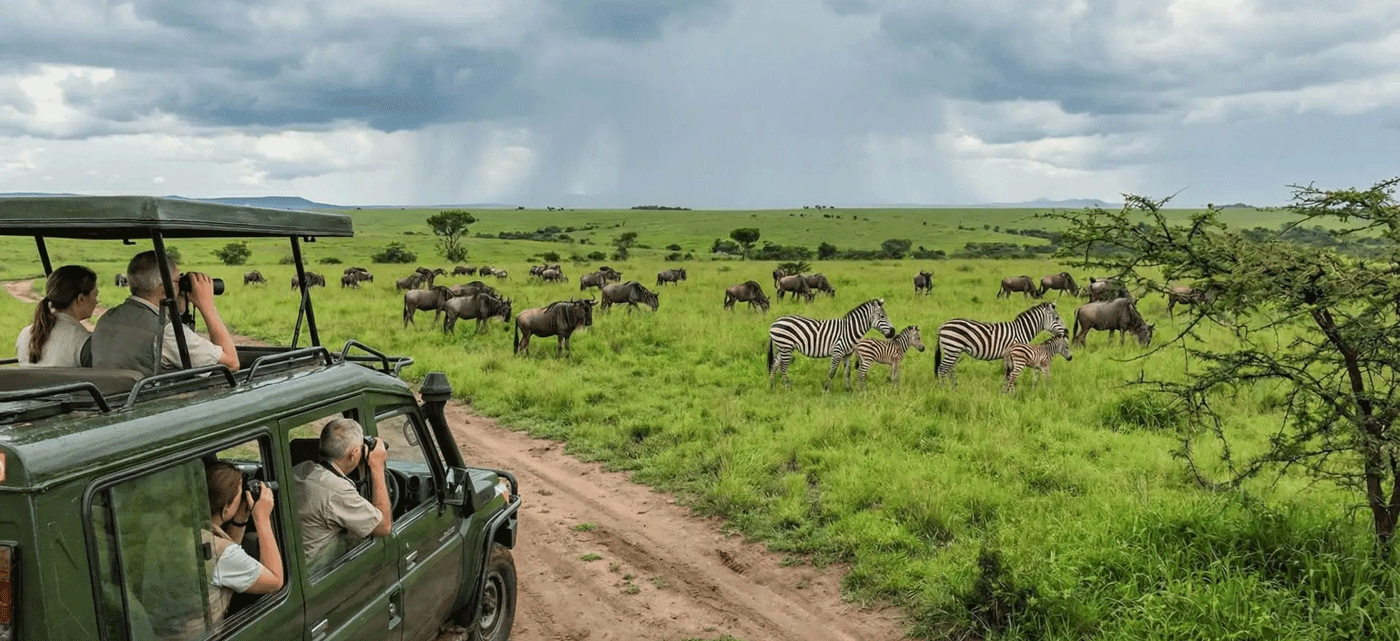
Serengeti Safari Photography gives travelers an exciting way to experience Tanzania’s extraordinary wildlife while creating photographs that preserve the atmosphere of the journey. The Serengeti combines enormous grasslands, dramatic skies, ancient kopjes, acacia trees and an incredible variety of wildlife. Every game drive can present a completely different photographic opportunity from a lion resting beneath a tree to a herd of wildebeest crossing an open plain.
Successful wildlife photography starts with observation rather than equipment. You need to understand how animals move, where they prefer to rest and how light changes throughout the day. When you observe carefully you can anticipate interesting moments instead of simply reacting after they happen. This approach helps you capture natural behavior and stronger compositions.
The Serengeti also rewards photographers who look beyond individual animals. A wide photograph can show an elephant moving across an enormous plain, while a close portrait can reveal the details of its face and skin. Both approaches tell different stories about the same destination.
Serengeti Travels helps travelers explore the Serengeti with experienced safari guides who understand wildlife behavior and local conditions. Their knowledge can help photographers spend more time observing animals and identifying promising photographic opportunities.
You do not need the most expensive camera to enjoy photography in the Serengeti. A smartphone can capture memorable moments, while a DSLR or mirrorless camera with a suitable lens can provide greater control. The most important factors include preparation, patience, timing, composition, and respect for wildlife.
With the right approach, your safari becomes more than a wildlife viewing experience. You can turn each game drive into an opportunity to create photographs that capture the movement, atmosphere, scale and beauty of the Serengeti.
Table of contents
- Introduction
- How to Capture the Perfect Wildlife Shot in Serengeti
- Choosing the Best Camera and Photography Equipment
- Best Camera Settings for Serengeti Wildlife Photography
- How to Use Light for Stunning Serengeti Photos
- How to Photograph the Big Five in Serengeti
- How to Capture the Great Migration
- Serengeti Photography Composition Tips
- How to Photograph Serengeti Landscapes
- Best Places and Times for Photography in Serengeti
- Photography Tips for Beginners on Safari
- How to Photograph Wildlife Responsibly
- Common Serengeti Safari Photography Mistakes to Avoid
- Frequently Asked Questions About Serengeti Safari Photography
- 1. What is the best camera for Serengeti Safari Photography?
- 2. What lens is best for wildlife photography in the Serengeti?
- 3. What are the best camera settings for Serengeti wildlife photography?
- 4. What is the best time of day for Serengeti Safari Photography?
- 5. Can beginners take good photographs in the Serengeti?
- 6. How do I photograph the Big Five in the Serengeti?
- 7. How can I photograph the Great Migration?
- 8. How can I protect my camera from dust during a Serengeti safari?
- 9. Do I need an expensive camera for Serengeti Safari Photography?
- 10. How can I photograph Serengeti landscapes?
- 11. What is the best way to photograph wildlife responsibly?
- 12. Can I use a smartphone for Serengeti Safari Photography?
- 13. What equipment should I bring for safari photography?
- 14. How can I improve my wildlife photography composition?
- 15. What are the most common Serengeti Safari Photography mistakes?
- 16. Which Serengeti areas are good for photography?
- 17. How important is a safari guide for photography?
- 18. How can I capture better wildlife photographs during a safari?
- 19. Is the Serengeti good for landscape photography?
- 20. How can Serengeti Travels help with safari photography?
- Final Thoughts: Capturing the Ultimate Serengeti Safari Experience
How to Capture the Perfect Wildlife Shot in Serengeti
Capturing the perfect wildlife photograph requires patience, timing and careful observation. During Serengeti Safari Photography animals rarely behave according to a photographer’s schedule. A lion may remain still for several minutes before suddenly standing, walking or interacting with another member of its pride. Instead of putting your camera away when nothing happens, stay prepared and watch the animal closely.
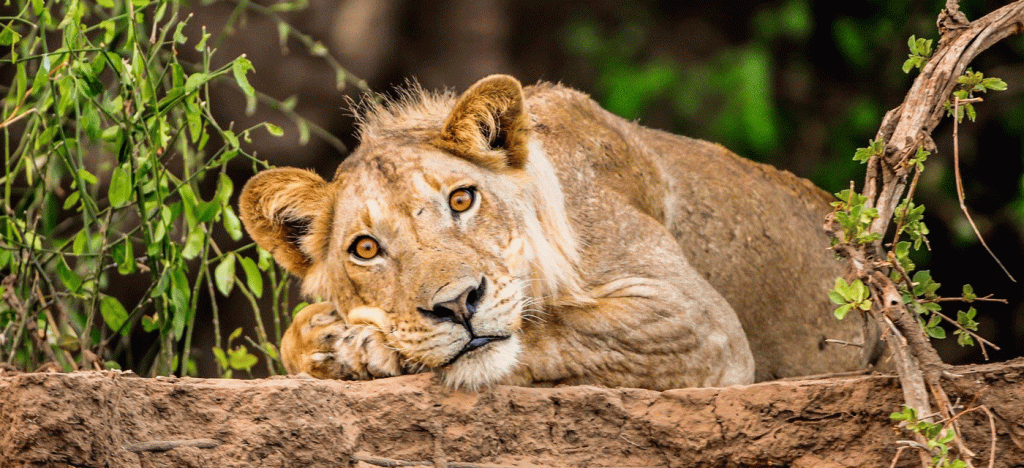
Start by identifying the subject and studying its behavior. Look for signs that indicate movement, such as changes in posture, head direction or interaction with nearby animals. Anticipating movement allows you to prepare your composition before the important moment arrives.
Pay attention to the animal’s eyes. A photograph often becomes more engaging when the subject looks toward the camera. Try to position yourself so that the eyes remain visible and sharp. Focus carefully because a slightly soft eye can reduce the impact of an otherwise strong portrait.
Use the surrounding environment to strengthen your image. You can frame a lion against golden grass, place an elephant beneath an acacia tree or photograph a giraffe against the open Serengeti sky. These details help viewers understand where the photograph was taken.
Avoid taking every photograph from the same distance. Use a telephoto lens for detailed portraits then switch to a wider lens when the environment adds important context.
Timing also matters. Watch for interactions between animals, moments of movement and changes in expression. Continuous shooting can help you capture a short sequence but do not rely entirely on rapid bursts. Think about the composition before pressing the shutter.
Finally remain patient. Some of the most memorable photographs appear after long periods of quiet observation. Let the animal behave naturally, follow your guide’s instructions and wait for the moment rather than trying to force it.
Choosing the Best Camera and Photography Equipment
Choosing suitable equipment can make Serengeti Safari Photography easier but you do not need to purchase the most expensive gear available. Instead select equipment that matches your photography experience, travel style and budget. A reliable camera with fast autofocus and good low-light performance can handle many safari situations effectively.
A telephoto lens remains one of the most valuable pieces of equipment for wildlife photography. Animals may remain at a considerable distance from your vehicle and a longer lens allows you to fill the frame without disturbing them. A zoom lens offers additional flexibility because wildlife can suddenly appear much closer than expected.
A wide-angle lens can complement your telephoto lens. Use it to photograph landscapes, large herds, animals within their surroundings and dramatic skies. The Serengeti offers enormous open spaces so wide compositions can communicate the scale of the environment.
Carry several spare batteries and memory cards. Long game drives can produce many opportunities and you may not have immediate access to charging facilities. Downloading your photographs regularly can also protect your images if a memory card develops a problem.
Dust represents another consideration. Safari vehicles travel along unpaved roads and dry conditions can expose camera equipment to dust. Keep your camera protected when you do not use it and avoid changing lenses unnecessarily in dusty environments.
A beanbag can provide useful support when photographing from a vehicle. It offers stability while remaining relatively compact. You can also carry a cleaning kit with a blower and microfiber cloth to remove dust from your equipment.
Before your safari begins practice with your camera. Learn how to change shutter speed, aperture, ISO, autofocus mode and shooting mode without taking your eye away from the subject. Familiarity with your equipment allows you to concentrate on wildlife instead of searching through menus when an exciting moment appears.
Best Camera Settings for Serengeti Wildlife Photography
Understanding camera settings can significantly improve your Serengeti Safari Photography. Wildlife moves unpredictably so you should prepare settings that allow you to react quickly. Start with shutter speed because movement can quickly create blur. Use a faster shutter speed when photographing running animals, birds in flight or sudden interactions.
For animals that remain still you can reduce the shutter speed if lighting conditions require it. However remember that your own movement can also create blur when you use a long telephoto lens. A stable shooting position can help you maintain sharper images.
Aperture controls how much of the scene appears in focus. A wider aperture can separate an animal from a distracting background and create a pleasing visual effect. This approach works especially well for individual wildlife portraits. A narrower aperture can help when you photograph several animals and want more subjects to remain sharp.
ISO allows you to maintain a suitable shutter speed when light becomes limited. Early morning and late afternoon often produce beautiful light but can also require higher ISO settings. Modern cameras can handle higher ISO values effectively although you should avoid increasing ISO more than necessary.
Use continuous autofocus when photographing moving animals. This setting allows your camera to adjust focus as the subject changes position. Animal-eye autofocus can also help on compatible cameras but you should understand how your camera behaves before relying on it during an important sighting.
Continuous shooting can help you capture a sequence of movement. However, avoid holding the shutter continuously without purpose. Watch the animal, anticipate the action, and capture deliberate sequences.
Check exposure regularly particularly when moving between bright grasslands and shaded areas. Bright skies can influence your camera’s metering and cause subjects to appear too dark. Learning these basic settings before your safari will help you respond quickly and confidently during every game drive.
How to Use Light for Stunning Serengeti Photos
Light plays one of the most important roles in creating memorable Serengeti Safari Photography. The Serengeti changes dramatically as the sun moves across the sky giving photographers different opportunities throughout the day. Instead of treating light as a background detail use it as an active part of your composition.
Early morning often provides soft, gentle light. During this period, the lower sun can create long shadows and reveal textures across the grasslands. Wildlife may also remain active during the cooler morning hours giving you opportunities to photograph movement and interaction.
Late afternoon offers another excellent period for photography. Warm sunlight can create golden tones across the landscape and add depth to animal portraits. Position your subject carefully so the light illuminates important details without creating distracting highlights.
Side lighting can emphasize the texture of an animal’s fur, feathers or skin. It can also create stronger shadows that add dimension to your photographs. Watch how the light falls across your subject and adjust your composition accordingly.
Backlighting provides another creative option. When the sun sits behind an animal, you can create silhouettes or glowing outlines. This technique works particularly well during sunrise and sunset when the sun sits lower on the horizon.
Do not avoid cloudy weather. Clouds can soften harsh sunlight and create dramatic backgrounds. A cloudy sky can also provide more even illumination across your subject particularly during brighter parts of the day.
The green season can introduce another photographic advantage because fresh vegetation creates rich textures and vibrant scenery. During drier periods, golden grass and dusty landscapes can create a completely different visual character.
Most importantly watch the light before you take the photograph. Look at shadows, highlights, background brightness and the direction of the sun. When you combine good light with patient observation and strong composition even a simple wildlife encounter can produce a striking photograph.
How to Photograph the Big Five in Serengeti
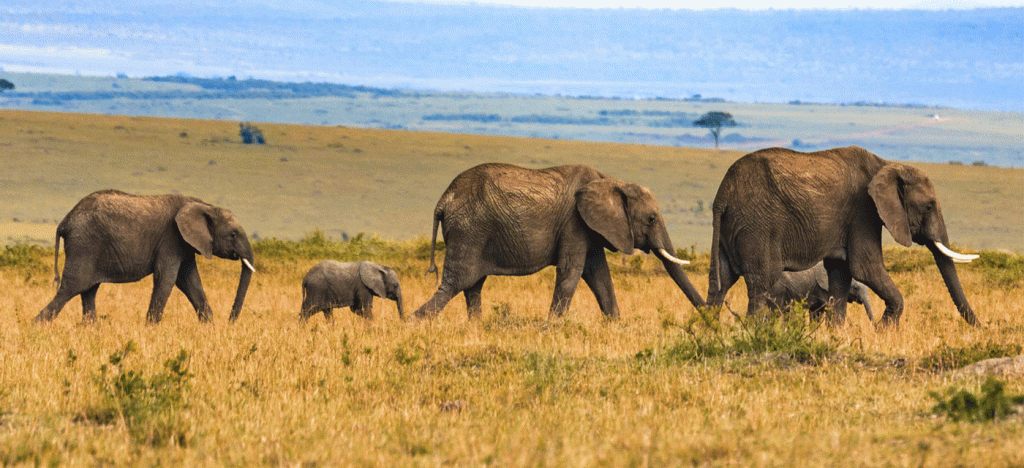
Photographing the Big Five remains a major attraction for travelers interested in Serengeti Safari Photography. Lions, leopards, elephants, buffalo and rhinoceros each present different photographic opportunities. Instead of simply trying to collect photographs of each species focus on capturing natural behavior and the relationship between animals and their environment.
Lions often provide diverse opportunities because they rest, walk, groom, hunt and interact with other pride members. Watch their faces and body language carefully. A direct gaze can create a powerful portrait while a wider composition can show a pride resting beneath a tree.
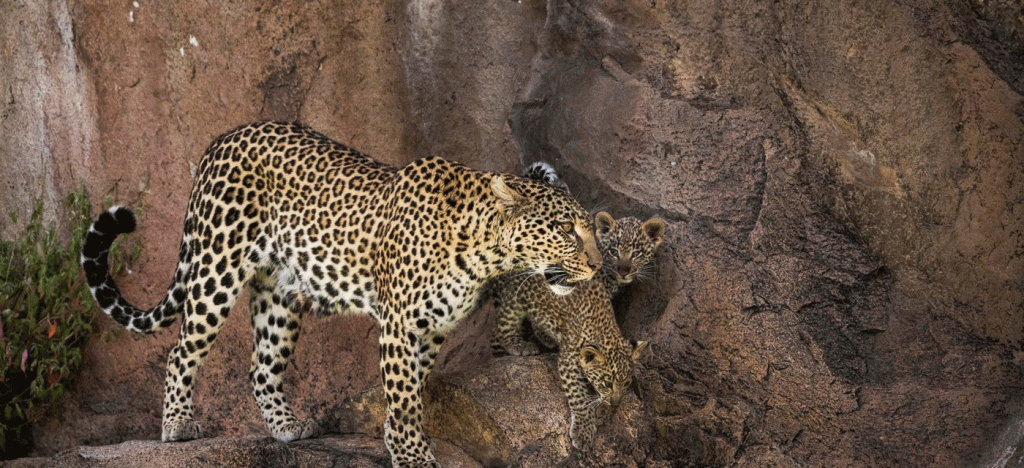
Leopards require patience because they often blend into vegetation and spend time resting in trees. Look carefully at branches, rocky areas and shaded vegetation. When you find one remain patient and allow your guide to determine an appropriate viewing position.
Elephants offer excellent opportunities for both close portraits and environmental photographs. You can photograph facial details, family interactions or entire herds moving across the plains. A wider lens can show their enormous relationship with the landscape.
Buffalo frequently gather in large groups making them ideal subjects for compositions that emphasize numbers and movement. Instead of photographing one animal consider showing several individuals within the same frame.
Rhinoceros sightings can require particular patience and respect. If you encounter one listen carefully to your guide and maintain an appropriate distance. Do not sacrifice responsible behavior simply to obtain a closer photograph.
The Big Five also offer opportunities to practice different techniques. Use shallow depth of field for portraits, wider compositions for environmental scenes and faster shutter speeds for movement.
Remember that the strongest wildlife photograph does not always show an animal’s entire body. Details such as eyes, horns, paws, ears or textures can tell compelling stories. Observe carefully, respect the animals and allow natural behavior to guide your photography.
How to Capture the Great Migration
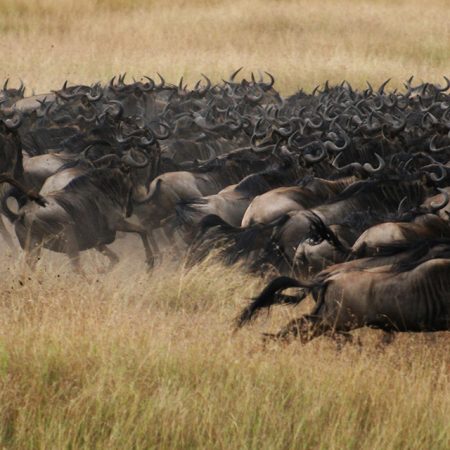
The Great Migration creates some of the most dynamic opportunities for Serengeti Safari Photography. Wildebeest, zebras and other animals move across the Serengeti ecosystem throughout the year creating scenes that constantly change. The scale of the migration allows photographers to experiment with both wide environmental images and detailed wildlife portraits.
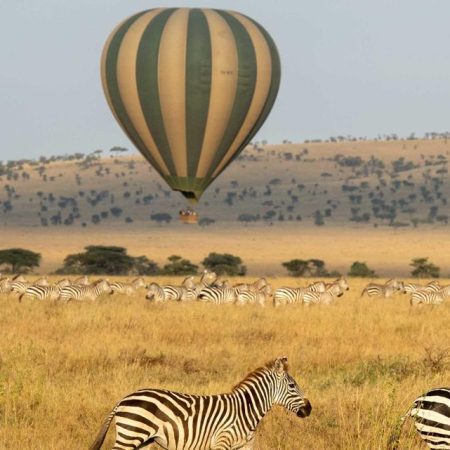
Start by showing the scale of the herds. A wide-angle photograph can reveal thousands of animals spreading across the plains. Look for elevated viewpoints, open horizons or natural features that allow you to communicate the enormous size of the movement.
Then look for individual subjects within the larger group. A single zebra or wildebeest can create a strong focal point when it separates visually from the surrounding animals. Use a longer lens to isolate the subject while retaining enough background to communicate the migration.
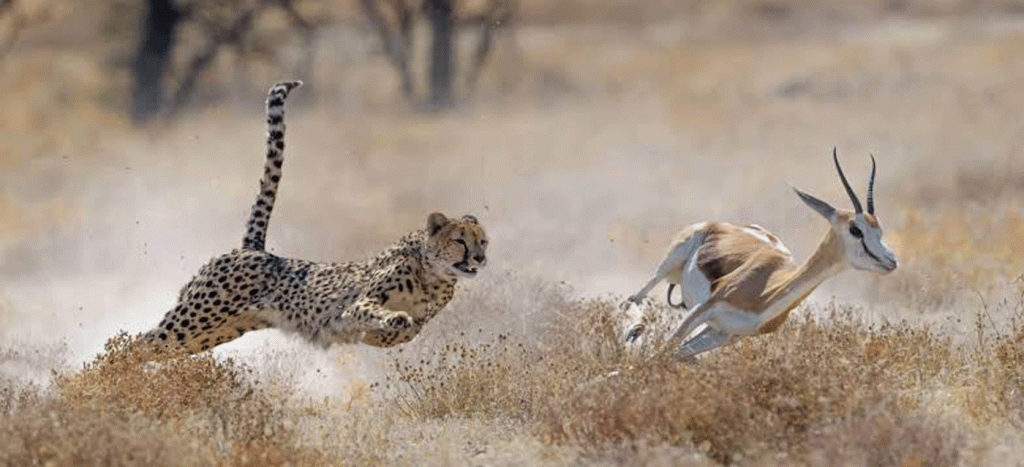
Movement requires preparation. Watch the direction of the herd and anticipate where animals will travel next. Set a suitable shutter speed before the action begins so you can react immediately.
Dust can add atmosphere to migration photographs. When herds move rapidly, dust may rise from the ground and create layers within the scene. Use this effect carefully and adjust your exposure when bright dust affects the background.
River crossings require patience. Animals may gather along the riverbank before moving and the timing can remain unpredictable. Do not pressure your guide to approach dangerously or interfere with other vehicles. Allow wildlife to determine the pace of the event.
The migration also changes throughout the year so your photographic opportunities depend on seasonal movement. Before booking discuss your interests with your safari operator so you can understand where your itinerary may take you.
Focus on storytelling rather than simply photographing action. Capture the waiting herds, movement across the plains, interactions between animals and dramatic landscapes surrounding them. These elements can create a complete visual story of the Great Migration.
Serengeti Photography Composition Tips
Strong composition can transform an ordinary photograph into an engaging visual story. During Serengeti Safari Photography, think carefully about where you place your subject, how much environment you include and how the viewer’s eye will move through the image.
The rule of thirds provides a simple starting point. Imagine dividing your frame into nine sections and place your main subject near one of the intersections. This technique can create balance while leaving space for the animal to move or look toward.
Pay attention to the direction of movement. If an animal walks toward the right side of the frame leaving additional space ahead of it can make the photograph feel more natural. Similarly if an animal looks toward the horizon include enough surrounding landscape to show where its attention points.
Use natural elements to create depth. Grass in the foreground an animal in the middle ground and mountains or trees in the distance can produce a layered composition. This approach helps viewers understand the scale of the Serengeti.
Look for leading lines. Roads, tracks, rivers and natural patterns can guide the viewer’s attention toward an animal or distant landscape feature.
Herds provide opportunities to experiment with repetition and patterns. Zebras can create striking visual rhythms while elephants moving together can create a strong sense of scale.
Do not always fill the entire frame. Negative space can communicate the openness of the Serengeti. An animal surrounded by empty grassland can make the landscape itself part of the story.
Before taking the photograph inspect the edges of your frame. Distracting branches, vehicle parts or other objects can weaken an otherwise strong composition.
You can also change your perspective. Instead of photographing every subject from the same angle, experiment with wider views, tighter portraits and environmental compositions.
Most importantly decide what you want the photograph to communicate. Good composition does not follow rules blindly. Use these techniques as tools, then adapt them to the behavior, environment and light in front of you.
How to Photograph Serengeti Landscapes
The Serengeti offers exceptional landscape photography opportunities beyond its famous wildlife. Its enormous plains, acacia trees, rocky kopjes, rivers, distant hills and dramatic skies allow photographers to create images that communicate the character of Tanzania’s wilderness.
During Serengeti Safari Photography look beyond animals and study the entire scene. When you encounter an interesting landscape consider how you can use natural elements to create a balanced composition. A lone tree can become a focal point while a distant herd can add scale.
Wide-angle lenses work particularly well for expansive landscapes. They allow you to include large areas of sky and foreground while keeping important environmental features within the frame.
Sunrise and sunset can add strong visual effects. Arrive at promising viewpoints with enough time to observe the changing light. As the sun moves shadows can reveal textures across the grasslands and create depth within the scene.
Clouds can become important compositional elements. A dramatic sky can occupy a large portion of the frame when it contains interesting patterns or changing light. At other times you may reduce the amount of sky and emphasize the landscape.
Use leading lines to guide viewers through your photograph. Safari tracks can lead toward distant trees, while rivers and natural contours can direct attention toward wildlife.
The green season offers opportunities to photograph fresh vegetation and vibrant landscapes. During drier periods, golden grasses, exposed soil and warm tones create a different visual atmosphere.
Rocky kopjes can provide excellent viewpoints and distinctive foreground elements. Acacia trees can also create recognizable African silhouettes when positioned against a bright sky.
Remember to remain patient. A landscape can change dramatically when wildlife enters the scene or when sunlight breaks through clouds. Sometimes waiting a few minutes produces a much stronger photograph than immediately pressing the shutter.
Best Places and Times for Photography in Serengeti
Choosing suitable locations and times can greatly improve your Serengeti Safari Photography opportunities. The Serengeti covers a vast area and different regions can offer different landscapes, wildlife experiences and photographic conditions. Your route should therefore match the type of photography you want to pursue.
Central Serengeti particularly the Seronera area provides excellent opportunities for photographing wildlife because animals remain present throughout much of the year. The region features open plains, rocky areas and varied habitats that support many species.
The Western Corridor can provide distinctive landscapes and seasonal wildlife opportunities. During periods when the migration moves through the area photographers can capture large herds against different environmental backgrounds.
Northern Serengeti offers opportunities to photograph the migration during relevant seasonal periods as well as landscapes featuring hills, valleys and open grasslands. The region can provide a different visual character from the central plains.
Southern Serengeti and the Ndutu area can become particularly interesting during the calving season. Newborn animals, predators, open plains and dramatic interactions create a wide range of photographic subjects.
Timing also matters. Early morning and late afternoon generally provide softer light and more comfortable temperatures. Midday light can become harsher but you can still find useful opportunities particularly under clouds or when photographing animals in shaded areas.
Your guide can help you understand local conditions and identify promising locations. Experienced guides observe animal behavior, recent sightings, road conditions and seasonal patterns.
When planning your safari discuss your photography goals before departure. Tell your operator whether you prioritize landscapes, predators, birds, migration scenes or a combination of subjects.
Avoid trying to cover too much territory simply to collect more locations. Spending meaningful time in one area can produce better photographic opportunities than rushing between distant regions. A well-planned itinerary gives you time to observe, wait, compose and respond to wildlife naturally.
Photography Tips for Beginners on Safari
Beginners can create excellent Serengeti Safari Photography without owning professional equipment. The most important step involves learning how to use the camera you already have. Before traveling to Tanzania, practice changing basic settings and photographing moving subjects.
Start by learning shutter speed, aperture and ISO. These three controls form the foundation of exposure and allow you to adapt to different lighting and movement. Practice at home by photographing pets, birds, vehicles or people moving at different speeds.
Learn how your autofocus system works. Find out how to select focus points and how continuous autofocus behaves when your subject moves. This preparation can save valuable time during a wildlife encounter.
Avoid constantly changing settings without understanding their effects. Begin with a practical setup and make small adjustments when conditions change.
During your safari watch before photographing. Many beginners immediately start taking pictures when they see an animal. Instead spend a few moments observing its behavior. Look at its direction, posture, surroundings and potential movement.
Take both vertical and horizontal photographs. Vertical framing can work well for giraffes, trees and standing animals while horizontal framing often suits landscapes and moving herds.
Do not review every photograph immediately. Constantly looking at your screen can cause you to miss the next moment. Check your images periodically to confirm focus and exposure then return your attention to the wildlife.
Use your guide’s knowledge. Safari guides spend significant time observing animals and understanding their behavior. Listen when they explain what an animal might do next.
Most importantly do not compare your photographs with professional images you see online. Use your first safari to develop your own skills and discover what types of photography you enjoy.
You may return home with some imperfect photographs and that is normal. Each game drive gives you another opportunity to improve. With practice, patience and careful observation beginners can create meaningful photographs that preserve their Serengeti experience.
How to Photograph Wildlife Responsibly
Responsible photography should guide every Serengeti Safari Photography experience. A great photograph never justifies disturbing an animal damaging its habitat or ignoring established safari rules. Photographers should treat wildlife as living animals rather than photographic props.
Maintain a respectful distance at all times. Your safari guide understands appropriate vehicle positioning and can help you observe animals without creating unnecessary stress. Never pressure your guide to drive closer simply because you want a larger subject in your frame.
Do not call, shout at, whistle toward or otherwise attract animals. These actions can interfere with natural behavior and create an artificial scene. Instead, remain quiet and let the animal determine what happens next.
Stay inside the safari vehicle unless your guide identifies a safe and authorized location where you can exit. Wildlife can react unpredictably to people on foot so following professional guidance protects both you and the animals.
Respect other travelers as well. If several vehicles observe an important sighting allow others an opportunity to enjoy the experience. Avoid demanding prolonged access to a particular position.
Never leave waste behind. Keep plastic, food packaging and other materials inside the vehicle until you can dispose of them properly.
Think carefully about how you share photographs online. Images can influence how people understand wildlife encounters. Avoid presenting unusually close encounters as normal or encouraging others to seek unsafe situations for photographs.
Responsible photography also means accepting that you may not capture every desired image. Wildlife operates according to natural behavior, weather and environmental conditions. Sometimes the best decision involves putting your camera down and simply watching.
Serengeti Travels can help travelers experience wildlife while following responsible safari practices. Experienced guides understand animal behavior and local regulations allowing photographers to observe subjects while minimizing disturbance.
A successful safari should leave you with more than photographs. It should give you a deeper appreciation for wildlife, conservation and the natural environment that makes the Serengeti extraordinary.
Common Serengeti Safari Photography Mistakes to Avoid
Avoiding common mistakes can make Serengeti Safari Photography more enjoyable and productive. One frequent mistake involves using unsuitable shutter speeds. Wildlife can move suddenly and a slow shutter speed can produce motion blur. Check your settings before the action begins.
Another mistake involves relying entirely on automatic modes without understanding what the camera does. Automatic settings can help beginners but learning manual controls or priority modes gives you greater control when lighting and movement change.
Photographers also sometimes use only the longest available lens. Telephoto lenses work well for animal portraits but they can prevent you from capturing the surrounding landscape. Switch between different focal lengths when the scene allows.
Ignoring the background creates another common problem. Branches, vehicles, bright objects or other distracting elements can compete with your subject. Before taking the photograph check what appears behind the animal.
Many photographers also concentrate too heavily on individual animals. While portraits have value wider images can communicate the Serengeti’s scale and atmosphere. Capture both detailed subjects and environmental scenes.
Shooting continuously without thinking can fill memory cards quickly without producing stronger photographs. Instead, observe the animal and anticipate important moments. Capture deliberate sequences when movement begins.
Another mistake involves photographing only in bright midday conditions. Early morning and late afternoon often provide more favorable light so plan your game drives and photography expectations accordingly.
Do not forget spare batteries and memory cards. A dead battery or full memory card can prevent you from capturing an important encounter.
Some visitors also focus so heavily on photography that they forget to experience the safari itself. Put the camera down occasionally and observe the animals directly. You can remember a moment even when you do not photograph it.
Finally never compromise responsible wildlife behavior for a photograph. Maintain distance, follow your guide’s instructions and allow animals to behave naturally. A photograph becomes more meaningful when you know you captured it without interfering with the wildlife or environment.
Frequently Asked Questions About Serengeti Safari Photography
1. What is the best camera for Serengeti Safari Photography?
A DSLR or mirrorless camera with fast autofocus and good low-light performance works well for Serengeti Safari Photography. A telephoto zoom lens provides flexibility for photographing distant wildlife while a wide-angle lens helps capture landscapes and large herds.
2. What lens is best for wildlife photography in the Serengeti?
A telephoto zoom lens is ideal for photographing wildlife from a safari vehicle. It allows you to capture detailed animal portraits while maintaining a respectful distance. A wide-angle lens also helps when you want to include animals within the Serengeti landscape.
3. What are the best camera settings for Serengeti wildlife photography?
Use a fast shutter speed for moving animals, continuous autofocus for subjects in motion and an appropriate ISO when light becomes limited. A wider aperture can help separate animals from distracting backgrounds while a narrower aperture works well for groups of animals.
4. What is the best time of day for Serengeti Safari Photography?
Early morning and late afternoon generally provide softer, warmer light that works well for wildlife and landscape photography. These periods can also offer attractive shadows, textures and atmospheric conditions.
5. Can beginners take good photographs in the Serengeti?
Yes. Beginners can take memorable photographs without professional equipment. Understanding basic camera settings, practicing before the safari and observing wildlife carefully can significantly improve your results.
6. How do I photograph the Big Five in the Serengeti?
Use different approaches for each species. Telephoto lenses work well for detailed portraits while wider compositions can show animals within their environment. Focus on natural behavior rather than simply photographing each species.
7. How can I photograph the Great Migration?
Use wide compositions to show the scale of migrating herds and telephoto lenses to isolate individual animals. Anticipate movement use an appropriate shutter speed and remain patient especially when photographing gathering herds or river crossings.
8. How can I protect my camera from dust during a Serengeti safari?
Keep your camera protected when you are not photographing and avoid changing lenses unnecessarily in dusty conditions. Carry a blower and microfiber cloth for basic cleaning and keep spare equipment safely stored.
9. Do I need an expensive camera for Serengeti Safari Photography?
No. Expensive equipment can provide additional features and greater control, but preparation, observation, timing and composition often have a greater impact on the final photograph.
10. How can I photograph Serengeti landscapes?
Use a wide-angle lens to capture the expansive plains, dramatic skies, acacia trees and kopjes. Include wildlife or other environmental features when possible to provide scale and context.
11. What is the best way to photograph wildlife responsibly?
Maintain an appropriate distance, follow your guide’s instructions and never disturb animals to obtain a photograph. Avoid calling or attracting wildlife and remain inside the vehicle unless your guide identifies a safe and authorized location.
12. Can I use a smartphone for Serengeti Safari Photography?
Yes. Smartphones can capture memorable wildlife and landscape photographs particularly when animals are relatively close or when you want to document the overall safari experience.
13. What equipment should I bring for safari photography?
Consider bringing a reliable camera, telephoto lens, wide-angle lens, spare batteries, memory cards, a cleaning kit and suitable protection against dust. A beanbag can also provide useful support when photographing from a safari vehicle.
14. How can I improve my wildlife photography composition?
Experiment with the rule of thirds, negative space, leading lines and environmental compositions. Leave space in front of moving or looking animals and inspect the edges of your frame for distracting objects.
15. What are the most common Serengeti Safari Photography mistakes?
Common mistakes include using unsuitable shutter speeds, ignoring backgrounds, relying entirely on automatic settings, using only one focal length, forgetting spare batteries and memory cards and prioritizing photographs over responsible wildlife viewing.
16. Which Serengeti areas are good for photography?
Central Serengeti, the Western Corridor, Northern Serengeti and Southern Serengeti around Ndutu can provide different photographic opportunities depending on wildlife movements and the season. Your itinerary should match the subjects and photography experiences you want to capture.
17. How important is a safari guide for photography?
An experienced guide can help identify wildlife, understand animal behavior, assess local conditions and position the vehicle appropriately. Their knowledge can give photographers more opportunities to observe natural behavior without disturbing animals.
18. How can I capture better wildlife photographs during a safari?
Observe the animal before pressing the shutter, anticipate its movement, watch the light and choose an appropriate composition. Patience often helps you capture more meaningful moments than taking photographs continuously.
19. Is the Serengeti good for landscape photography?
Yes. The Serengeti offers expansive grasslands, acacia trees, rocky kopjes, distant hills and dramatic skies. These features allow photographers to create both wide environmental images and detailed landscape compositions.
20. How can Serengeti Travels help with safari photography?
Serengeti Travels provides safari experiences with experienced local guides who understand wildlife behavior and local conditions. Their knowledge can help photographers spend more time observing wildlife and identifying promising photographic opportunities.
Final Thoughts: Capturing the Ultimate Serengeti Safari Experience
Serengeti Safari Photography combines wildlife, landscapes, adventure, creativity and storytelling into one remarkable travel experience. The Serengeti provides an extraordinary variety of subjects allowing photographers to create everything from intimate animal portraits to expansive landscape photographs.
You do not need the most expensive equipment to begin. A reliable camera, suitable lens, spare batteries, memory cards and basic protection against dust can provide a strong foundation. More importantly learn how your equipment works before arriving in Tanzania.
Prepare your camera settings but remain flexible. Wildlife can move quickly, light can change within minutes and unexpected encounters can appear at any time. Understanding shutter speed, aperture, ISO, autofocus and exposure allows you to react confidently.
Photography also depends heavily on observation. Watch animals before pressing the shutter. Study their behavior, anticipate movement and look for moments of interaction. Patience often produces better photographs than taking hundreds of images without a clear purpose.
Remember to photograph the environment as well. The Serengeti’s open plains, acacia trees, kopjes, golden grasses, dramatic skies and changing seasons form an essential part of the safari story.
The Great Migration, Big Five, birdlife, landscapes and everyday wildlife behavior can all contribute to a diverse photography collection. Give yourself time to explore different styles instead of focusing on one type of photograph.
Most importantly practice responsible wildlife photography. Maintain appropriate distances, follow your guide’s instructions, avoid disturbing animals and respect other safari travelers. Your photographs should celebrate the Serengeti without interfering with the natural behavior that makes the destination so special.
Serengeti Travels can help you explore the Serengeti with experienced local guides and carefully planned safari experiences. With preparation, patience and an observant approach, you can return home with photographs that capture more than wildlife. You can preserve the atmosphere, scale, movement and emotion of your safari.
The ultimate Serengeti photograph may not be the most technically perfect image. It may simply be the photograph that brings you back to the moment you experienced the wild heart of Tanzania.