 English
 Deutsch
 Italia
June 5, 2026
Serengeti River Crossing Safari Guide
Introduction
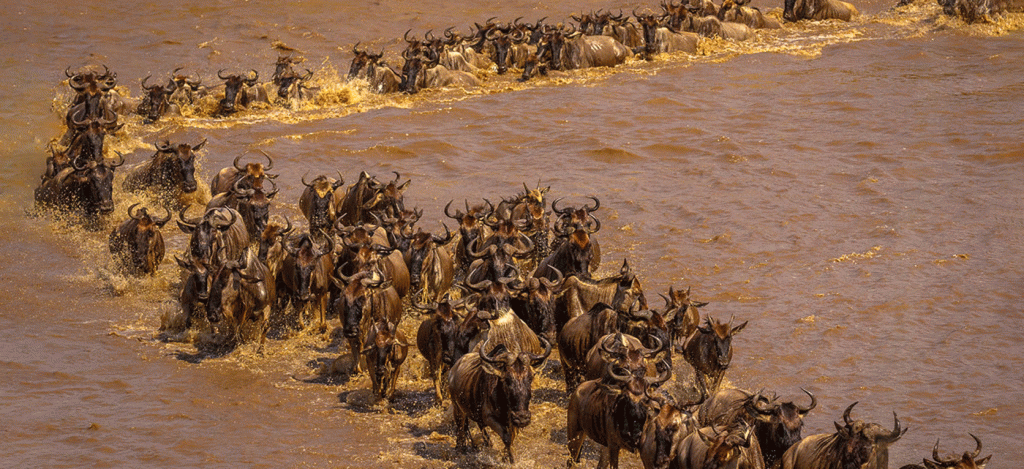
The Serengeti River Crossing safari is one of the most dramatic wildlife experiences in Africa centered around the Great Wildebeest Migration as it moves between Tanzania’s Serengeti National Park and Kenya’s Maasai Mara. Each year over 1.5 million wildebeest accompanied by hundreds of thousands of zebras and gazelles follow seasonal rains in search of fresh grazing land. One of the most intense moments of this journey is the river crossing especially at the Mara River.
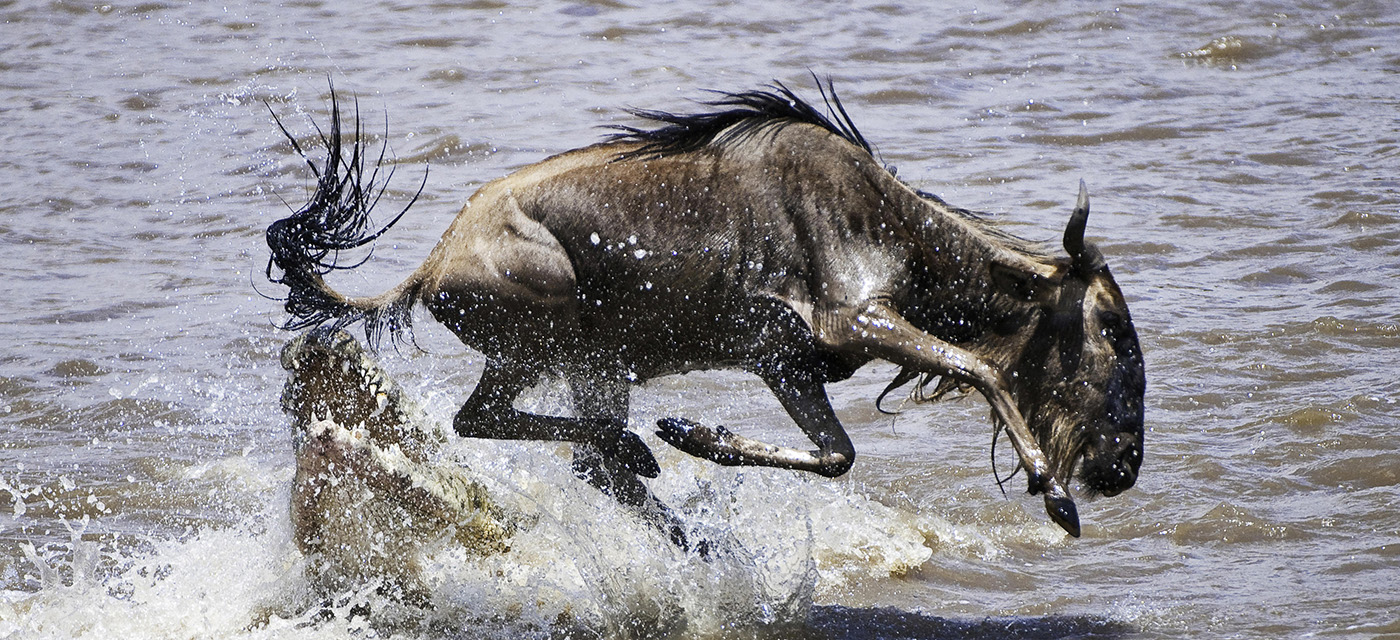
During these crossings animals gather at the riverbanks in large herds hesitating before plunging into crocodile-infested waters. The tension builds as wildebeest push each other forward, driven by survival instincts. For visitors this is not just a safari it is witnessing raw nature where life and death happen in seconds. The unpredictability makes every crossing unique sometimes herds cross within minutes other times they delay for hours or even days.
A Serengeti river crossing safari is typically organized between July and October though timing can vary depending on rainfall patterns. Travelers stay in mobile camps or lodges positioned near key crossing points in northern Serengeti. Expert guides play a crucial role in tracking herd movements and positioning safari vehicles for the best viewing opportunities.
This safari is considered a bucket-list experience for wildlife lovers, photographers and adventure seekers due to its emotional intensity, dramatic scenes and unmatched natural behavior.
Table of contents
- Introduction
- Best Time for Serengeti River Crossings
- What Happens During a River Crossing
- Best Locations for River Crossing Safaris
- Travel Tips for a Serengeti River Crossing Safari
- Wildlife You Can See During the River Crossing Safari
- Accommodation Options for River Crossing Safaris
- How to Get to the Serengeti River Crossing Areas
- Costs of a Serengeti River Crossing Safari
- Photography Tips for River Crossing Safaris
- Challenges of a Serengeti River Crossing Safari
- Frequently Asked Questions (FAQs)
- Conclusion
Best Time for Serengeti River Crossings
Timing is the most important factor when planning a Serengeti river crossing safari. The crossings usually occur between July and October when the wildebeest migration reaches the northern Serengeti and the Mara River. However nature does not follow a strict schedule and exact crossing moments depend on rainfall, river levels and herd movement.
July often marks the beginning of the crossings with herds gathering in areas such as Kogatende and Lamai. During this period the first dramatic crossings begin often involving large groups entering the river under pressure from predators and other herds. August and September are considered peak months offering the highest chances of witnessing multiple crossings in a single trip.
October sometimes still provides opportunities especially if the herds remain in the northern Serengeti before moving back south. Early planning is essential as safari camps in prime locations are fully booked months in advance.
Weather conditions also influence the experience. The dry season ensures easier game viewing since vegetation is thinner and animals concentrate around water sources. However, the unpredictability of crossings is what makes them so exciting. You might wait hours for a single crossing only to witness one of the most breathtaking wildlife events within minutes.
For travelers flexibility is key. Staying multiple days in the northern Serengeti increases the chance of seeing at least one successful river crossing making timing and patience essential elements of this safari.
What Happens During a River Crossing
A river crossing in the Serengeti is a highly intense and chaotic natural event. As herds approach the Mara River they gather in large groups at the riverbanks. The animals become restless moving back and forth repeatedly as they assess danger. Wildebeest are especially sensitive to movement and sound which often delays the crossing for hours.
Once the first brave individuals enter the water the rest of the herd quickly follows in a rush. The river is fast-moving, deep in some areas and filled with Nile crocodiles waiting for an opportunity. Predation is a natural part of this journey and not all animals survive the crossing. This harsh reality is what makes the event both dramatic and emotionally powerful.
Zebras often lead or mix with wildebeest during crossings because they are more alert and have better memory of safe crossing points. On the opposite side lions may wait near exit points adding further danger after the crossing is completed.
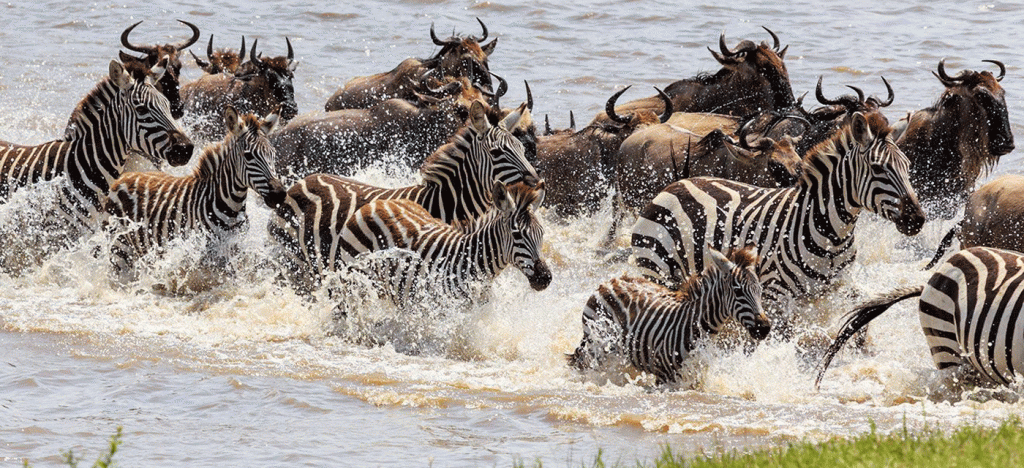
Dust, noise and movement create chaos as thousands of animals push forward at once. Some slip-on muddy riverbanks while others struggle with strong currents. Despite the risks, survival instincts dominate and the herd eventually makes it across to fresh grazing lands. For visitors witnessing this event is unforgettable. It is a rare chance to observe raw survival behavior in one of the last remaining large-scale natural migrations on Earth.
Best Locations for River Crossing Safaris
The northern Serengeti is the most important region for witnessing river crossings. Key areas include Kogatende, Lamai Wedge and parts of the Mara River corridor. These locations are close to the Tanzania Kenya border and are known for frequent crossing points used by migrating herds.
Kogatende is one of the most popular safari bases because it offers reliable access to multiple river crossing sites. Safari vehicles can quickly move between different observation points depending on herd movement increasing the chances of seeing a crossing.
Lamai Wedge is another excellent area known for dramatic landscapes and fewer crowds compared to other parts of the Serengeti. It offers a more exclusive safari experience while still providing excellent crossing opportunities when herds gather nearby.
Mobile tented camps are often set up in these regions during peak migration season. These camps move according to the migration pattern ensuring guests are always close to the action. Permanent lodges also exist but are fewer in number due to the remote nature of the area.
Game drives are usually conducted early in the morning and late afternoon when animals are most active. Experienced guides track herd movements using radio communication and visual observation, increasing the chances of being in the right place at the right time. Choosing the right location is critical because river crossings are unpredictable and being near active crossing points significantly improves the safari experience.
Travel Tips for a Serengeti River Crossing Safari
Preparing for a Serengeti river crossing safari requires careful planning to ensure comfort and maximize wildlife viewing opportunities. First booking early is essential because camps in northern Serengeti fill up quickly during peak migration months.
Travelers should pack lightweight clothing in neutral colors to blend with the environment. A good pair of binoculars is highly recommended since crossings often happen at a distance. A high-quality camera with zoom capability is also important for capturing fast-moving action.
Patience is a key part of the experience. River crossings do not follow schedules and visitors may wait for long periods before witnessing activity. However the anticipation is part of what makes the experience rewarding. Choosing experienced safari operators is highly important. Skilled guides understand migration patterns and can position vehicles in strategic locations. They also provide valuable insight into animal behavior and safety around wildlife.
Health and safety preparations include travel insurance, malaria precautions and proper hydration. Since northern Serengeti is remote medical facilities are limited so preparation is essential. Finally respect for wildlife is crucial. Maintaining a safe distance and following guide instructions ensures both visitor safety and minimal disturbance to animals.
A Serengeti River crossing safari is not just a trip it is an immersive natural experience that demands preparation, patience and appreciation for one of the world’s greatest wildlife spectacles.
Wildlife You Can See During the River Crossing Safari
While the wildebeest migration is the main highlight of a Serengeti River crossing safari the ecosystem around the Mara River is incredibly rich and diverse. Alongside the millions of wildebeest, large herds of zebras and Thomson’s gazelles are almost always present. Zebras often travel slightly ahead or alongside wildebeest acting as natural scouts due to their strong memory of migration routes and better awareness of danger.
Predators are a major part of this ecosystem. Nile crocodiles dominate the Mara River itself and are often seen waiting motionless near crossing points for hours or even days. Once the animals enter the water, crocodiles become highly active creating some of the most dramatic hunting scenes in nature.
On land lions are commonly spotted near exit points of the river waiting for weak or injured animals after the crossing. Leopards and cheetahs are also present in the broader Serengeti region, although they are more elusive and harder to spot during crossings. Hyenas frequently follow the migration, scavenging and sometimes hunting vulnerable calves.
Birdlife is also abundant including vultures, marabou storks, and fish eagles, which often circle above the river waiting for carrion. Hippos are frequently seen in deeper sections of the river although they are not directly involved in crossings. This combination of herbivores, predators and scavengers makes the river crossing one of the most complete wildlife spectacles in the world showcasing the full food chain in action within a single location.
Accommodation Options for River Crossing Safaris
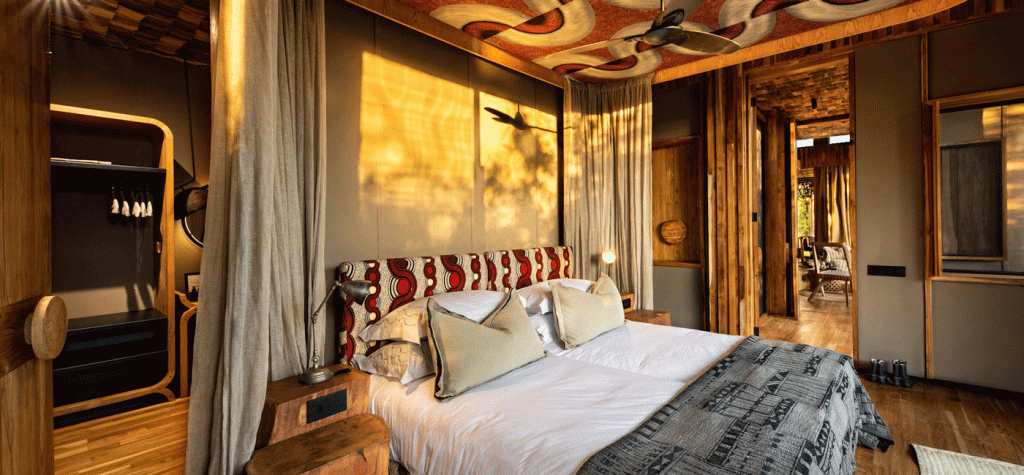
Accommodation plays a major role in shaping the Serengeti river crossing safari experience. Most travelers stay in either mobile tented camps or permanent lodges located in or near the northern Serengeti, particularly around Kogatende and Lamai areas. These locations are chosen specifically for their proximity to the Mara River allowing quick access to potential crossing points.
Mobile tented camps are the most popular option during migration season. These camps move with the herds, ensuring guests are always close to the action. Despite being mobile they often provide high comfort levels including proper beds, private bathrooms and dining tents. Staying in a mobile camp gives visitors a more immersive and flexible safari experience as guides can respond quickly to wildlife movements.
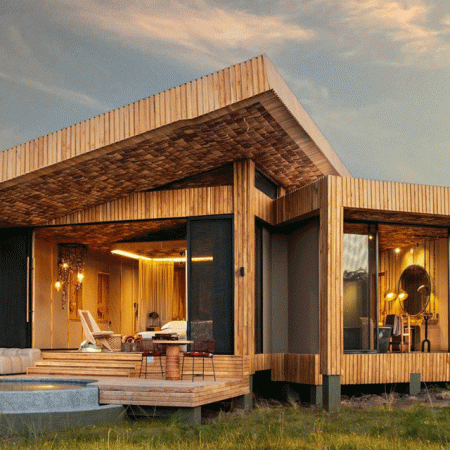
Permanent lodges on the other hand offer more stability and luxury amenities. These lodges are built with eco-friendly designs to blend into the environment and provide stunning views of the Serengeti plains. While they may not move with the migration they are strategically located to give reasonable access to river crossing areas.
Budget travelers may also find simpler campsites, though these are less common in the remote northern Serengeti. Regardless of the accommodation type most safari packages include full-board meals, guided game drives and airport transfers from nearby airstrips such as Kogatende or Seronera.
Choosing the right accommodation depends on budget, comfort preference and how close you want to be to the river crossing action. Early booking is essential because availability is extremely limited during peak migration months.
How to Get to the Serengeti River Crossing Areas
Reaching the Serengeti river crossing zones requires careful travel planning due to the remote location of northern Serengeti. Most international travelers first fly into Kilimanjaro International Airport or Julius Nyerere International Airport in Dar es Salaam. From there, they connect to smaller domestic flights heading directly to Serengeti airstrips.
The most commonly used airstrips for river crossing safaris are Kogatende Airstrip and Lamai Airstrip. These airstrips are located close to the Mara River significantly reducing travel time and allowing visitors to reach their camps within minutes after landing. Flying is the most efficient and popular method because it avoids long road journeys.
Alternatively, some travelers choose a road safari starting from Arusha or central Serengeti. While this option is more affordable it involves long travel times and rough terrain often taking a full day or more depending on road conditions. However, road safaris do provide opportunities to see wildlife along the way making the journey part of the adventure.
Once inside the Serengeti 4×4 safari vehicles are used for game drives. Experienced drivers and guides navigate the park using established tracks and knowledge of migration patterns. Since river crossings are unpredictable guides constantly monitor herd movements to position vehicles at the best vantage points.
Whether by air or road access to the river crossing areas is well organized through safari operators ensuring travelers can reach one of the most remote yet spectacular wildlife regions in Africa.
Costs of a Serengeti River Crossing Safari
The cost of a Serengeti River crossing safari varies widely depending on travel style, accommodation level and length of stay. Because this experience takes place in one of the most remote and sought-after wildlife areas in Africa it is generally more expensive than standard safaris in less remote parks.
On average mid-range safaris cost between $300 and $600 per person per day. These packages typically include accommodation in tented camps, meals, park fees, professional guides and game drives. Mid-range options are the most common choice for travelers who want comfort while still staying close to nature and migration routes.
Luxury safaris can range from $700 to over $1,500 per person per day. These include high-end lodges or premium mobile camps with private suites, gourmet dining, personalized guiding and exclusive access to prime viewing areas near the Mara River. Luxury travelers often enjoy additional services such as private vehicles and charter flights.
Budget safaris although limited in the northern Serengeti may cost around $200 to $300 per person per day. These usually involve basic campsites or shared tented accommodation with fewer amenities. However even budget options still provide access to guided game drives and migration viewing.
Additional costs include international flights, domestic flights to Serengeti airstrips, visa fees, travel insurance and tips for guides and staff. During peak migration season (July to October) prices increase due to high demand and limited availability. Booking early is highly recommended not only to secure better prices but also to guarantee accommodation near key river crossing locations. Proper budgeting ensures a smooth and stress-free safari experience.
Photography Tips for River Crossing Safaris
The Serengeti River crossing is one of the most challenging yet rewarding wildlife photography opportunities in the world. Capturing the fast-moving action of thousands of animals crossing a crocodile-filled river requires preparation, timing and the right equipment.
A camera with a fast shutter speed is essential to freeze motion, especially when wildebeest are running through water or leaping off riverbanks. A telephoto lens ideally between 200mm and 600mm allows photographers to capture close-up action from a safe distance without disturbing wildlife.
Lighting plays a crucial role. Early morning and late afternoon provide the best natural light, known as the golden hours, which enhances contrast and brings warmth to the dramatic scenes. Midday light can be harsh so adjusting exposure settings is important.
Patience is one of the most important skills. River crossings are unpredictable and photographers may wait for hours before any action begins. Keeping the camera ready at all times is essential because crossings often start suddenly and last only a short time. Positioning is also critical. Working with experienced safari guides helps photographers reach the best vantage points along the riverbanks. However, it is important to follow park rules and avoid blocking animal movement.
Continuous shooting mode is highly recommended to capture sequences of action while extra memory cards and batteries are essential due to long waiting periods. Ultimately, photographing a Serengeti River crossing is about capturing raw nature in motion chaotic, emotional and unforgettable.
Challenges of a Serengeti River Crossing Safari
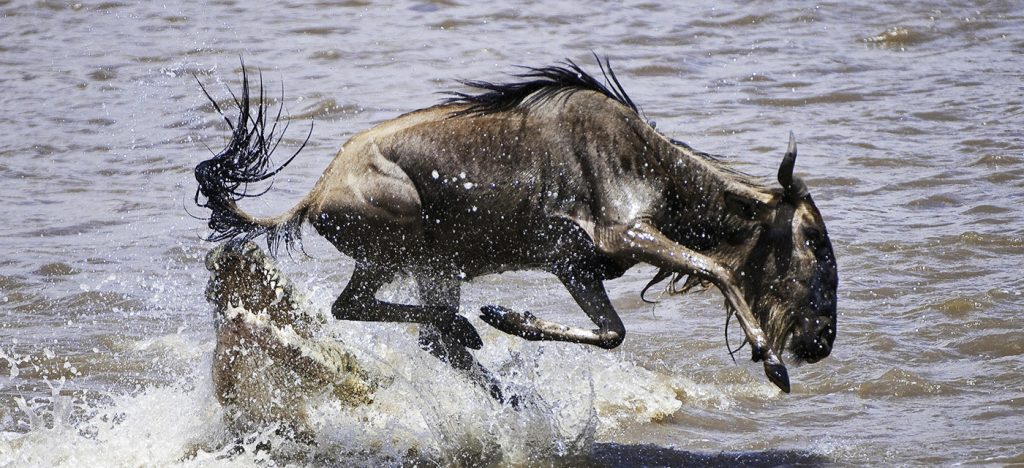
A Serengeti River crossing safari is an extraordinary experience but it also comes with several challenges that travelers should understand before planning their trip. One of the main challenges is unpredictability. River crossings do not follow fixed schedules, and herds may arrive at crossing points and delay for hours days or even move away entirely without crossing during your stay.
Another challenge is long waiting times in remote areas. Visitors often spend extended periods in safari vehicles under the sun waiting for movement at the riverbanks. This requires patience and mental preparation as there is no guarantee of immediate action despite being in the right location.
Weather and road conditions can also be difficult. During the dry season dust can be intense affecting visibility and comfort. In some cases, roads near the river can become rough and bumpy making travel tiring especially for those not used to long off-road journeys.
Wildlife unpredictability adds another layer of complexity. While this is the main attraction it also means safety must always be taken seriously. Crocodiles, lions and other predators are part of the environment and strict guidance from safari experts is essential to avoid risky situations. Accommodation availability is another challenge especially during peak migration months. Camps near the Mara River are often fully booked many months in advance leaving limited options for late planners.
Despite these challenges most travelers find that the experience is worth the effort. Proper preparation, flexibility and choosing experienced safari operators significantly reduce difficulties and enhance the overall safari experience.
Frequently Asked Questions (FAQs)
1. What is the Serengeti River Crossing Safari?
The Serengeti River Crossing Safari is a wildlife adventure focused on witnessing the Great Wildebeest Migration as millions of wildebeest, zebras and gazelles cross the Mara River in northern Serengeti.
2. When is the best time to see the Serengeti river crossings?
The best time is from July to October when the Great Migration reaches the Mara River. August and September usually offer the highest chances of seeing dramatic crossings.
3. Where do the Serengeti river crossings take place?
The main crossing points are located in Kogatende, Lamai Wedge and along the Mara River in the northern Serengeti National Park.
4. How many days should I stay to see a river crossing?
A stay of 3 to 5 days in northern Serengeti is recommended because river crossings are unpredictable and may occur at any time.
5. Are river crossings guaranteed during my safari?
No. River crossings are natural events influenced by rainfall, herd movements and animal behavior, so no safari operator can guarantee a crossing.
6. What animals can I see during a river crossing safari?
Besides wildebeest, you may see zebras, Nile crocodiles, lions, hyenas, leopards, cheetahs, hippos, elephants, giraffes and a variety of bird species.
7. How do I get to the Serengeti river crossing areas?
Most travelers fly from Arusha or Kilimanjaro International Airport to Kogatende or Lamai Airstrip. Road safaris are also available but take significantly longer.
8. How much does a Serengeti River Crossing Safari cost?
Prices typically range from $300–$600 per person per day for mid-range safaris, while luxury safaris can cost $700–$1,500+ per person per day depending on accommodation and inclusions.
9. What should I pack for a Serengeti River Crossing Safari?
Pack lightweight neutral-colored clothing, a hat, sunscreen, binoculars, a camera with a zoom lens, comfortable walking shoes, insect repellent and any personal medications.
10. Why should I book a Serengeti River Crossing Safari with Serengeti Travels?
Serengeti Travels offers experienced safari guides, customized itineraries, comfortable accommodation options and expert knowledge of migration movements to maximize your chances of witnessing the unforgettable Mara River crossings.
Conclusion
The Serengeti River crossing safari is one of the most powerful wildlife experiences on Earth. It combines raw natural drama, massive animal movement and intense survival moments into a single unforgettable journey. Watching thousands of wildebeest and zebras gather at the Mara River, hesitate and then plunge into crocodile-filled waters is an experience that cannot be replicated anywhere else.
What makes this safari truly special is its unpredictability. Every crossing is different sometimes calm and quick other times chaotic and emotionally intense. This uncertainty adds excitement and makes every moment at the riverbank meaningful. Travelers are not just observing wildlife they are witnessing one of the greatest natural cycles of life, death and survival.
Beyond the crossings, the Serengeti offers vast landscapes, rich biodiversity and incredible predator-prey interactions that continue throughout the migration route. Combined with expert guiding, comfortable accommodation options and well-organized safari logistics the experience becomes both adventurous and accessible.
A river crossing safari is not just about seeing animals it is about feeling the rhythm of nature at its most powerful. It leaves visitors with lasting memories, deep respect for wildlife and a stronger appreciation for conservation efforts that protect this fragile ecosystem. For many travelers witnessing the Serengeti river crossing is a once-in-a-lifetime journey that defines their understanding of African wilderness.