 English
 Deutsch
 Italia
December 16, 2025
Fascinating Facts About Serengeti National Park
Introduction
Fascinating Facts About Serengeti National Park reveal why this remarkable destination remains one of Africa’s most celebrated wildlife areas. Located in northern Tanzania the Serengeti protects vast grasslands, woodlands, rocky kopjes, rivers and seasonal wetlands that support an extraordinary variety of wildlife. The park also forms part of the larger Serengeti-Mara ecosystem which extends across Tanzania and Kenya.
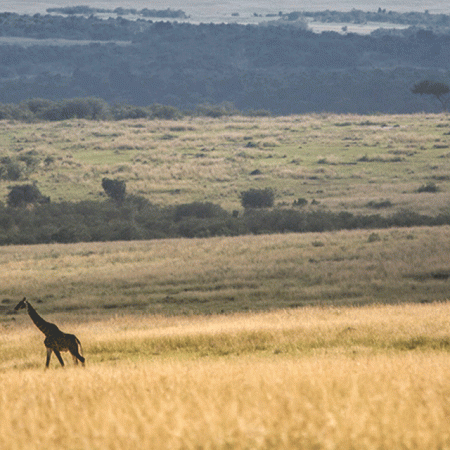
The Serengeti covers approximately 14,750 square kilometres, giving wildlife enormous areas in which to move, feed, reproduce and find water. Its name comes from the Maasai word siringet, commonly interpreted as “endless plains,” a fitting description of the landscape that stretches toward the horizon.
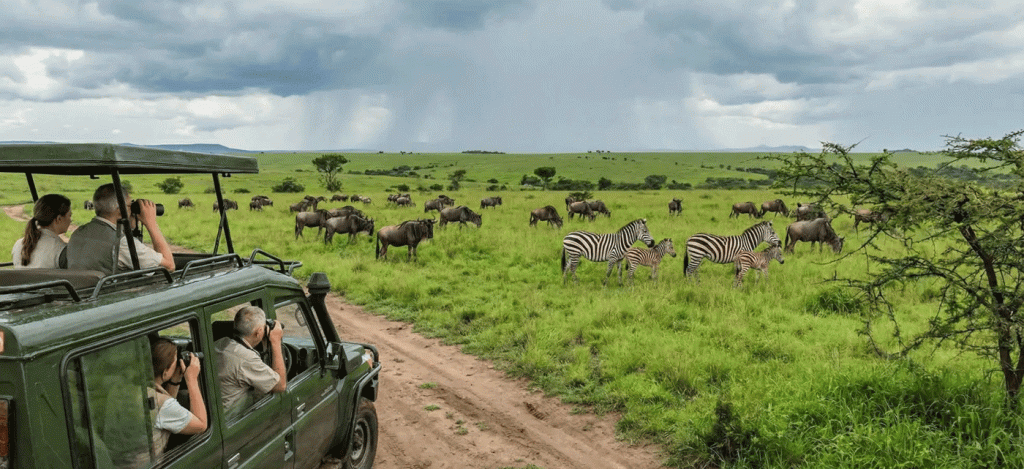
The park has gained worldwide recognition for the Great Migration when millions of wildebeest, zebras and gazelles move through the ecosystem in response to rainfall and fresh grazing. However the migration represents only one part of the Serengeti’s remarkable story.
The park supports lions, leopards, cheetahs, elephants, giraffes, buffaloes, hippos, crocodiles, hyenas, wild dogs in surrounding areas and hundreds of bird species. Its predators constantly interact with migrating and resident herbivores creating dynamic wildlife experiences throughout the year.
Beyond wildlife the Serengeti also preserves important ecological processes and landscapes that have developed over thousands of years. From sunrise over the plains to dramatic predator encounters almost every part of the park reveals another fascinating fact.
For travelers planning a Tanzania safari understanding these facts can make a Serengeti visit more meaningful and help explain why this ecosystem holds such exceptional natural importance.
The Serengeti Is One of Africa’s Most Famous Ecosystems
The Serengeti stands among Africa’s best-known wildlife ecosystems because of its extraordinary combination of open plains, abundant animals, seasonal rainfall and large-scale wildlife movements. Rather than functioning as an isolated wildlife destination the park forms part of a much larger ecosystem that connects different habitats across northern Tanzania and southern Kenya.
The broader Serengeti-Mara ecosystem allows animals to move according to changing environmental conditions. Rainfall determines where fresh grass appears, while rivers, waterholes and permanent vegetation provide important resources during drier periods.
This seasonal rhythm helps explain why the Serengeti can look completely different from one month to another. During wetter periods rainfall stimulates fresh plant growth and transforms sections of the landscape into vibrant grazing areas. During dry months grasses become shorter and water becomes more concentrated creating different wildlife-viewing opportunities.
The ecosystem supports an impressive range of herbivores and predators. Wildebeest, zebras, gazelles, buffaloes, elephants, giraffes and many other species share the landscape. Lions, cheetahs, leopards, hyenas and other predators depend on this abundance of prey.
The Serengeti also demonstrates how interconnected wildlife habitats can remain productive when natural ecological processes continue operating across large areas. Animals do not follow human boundaries; they respond to food, water, breeding opportunities, weather and seasonal changes.
For safari travelers this interconnectedness makes the Serengeti more than a collection of famous wildlife sightings. It represents a functioning ecosystem where thousands of natural interactions occur every day.
The Serengeti Covers an Enormous Area
One of the most fascinating facts about Serengeti National Park concerns its sheer size. The park covers roughly 14,750 square kilometres making it larger than many cities and regions that travelers may have visited before.
This enormous area creates room for wildlife to move naturally across different habitats. Instead of concentrating animals in one small location the Serengeti provides extensive plains, woodlands, rocky formations, river corridors and other environments.
The size also contributes to the feeling of wilderness that many visitors experience during a safari. Travelers can sometimes drive for long distances without seeing another vehicle particularly in less-visited areas of the park. The landscape can appear to stretch endlessly giving the Serengeti its famous reputation for open horizons.
Different sections of the park also offer different wildlife experiences. Seronera and the Central Serengeti provide productive habitats throughout much of the year. The Western Corridor contains the Grumeti River and surrounding habitats while northern areas provide important seasonal grazing grounds and wildlife movement routes.
Southern areas particularly the Ndutu region within the wider ecosystem become especially important during the calving season. These geographical differences demonstrate why travelers often combine several Serengeti regions during longer safaris.
The park’s size also supports biodiversity. Different habitats provide food, shelter, nesting sites, breeding grounds and water for numerous species.
This vast scale means that a Serengeti safari never represents the entire park in a single game drive. Every route reveals another portion of the ecosystem making exploration one of the destination’s most rewarding features.
The Great Migration Moves Through the Serengeti
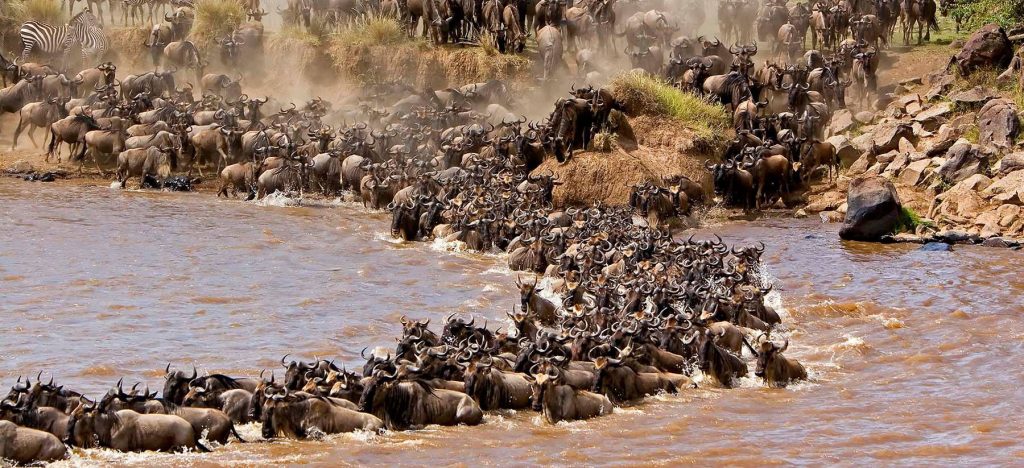
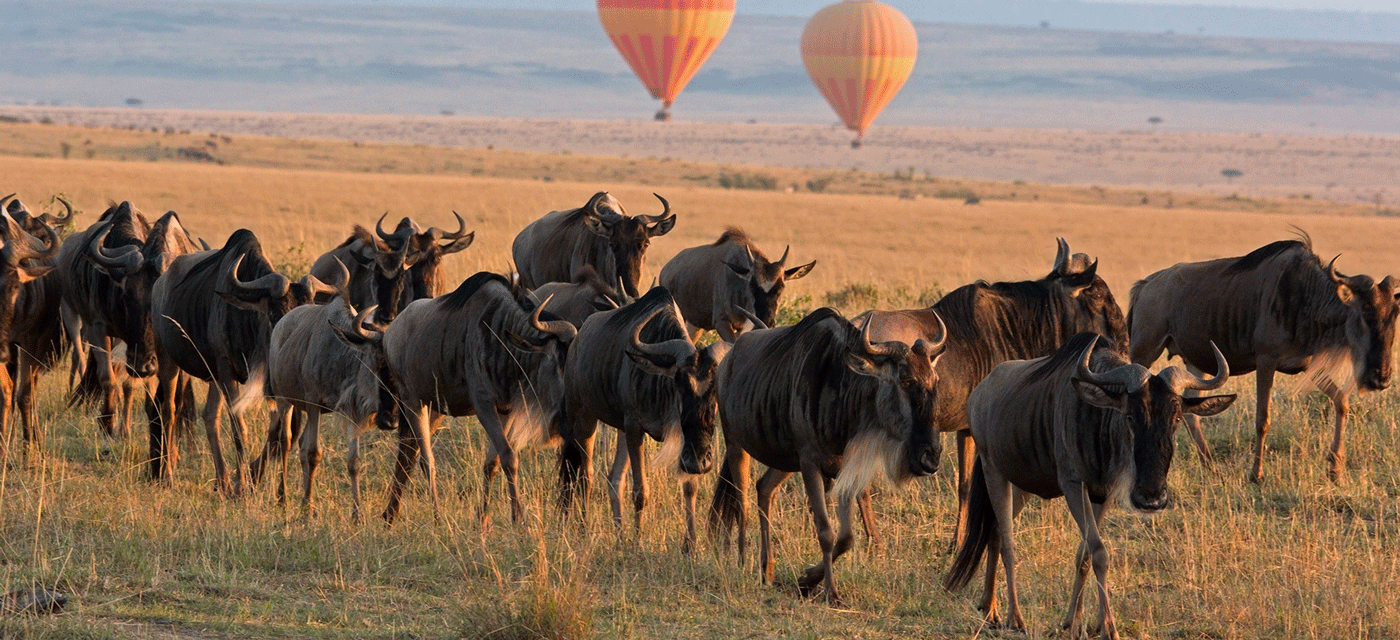
The Great Migration represents one of the most spectacular natural movements on Earth. Every year, huge numbers of wildebeest, zebras and gazelles move through the Serengeti-Mara ecosystem as they respond to rainfall, fresh grass and water availability.
Many people imagine the migration as a single event occurring at one specific location. In reality it functions as a continuous cycle that changes throughout the year. The herds move between different areas as environmental conditions change.
The southern plains commonly become important during the calving season when wildebeest give birth to large numbers of calves. Fresh grass provides mothers with valuable nutrition while the concentration of young animals attracts predators such as lions, cheetahs, hyenas and other carnivores.
As the season progresses the herds gradually move toward western and northern areas. The famous river crossings can occur when animals encounter rivers along their routes. These crossings can become dramatic wildlife spectacles although their timing and location remain unpredictable because animals make their own decisions.
Eventually many herds move into Kenya’s Maasai Mara before returning south as rainfall and grazing conditions change.
The migration demonstrates the relationship between wildlife and environmental conditions. Animals do not migrate simply because of a calendar date. They respond to rainfall patterns and the availability of nutritious grazing.
For visitors this means migration safaris require flexibility. Even during a recognized migration season the precise location of the herds can change quickly.
The Serengeti Supports the Big Five
The Serengeti provides habitat for the famous African Big Five: lion, leopard, elephant, buffalo and rhinoceros. The term originally referred to animals considered challenging and dangerous to hunt but modern safari tourism uses it primarily as a wildlife-viewing term.
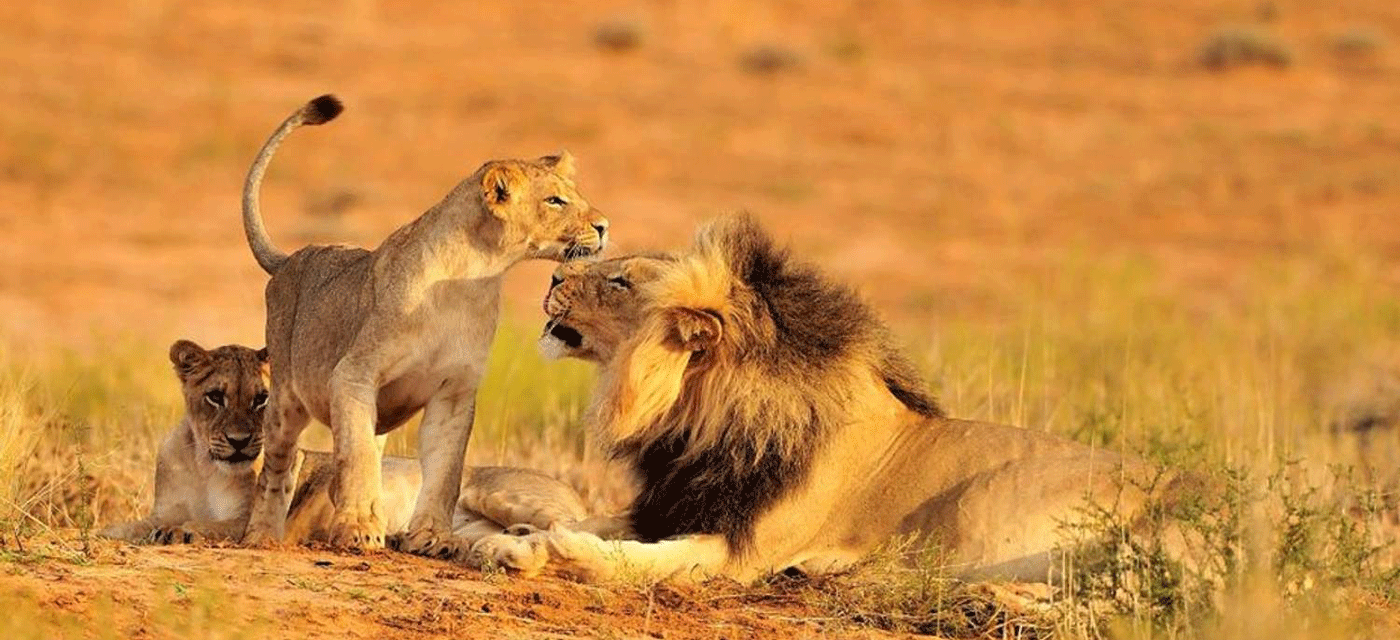
Lions represent one of the Serengeti’s most recognizable predators. They live in prides and often use open plains, rocky kopjes and shaded areas for resting between hunts. Their presence reflects the abundance of herbivores that sustain the ecosystem.
Leopards usually behave more discreetly. They often spend time in trees or dense vegetation, making them more challenging to locate. Experienced guides use tracks, behavior and habitat knowledge to improve the chances of finding them.
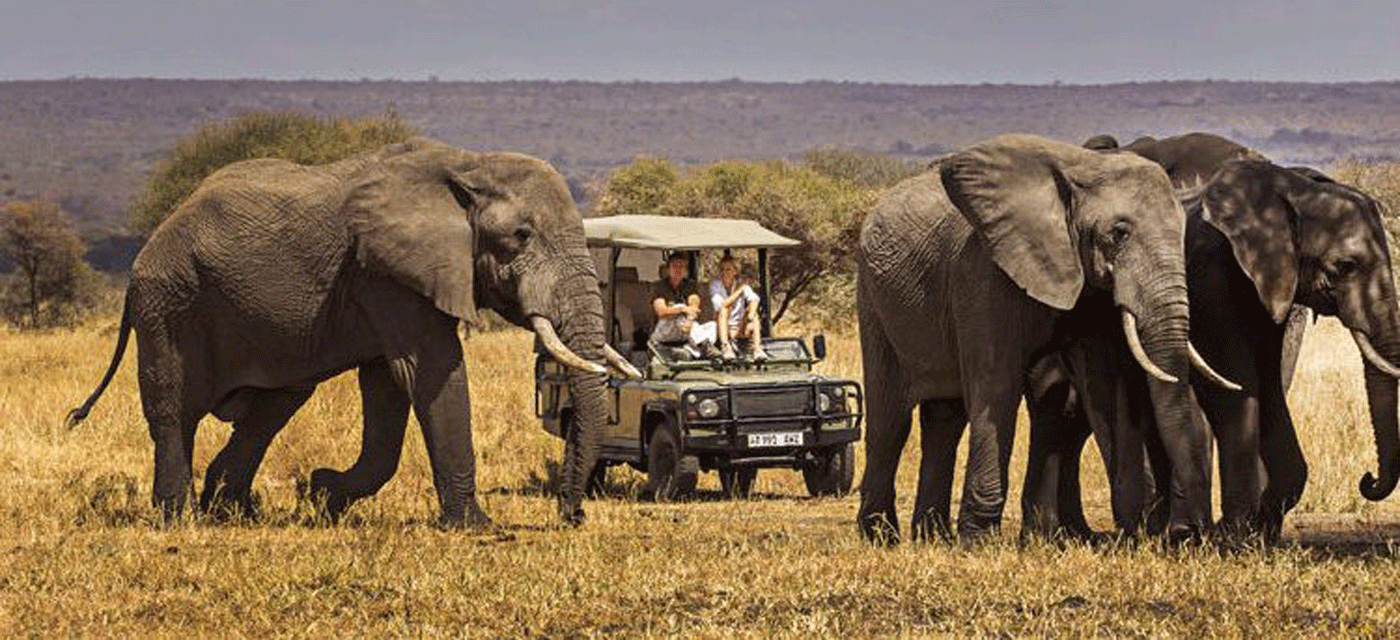
Elephants move through different habitats searching for vegetation and water. Their size and social behavior make encounters particularly memorable.
Buffaloes frequently gather in large herds and contribute significantly to the Serengeti’s herbivore population. They graze across grasslands and can become important prey for large predators.
Rhinoceros sightings are less common than sightings of the other four members of the Big Five. Black rhinos survive in protected areas of the wider Serengeti ecosystem and their conservation remains important.
Seeing all five during one safari depends on timing, location, habitat and luck. A responsible guide never guarantees specific sightings because wildlife moves freely through a natural environment.
The Big Five therefore represent only part of the Serengeti’s wildlife richness. Many smaller mammals, birds, reptiles, insects and other species contribute equally to the ecosystem.
The Serengeti Has One of the World’s Greatest Predator Populations
The Serengeti supports an impressive community of predators because its extensive herbivore populations provide a dependable source of food. Lions, cheetahs, leopards, spotted hyenas, jackals and other carnivores interact across the ecosystem.
Lions remain among the most visible predators. They often live in social prides and cooperate when hunting larger prey. Their ability to work together gives them opportunities to target animals that an individual predator might struggle to tackle alone.
Cheetahs follow a different strategy. They rely on speed and acceleration to pursue suitable prey, particularly smaller and medium-sized antelopes. Open plains provide the visibility and space they need.
Leopards use stealth rather than speed. Their spotted coats provide effective camouflage while their climbing ability allows them to rest in trees and protect food from competing predators.
Spotted hyenas play an important ecological role as both hunters and scavengers. Their powerful social groups can compete directly with lions and other predators for food.
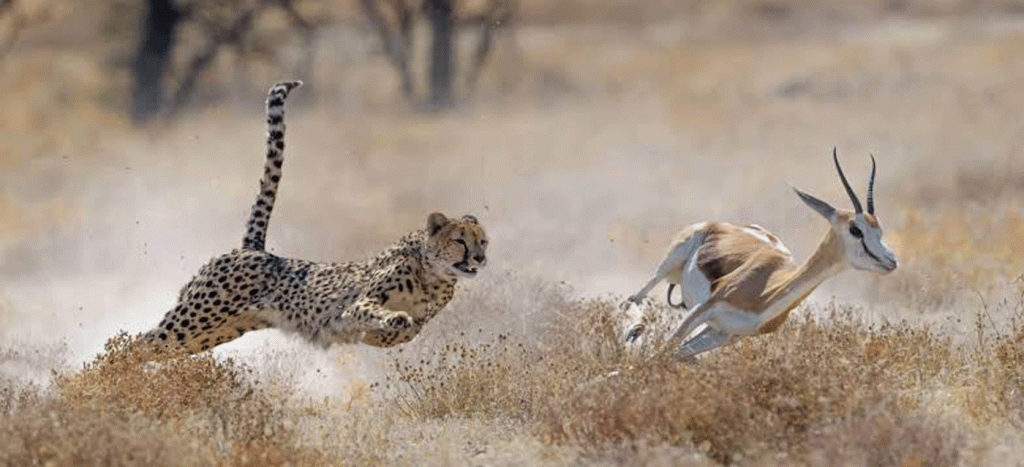
The interaction between these species creates one of the Serengeti’s most fascinating ecological features. Predators compete, cooperate within their own social groups, defend territories, raise young and adapt their hunting strategies to changing conditions.
Young animals also influence predator behavior. During calving periods the abundance of vulnerable newborns creates opportunities for carnivores, while mothers and herds attempt to protect their offspring.
These interactions make every game drive unpredictable. A quiet afternoon can suddenly become an important wildlife encounter when a guide discovers tracks, alarm calls or predator activity.
The Serengeti Contains Ancient Rock Formations Called Kopjes
Kopjes provide some of the most distinctive landscapes in the Serengeti. These rocky formations rise above the surrounding plains and consist of large granite boulders that weathered over extremely long periods.
Some kopjes appear like natural islands surrounded by grass. They create elevated viewpoints where animals can rest, watch their surroundings or seek shelter from environmental conditions.
Lions particularly favor certain kopjes because the rocks provide shade, elevated positions and excellent views across surrounding grasslands. Visitors may sometimes find lions resting between boulders during the heat of the day.
Kopjes also support smaller plants and animals that differ from those found on the surrounding plains. Cracks and shaded spaces provide shelter for reptiles, insects, birds and small mammals.
The rocks therefore contribute to biodiversity while also creating visually dramatic scenery.
Moru Kopjes represent one of the better-known examples. Their unusual shapes and rugged surfaces create excellent photographic backgrounds especially during early morning and late afternoon when changing sunlight emphasizes the textures of the rocks.
Kopjes also help travelers understand how geological features influence wildlife behavior. An apparently simple pile of rocks can provide shade, shelter, vantage points and nesting opportunities.
These formations demonstrate that the Serengeti’s natural appeal extends beyond large mammals. The landscape itself plays an active role in shaping where animals live and how they behave.
A safari through the Serengeti becomes more interesting when travelers recognize these geological features and understand why animals repeatedly use them.
The Serengeti Hosts Hundreds of Bird Species
The Serengeti does not belong only to mammals. Its diverse habitats support an impressive variety of birds making the park an important destination for birdwatchers as well as traditional safari travelers.
Bird species occupy different ecological niches throughout the park. Large birds such as ostriches move across open plains while vultures circle above wildlife activity and help remove animal remains from the ecosystem.
Birds of prey include eagles, hawks, kites and other raptors. Their excellent eyesight allows them to detect prey or carrion from considerable distances.
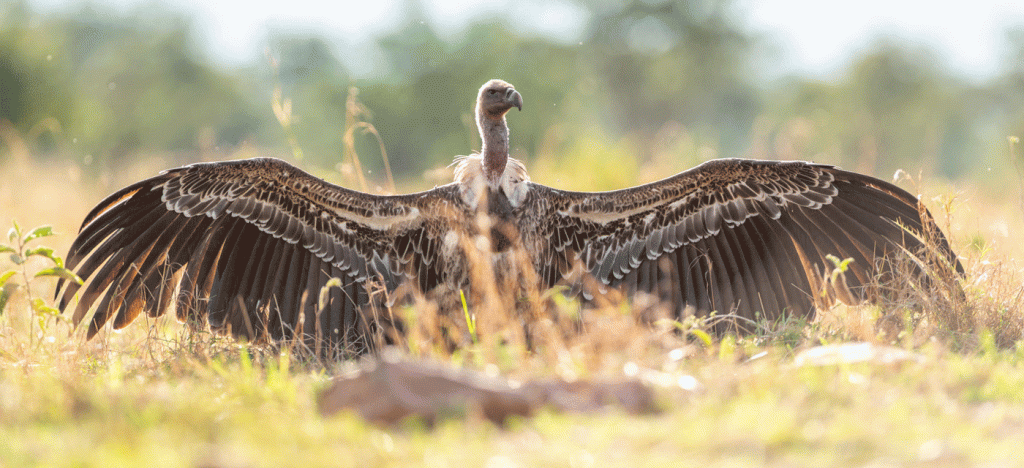
Smaller birds add color and sound to the landscape. Weavers, rollers, bee-eaters, starlings and various other species inhabit grasslands, trees, river corridors and rocky areas.
The presence of birds also provides useful ecological information. Some species respond quickly to changes in water availability, vegetation, insects and seasonal conditions.
Migratory birds add another dimension during certain periods of the year. Some species travel considerable distances between breeding and feeding areas while resident birds remain within the Serengeti throughout the year.
Birdwatching also encourages visitors to slow down and observe details that they might otherwise miss. A game drive focused only on large mammals can overlook fascinating behavior happening in trees, bushes, or the sky.
For photographers birds provide additional opportunities between major mammal sightings. Their flight patterns, colors and interactions can produce memorable images.
The Serengeti’s birdlife demonstrates the ecosystem’s biological diversity and proves that a safari can offer much more than the search for lions, elephants and wildebeest.
The Serengeti Experiences Distinct Wet and Dry Seasons
The Serengeti does not experience the same weather throughout the year. Seasonal changes in rainfall strongly influence vegetation, water availability, wildlife distribution and safari conditions.
The dry season generally creates clear skies, shorter grasses and more concentrated wildlife around remaining water sources. These conditions can make animals easier to observe in some areas because vegetation becomes less dense.
The wetter periods transform parts of the landscape. Rain stimulates grass growth, fills temporary water sources and creates fresh feeding opportunities for herbivores.
The so-called green season can produce spectacular scenery. Grasslands become greener, wildflowers may appear and many animals give birth during periods when food becomes more abundant.
Rain does not necessarily mean that travelers experience continuous storms throughout their safari. Rainfall can arrive as short afternoon or evening showers although patterns vary between years and locations.
Temperature also changes between morning, afternoon and evening. Early game drives can feel cool, while midday conditions can become considerably warmer.
These seasonal differences influence the type of safari experience travelers encounter. Someone visiting during a dry month may experience a different landscape from someone visiting during the green season.
Understanding weather patterns helps travelers select appropriate clothing, plan activities and set realistic expectations.
Rather than identifying one universally perfect season visitors can choose the period that matches their interests. Wildlife concentration, migration movements, green landscapes, photography and accommodation availability can all influence the decision.
The Serengeti Is a UNESCO World Heritage Site
The Serengeti holds international recognition because of its exceptional natural importance. UNESCO designated the Serengeti National Park as a World Heritage Site in 1981.
This recognition reflects the park’s outstanding ecological value, biodiversity and large-scale natural processes. The Serengeti represents one of the world’s important remaining ecosystems where wildlife continues to move across extensive natural habitats.
The annual migration forms an important part of the ecosystem’s global significance. However the Serengeti’s value extends beyond the migration itself.
Its diverse habitats support numerous mammal, bird, reptile and plant species. Large populations of herbivores sustain complex predator communities while seasonal rainfall drives changes in vegetation and animal distribution.
World Heritage recognition also highlights the importance of conserving such ecosystems for future generations. Protecting the Serengeti requires cooperation among conservation authorities, local communities, tourism operators, researchers, guides and visitors.
Travelers contribute to conservation through responsible tourism practices. Following park regulations, avoiding disturbance of animals staying on designated routes where required and respecting wildlife distances all help protect the environment.
The UNESCO designation also gives international attention to the Serengeti and reinforces its importance as part of global natural heritage.
For visitors this recognition adds another dimension to a safari. They are not simply visiting a famous tourist destination they are experiencing a protected ecosystem recognized internationally for its exceptional natural characteristics.
The Serengeti Has No Guarantee of Wildlife Sightings
One fascinating fact that every safari traveler should understand is that the Serengeti operates according to nature rather than a fixed schedule. Guides can use experience and local knowledge to improve wildlife-viewing opportunities but nobody can guarantee that a particular animal will appear.
Animals constantly move in response to food, water, weather, territory, breeding and other factors. A lion seen in one location in the morning may move several kilometres before another vehicle reaches the area.
This unpredictability forms an important part of the safari experience. A game drive becomes an exploration rather than a predetermined wildlife show.
Experienced guides look for tracks, fresh footprints, alarm calls, vultures, unusual animal behavior and other clues. These signs can indicate that predators or other wildlife may be nearby.
Patience also plays an important role. A vehicle may stop beside an apparently empty patch of grass only for a camouflaged cheetah or leopard to become visible after careful observation.
This uncertainty makes every safari different. Even travelers visiting the Serengeti multiple times can experience completely different wildlife encounters.
Responsible tourism also requires respecting the animals’ behavior. Guides should avoid actions that unnecessarily disturb wildlife merely to provide a closer photograph.
The goal should not simply be to collect a checklist of species. Instead, travelers can appreciate the natural behaviors, interactions, landscapes and ecological processes unfolding around them.
That approach often produces more meaningful memories than chasing guaranteed sightings.
The Serengeti Plays a Major Role in Tanzania’s Conservation
The Serengeti represents an important part of Tanzania’s conservation network. Protecting such a large ecosystem requires long-term management of wildlife, habitats, tourism, research and surrounding landscapes.
Conservation efforts help protect threatened species, maintain wildlife populations and preserve ecological processes. Rangers, researchers, conservation organizations, government authorities, tourism operators and local communities all contribute in different ways.
Tourism also creates an economic connection between wildlife conservation and visitors. Safari revenues can support protected-area management and contribute to local economic activity.
Responsible tourism therefore matters. Travelers can support conservation by choosing reputable operators, following park rules, respecting wildlife, reducing waste and avoiding behavior that damages natural habitats.
The Serengeti also demonstrates why conservation must extend beyond individual animals. Protecting a lion means more than protecting the lion itself. The ecosystem must also maintain prey populations, water sources, suitable habitat and space for natural movement.
Migration makes this especially important because animals cross different landscapes throughout the year. Conservation planning therefore needs to consider the wider Serengeti-Mara ecosystem rather than treating individual protected areas as completely independent.
The continuing survival of this ecosystem depends on balancing conservation with human needs and responsible tourism.
For travelers understanding this connection can make a safari more meaningful. Every game drive takes place within a much larger conservation story that involves wildlife, landscapes, people and future generations.
The Serengeti Changes Dramatically Throughout the Year
The Serengeti can look like a completely different destination depending on when travelers visit. Seasonal rainfall changes the appearance of the plains, wildlife distribution, road conditions and overall safari atmosphere.
During dry periods golden grasses dominate many areas. Wildlife can become easier to spot against shorter vegetation while animals may concentrate around reliable water sources.
When rains arrive the landscape changes rapidly. Fresh grass emerges, temporary pools fill and the plains become greener. Migratory herds respond to these conditions by moving toward areas offering better grazing.
The calving season adds another dramatic dimension. Large numbers of newborn wildebeest arrive within a relatively short period, attracting predators and creating intense wildlife activity.
Later the herds continue their movement toward western and northern areas. The timing of river crossings can vary making exact predictions impossible.
This seasonal transformation explains why experienced safari travelers often return to the Serengeti more than once. A visit during the dry season can feel entirely different from one during the green season.
The changing scenery also benefits photographers. Golden landscapes, green plains, dramatic clouds, newborn animals, predator encounters and migratory herds provide different visual opportunities throughout the year.
Rather than asking whether the Serengeti remains the same throughout the year travelers can think of it as an ecosystem that continuously changes.
That constant transformation is one of the reasons the Serengeti remains fascinating even for people who have visited before.
The Serengeti Offers More Than Traditional Game Drives
A traditional 4×4 game drive remains the most popular way to explore the Serengeti, but visitors can experience the ecosystem through other activities depending on location, regulations and safari arrangements.
Hot-air balloon safaris provide a different perspective over selected parts of the ecosystem. From above, travelers can see the enormous scale of the plains, winding rivers, wildlife trails and changing landscapes.
Walking experiences may also operate in permitted areas with qualified guides and appropriate authorization. Walking changes the safari experience by focusing attention on smaller details such as tracks, plants, insects, sounds and animal signs.
Photographic safaris provide another specialized approach. Travelers can spend additional time observing animal behavior and working with guides who understand lighting, positioning and wildlife movement.
Cultural experiences around the wider Serengeti ecosystem can also help travelers understand the relationship between people and the landscape when arranged responsibly and with appropriate local participation.
Each activity offers a different way to understand the Serengeti. A vehicle safari provides mobility across large distances while walking encourages close observation of the environment. A balloon flight emphasizes the scale and patterns of the landscape.
Travelers should choose activities based on their interests, itinerary, budget and the locations they visit.
The most important point is that the Serengeti offers multiple ways to experience its natural environment. The destination can appeal to wildlife enthusiasts, photographers, nature lovers, birdwatchers, adventure travelers and first-time safari visitors alike.
The Serengeti Is Home to the Famous Seronera Valley
Seronera sits in the Central Serengeti and represents one of the park’s most productive wildlife areas. The region combines grasslands, rocky formations, riverine vegetation and water sources that attract wildlife throughout much of the year.
The area has earned a reputation for predator sightings because resident wildlife populations remain relatively strong. Lions, cheetahs, leopards, hyenas and other carnivores can occur within the broader Seronera landscape.
Its location also makes Seronera an important base for exploring different parts of Central Serengeti. Travelers staying in the area can access several game-drive routes without needing to relocate every day.
The Seronera River provides water and supports vegetation helping maintain wildlife activity even when surrounding areas become drier.
The area’s combination of habitats creates opportunities to see both predators and herbivores. Giraffes, zebras, wildebeest, gazelles, buffaloes, elephants and other species may appear during game drives.
Seronera also demonstrates how water influences wildlife distribution. Animals need reliable resources so river systems and other permanent water sources can become important gathering areas.
For photographers the varied landscape provides opportunities for both close wildlife images and broader environmental photographs.
However wildlife remains unpredictable. The presence of a productive habitat does not guarantee a particular sighting on any given day.
Seronera’s reputation comes from its ecological conditions rather than a promise of sightings making it an important part of the Central Serengeti safari experience.
The Serengeti Is an Ecosystem of Constant Movement
Movement defines the Serengeti. Even when visitors see a seemingly peaceful landscape, animals continuously travel, graze, hunt, rest, reproduce and defend territories.
Wildebeest move across seasonal grazing areas. Zebras travel alongside them and often use different feeding strategies. Gazelles occupy different habitats depending on species and environmental conditions.
Predators also move continuously. Lions patrol territories, cheetahs search for suitable hunting opportunities, leopards shift between resting areas and hunting grounds while hyenas travel between dens, hunting areas and carcasses.
Elephants may cover considerable distances while searching for water and vegetation.
Birds move between feeding and nesting areas, while insects respond to temperature, rainfall and plant growth.
This constant movement makes the Serengeti a dynamic ecosystem rather than a static landscape.
Weather provides one of the strongest influences. Rainfall can change the availability of food and water prompting herbivores to move. Predators then follow their prey creating a chain of ecological responses.
This movement also explains why guides continually monitor tracks and animal behavior. A good safari does not simply drive randomly across the plains. Guides interpret the environment and use available information to determine where wildlife activity may occur.
For visitors the lesson is simple: the Serengeti is always changing.
Every game drive provides a temporary glimpse into a much larger natural cycle. The animals seen today may occupy completely different areas tomorrow while new species may appear as conditions change.
That unpredictability gives the Serengeti its sense of adventure.
Why the Serengeti Remains a Must-Experience Safari Destination
The Serengeti combines extraordinary wildlife, vast landscapes, seasonal movements, ancient geological features and complex ecological relationships in one remarkable destination. Its appeal does not depend on a single attraction.
The Great Migration provides one of the world’s most famous wildlife spectacles but resident wildlife ensures that the Serengeti remains rewarding outside migration periods as well.
Travelers can encounter lions resting beneath trees, cheetahs scanning open plains, elephants moving through woodland, giraffes browsing on vegetation, hippos gathering in water and countless birds filling the landscape with movement and sound.
The environment itself also creates unforgettable experiences. Sunrise can transform the plains with soft golden light while evening skies create dramatic silhouettes across kopjes and distant grasslands.
The Serengeti’s enormous size allows visitors to experience a genuine sense of wilderness. Different regions offer different habitats and wildlife patterns encouraging travelers to explore beyond the most famous locations.
For first-time visitors the park provides an introduction to many of Africa’s most iconic wildlife experiences. For returning travelers, seasonal changes and unpredictable animal behavior ensure that another visit can reveal something completely different.
A well-planned safari should therefore consider more than simply the number of days spent inside the park. Travelers should also consider season, region, accommodation, wildlife interests, travel pace and the type of experience they want.
With the right planning the Serengeti can become more than a sightseeing destination. It can provide a deeper understanding of wildlife, conservation, landscapes and the natural cycles that continue shaping this extraordinary ecosystem.
Best Time to Visit for Safari Lovers
When planning a safari to the iconic Serengeti National Park understanding the seasonal dynamics is crucial for maximizing wildlife viewing opportunities. The most favorable times for safari enthusiasts to visit largely hinge upon weather patterns and animal behaviors particularly the famed Great Migration. This natural spectacle typically occurs between late June and early September drawing countless tourists eager to witness the dramatic river crossings of wildebeest and zebra. These months feature dry weather and minimal vegetation, facilitating easier spotting of animals.
While the peak season characterized by higher visitor numbers and more expensive accommodation rates, offers unparalleled wildlife experiences the off-peak season presents its own unique advantages. The off-peak months, notably from late March to early May coincide with the “green season”, when the landscape is lush and vibrant. Though rainfall can be frequent during this period it is also when various species, including migratory birds and new offspring can be best observed. Visitors during these months benefit from fewer tourists, enhanced accessibility and potentially lower prices on travel packages.
Moreover the transition months of November and December serve as a bridge between the wet and dry seasons. This time is characterized by moderate weather conditions and an abundance of wildlife as animals tend to congregate around water sources. Thus for safari enthusiasts seeking a rich experience without the crowds visiting during these transitional periods can be both rewarding and cost-effective.
In essence while the Serengeti National Park is a year-round destination timing your visit in accordance with the seasonal wildlife patterns can significantly enhance your safari experience. Whether you choose the bustling peak season or the quieter off-peak months the park’s allure remains constant making it a must-visit location for any safari lover.
Conclusion
The Fascinating Facts About Serengeti National Park reveal an ecosystem shaped by movement, rainfall, wildlife, geological history and conservation. From its enormous grasslands and ancient kopjes to the Great Migration and remarkable predator populations the Serengeti offers far more than a traditional safari checklist.
Every season changes the landscape and influences where animals feed, breed, hunt and travel. The park’s connection to the wider Serengeti-Mara ecosystem also demonstrates why protecting large, connected habitats remains essential for wildlife.
For travelers planning a Tanzania safari Serengeti Travels can help turn these facts into a real experience by creating itineraries around wildlife interests, seasonal conditions safari duration and preferred accommodation.
Whether you want to follow the Great Migration, search for Africa’s iconic predators, explore the Central Serengeti, experience the green season or simply enjoy the endless plains the Serengeti offers countless opportunities to discover something new.
The most fascinating fact of all may be that no two safaris are exactly alike. Wildlife moves, weather changes, landscapes transform and unexpected encounters happen every day. That natural unpredictability is what keeps the Serengeti one of Tanzania’s most extraordinary safari destinations.