 English
 Deutsch
 Italia
May 21, 2026
Top Exclusive Experiences You Can Only Have in Serengeti
Introduction
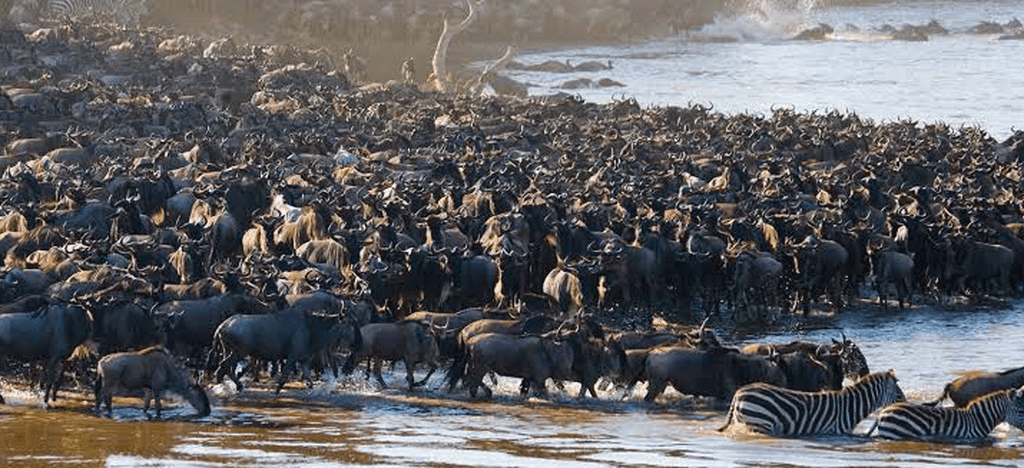
Top Exclusive Experiences You Can Only Have in Serengeti begin in one of the most extraordinary wildlife ecosystems on Earth located in northern Tanzania and extending into the wider Serengeti-Mara ecosystem. The Serengeti is not just a national park or a safari destination it is a vast, living natural system where millions of animals, predators and landscapes interact in continuous motion.
What makes the Serengeti truly exceptional is not only the presence of wildlife but the exclusive nature of its experiences. Here nature is not arranged for visitors instead visitors enter a world that functions entirely according to its own rules. The result is a safari experience that is raw, unpredictable and deeply immersive.
From the Great Migration involving millions of animals to intimate encounters with predators on the hunt and peaceful nights beneath endless star-filled skies the Serengeti offers experiences that cannot easily be replicated elsewhere. Each moment is shaped by natural forces such as rainfall, survival pressure, seasonal movement and ecological balance.
Unlike many wildlife destinations where sightings may be limited or controlled the Serengeti allows visitors to observe natural processes unfolding in real time and on an extraordinary scale. Every game drive, walking safari or aerial experience can reveal something different making each visit unique.
This guide explores 20 of the most exclusive experiences available in the Serengeti ecosystem highlighting not only what you can see but also how deeply you can connect with nature while experiencing this remarkable wilderness.
Table of contents
- Introduction
- The Great Migration
- Mara River Crossing
- Grumeti River Crossing
- Hot Air Balloon Safari
- Off-Road Wildlife Tracking
- Full-Day Remote Safari Experience
- Sleeping in Luxury Tented Camps
- Walking Safari Experience
- Predator Hunting Sequences
- Night Game Drives
- Bush Dining in the Open Wilderness
- Maasai Cultural Experience
- Calving Season Experience
- Big Cat Territory Tracking
- Sunrise Safari Drives
- Sunset Safari Drives
- Photographic Safari Expeditions
- Hidden Valley Exploration
- Elephant Herd Encounters
- Silent Wilderness Moments
- Frequently Asked Questions of Top Exclusive Experiences You Can Only Have in Serengeti
- Conclusion
The Great Migration
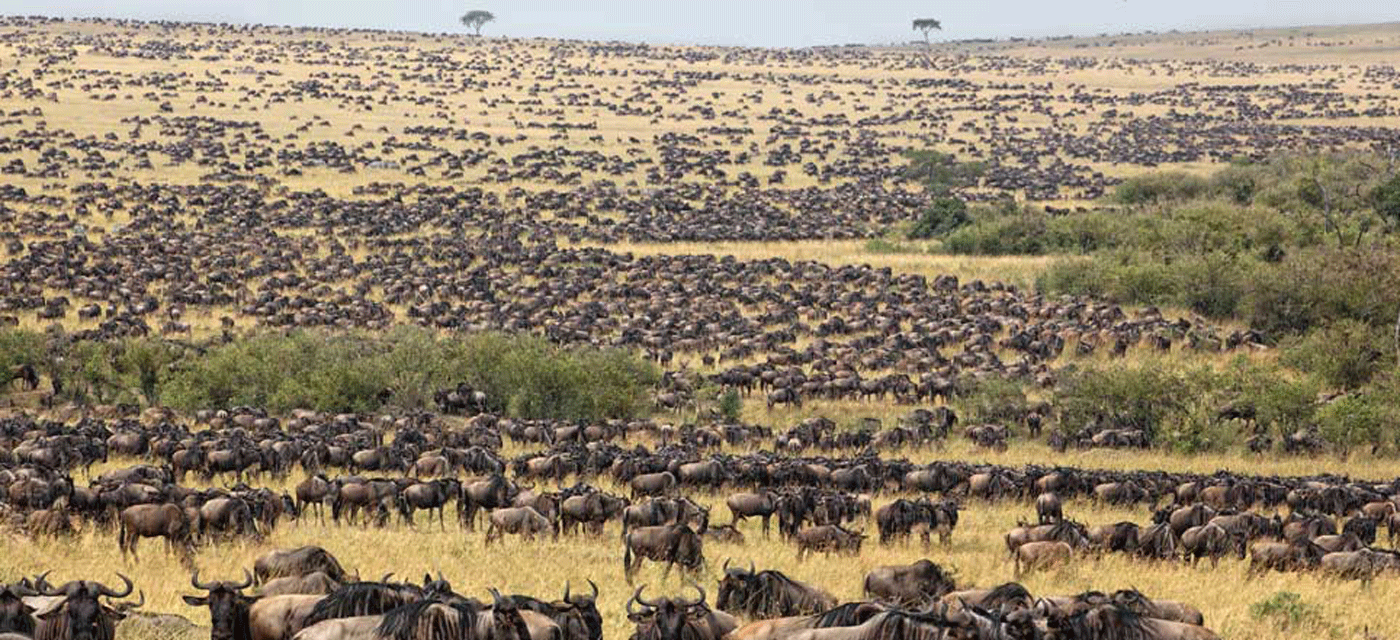
The Great Migration is the most powerful natural event in the Serengeti and one of the greatest wildlife spectacles on Earth. It involves more than two million wildebeest, zebras and gazelles moving in a continuous circular route across the Serengeti ecosystem and into the Maasai Mara. What makes it truly exclusive is that it is not a single event it is a living system in constant motion, driven by rainfall, grass growth and survival pressure.
Unlike predictable tourist attractions the migration has no fixed starting point or ending season. It shifts month by month sometimes even week by week. This means every safari experience is different. One visitor may witness vast herds in the southern plains during calving season while another may see them crossing rivers in the north.
The experience is not peaceful it is a survival journey. Animals must deal with exhaustion, predators, hunger and dangerous terrain. Lions follow the herds, cheetahs chase the weak and hyenas wait for opportunity. This creates a fully functioning predator-prey ecosystem in motion.
The most visually powerful aspect is scale. Herds stretch to the horizon creating living landscapes that appear like moving rivers of animals. Dust rises under thousands of hooves especially during dry conditions giving the entire environment a dramatic atmosphere.
What makes this experience truly exclusive is that it cannot be controlled or staged. It is one of the last remaining large-scale natural migrations on Earth unchanged for thousands of years and still operating exactly as nature intended.
Mara River Crossing
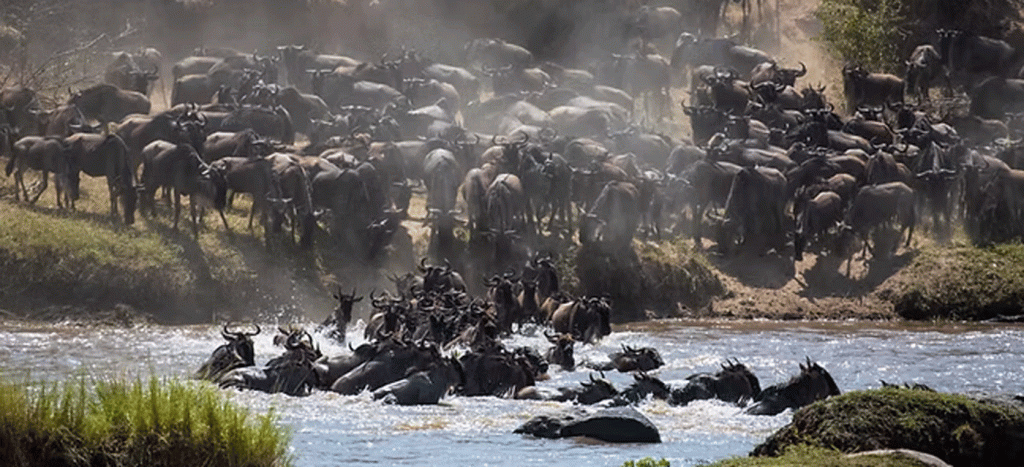
The Mara River crossing is one of the most dramatic wildlife experiences in the world. It occurs when migrating herds attempt to cross the crocodile-infested Mara River between Tanzania and Kenya. What makes this experience exclusive is its unpredictability no schedule, no warning and no guarantee.
Thousands of animals gather at the riverbanks in a state of tension. Some arrive and wait for hours or even days without crossing. The pressure builds as the herd becomes restless. Eventually one or a few animals make the first move triggering a chain reaction.
What follows is chaos in its purest form. Animals plunge into fast-moving water struggling against strong currents while massive Nile crocodiles wait below. Panic spreads quickly and the herd becomes a mix of survival instinct and confusion. Some animals successfully reach the opposite bank while others are dragged underwater or swept downstream.
This moment is emotionally intense for observers. It is not entertainment it is raw survival happening in real time. Every second matters and outcomes are unpredictable. Guides position vehicles at safe viewing points, often from elevated riverbanks allowing visitors to witness the action without interfering. Even from a distance, the sound, movement and energy of the crossing are overwhelming.
The exclusivity comes from rarity and timing. You can spend days waiting without seeing anything and then suddenly witness one of nature’s most powerful events within minutes.
Grumeti River Crossing
The Grumeti River crossing is one of the most underrated yet exclusive Serengeti experiences. Located in the western corridor of the ecosystem it is part of the early migration route before herds reach the Mara River.
What makes Grumeti unique is its intimacy. Unlike the Mara River which attracts larger crowds Grumeti is more remote and less visited. This creates a quieter and more private safari experience where you may feel completely alone in the wilderness.
The river itself is narrow in some areas but extremely dangerous due to the presence of large Nile crocodiles that have adapted specifically to this crossing point. These crocodiles are often older, larger and more experienced hunters.
The crossing process is similar to the Mara River but often more concentrated. Herds gather tightly creating high pressure before crossing. Once movement begins the scene becomes rapid and intense. The confined river space means animals are packed closely together, increasing both confusion and danger.
What makes this experience exclusive is not just the wildlife action but the setting. The western Serengeti has rolling hills, woodland patches and fewer tourist vehicles. This gives the entire experience a sense of untouched wilderness. Grumeti crossings are also unpredictable meaning timing is never guaranteed. However when they occur, they offer one of the most powerful and raw wildlife encounters in Africa.
Hot Air Balloon Safari
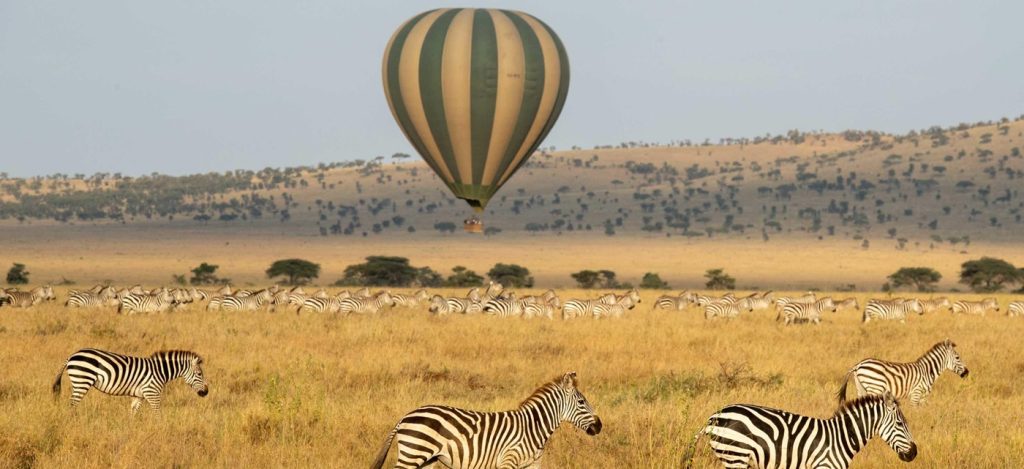
A hot air balloon safari offers one of the most peaceful and visually stunning ways to experience the Serengeti. It begins before sunrise when the balloon is inflated in darkness and the savannah is still silent. As the balloon rises the entire ecosystem slowly reveals itself under the first light of day.
The exclusivity of this experience comes from perspective. Instead of being inside the landscape you are floating above it observing patterns that are impossible to see from the ground. Herds appear as moving shapes rivers trace natural boundaries and predator movements become visible as strategic paths.
The silence is one of the most powerful elements. There is no engine noise only wind movement and occasional burner flames. This creates a calm almost meditative atmosphere. At sunrise the Serengeti transforms visually. Golden light spreads across the plains, long shadows stretch across the land and wildlife becomes active. Elephants move slowly through acacia trees, giraffes feed on treetops and predators return from nighttime hunts.
This aerial view reveals the true scale of the Serengeti ecosystem. It is not just a collection of animals it is a connected system of movement, survival and geography. The experience ends with a bush breakfast in a remote location often set up in the wilderness.
This combination of silence, altitude and natural beauty makes it one of the most exclusive safari experiences in Africa.
Off-Road Wildlife Tracking
Off-road wildlife tracking is one of the most immersive safari experiences in the Serengeti ecosystem. It is only allowed in specific areas and under strict regulation making it both exclusive and carefully controlled.
Unlike standard safaris where vehicles must remain on designated tracks off-road access allows guides to follow animals directly across open terrain. This flexibility changes the entire nature of wildlife viewing.
Instead of brief sightings from a distance visitors can observe detailed behavior over time. For example following a lion pride may reveal resting patterns, social bonding, territorial marking and hunting preparation. With cheetahs it may allow full observation of stalking and chase sequences.
The key advantage is adaptability. Wildlife does not follow roads so being able to move with animals creates a more natural and continuous viewing experience. Another important aspect is privacy. Off-road regions are often remote meaning fewer vehicles and less human presence. This increases the feeling of wilderness and reduces distractions during sightings.
Guides play a crucial role, ensuring both safety and ethical wildlife distance. They understand animal behavior deeply and know how to position vehicles without disturbing natural activity. This experience is exclusive because it bridges the gap between observation and participation. It allows visitors to not just see wildlife but to follow and understand it in real time.
Full-Day Remote Safari Experience
A full-day safari in the Serengeti is one of the most immersive ways to experience the ecosystem because it removes the usual structure of short game drives and replaces it with continuous exploration. Instead of returning to camp at midday you remain in the wild from morning until evening following wildlife movement as it naturally unfolds throughout the day.
What makes this experience exclusive is the depth of observation it allows. Wildlife behavior changes constantly depending on temperature, time of day and predator activity. Early morning often begins with hunting or movement midday is usually rest time for many species and late afternoon brings renewed activity. A full-day safari allows you to witness all these phases without interruption.
Remote regions of the Serengeti are key to this experience. These areas are far from main tourist routes, meaning fewer vehicles and more natural behavior from animals. Without crowds’ wildlife feels less disturbed and sightings become more authentic.
Guides plan flexible routes depending on real-time animal movement. If a predator is tracking prey or a herd begins migrating in a new direction the safari can adjust instantly. This flexibility increases the chance of witnessing rare events. Lunch is often served as a bush picnic under shade trees or near safe open areas. This keeps you fully inside the ecosystem instead of returning to artificial environments.
The exclusivity comes from time, space and immersion. You are not just visiting the Serengeti you are living inside its daily rhythm for an entire day.
Sleeping in Luxury Tented Camps
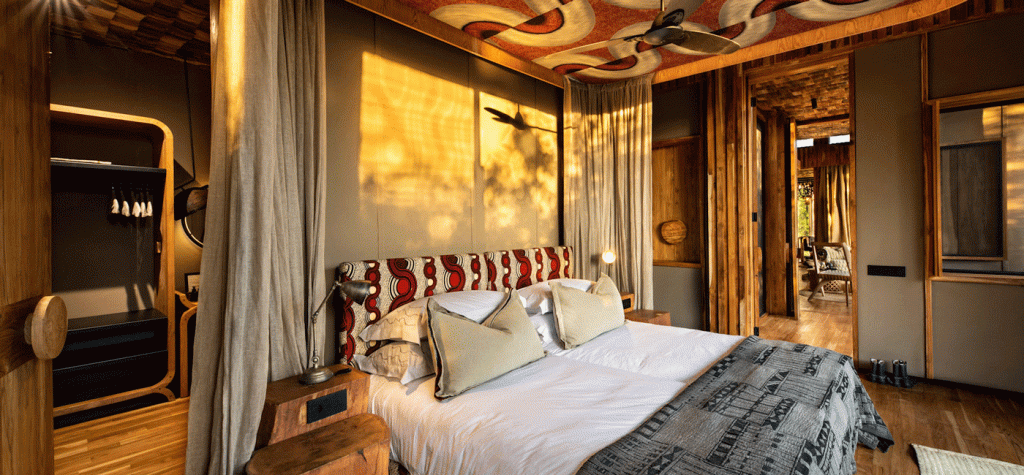
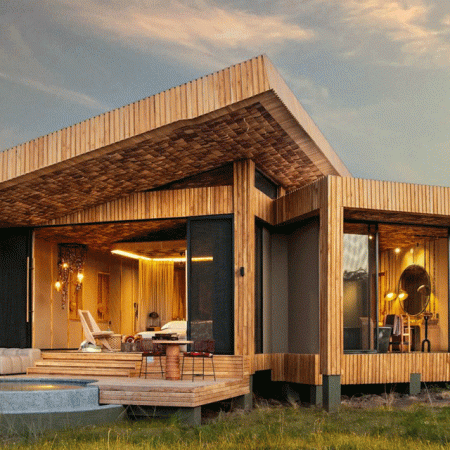
Luxury tented camps in the Serengeti offer a rare balance between comfort and immersion. Unlike traditional hotels these camps are located deep inside the wilderness meaning you are constantly surrounded by natural sounds, sights and movement.
What makes this experience exclusive is the level of proximity to wildlife combined with high-end comfort. Tents are designed with real beds, private bathrooms and elegant interiors, yet they remain open enough to keep you connected to nature.
At night the Serengeti becomes completely different. Without artificial light the sky transforms into a vast display of stars. The Milky Way is often clearly visible and the sense of scale becomes overwhelming. There is no noise from cities only natural sounds. You may hear lions roaring in the distance, hyenas communicating or elephants moving near camp. These sounds are not background noise they are part of the environment you are sleeping in.
The experience is both peaceful and intense. It combines luxury comfort with the feeling of being inside a wild ecosystem. Some camps are unfenced meaning wildlife can move nearby adding to the realism of the experience. Even simple routines like waking up drinking coffee at sunrise or sitting around a campfire become meaningful because of the setting.
This experience is exclusive because it removes separation between human comfort and wild nature creating full environmental immersion without sacrificing safety or luxury.
Walking Safari Experience
A walking safari transforms the Serengeti experience completely by removing the vehicle barrier and placing you directly on foot in the wilderness. Guided by trained professionals and armed rangers you explore the ecosystem at a human pace rather than a mechanical one.
What makes this experience exclusive is the shift in perception. In a vehicle, focus is on large animals. On foot everything becomes important tracks, insects, plants, soil texture, wind direction and bird calls. The ecosystem becomes layered and detailed.
Guides teach tracking skills, showing how to interpret footprints, droppings and broken vegetation. This allows you to understand what animals passed through, how recently and what they were doing. The landscape becomes a story written in signs.
Encounters with large wildlife are handled carefully and at safe distances but even seeing animals from afar feels more powerful when experienced on foot. The absence of an engine increases awareness and emotional connection. Walking safaris also highlight the importance of smaller species. Birds, ants, dung beetles and plant life all play essential roles in the ecosystem. This creates a deeper ecological understanding.
The pace is slow and intentional allowing time for observation and reflection. Every step becomes meaningful. This experience is exclusive because it turns safari travel into active participation rather than passive observation offering a completely different understanding of the Serengeti.
Predator Hunting Sequences
The Serengeti is one of the best places in Africa to observe predator behavior especially hunting sequences. This is due to the high density of prey animals created by the Great Migration and the stable predator populations. What makes this experience exclusive is the opportunity to witness complete hunting cycles from beginning to end. This includes stalking, positioning, chase, capture and feeding.
Lions often hunt in coordinated groups, using teamwork and strategy. Cheetahs rely on speed and precision launching short but explosive chases. Leopards use stealth and patience often attacking from trees or hidden positions. Hyenas combine intelligence and endurance in group hunts. These events are unpredictable but frequent enough in the Serengeti to create real chances of witnessing them.
Emotionally predator hunts can be intense to watch. However, they are a natural part of ecosystem balance. Predators control herbivore populations and remove weak individuals maintaining overall health in the system. The exclusivity comes from visibility. In many ecosystems predator hunts are rare or occur in dense vegetation where they cannot be seen. In the open plains of the Serengeti visibility is much higher.
Every hunt is different. Some succeed, some fail and some end in long chases that cover large distances. This makes the Serengeti one of the most dynamic predator viewing environments in the world.
Night Game Drives
Night game drives reveal an entirely different side of the Serengeti that cannot be seen during daylight hours. Many animals in the ecosystem are nocturnal meaning they are active only after sunset. What makes this experience exclusive is access to hidden behavior. Using controlled spotlighting guides can locate animals such as genets, civets, bush babies, aardvarks and other rarely seen species.
Even familiar animals behave differently at night. Lions may be active hunters’ leopards become more mobile and hyenas often move in coordinated groups. The environment itself feels different. Darkness increases awareness of sound, smell and movement. Every noise becomes significant and visibility is limited to illuminated areas creating a sense of mystery.
Night drives are only allowed in specific areas, making them rare and highly controlled. This exclusivity ensures minimal disturbance to wildlife while offering unique viewing opportunities. The emotional experience is also different. The Serengeti at night feels more intense, unpredictable and immersive compared to daytime safaris.
This experience is exclusive because it reveals a completely hidden ecosystem that most visitors never see.
Bush Dining in the Open Wilderness
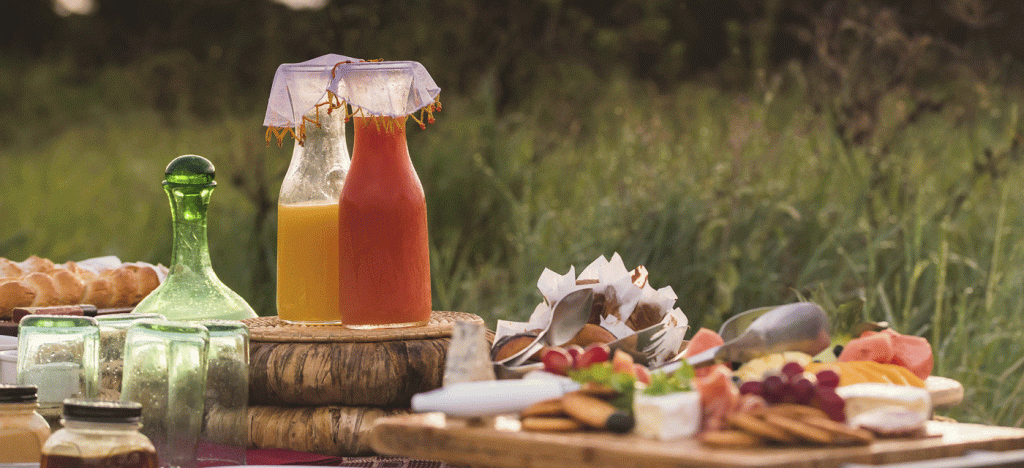
Bush dining in the Serengeti is one of the most refined yet deeply natural experiences you can have. Instead of eating inside a lodge or enclosed restaurant, meals are prepared and served in open wilderness settings often surrounded by savannah landscapes, acacia trees or seasonal riverbeds.
What makes this experience exclusive is the combination of luxury and raw environment. Tables are carefully arranged in safe, scenic locations, complete with elegant setups, fine dining service and sometimes candlelight or lanterns. Yet just beyond the dining area lies untouched wilderness where wildlife continues its natural rhythm.
The experience is designed to heighten awareness. While enjoying high-quality meals you remain fully connected to the environment. You may hear distant lion calls, bird alarms or the movement of animals nearby. This creates a dining atmosphere unlike anywhere else in the world.
Bush breakfasts are often held after early morning game drives allowing guests to eat in the golden sunrise light. Bush lunches are set under shaded trees during full-day safaris. Bush dinners are more atmospheric often under star-filled skies with soft lighting and open air surroundings. Safety is carefully managed by guides and staff ensuring wildlife does not interfere with the dining area. However, the feeling of being inside a living ecosystem remains strong.
This experience is exclusive because it transforms a basic human activity eating into a fully immersive wilderness moment, blending comfort, elegance and nature in perfect balance.
Maasai Cultural Experience
The Maasai cultural experience offers a unique human dimension to the Serengeti ecosystem. While the national park itself focuses on wildlife conservation nearby communities such as the Maasai live in close proximity to these landscapes maintaining traditional lifestyles that have existed for generations.
What makes this experience exclusive is the opportunity to understand how humans and wildlife coexist in the same environment. The Maasai have developed a way of life centered on cattle herding, traditional housing and strong cultural identity all within regions that border some of Africa’s richest wildlife habitats.
During cultural visits, you can learn about their daily routines, including livestock management, traditional building structures (bomas) and social organization. These elements are deeply connected to survival in a semi-arid environment where resources are shared with wildlife.
Traditional dances, storytelling and demonstrations of skills such as fire-making or beadwork are often part of the experience. These activities are not just performances they represent cultural identity and heritage passed through generations.
The Maasai also have a long-standing relationship with wildlife. They understand animal behavior, migration patterns and environmental changes often observing nature in ways that complement scientific understanding. This experience is exclusive because it connects the ecological story of the Serengeti with its human dimension offering insight into how culture and nature coexist in a fragile but functional balance.
Calving Season Experience
Calving season in the Serengeti is one of the most intense wildlife periods of the year. It typically occurs in the southern plains when wildebeest give birth to hundreds of thousands of calves within a short time frame. What makes this experience exclusive is the sheer concentration of new life. Thousands of calves are born almost daily creating a massive surge in population within the migration system.
This abundance of newborns also triggers heightened predator activity. Lions, cheetahs, hyenas and jackals take advantage of the vulnerability of young animals. As a result the plains become a constant stage for both birth and survival struggles.
Despite the danger calving season is not only about predation. It is also about resilience and instinct. Newborn calves are surprisingly quick to stand and run often within minutes of birth. This rapid development is crucial for survival in an environment filled with predators.
The landscape during this period is visually stunning. Vast green plains are filled with scattered herds, movement and constant activity. The ecosystem feels alive in every direction. This experience is exclusive because it represents one of the most concentrated biological events on Earth, combining birth, survival pressure and ecosystem balance in a short seasonal window.
Big Cat Territory Tracking
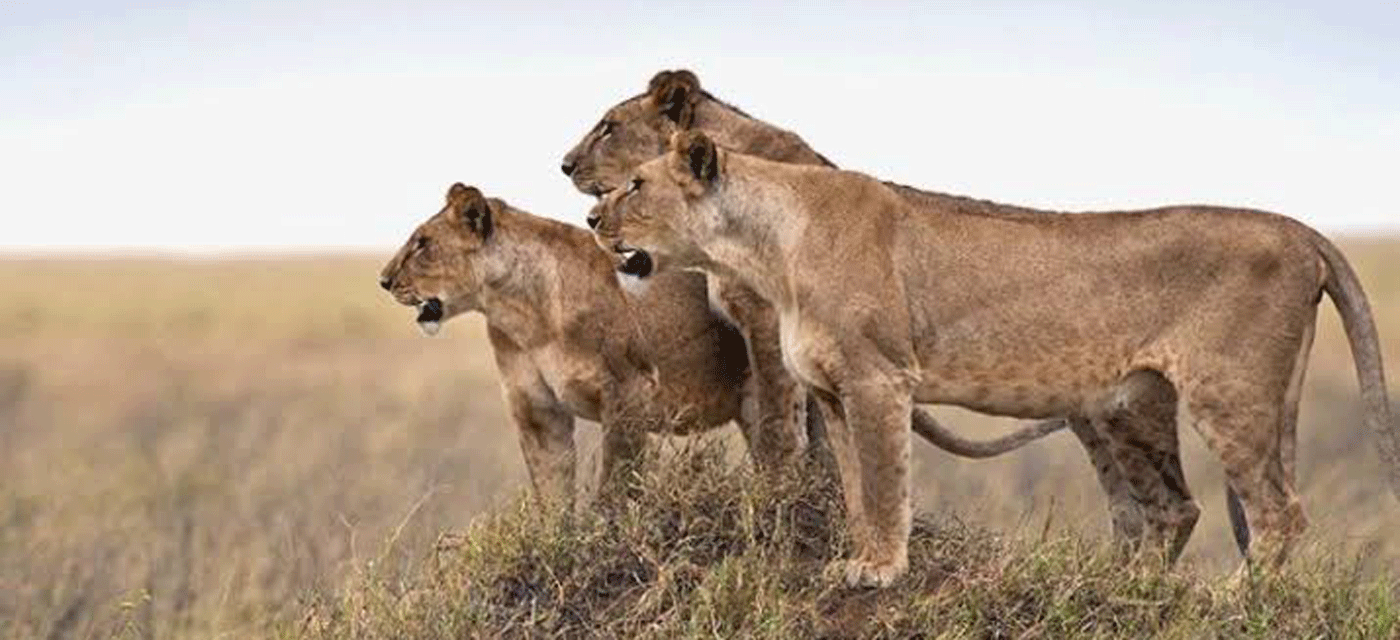
Tracking big cats such as lions, leopards and cheetahs over time is one of the most rewarding safari experiences in the Serengeti. Unlike single sightings this approach focuses on understanding movement patterns, behavior and territory use.
What makes this experience exclusive is continuity. Instead of seeing different animals randomly you follow the same individuals or prides over time. This allows you to observe their daily routines, hunting strategies, resting behavior and social structures.
Lions for example operate in prides with strong social bonds. Observing them over time reveals how they cooperate in hunting and how they interact within family groups. Leopards on the other hand are solitary and highly territorial often using trees and hidden areas to move undetected. Cheetahs are more open in behavior relying on speed and visibility across plains. Tracking them allows you to witness hunting strategies and maternal care for cubs.
Guides play a key role in identifying individuals, understanding movement patterns and predicting locations based on experience. This experience is exclusive because it creates a deeper connection with wildlife transforming animals from random sightings into recognizable individuals with ongoing stories.
Sunrise Safari Drives
Sunrise safari drives are among the most productive and visually beautiful experiences in the Serengeti. Early morning is when the ecosystem transitions from nighttime activity to daytime movement. What makes this experience exclusive is timing. Wildlife is most active during the cooler hours of the morning. Predators may still be returning from hunts while herbivores begin feeding after the night.
The lighting during sunrise is also exceptional. Soft golden tones spread across the plains creating ideal conditions for photography and observation. Long shadows and warm colors enhance the beauty of the landscape. Animals such as elephants, giraffes, zebras and antelopes are often seen moving in groups during this time. Predator activity may still be visible especially lions finishing night hunts.
The atmosphere is calm but active. The air is cool, the environment is quiet and wildlife behavior is natural and undisturbed. This experience is exclusive because it captures the Serengeti at its most active and visually stunning transition period.
Sunset Safari Drives
Sunset safari drives in the Serengeti are among the most visually striking and behaviorally active moments of the day. As the sun lowers toward the horizon the entire ecosystem transitions into a new phase of activity. The temperature cools, shadows stretch across the plains and wildlife begins to move again after resting during the hotter hours.
What makes this experience exclusive is the combination of lighting and behavior. The “golden hour” creates warm tones across the landscape turning grasslands into glowing fields and silhouetting animals against the sky. This is also one of the best times for photography because of soft light and dramatic contrast.
Behaviorally sunset marks a shift. Herbivores begin grazing more actively as temperatures drop while predators prepare for nighttime hunting. Lions often become more mobile positioning themselves for ambush. Cheetahs may begin scanning for opportunities and hyenas start organizing group movement.
The atmosphere is calm but charged with anticipation. Unlike the busy energy of morning drives, sunset has a slower, more cinematic rhythm. The Serengeti feels vast, quiet and deeply connected. Another exclusive element is positioning. Guides often place vehicles in scenic open areas or near water sources to maximize viewing opportunities during this transition period.
This experience is special because it captures the Serengeti at a turning point between day and night, where light, behavior and atmosphere align perfectly.
Photographic Safari Expeditions
Photographic safaris in the Serengeti are specialized experiences designed for capturing high-quality wildlife images in optimal conditions. Unlike regular game drives these safaris focus on positioning, timing and understanding animal behavior from a photography perspective.
What makes this experience exclusive is the level of expertise involved. Guides are trained not only in wildlife tracking but also in photography composition, lighting angles and behavioral prediction. This ensures that guests are placed in the best possible positions for capturing meaningful images.
The Serengeti provides ideal photographic conditions due to its open landscapes. The wide plains allow clear visibility while natural lighting changes throughout the day create varied artistic opportunities. Photographers may follow specific subjects such as lion prides, cheetahs hunting or migration herds waiting patiently for the perfect moment. This requires time, patience and understanding of animal behavior cycles.
Another important aspect is customization. Unlike standard safaris photographic expeditions can be adjusted based on subject focus whether it is predators, birds or landscape photography. This experience is exclusive because it transforms wildlife viewing into a creative and technical pursuit combining nature observation with artistic expression.
Hidden Valley Exploration
Hidden valley exploration in the Serengeti involves visiting lesser-known and remote regions of the ecosystem that are far from main tourist routes. These areas often include secluded valleys, seasonal water channels and untouched grasslands.
What makes this experience exclusive is its sense of discovery. Unlike popular safari circuits these regions are rarely visited meaning wildlife behavior is more natural and less influenced by human presence. Animals in these areas often display relaxed and undisturbed behavior. Herds move without pressure from vehicles, predators hunt without interruption and smaller species thrive in quieter environments.
The landscape itself is also different. Hidden valleys may feature rolling terrain, scattered woodlands and seasonal vegetation patterns that differ from the open plains. This adds variety to the safari experience. Guides rely heavily on experience and tracking skills to navigate these regions as there are fewer defined routes. This makes the journey feel more exploratory and adventurous.
This experience is exclusive because it offers a sense of untouched wilderness where visitors feel like true explorers rather than tourists.
Elephant Herd Encounters
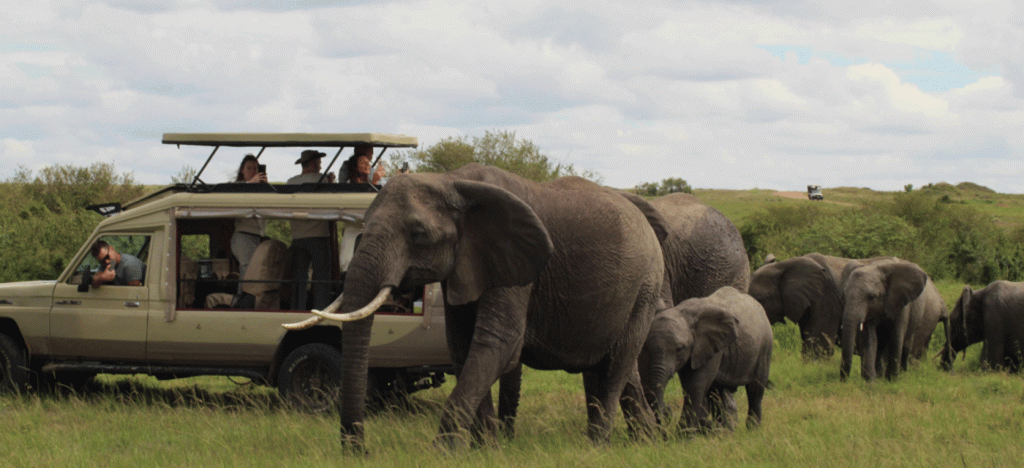
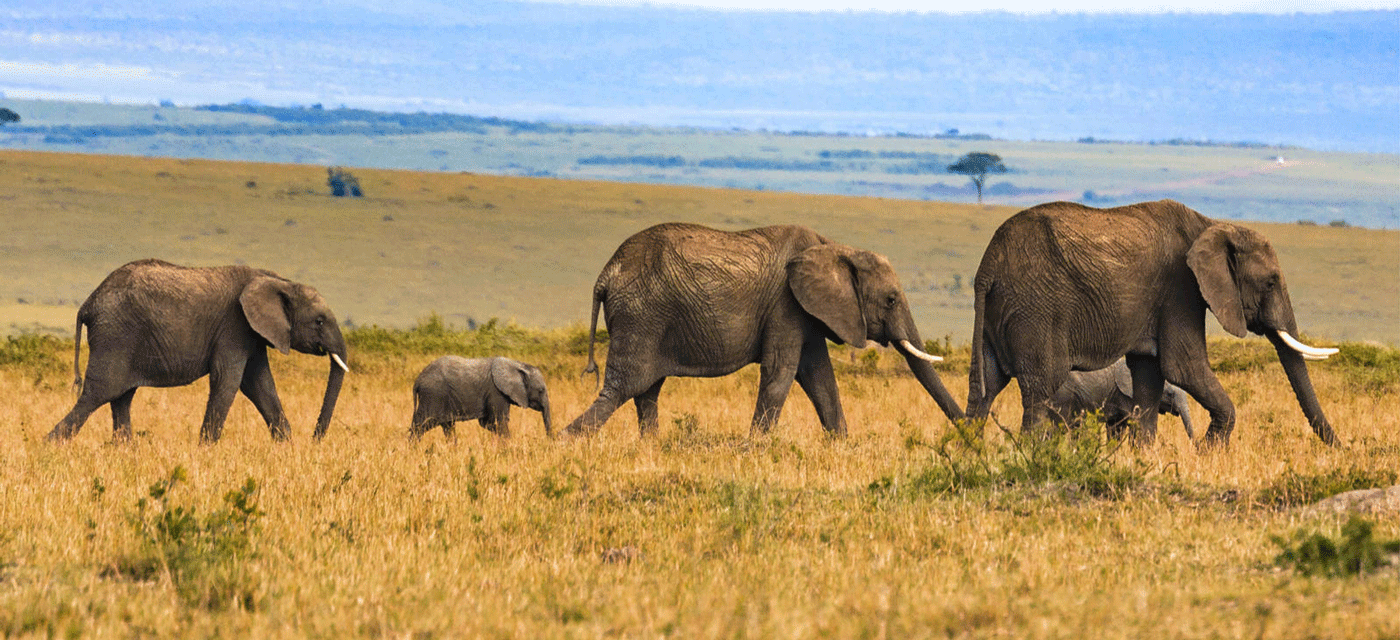
Elephant encounters in the Serengeti are powerful and emotionally moving experiences. These large intelligent animals move in structured family groups known as herds often led by experienced matriarchs. What makes this experience exclusive is the depth of social behavior that can be observed. Elephants are highly intelligent and display complex communication, emotional bonding and cooperative movement.
Herds often include females and young calves while adult males may travel separately or in smaller groups. Observing these dynamics provides insight into their social structure and survival strategies. Elephants interact constantly through vocalizations, body language and physical touch. Calves are closely protected and guided by older members of the herd.
In the Serengeti, elephant encounters often occur in open plains, river areas or near scattered woodlands. Watching them move across the landscape is a powerful reminder of their size and importance in the ecosystem. This experience is exclusive because elephants are not just seen they are observed as complex social beings with structured relationships and behaviors.
Silent Wilderness Moments
Beyond dramatic events and wildlife action one of the most exclusive Serengeti experiences is silence itself. These are moments when the ecosystem appears completely still offering a rare sense of peace and connection.
What makes this experience unique is its simplicity. There is no movement no chase no immediate action just the natural environment existing in balance. Grass sways gently in the wind, distant animal calls echo across the plains and the horizon stretches endlessly.
These moments often occur between major activity periods such as midday heat or early afternoon rest times. Wildlife may be resting under shade and predators may be inactive. Despite the lack of visible action, the ecosystem is still alive. Subtle signs such as bird calls, insect movement and distant animal presence create a layered sense of awareness. This experience allows reflection. Without distractions, visitors become more aware of scale, space and natural rhythm.
It is exclusive because it represents the Serengeti in its purest form not as a spectacle but as a living breathing environment.
Frequently Asked Questions of Top Exclusive Experiences You Can Only Have in Serengeti
What are the most exclusive experiences you can have in the Serengeti?
Some of the most exclusive Serengeti experiences include witnessing the Great Migration, Mara River and Grumeti River crossings, hot air balloon safaris, off-road wildlife tracking, walking safaris, night game drives, bush dining, big cat tracking and photographic safari expeditions.
Why is the Great Migration considered an exclusive Serengeti experience?
The Great Migration is exclusive because it is a natural event that cannot be staged or predicted precisely. Millions of wildebeest, zebras and gazelles move across the ecosystem according to rainfall, grass growth and survival pressures.
When can I see the Mara River crossing in the Serengeti?
Mara River crossings occur when migrating herds reach the northern Serengeti but the exact timing is unpredictable. Visitors may wait for days before witnessing a crossing as the animals decide when to enter the river.
What makes a Grumeti River crossing different from the Mara River crossing?
The Grumeti River crossing takes place in the western Serengeti and can offer a quieter experience because the area is generally less visited. The setting also provides a more remote wilderness atmosphere.
Is a hot air balloon safari worth experiencing in the Serengeti?
A hot air balloon safari provides a completely different perspective of the Serengeti. From above travelers can appreciate the scale of the ecosystem, observe wildlife movement and enjoy sunrise over the plains.
What is off-road wildlife tracking in the Serengeti?
Off-road wildlife tracking allows safari vehicles to travel away from designated tracks in areas where this activity is permitted and regulated. It gives guides greater flexibility to follow wildlife and observe behavior more closely.
Can I take a walking safari in the Serengeti?
Walking safaris are available in specific areas and are conducted with trained professionals and appropriate safety measures. They provide an opportunity to notice tracks, plants, insects, birds and other details that can be missed from a vehicle.
What can I see during a night game drive?
Night game drives can reveal nocturnal wildlife and nighttime behavior that is rarely visible during daytime safaris. Depending on the area sightings may include genets, civets, bush babies and other nocturnal species.
What is a bush dining experience in the Serengeti?
Bush dining involves eating meals in carefully selected wilderness locations rather than inside a lodge or restaurant. Guests may enjoy breakfast, lunch or dinner while remaining surrounded by the Serengeti landscape.
Can I have a Maasai cultural experience during a Serengeti safari?
A Maasai cultural experience can provide insight into traditional lifestyles, cattle herding, bomas, storytelling, dances, beadwork and the relationship between communities and the surrounding natural environment.
When is calving season in the Serengeti?
Calving season typically takes place in the southern Serengeti plains. During this period, large numbers of wildebeest give birth, creating a period of intense wildlife activity and increased predator presence.
What makes big cat territory tracking special?
Big cat tracking focuses on following individual lions, leopards or cheetahs over time rather than simply viewing them during a single sighting. This can provide a deeper understanding of their behavior, movements and social structures.
What is the best time of day for a Serengeti safari drive?
Sunrise and sunset are highlighted as particularly special periods because wildlife activity changes as temperatures and light conditions shift. Early mornings can reveal predator activity while sunset brings renewed movement across the plains.
Are photographic safaris different from regular Serengeti game drives?
Photographic safaris place greater emphasis on wildlife positioning, timing, lighting and animal behavior. They can also be tailored around specific photographic subjects such as predators, birds, migration herds or landscapes.
What are hidden valley explorations in the Serengeti?
Hidden valley exploration involves visiting remote areas away from the main safari routes. These locations can provide a greater sense of discovery, quieter surroundings and opportunities to observe wildlife in less-visited environments.
What can I learn from elephant herd encounters?
Elephant encounters can reveal complex social relationships, communication, cooperation and family structures. Herds are often led by experienced matriarchs, while young elephants receive protection and guidance from older members.
Why are silent wilderness moments considered an exclusive Serengeti experience?
The Serengeti is not only about dramatic wildlife events. Quiet moments allow visitors to appreciate the sounds, landscapes, wildlife and natural rhythm of the ecosystem without the focus being on a major spectacle.
Can Serengeti Travels arrange exclusive Serengeti experiences?
Serengeti Travels can help travelers plan safari journeys around the wildlife, landscapes and seasonal movements highlighted in the guide including experiences such as the Great Migration and other immersive Serengeti activities.
Why are Serengeti experiences different from other safari destinations?
The Serengeti combines enormous scale, free-moving wildlife, seasonal movements and unpredictable natural events. The experiences are shaped by nature rather than staged attractions making every safari different.
How can I plan a safari around a specific Serengeti experience?
Planning should take into account the experience you want to see, the season, the location within the ecosystem and the amount of time available. Working with an experienced safari operator such as Serengeti Travels can help align the itinerary with these factors.
Conclusion
The Serengeti stands as one of the last places on Earth where nature still operates on a grand untouched scale. Exploring the Top Exclusive Experiences You Can Only Have in Serengeti reveals that what defines this remarkable destination is not a single attraction but a continuous flow of natural events that cannot be staged, controlled or replicated elsewhere. With Serengeti Travels travelers can discover these extraordinary experiences through thoughtfully planned safari journeys designed around the wildlife, landscapes and seasonal movements of the Serengeti.
From witnessing the dramatic Great Migration across the open plains to observing predators patiently preparing for a hunt, every moment reflects the raw reality of survival and balance in the wild. The experience extends beyond famous wildlife encounters with breathtaking sunrises over endless grasslands peaceful moments surrounded by nature and spectacular African nights filled with countless stars.
What makes the Serengeti truly unique is its authenticity and scale. Animals move freely across vast ecosystems, while weather, seasons and natural behavior constantly shape what visitors see. No two safari experiences are exactly alike making every journey unpredictable and memorable. Serengeti Travels helps travelers experience this wilderness while keeping the natural environment and authentic safari experience at the heart of the journey.
The 20 exclusive experiences highlighted in this guide demonstrate that the Serengeti is much more than a place to see wildlife. It is a destination where adventure, education, emotion and reflection come together. Whether watching the Great Migration discovering rare wildlife or simply enjoying the silence of the plains the Serengeti creates memories that remain long after the safari ends.