 English
 Deutsch
 Italia
May 27, 2026
Serengeti vs Ngorongoro Crater Which One Should You Visit?
Introduction
Choosing between Serengeti vs Ngorongoro Crater Which One Should You Visit? is one of the most important decisions for anyone planning a safari in Tanzania. Both Serengeti National Park and Ngorongoro Crater are globally famous, located in northern Tanzania and offer unforgettable wildlife experiences. However, they are fundamentally different in terms of landscape, safari style, wildlife movement, travel time and overall atmosphere. Understanding these differences in detail is essential for making the right choice based on your expectations, budget and available time.
The Serengeti is a vast open ecosystem covering thousands of square kilometers of endless plains, river valleys and scattered woodlands. It represents the classic African safari image seen in documentaries and travel magazines. Its main attraction is not only the abundance of wildlife but also the sense of space and freedom it offers.
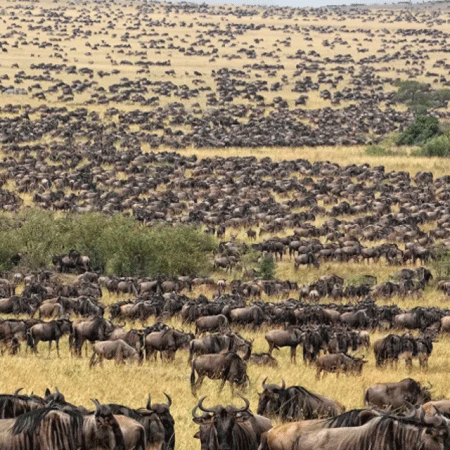
The Serengeti is also home to the Great Migration one of the most spectacular natural events on Earth, where millions of wildebeest, zebras and gazelles move across the plains in search of fresh grazing. This makes the Serengeti dynamic, ever-changing and deeply immersive.
Ngorongoro Crater on the other hand is a completely different type of destination. It is a collapsed volcanic caldera forming a natural enclosure that contains one of the densest wildlife populations in Africa. Unlike the Serengeti, which is vast and open, Ngorongoro is compact and concentrated.
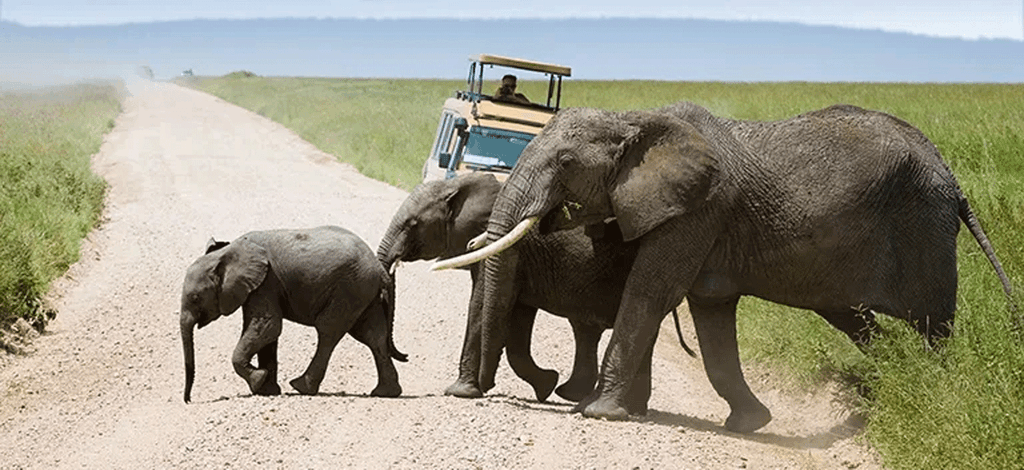
Within a single day visitors can see a wide range of animals, including lions, elephants, buffalo, zebras and even the rare black rhino. The scenery is dramatic with steep crater walls surrounding a lush ecosystem that feels like a natural amphitheater.
This comparison is not about which destination is better in general but about which one suits your travel style. Serengeti is ideal for travelers who want adventure, long game drives and large-scale wildlife movement. Ngorongoro is ideal for those who want concentrated wildlife sightings, shorter game-drive distances and a visually dramatic environment.
In the sections below both destinations are compared in depth across key factors to help you decide clearly and confidently.
Table of contents
Landscape and Scenery
The Serengeti is famous for its endless plains often described as one of the most iconic landscapes in the world. The word “Serengeti” itself comes from a Maasai term meaning “endless plains,” and that description is accurate. When you enter the park, you are immediately struck by the vast openness that stretches beyond the horizon.
The terrain is mostly flat or gently rolling covered with golden grasses that change color depending on the season. Scattered acacia trees and rocky outcrops known as kopjes add character to the scenery. These kopjes are not just visual features they also serve as resting and lookout points for predators like lions and leopards.
The Serengeti landscape is not uniform. Different regions offer different scenery. The southern plains are wide and open ideal for grazing animals. The central region has a mix of plains and woodlands making it excellent for year-round wildlife viewing. The western corridor features river systems and thicker vegetation while the northern Serengeti has hills and forests. This diversity creates a constantly changing visual experience especially if you travel across multiple areas.
Ngorongoro Crater offers a completely different kind of beauty. It is a collapsed volcanic caldera forming a natural bowl surrounded by steep walls that rise about 600 meters high. From the rim the view is breathtaking. You look down into a self-contained ecosystem that includes grasslands, forests, swamps and a central soda lake. The scenery feels dramatic and almost surreal because everything is contained within a defined boundary.
Inside the crater the environment feels lush and compact compared to Serengeti. The presence of water sources and fertile soil supports dense vegetation and abundant wildlife. The lake often hosts flamingos adding a splash of color to the landscape. In summary Serengeti offers vastness and variety while Ngorongoro delivers dramatic and concentrated beauty. Your preference depends on whether you value endless open space or a visually striking natural enclosure.
Wildlife Density and Variety
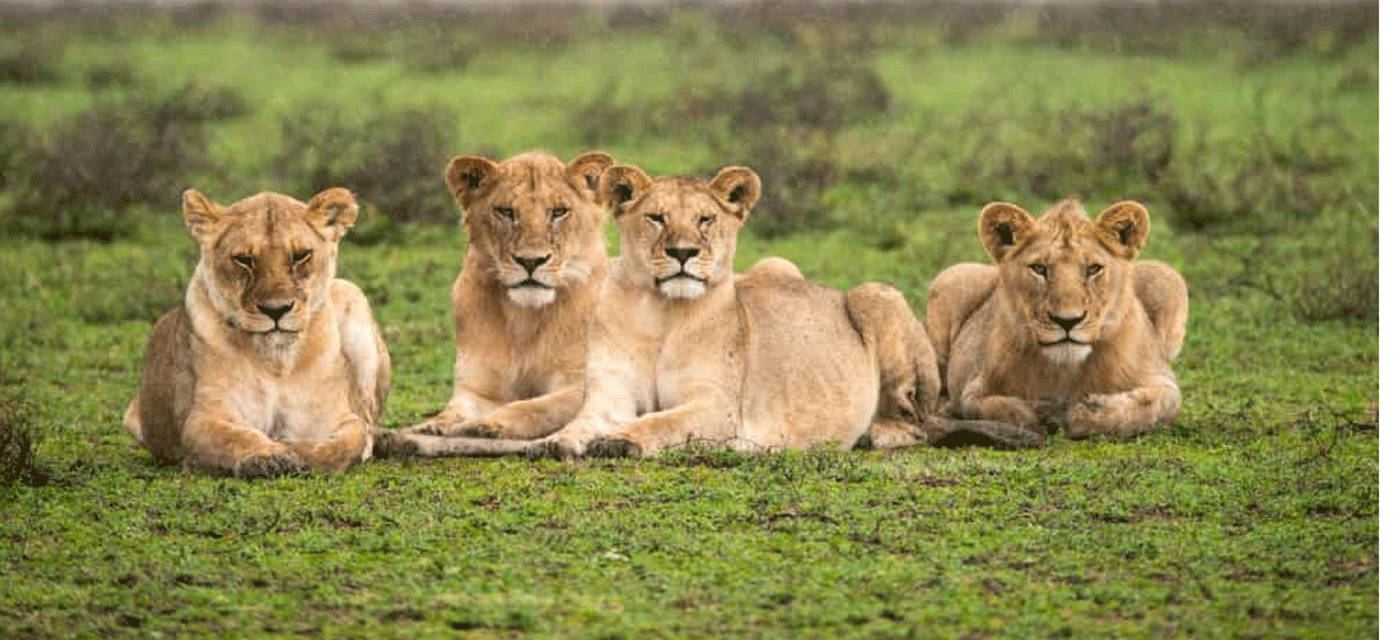
Serengeti is one of the richest wildlife ecosystems on Earth, supporting millions of animals across its vast landscape. It is home to large populations of herbivores such as wildebeest, zebras, gazelles and buffalo. These animals form the base of a complex food chain that includes top predators like lions, leopards, cheetahs and hyenas.
Because of its size, wildlife in Serengeti is spread out and sightings depend on location, timing and guide experience. This means that while you may not see everything in one day the overall diversity you can encounter over several days is incredibly high.
One of the strengths of Serengeti is the opportunity to observe natural behavior. Animals move freely across large distances and predator-prey interactions occur in a more natural and less confined setting. This makes the experience feel authentic and dynamic. You may witness a lion hunt, a cheetah chase or a herd migrating across the plains.
Ngorongoro Crater by contrast has one of the highest concentrations of wildlife in Africa. Because the crater acts as a natural enclosure animals remain within its (note: replacing word use “boundaries” instead) boundaries year-round. This makes wildlife easier to find even within a short game drive. It is possible to see the Big Five lion, elephant, buffalo, leopard and black rhino in a single day.
However while density is high overall variety is slightly lower compared to Serengeti. The crater has limited space and fewer habitat types which restricts the number of species it can support. Also some animals, like giraffes are rarely seen inside the crater due to the steep walls.
If your goal is to maximize the number of animals seen in a short time Ngorongoro is highly effective. If you want broader biodiversity and more natural wildlife movement, Serengeti offers a richer and more expansive experience.
The Great Migration Experience
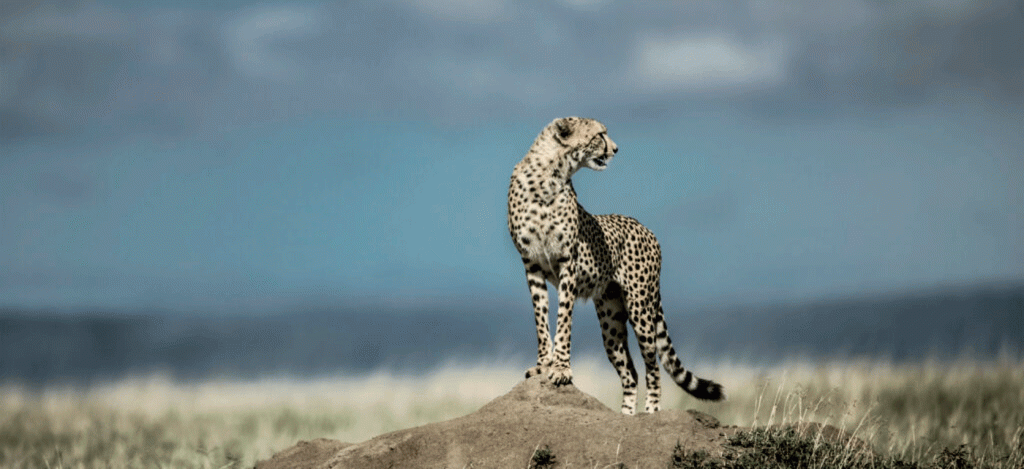
The Great Migration is one of the most extraordinary wildlife events in the world and Serengeti is its main stage. Each year over 1.5 million wildebeest along with hundreds of thousands of zebras and gazelles move in a continuous cycle across the ecosystem. This movement is driven by rainfall patterns and the search for fresh grazing. It is not a single event but a year-round process that shifts location depending on the season.
In the southern Serengeti the calving season occurs between January and March when thousands of wildebeest give birth within a short period. This attracts predators, creating intense and dramatic wildlife interactions. As the dry season approaches the herds move west and then north eventually crossing into Kenya’s Maasai Mara. The river crossings in the north are among the most dramatic moments as animals face strong currents and crocodile-infested waters.
Ngorongoro Crater is not part of this migration route. The animals in the crater are mostly resident meaning they stay within the area year-round. While this provides consistency it lacks the dynamic movement and large-scale drama of the migration. Choosing Serengeti gives you the chance to witness one of nature’s greatest spectacles but it requires careful timing and planning. Ngorongoro offers reliability with consistent wildlife viewing regardless of season.
If the migration is your priority Serengeti is the only choice. If you prefer a predictable experience without worrying about timing, Ngorongoro is more suitable.
Safari Experience and Exploration
A safari in Serengeti is defined by exploration and unpredictability. Because of its vast size game drives often involve traveling long distances in search of wildlife. This creates a sense of adventure as you never know exactly what you will encounter. Each day can be completely different depending on where you go and what animals are active.
Guides play a crucial role in Serengeti. Their knowledge of animal behavior, tracks and movement patterns can significantly enhance your experience. Tracking predators or following herds across the plains adds excitement and depth to the safari.
Ngorongoro Crater offers a more structured experience. Once you descend into the crater wildlife is relatively easy to find. Game drives are shorter and more focused with less time spent searching and more time observing. This makes it ideal for travelers who want efficient and reliable wildlife viewing.Serengeti suits those who enjoy long drives, exploration and a sense of discovery. Ngorongoro is better for those who prefer a compact high-success safari with minimal effort.
Accommodation Options
Serengeti provides a wide range of accommodation options from budget campsites to luxury lodges and mobile tented camps. Mobile camps are particularly unique because they move with the migration allowing guests to stay close to the action. This creates a highly immersive experience where you are surrounded by nature and can hear wildlife at night.
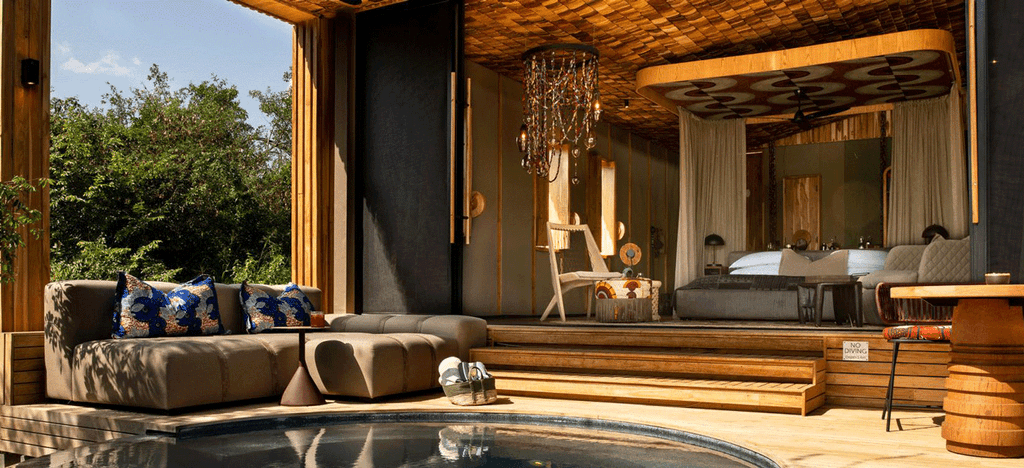
Lodges in Serengeti are spread across different regions giving you flexibility in choosing where to stay based on your itinerary. Whether you want a basic camp or a high-end lodge with all amenities Serengeti has options to suit different budgets.
Ngorongoro accommodations are mostly located on the crater rim. These lodges offer stunning views but are generally more expensive due to limited space and high demand. Staying on the rim means you need to drive down into the crater for game drives which can take time. Camping inside the crater is not allowed which limits the sense of immersion compared to Serengeti. However, the views from the rim are among the best in Tanzania.
If variety and flexibility are important Serengeti is the better choice. If you value scenic views and don’t mind higher costs Ngorongoro offers a unique lodging experience.
Accessibility and Travel Time
Accessibility is one of the biggest differences between Serengeti National Park and Ngorongoro Crater and it plays an important role in deciding which destination fits your travel plan. Ngorongoro Crater is significantly easier to access compared to Serengeti. Most travelers begin their safari from Arusha and from there the drive to Ngorongoro takes approximately 3 to 4 hours depending on road conditions and the exact lodge location.
This makes Ngorongoro ideal for short safaris or even one-day trips. You can leave early in the morning, descend into the crater for a full game drive and return to your accommodation by evening.
The roads leading to Ngorongoro are generally well-established compared to deeper safari regions although the final descent into the crater is steep and requires careful driving. Because of its proximity to Arusha and relatively simple logistics Ngorongoro is often included in shorter safari packages or combined with other nearby parks like Lake Manyara.
Serengeti on the other hand is much farther and requires more planning. The journey from Arusha to central Serengeti can take 6 to 8 hours by road often passing through Ngorongoro Conservation Area. Some regions especially northern or western Serengeti are even more remote. Alternatively, travelers can take domestic flights from Arusha or Kilimanjaro Airport to airstrips inside the park which reduces travel time significantly but increases cost.
Once inside Serengeti distances between regions are large meaning game drives often involve long hours of movement. However this is part of the experience as it allows you to explore different ecosystems and wildlife zones.
In summary Ngorongoro is ideal for travelers with limited time or those seeking convenience while Serengeti is better suited for longer trips where travel itself becomes part of the adventure. If accessibility is your top priority, Ngorongoro clearly has the advantage.
Crowds and Tourism Pressure
Tourism pressure is an important factor when comparing Serengeti and Ngorongoro especially for travelers seeking a peaceful and immersive safari experience. Ngorongoro Crater despite being one of the most spectacular wildlife destinations in the world is relatively small in size. Because of this all safari vehicles descend into the same area each morning which can lead to congestion especially during peak travel seasons such as July to October and December holidays.
Inside the crater wildlife is concentrated in predictable areas such as water sources, open grasslands and near the soda lake. As a result it is common to see multiple safari vehicles gathered around the same animal sightings, particularly lions, elephants or rhinos. While this does not reduce the quality of wildlife viewing it can affect the feeling of solitude and wilderness that some travelers expect from a safari.
Serengeti offers a very different experience due to its massive size. Even during peak migration seasons the park is large enough to disperse both animals and tourists. This means you can often find areas where you are completely alone with wildlife without other vehicles in sight. The further you travel into remote regions of Serengeti, the more exclusive the experience becomes.
For example, the central Serengeti can be busier due to its accessibility and resident wildlife, but the northern and western regions often feel much more isolated. Mobile camps also help reduce crowding by moving with animal movements ensuring guests are positioned away from heavily visited areas.
If avoiding crowds and enjoying a more private safari experience is important Serengeti is clearly the better option. Ngorongoro still offers incredible wildlife encounters but its compact nature naturally leads to more vehicle concentration.
Cost Considerations
Cost is another major factor when deciding between Serengeti and Ngorongoro Crater. Both destinations are part of Tanzania’s premium safari circuit meaning they are not cheap compared to many other travel experiences. However the cost structure differs between the two.
Ngorongoro Crater has relatively high daily conservation fees due to its UNESCO World Heritage status and unique ecosystem protection requirements. Every vehicle entering the crater must pay entrance fees, crater service fees and sometimes additional charges depending on regulations. On top of that accommodation on the crater rim is often expensive because of limited space and high demand. Even though you typically spend only one full day inside the crater the per-day cost can feel high.
However, because visits to Ngorongoro are usually short total trip expenses may remain moderate. Many travelers combine it with other parks, reducing overall cost per destination.
Serengeti offers more flexibility in pricing. There are budget camping options, mid-range lodges and high-end luxury camps giving travelers more control over their budget. However, Serengeti trips are usually longer, meaning more days in the park, higher fuel costs and sometimes additional internal flights if you choose air travel.
Luxury experiences in Serengeti can be very expensive especially mobile camps located near migration routes. However, budget travelers can still enjoy the park through camping safaris which significantly reduce costs while maintaining a strong wildlife experience.
In general, Ngorongoro is expensive per day but short in duration, while Serengeti can range widely in cost depending on length of stay and travel style. If you want flexibility Serengeti offers more options. If you prefer a short but intense premium experience Ngorongoro is often more cost-efficient overall.
Best Time to Visit
Both Serengeti and Ngorongoro Crater are excellent year-round safari destinations but the best time to visit depends on what you want to experience.
Serengeti’s best time is closely tied to the Great Migration cycle. Between January and March, the southern plains become the stage for calving season where thousands of wildebeest are born within weeks. This attracts predators and creates dramatic wildlife interactions. From April to June the herds move west and north while July to September is famous for river crossings in the northern Serengeti. October to December sees herds returning south.
Outside the migration Serengeti still offers excellent wildlife viewing due to resident animals. However, timing your visit correctly can significantly enhance your experience.
Ngorongoro Crater in contrast, offers consistent wildlife viewing throughout the year. Because animals remain inside the crater there is no major seasonal movement. The dry season (June to October) is often considered the best time due to shorter grass and easier animal spotting but even the rainy season provides lush scenery and good wildlife encounters.
Rainy months (March to May and November) can make some roads slippery but they also reduce tourist numbers and create greener landscapes. If you want predictable conditions Ngorongoro is easier to plan. If you want seasonal highlights and dramatic wildlife events Serengeti requires more careful timing.
Overall Experience and Final Recommendation
When comparing Serengeti and Ngorongoro Crater it becomes clear that both destinations offer world-class safari experiences but in very different ways. Serengeti is about scale, movement and adventure. It provides a sense of endless wilderness where wildlife moves freely across vast landscapes.
It is ideal for travelers who want longer safaris, diverse ecosystems and the chance to witness the Great Migration. Every day in Serengeti feels different and the experience is shaped by exploration and unpredictability.
Ngorongoro Crater, on the other hand, is about intensity, accessibility and guaranteed wildlife encounters. It offers one of the highest concentrations of animals in Africa within a compact and visually stunning environment. It is perfect for short trips first-time safari travelers or those who want efficient game viewing without long travel distances.
If your goal is to maximize wildlife sightings in a short time Ngorongoro is the better choice. If you want a deeper more immersive safari experience with variety and scale Serengeti is unmatched.
However, the strongest recommendation is not to choose one over the other but to combine both. Together they create a complete safari journey: Serengeti provides the grand cinematic wildlife experience while Ngorongoro delivers a concentrated dramatic close-up of Africa’s wildlife richness. Experiencing both gives you a fuller understanding of Tanzania’s natural heritage and makes your safari far more rewarding.
Frequently Asked Questions About Serengeti vs Ngorongoro Crater
1. Which is better, Serengeti or Ngorongoro Crater?
Serengeti is better for travelers seeking vast landscapes, longer game drives, diverse wildlife and the Great Migration. Ngorongoro Crater is better for travelers who want concentrated wildlife viewing, dramatic scenery and easier access. If possible combining both destinations provides a more complete Tanzania safari experience.
2. Is Serengeti more expensive than Ngorongoro Crater?
The total cost depends on the length and style of your safari. Ngorongoro can have high daily conservation and crater-related costs, while Serengeti offers a wider range of accommodation and safari options. However Serengeti trips are often longer which can increase the overall cost.
3. Can I see the Big Five in Serengeti and Ngorongoro Crater?
Yes. Both destinations offer opportunities to see the Big Five: lion, leopard, elephant, buffalo and rhino. Ngorongoro Crater is particularly known for concentrated wildlife viewing, while Serengeti offers a larger and more diverse ecosystem where sightings can vary by location and season.
4. Which destination is better for the Great Migration?
Serengeti is the better choice for experiencing the Great Migration because the migration moves through different areas of the Serengeti ecosystem during the year. Ngorongoro Crater is not part of the main migration route.
5. Is Ngorongoro Crater easier to visit than Serengeti?
Yes. Ngorongoro Crater is generally easier to access from Arusha and can fit well into shorter safari itineraries. Serengeti is farther away and may require several hours of driving or a domestic flight particularly when visiting remote regions.
6. Which has more wildlife, Serengeti or Ngorongoro?
Ngorongoro Crater has exceptionally high wildlife density within a relatively small area making animals easier to find during a short game drive. Serengeti has a much larger ecosystem with greater habitat variety and extensive wildlife populations spread across the park.
7. Which is better for a short safari, Serengeti or Ngorongoro?
Ngorongoro Crater is generally better for a short safari because its compact ecosystem allows visitors to see many animals within a limited amount of time. Serengeti is better suited to travelers who have several days available for exploration.
8. What is the best time to visit Serengeti?
The best time depends on your interests. January to March is popular for the calving season in the southern Serengeti, while July to October is well known for dry-season wildlife viewing and potential river-crossing experiences in the northern Serengeti.
9. Is Ngorongoro Crater good to visit all year round?
Yes. Ngorongoro Crater offers wildlife viewing throughout the year because many resident animals remain within the crater. The dry season from June to October is particularly popular, while wetter months can provide greener scenery and fewer visitors.
10. Which destination has better scenery, Serengeti or Ngorongoro?
This depends on personal preference. Serengeti is famous for its endless plains, kopjes and changing landscapes, while Ngorongoro offers dramatic crater walls, grasslands, forests and a spectacular view from the crater rim.
11. Which destination is better for avoiding crowds?
Serengeti generally provides more opportunities to escape crowds because of its enormous size. Some remote areas of the park can feel particularly peaceful. Ngorongoro Crater is smaller so safari vehicles can become concentrated around popular wildlife sightings.
12. Should I visit Serengeti and Ngorongoro Crater together?
Yes. Combining both destinations is one of the best ways to experience northern Tanzania. Serengeti offers vast wilderness, wildlife movement and the Great Migration, while Ngorongoro provides concentrated wildlife viewing, dramatic scenery and convenient access. A combined itinerary can be arranged with Serengeti Travels according to your time and budget.
Conclusion
After comparing Serengeti National Park and Ngorongoro Crater across multiple factors, both offer world-class safari experiences but serve different travel purposes. For travelers planning with Serengeti Travels the right choice depends on time, interests, budget and the type of safari experience they want.
Serengeti provides a true wilderness experience defined by vast open plains, diverse wildlife and constantly changing animal movements. Visitors can travel across large landscapes while following wildlife and experiencing the unpredictability of nature. The Great Migration adds even more excitement making Serengeti one of Africa’s most spectacular safari destinations. It is ideal for travelers who have more time and want exploration, adventure and a deeper connection with nature.
Ngorongoro Crater offers a different experience. Its compact landscape and high wildlife concentration allow visitors to see many animals within a relatively small area. This makes it an excellent choice for short safari trips, first-time travelers and visitors who prefer efficient wildlife viewing. The dramatic crater scenery also provides a unique backdrop that makes every game drive memorable.
Rather than being competitors, Serengeti and Ngorongoro complement each other. Serengeti offers scale, movement and adventure, while Ngorongoro provides wildlife density, accessibility and spectacular scenery. Combining both destinations creates one of the most rewarding safari experiences in Tanzania.
Serengeti Travels can help travelers design an itinerary that includes both destinations according to their schedule and interests. If time and budget allow, visiting Serengeti and Ngorongoro together is the best option for experiencing Tanzania’s wildlife, landscapes and natural heritage in a complete and memorable safari adventure.