 English
 Deutsch
 Italia
May 26, 2026
Serengeti Ecosystem Explained How Nature Works Here
Introduction
Serengeti Ecosystem Explained How Nature Works Here begins with understanding one of the most famous and ecologically important natural systems in the world. Located in northern Tanzania and extending into southwestern Kenya, the Serengeti covers vast savannah plains, woodlands, rivers and rocky landscapes that together form a highly connected environment. What makes the Serengeti truly remarkable is not only its rich wildlife but also the way every component of the ecosystem works together in a delicate natural balance.
At the heart of this system is a continuous flow of energy that starts with the sun and moves through plants, herbivores, predators and finally decomposers. Each level depends on the other, creating a tightly linked food web that sustains millions of animals throughout the year. Seasonal rainfall patterns act as the main driving force, controlling plant growth, water availability and animal movement across the landscape.
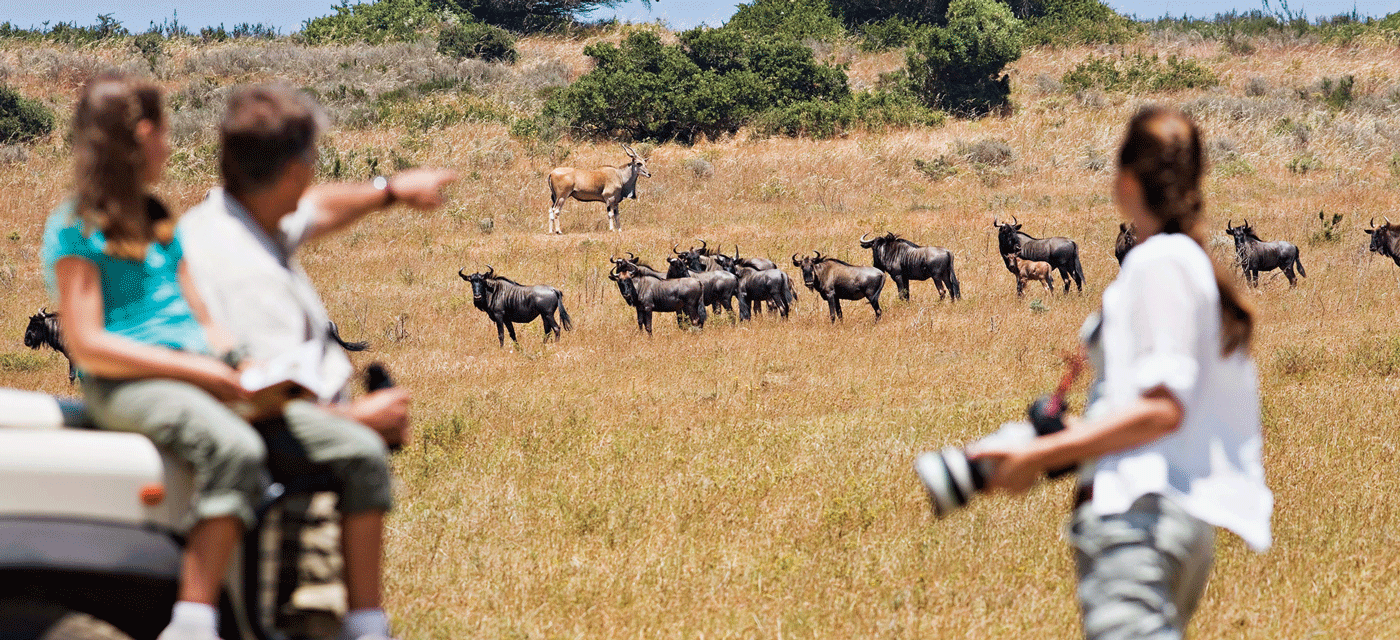
One of the most powerful expressions of this system is the Great Migration where more than a million wildebeest, along with zebras and gazelles move in a circular route following fresh grazing land. This movement is not random it is a survival strategy shaped by climate and ecology, connecting different parts of the ecosystem into one large functional unit.
The Serengeti is also defined by its remarkable biodiversity. From tiny insects in the soil to large predators such as lions and elephants every species plays a specific ecological role. Some help control population growth, others recycle nutrients, while many contribute to plant growth and soil health.
Understanding the Serengeti ecosystem means understanding how nature maintains balance without human design. It is a living example of interdependence, adaptation and natural regulation. This introduction sets the foundation for exploring how geography, climate, wildlife and ecological processes work together to keep the Serengeti functioning as one of the greatest ecosystems on Earth.
Table of contents
- Introduction
- Geography and Physical Structure of the Serengeti
- Climate and Seasonal Cycles
- Plant Life and Primary Production
- Herbivores and Grazing Dynamics
- Predators and Population Control
- Decomposers and Nutrient Recycling
- The Great Migration
- Food Web and Interdependence
- Adaptation and Survival Mechanisms
- Water Systems and Resource Distribution
- Energy Flow and Trophic Levels
- Biodiversity and Species Coexistence
- Predator-Prey Dynamics
- Human Influence and Conservation Pressure
- Ecosystem Stability and Long-Term Balance
- Frequently Asked Questions of Serengeti Ecosystem Explained How Nature Works Here
- Conclusion
Geography and Physical Structure of the Serengeti
The Serengeti ecosystem is built on a highly diverse physical landscape that determines how every form of life is distributed and sustained. It is not a single uniform grassland but a combination of plains, woodlands, river valleys, wetlands and rocky formations known as kopjes. Each of these landforms plays a critical ecological role.
The southern Serengeti is dominated by short-grass plains formed from volcanic ash deposits. These soils are extremely fertile and support nutrient-rich grasses that attract massive herds of grazers especially during the wet season. This area becomes the primary calving ground for wildebeest because the flat terrain also allows predators to be seen from a distance improving survival chances for newborns.
The central Serengeti introduces more complexity with mixed vegetation including acacia trees and bushy areas. This creates a balance between open grazing land and covered hunting grounds, making it ideal for both herbivores and predators. Kopjes which are ancient granite rock formations act as microhabitats. They provide shade, shelter and elevated viewpoints for predators like lions and leopards.
Northern Serengeti is more river-dominated with permanent water sources such as the Mara River. These water systems act as lifelines during dry seasons and also shape migration routes. Together these physical features create a patchwork of habitats. This diversity is what allows such a high concentration of wildlife to coexist in one ecosystem. Without this geographic variation, the Serengeti would not be able to support its complex food webs or seasonal movements.
Climate and Seasonal Cycles
Climate is the most powerful force shaping the Serengeti ecosystem. The entire system operates on a predictable but dynamic cycle of rainfall and drought, which controls food availability, animal movement and reproductive patterns. The region experiences two main rainy seasons: the short rains from October to December and the long rains from March to May.
During rainfall periods the landscape transforms rapidly. Dry dusty plains turn green within weeks as grasses germinate and spread. This sudden abundance of food triggers large-scale movement of herbivores especially wildebeest and zebras who follow the rains in search of fresh grazing land. It also marks the peak birthing season for many species as newborns have a higher chance of survival when food is plentiful.
As the dry season sets in water sources shrink and vegetation becomes scarce. Rivers and permanent wetlands become critical survival zones. Animals begin migrating toward areas with reliable water creating intense competition between species. Rainfall in the Serengeti is uneven and unpredictable across regions creating ecological imbalance that drives movement. Some areas remain productive longer than others, forcing wildlife to constantly adjust.
Temperature remains relatively stable year-round but moisture availability defines survival conditions. Over thousands of years species have evolved behavioral adaptations such as migration, breeding timing and feeding flexibility to match this cycle. In essence, climate acts like a heartbeat for the Serengeti pulsing between abundance and scarcity controlling every ecological interaction and ensuring continuous movement across the landscape.
Plant Life and Primary Production
Plants form the foundation of the Serengeti ecosystem by converting solar energy into biological energy through photosynthesis. This process supports every higher level of life, from herbivores to apex predators. The dominant vegetation type is grassland but the ecosystem also includes shrubs, herbs and scattered trees such as acacia species.
The southern plains are dominated by short highly nutritious grasses. These grasses grow quickly after rainfall and contain essential minerals like phosphorus and calcium. This makes them especially important for pregnant herbivores and growing young animals. As grazing pressure increases, grasses respond by regenerating creating a self-renewing system.
Acacia trees are widespread in central and northern regions. They provide food for browsing animals like giraffes and elephants. These trees also have deep ecological roles, including nitrogen fixation, which enriches soil fertility and supports plant growth in surrounding areas.
Plant distribution is tightly linked to rainfall patterns and soil composition. After the rainy season begins plant growth explodes creating a temporary surplus of food. As the dry season progresses vegetation declines forcing animals to migrate. Plants also stabilize the ecosystem by preventing soil erosion, maintaining water cycles and regulating microclimates. Grass cover reduces surface heat and helps retain moisture in the soil.
Without plant life the Serengeti would collapse immediately. Every organism in the ecosystem depends directly or indirectly on this primary production layer making vegetation the true foundation of all ecological processes.
Herbivores and Grazing Dynamics
Herbivores are the primary consumers in the Serengeti ecosystem responsible for transferring energy from plants to higher trophic levels. The region supports enormous populations of grazing and browsing animals, including wildebeest, zebras, gazelles, buffalo, giraffes and elephants.
Wildebeest are the most dominant grazers forming massive herds that shape the entire ecosystem. Their feeding behavior removes large amounts of grass influencing plant growth patterns and nutrient distribution. Zebras often feed first on taller tougher grasses making it easier for wildebeest to consume the shorter more nutritious regrowth.
Gazelles specialize in selective feeding, targeting high-quality shoots and leaves. This separation of feeding strategies allows multiple herbivore species to coexist without intense competition. Elephants play a unique ecological role as ecosystem engineers. By uprooting trees, stripping bark and clearing vegetation they transform woodland areas into open grasslands. This process creates habitats for grazing species while also influencing long-term vegetation patterns.
Herbivores also contribute significantly to nutrient cycling. Their dung returns organic material to the soil, improving fertility and supporting plant regeneration. Large-scale migration ensures nutrients are spread across vast areas rather than being concentrated in one place.
Predators rely entirely on herbivore populations for survival making these animals a critical energy bridge in the ecosystem. Without herbivores energy flow would stop at the plant level breaking the entire food web. Their movement, feeding behavior and population size collectively shape the structure and function of the Serengeti ecosystem.
Predators and Population Control
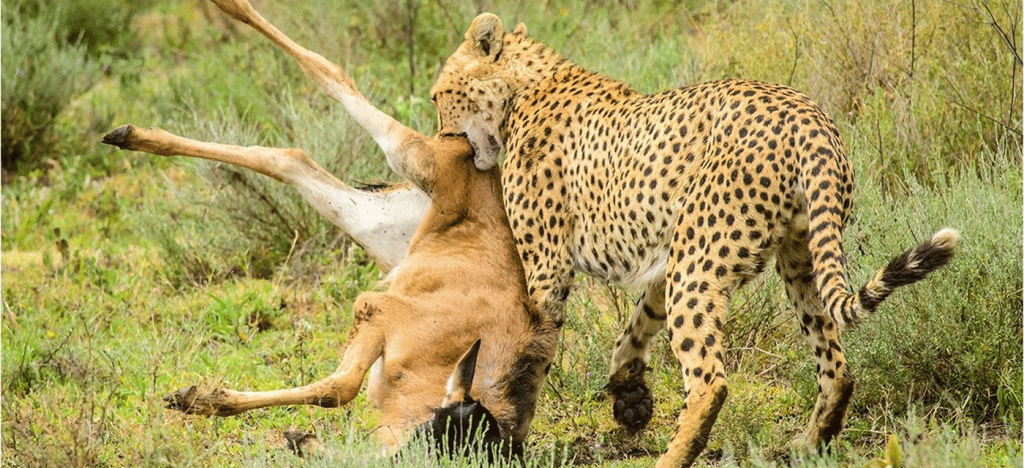
Predators are essential regulators of the Serengeti ecosystem ensuring that herbivore populations remain balanced and that vegetation is not overexploited. The main predators include lions, cheetahs, leopards, hyenas and occasionally wild dogs.
Lions are the dominant apex predators. They live in social groups called prides and use cooperative hunting strategies to take down large prey such as wildebeest and buffalo. Their strength lies in teamwork allowing them to control large herbivore populations effectively.
Cheetahs are built for speed and specialize in hunting smaller fast-moving prey like gazelles. Their hunting style relies on short bursts of extreme acceleration rather than endurance. Leopards are solitary and highly adaptable. They use stealth and ambush techniques often dragging prey into trees to avoid scavengers. This behavior reduces competition with other predators.
Hyenas are both hunters and scavengers making them highly efficient at utilizing available food resources. They often hunt in clans and can overpower prey through group coordination.
Predators primarily target weak, sick or young animals which strengthens the genetic health of herbivore populations. This process is known as natural selection and prevents overpopulation. Without predators, herbivore numbers would increase uncontrollably, leading to overgrazing, habitat degradation and eventual ecosystem collapse. Predators therefore maintain ecological stability by controlling energy flow from herbivores upward in the food chain.
Decomposers and Nutrient Recycling
Decomposers are the least visible but one of the most important components of the Serengeti ecosystem. They are responsible for breaking down dead plants, animal carcasses and organic waste into simpler substances that return nutrients back into the soil. Without them the ecosystem would quickly become overloaded with dead matter and lose its ability to support new life.
This group includes bacteria, fungi, termites, dung beetles and scavenging animals such as vultures and hyenas. Each plays a different role in the recycling process. Scavengers are usually the first to act on a carcass. Vultures rapidly consume soft tissues preventing the spread of disease. Hyenas also play a dual role as both hunters and scavengers ensuring that very little organic matter goes to waste.
After scavengers’ insects and microorganisms take over. Dung beetles break down animal waste by burying it in the soil which improves soil structure and fertility. Termites decompose tough plant material such as wood and dry grass converting it into nutrient-rich soil particles. At the microscopic level bacteria and fungi complete the breakdown process releasing essential nutrients like nitrogen and phosphorus.
These nutrients are absorbed by plants restarting the cycle of life. This continuous recycling process ensures that energy and matter are never wasted in the ecosystem. Decomposers also help control disease by removing decaying organic matter quickly. This prevents harmful pathogens from spreading among wildlife populations. In this way decomposers act as both recyclers and health protectors of the Serengeti ecosystem.
The Great Migration
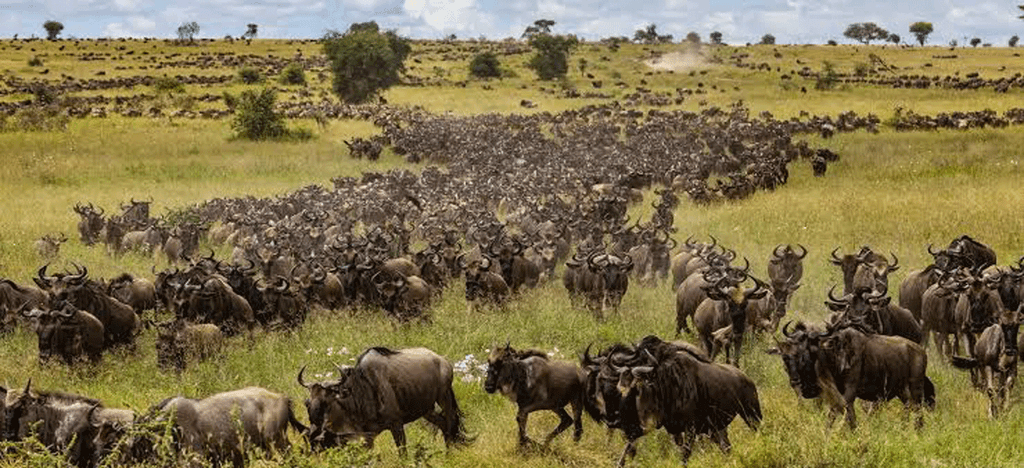
The Great Migration is one of the most extraordinary ecological processes in the Serengeti ecosystem. It involves over 1.5 million wildebeest along with hundreds of thousands of zebras and gazelles moving in a continuous circular route across Tanzania and Kenya in search of fresh grazing land and water.
This movement is not random but follows seasonal rainfall patterns. During the wet season herds gather in the southern Serengeti where nutrient-rich grasses provide ideal feeding and calving conditions. Thousands of calves are born within a short period ensuring survival through safety in numbers.
As the dry season progresses grass in the south becomes depleted. The herds begin moving northwest through central Serengeti toward the Mara River. This journey is dangerous especially during river crossings where strong currents and large Nile crocodiles pose significant threats.
Despite these dangers migration is essential for survival. It prevents overgrazing in any one area allowing vegetation time to recover. It also ensures that herbivores always have access to fresh food maintaining the balance between plant growth and consumption. Predators and scavengers depend heavily on the migration. Lions, cheetahs, hyenas and crocodiles follow the herds creating a dynamic predator-prey system that shifts throughout the year.
The migration is not just movement it is a survival strategy that connects the entire ecosystem. It regulates energy flow, supports biodiversity and maintains ecological balance across a vast landscape.
Food Web and Interdependence
The Serengeti ecosystem operates as a highly interconnected food web where every organism depends on others for survival. Unlike a simple linear food chain, the Serengeti functions through multiple overlapping relationships that create stability and resilience.
At the base of the system are plants which convert sunlight into energy. Herbivores consume these plants transferring energy upward to predators. When animals die decomposers break down their bodies and return nutrients to the soil allowing plants to grow again. This creates a continuous cycle of energy flow.
However, the food web is more complex than simple feeding relationships. Many species interact in multiple ways. For example, zebras and wildebeest both graze on grass but at different heights reducing competition. Birds often feed on insects found on large mammals benefiting both species by reducing parasites.
Predators also influence plant life indirectly. By controlling herbivore populations, they prevent overgrazing which allows vegetation to regenerate. This shows how even indirect relationships shape the entire ecosystem.
Disturbances in one part of the food web can affect many others. For example, a decline in herbivores would reduce food for predators and slow nutrient recycling. This interconnectedness ensures that balance is maintained but also makes the system sensitive to disruption. The Serengeti food web demonstrates that no species exists in isolation. Every organism is part of a larger network of survival, energy transfer and ecological stability.
Adaptation and Survival Mechanisms
Adaptation is a key survival mechanism in the Serengeti ecosystem, where environmental conditions change dramatically between wet and dry seasons. Animals have evolved physical, behavioral and physiological traits that allow them to survive in this challenging environment.
Predators such as cheetahs have developed extreme speed to catch fast-moving prey. Their lightweight bodies, flexible spines and large lungs are specialized for short bursts of acceleration. Lions in contrast, rely on strength and teamwork hunting in groups to bring down large animals.
Prey species have also developed strong survival strategies. Gazelles, for example rely on agility, quick direction changes and alertness to escape predators. Their ability to detect danger early increases their survival chances. Camouflage is another important adaptation. Leopards use their spotted coats to blend into trees and tall grass allowing them to ambush prey effectively. This stealth-based survival strategy reduces energy use and increases hunting success.
Elephants demonstrate behavioral adaptation through memory and learning. They remember water sources across vast distances and can locate them during severe droughts. Many animals also adapt through migration moving to areas with better resources depending on the season.
Social behavior is another survival tool. Herding animals gain protection through group living where more eyes increase predator detection. Young animals are often protected in the center of groups reducing risk. These adaptations ensure that species can survive despite environmental uncertainty. Over time natural selection strengthens traits that improve survival shaping the evolution of Serengeti wildlife.
Water Systems and Resource Distribution
Water is one of the most critical limiting factors in the Serengeti ecosystem. Although the region is famous for its vast grasslands water availability varies greatly across seasons and locations. Rivers, rainfall and underground water sources all play essential roles in sustaining life.
The main rivers, such as the Mara, Grumeti and Mbalageti act as permanent water sources that support wildlife during dry periods. These rivers attract large concentrations of animals especially during migration creating intense ecological activity around water points.
Seasonal rainfall is the primary source of water for most of the ecosystem. During the wet season, temporary pools and wetlands form across the plains allowing animals to spread out widely. As the dry season progresses these water sources disappear forcing wildlife to concentrate near permanent rivers.
This uneven distribution of water influences migration routes, predator behavior and plant growth. Areas with more reliable water support higher biodiversity while drier regions experience lower animal density. Water also affects vegetation patterns. Plants near rivers and wetlands grow more densely and remain green longer creating microhabitats for different species. This variation supports both grazers and browsers within a relatively small area.
Animals have adapted to water scarcity in different ways. Some species can travel long distances between water sources while others reduce activity during the hottest parts of the day to conserve moisture. Water systems therefore act as the backbone of the Serengeti ecosystem. They determine where life can exist, how animals move and how energy flows through the environment.
Energy Flow and Trophic Levels
Energy flow in the Serengeti ecosystem follows a structured path known as trophic levels where energy moves from one group of organisms to another. This flow begins with the sun which provides the initial energy input that drives all biological processes. Plants, as primary producers capture this energy through photosynthesis and convert it into chemical energy stored in leaves, stems and roots.
Herbivores form the second trophic level by consuming plants and transferring energy into animal biomass. Species such as wildebeest, zebras and gazelles play a major role in this transfer. However not all energy is passed forward efficiently. A significant portion is lost through respiration, movement and heat.
Carnivores occupy the third trophic level. Lions, leopards, cheetahs and hyenas obtain energy by consuming herbivores. This level ensures that energy continues moving upward in the ecosystem while also controlling herbivore populations. At the top of the structure are apex predators which have no natural enemies within the ecosystem. They regulate the balance of all lower levels.
Finally, decomposers break down dead organisms at every level, returning nutrients to the soil and restarting the cycle. Energy transfer is never 100 percent efficient which is why ecosystems naturally form pyramids with fewer organisms at higher levels. The Serengeti’s stability depends on maintaining this flow. Any disruption at one level affects all others showing how interconnected energy movement is within the ecosystem.
Biodiversity and Species Coexistence
The Serengeti ecosystem supports one of the highest concentrations of large mammals in the world because of its high biodiversity and effective species separation strategies. Biodiversity refers to the variety of species living in an ecosystem and in the Serengeti this includes thousands of plant and animal species interacting in complex ways.
One of the main reasons so many species coexist is niche differentiation. Each species occupies a specific ecological role. For example zebras feed on tall, coarse grass, wildebeest prefer short, nutritious grass and gazelles focus on tender shoots. This reduces direct competition for food.
Predators also reduce competition indirectly by controlling herbivore populations. Different predators target different prey types and hunting zones. Lions hunt in groups on open plains, cheetahs hunt individually in open areas and leopards hunt in wooded or rocky environments.
Spatial separation is another factor. Some species prefer open plains while others thrive in riverine forests or rocky kopjes. This habitat diversity allows multiple species to exist in the same general region without competing directly. Temporal separation also helps. Some animals are more active during the day while others are active at night reducing overlap in feeding and movement patterns.
Biodiversity increases ecosystem stability. The more species present the more resilient the system becomes to environmental changes. If one species declines others can partially fill its ecological role. The Serengeti’s biodiversity is a key reason it remains one of the most stable and productive ecosystems on Earth.
Predator-Prey Dynamics
Predator-prey relationships are one of the most dynamic forces shaping the Serengeti ecosystem. These interactions create a continuous cycle of survival, adaptation and population control that influences both predators and herbivores.
Predators such as lions, cheetahs and hyenas depend entirely on herbivores for food. Their hunting success is influenced by prey availability, environmental conditions and competition with other predators. At the same time prey species evolve strategies to avoid being caught.
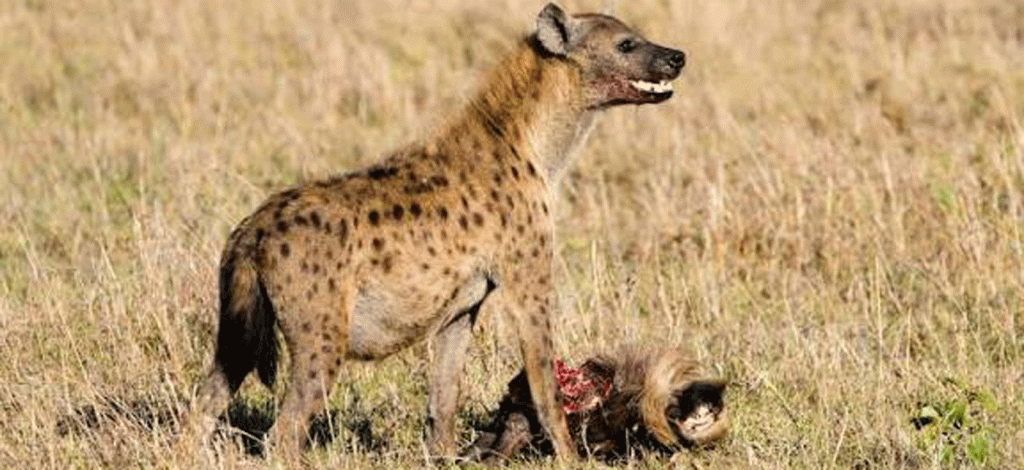
This relationship creates an evolutionary arms race. As predators become more efficient hunters, prey species develop better escape mechanisms such as speed, agility, group behavior and heightened senses.
Herding behavior is one of the most important survival strategies. Large groups reduce individual risk by increasing the chances of detecting predators early. Confusion within large herds also makes it harder for predators to single out individuals.
Predator populations are naturally regulated by prey availability. When prey numbers increase predator populations rise due to increased food supply. When prey declines predator numbers also decrease. This balance prevents extreme fluctuations in either group.
This dynamic relationship maintains ecosystem stability. Without predator’s herbivore populations would grow uncontrollably leading to overgrazing and habitat destruction. Without prey, predators would starve and decline. Predator-prey interactions are therefore essential for maintaining ecological balance and ensuring the long-term survival of the Serengeti ecosystem.
Human Influence and Conservation Pressure
Although the Serengeti ecosystem has evolved naturally over thousands of years human activity now plays a significant role in shaping its future. Increasing population growth, land use changes, climate change and tourism all place pressure on this fragile system.
One major threat is habitat fragmentation. As human settlements expand around the ecosystem boundaries wildlife corridors can become blocked disrupting migration routes. This is especially critical for species like wildebeest that rely on long-distance movement.
Poaching has also historically affected wildlife populations particularly large mammals such as elephants and rhinos. While conservation efforts have reduced illegal hunting it remains a concern in some areas.
Climate change introduces additional uncertainty. Changes in rainfall patterns can affect grass growth, water availability and migration timing. Since the Serengeti depends heavily on seasonal cycles even small changes can have large ecological impacts.
On the positive side conservation initiatives have made significant progress. National parks and protected areas help preserve habitats and regulate human activity. Anti-poaching patrols, wildlife monitoring and research programs contribute to ecosystem protection.
Tourism also plays a dual role. When managed responsibly it provides funding for conservation and supports local communities. However poorly managed tourism can disturb wildlife behavior. Community involvement is increasingly important. Local populations participate in conservation programs that balance wildlife protection with human development needs.
The future of the Serengeti depends on maintaining harmony between human activity and natural processes.
Ecosystem Stability and Long-Term Balance
The Serengeti ecosystem remains stable because of its strong internal regulation mechanisms that maintain balance among all living and non-living components. Stability in this context does not mean the ecosystem is unchanging but rather that it can absorb disturbances and recover naturally.
One key factor is population regulation through natural cycles. Predator-prey interactions prevent any one species from dominating the ecosystem. Herbivore populations rise and fall depending on food availability which is controlled by rainfall patterns. Another stabilizing factor is biodiversity. The presence of many species performing similar ecological roles ensures that if one species declines others can partially fill its role. This redundancy strengthens ecosystem resilience.
Nutrient cycling also contributes to stability. Decomposers ensure that energy and nutrients are continuously recycled preventing depletion of soil fertility. This supports ongoing plant growth which sustains herbivores and predators. Seasonal migration is another critical mechanism. The Great Migration redistributes pressure across the landscape preventing overgrazing in any single area and allowing vegetation to recover.
Environmental variability rather than being a weakness actually strengthens the system by forcing adaptation and flexibility among species. Overall, the Serengeti maintains balance through interconnected feedback loops. These loops ensure that changes in one part of the system are compensated for elsewhere keeping the ecosystem functioning over long periods of time.
Frequently Asked Questions of Serengeti Ecosystem Explained How Nature Works Here
What is the Serengeti ecosystem?
The Serengeti ecosystem is a highly connected natural system made up of grasslands, woodlands, rivers, wetlands and rocky landscapes. Plants, herbivores, predators, decomposers, climate and water systems all interact to maintain ecological balance.
How does the Serengeti ecosystem work?
The Serengeti ecosystem works through the continuous movement of energy and nutrients. Sunlight provides energy for plants, herbivores eat the plants, predators feed on herbivores, and decomposers return nutrients to the soil.
What role does climate play in the Serengeti ecosystem?
Climate controls rainfall, plant growth, water availability, animal movement and reproduction. The wet and dry seasons create changing conditions that influence how wildlife uses different parts of the ecosystem.
Why is the Great Migration important to the Serengeti ecosystem?
The Great Migration helps distribute grazing pressure across the landscape. More than 1.5 million wildebeest, together with zebras and gazelles move in response to seasonal rainfall and fresh grazing areas helping prevent overgrazing in one location.
What animals are important to the Serengeti ecosystem?
Important animals include wildebeest, zebras, gazelles, buffalo, giraffes, elephants, lions, cheetahs, leopards, hyenas and many other species. Each contributes to the ecosystem through feeding, predation, nutrient cycling or habitat modification.
Why are herbivores important in the Serengeti?
Herbivores transfer energy from plants to higher levels of the food web. Their grazing also influences vegetation growth and nutrient distribution across the ecosystem.
What role do predators play in the Serengeti ecosystem?
Predators help regulate herbivore populations and prevent excessive grazing. Lions, cheetahs, leopards and hyenas also contribute to the natural balance between different levels of the food web.
Why are decomposers important in the Serengeti?
Decomposers break down dead plants, animal remains and organic waste. Bacteria, fungi, termites and dung beetles help return nutrients to the soil, supporting new plant growth and continuing the nutrient cycle.
How does water affect wildlife in the Serengeti?
Water availability influences where animals live, feed and migrate. Rivers such as the Mara, Grumeti and Mbalageti provide important water sources, especially during dry periods.
How do different species coexist in the Serengeti?
Species coexist through niche differentiation, habitat preferences and different feeding strategies. For example, zebras, wildebeest and gazelles feed on different types or parts of vegetation reducing direct competition for food.
How does the Serengeti maintain ecological balance?
The ecosystem maintains balance through predator-prey relationships, nutrient recycling, biodiversity, seasonal migration, rainfall patterns and adaptation. These interconnected processes help the ecosystem recover from natural changes and disturbances.
How do humans affect the Serengeti ecosystem?
Human activities such as habitat fragmentation, land-use changes, poaching, climate change and poorly managed tourism can place pressure on the ecosystem. Conservation programs, protected areas, responsible tourism and community involvement help reduce these pressures.
How can tourism help protect the Serengeti ecosystem?
Responsible tourism can contribute to conservation funding and support local communities. Visitors can also help by respecting wildlife, following park regulations and choosing responsible safari operators such as Serengeti Travels.
Why is the Serengeti ecosystem important?
The Serengeti is important because it demonstrates how climate, landscapes, plants, animals and microorganisms work together. Its interconnected food webs, seasonal movements and biodiversity support one of the world’s most remarkable natural ecosystems.
Conclusion
The Serengeti ecosystem is one of the most complete and self-sustaining natural systems on Earth. It functions through a complex network of interactions between climate, geography, plants, animals and microorganisms. Every component plays a specific role, and no part exists in isolation. For visitors exploring this remarkable environment with Serengeti Travels understanding how these natural systems work adds greater meaning to every safari experience.
Energy enters the system through sunlight, is captured by plants, transferred through herbivores, regulated by predators and recycled by decomposers. This continuous flow ensures that life is constantly renewed and allows the ecosystem to remain productive throughout changing seasons.
Seasonal rainfall drives movement and behavior, especially through the Great Migration which connects different regions of the ecosystem in a continuous cycle of survival. This movement prevents overuse of resources and helps maintain ecological balance across the vast Serengeti landscape.
Biodiversity strengthens the system by allowing multiple species to coexist through niche separation. Predator-prey relationships regulate populations and prevent ecological imbalance. Water systems, grasslands, woodlands and other landscapes further shape how wildlife is distributed across the region.
Despite its natural resilience the Serengeti is not immune to human impact. Conservation efforts are essential to protect migration routes, habitats and wildlife populations. Sustainable tourism and community involvement play key roles in ensuring the long-term survival of the ecosystem. As a local safari company Serengeti Travels supports responsible tourism that encourages visitors to appreciate and protect Tanzania’s natural heritage.
Ultimately the Serengeti is more than a wildlife destination. It is a living system that demonstrates how nature organizes itself through balance, adaptation and interdependence. Understanding this ecosystem reveals the delicate structure that supports life on a large scale and highlights the importance of protecting it for future generations.