 English
 Deutsch
 Italia
May 25, 2026
Predator vs Prey Dramatic Wildlife Moments in Serengeti
Introduction
Predator vs Prey Dramatic Wildlife Moments in Serengeti reveal one of the most powerful and visually dramatic aspects of the Serengeti National Park where predator and prey interactions shape the rhythm of life every single day. Stretching across northern Tanzania into Kenya’s Maasai Mara, this vast landscape of endless grasslands, river systems and scattered woodlands creates the perfect stage for survival battles that define the natural world.
In the Serengeti life is governed by one simple rule survival depends on adaptation. Every animal plays a role in a constantly shifting balance. Predators such as lions, cheetahs, leopards, hyenas, wild dogs and crocodiles depend on hunting to survive. At the same time, prey animals like wildebeest, zebras, gazelles, buffalo and antelopes rely on speed, awareness, teamwork and instinct to avoid becoming targets.
What makes the Serengeti especially unique is that these encounters are not rare or occasional they happen continuously across the ecosystem. From silent ambushes hidden in tall grass to explosive chases across open plains from dangerous river crossings to nighttime hunts in complete darkness every moment can turn into a life-or-death situation.
This environment creates some of the most dramatic wildlife scenes in the world. It is not just about predators chasing prey but about intelligence, strategy, endurance and evolution. Each species has developed specialized survival techniques shaped by thousands of years of natural selection.
Understanding predator vs prey dynamics in the Serengeti reveals the deep interconnectedness of life in the wild. It shows how balance is maintained through struggle, how survival drives behavior and how every chase, escape and confrontation contributes to the stability of one of the greatest ecosystems on the planet.
Table of contents
- Introduction
- Lion Ambush in Tall Grass for Predator vs Prey Dramatic Wildlife Moments in Serengeti
- Cheetah Speed Chase
- Wildebeest River Crossing for Predator vs Prey Dramatic Wildlife Moments in Serengeti
- Hyena Clan Hunting Strategy
- Leopard Stealth Attack
- Buffalo Defense Against Lions for Predator vs Prey Dramatic Wildlife Moments in Serengeti
- Gazelle Escape Techniques
- Scavenger Competition at Kill Sites for Predator vs Prey Dramatic Wildlife Moments in Serengeti
- African Wild Dog Coordinated Hunt
- Night Hunting in the Serengeti
- Crocodile Ambush in Rivers for Predator vs Prey Dramatic Wildlife Moments in Serengeti
- Herd Protection in Zebras and Wildebeest
- Predator Competition in the Serengeti for Predator vs Prey Dramatic Wildlife Moments in Serengeti
- Migration Pressure and Survival Challenges
- Ecosystem Balance Through Predation
- Frequently Asked Questions Predator vs Prey Dramatic Wildlife Moments in Serengeti
- Conclusion
Lion Ambush in Tall Grass for Predator vs Prey Dramatic Wildlife Moments in Serengeti
The lion ambush in the tall grass of the Serengeti is one of the most iconic and dramatic predator-prey encounters in the wild. Lions are highly strategic hunters and their success depends more on patience, coordination and environment than raw speed. The golden savanna grass plays a critical role acting as natural camouflage that allows lions to disappear completely even when prey animals are nearby.
A lion pride typically divides roles before an attack. Some members position themselves downwind to avoid detection while others slowly circle around the herd. The goal is to create a trap where prey animals have limited escape options. Lions study herd behavior carefully watching for weak, injured, young or isolated individuals who are easier to catch.
Prey species such as wildebeest, zebras and antelopes may appear calm while feeding but they are constantly alert. Their ears rotate, eyes scan movement and bodies stay ready for sudden escape. However the Serengeti environment makes perfect vigilance impossible especially when herds are large and distractions are many.
When the lion finally attacks the moment is explosive. The silence of the grassland breaks instantly as a lion burst forward at full speed. Dust rises, birds scatter and the herd erupt into chaos. Every animal run in different directions creating confusion that benefits the predators.
Success depends on timing. If lions coordinate perfectly, they isolate a single target and bring it down quickly. If prey reacts fast enough especially as a group they can escape. This balance between predator strategy and prey awareness is what makes the lion ambush one of the most dramatic survival moments in the Serengeti ecosystem.
Cheetah Speed Chase
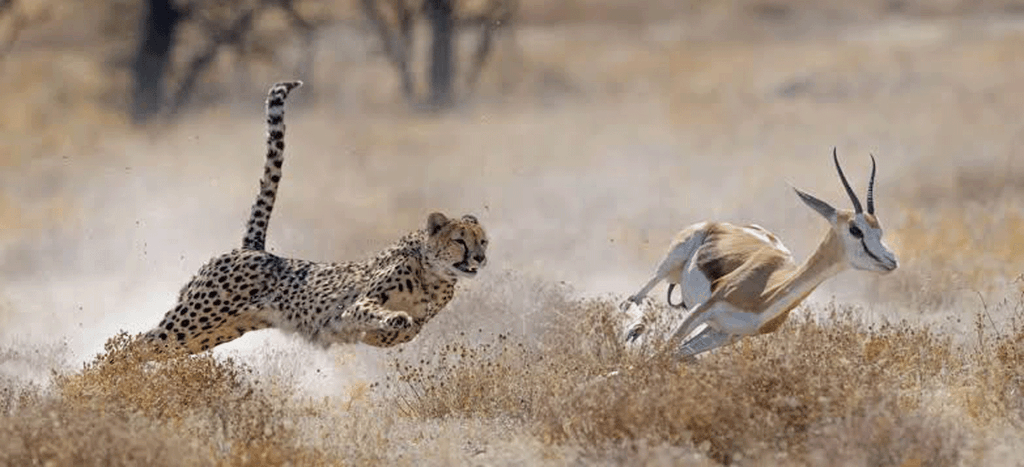
The cheetah speed chase represents the ultimate expression of acceleration in the Serengeti ecosystem. Unlike lions or hyenas cheetahs rely almost entirely on speed and precision rather than teamwork or endurance. Their bodies are uniquely designed for explosive movement with lightweight frames, long legs and specialized muscles that allow extreme acceleration in just a few seconds.
The hunt begins with silent stalking. A cheetah uses low posture, careful movement and visual focus to approach its target usually a Thomson’s gazelle or small antelope. Distance is critical. If the cheetah starts too far away it wastes energy if too close the prey may escape before the chase begins.
Once the cheetah commits the chase becomes a high-intensity sprint. It can reach incredible speeds within moments but this speed is only sustainable for a short duration. Every second counts. The cheetah must quickly close the gap while maintaining balance during sharp turns and sudden directional changes.
Prey animals respond with instinctive survival techniques. Gazelles, in particular, use zigzag patterns, unpredictable jumps and sudden stops to confuse the predator’s tracking ability. This creates a visually dramatic chase where both speed and intelligence are tested simultaneously.
However, the cheetah’s biggest limitation is endurance. The intense sprint generates heat and exhaustion rapidly. If the chase lasts too long, the cheetah risks overheating and losing the hunt entirely. Even after a successful catch it must consume the prey quickly before stronger predators like lions or hyenas arrive.
If the hunt fails the cheetah must rest for long periods to recover energy making every attempt extremely valuable and risky. This balance of speed, precision and vulnerability makes the cheetah chase one of the most intense predator-prey interactions in the Serengeti.
Wildebeest River Crossing for Predator vs Prey Dramatic Wildlife Moments in Serengeti
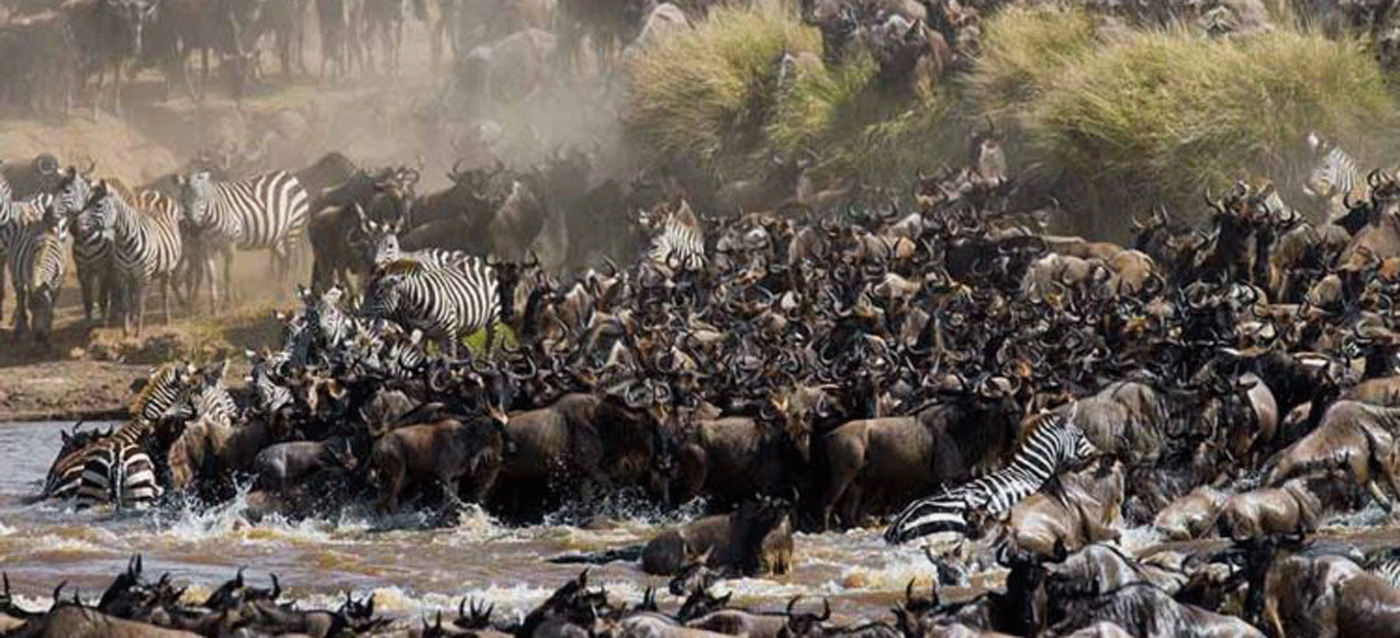
The wildebeest river crossing is one of the most dangerous and emotionally intense wildlife events in the Serengeti. It occurs during the Great Migration when millions of wildebeest, zebras and other herbivores move across vast distances in search of fresh grazing land. The river crossing represents a critical obstacle filled with life-threatening challenges.
As herds gather at the riverbank tension builds dramatically. The animals hesitate sensing danger from both the strong currents and the hidden predators beneath the water. Nile crocodiles lie motionless, perfectly camouflaged and waiting for the right moment to strike. The uncertainty creates a chaotic atmosphere where hesitation and fear are visible in the herd’s behavior.
Eventually, pressure from behind forces movement. Once a few individuals enter the water the rest follow in a massive uncontrolled surge. This triggers complete chaos. The river becomes a scene of panic, movement and survival struggle.
Crocodiles strike suddenly and powerfully. Their attacks are fast and silent often pulling animals underwater within seconds. The struggle is violent with splashing water and frantic movement visible across the river surface. Despite this predator can not capture every animal due to the overwhelming number of crossing individuals.
Survival depends heavily on group behavior. The sheer size of the herd creates confusion for predators making it difficult to isolate targets. Many animals successfully reach the opposite bank simply because of numbers and timing.
However, losses are unavoidable. The river crossing demonstrates the harsh reality of migration: survival requires risk. It is a powerful reminder that life in the Serengeti is shaped by movement, pressure and constant danger where even a journey for food becomes a battle for survival.
Hyena Clan Hunting Strategy
Spotted hyenas are among the most misunderstood predators in the Serengeti, yet they are highly intelligent, socially complex and extremely efficient hunters. Unlike lions or cheetahs that rely on power or speed, hyenas depend on endurance, teamwork and strategic coordination. Their hunting success is closely tied to their clan structure which can include dozens of individuals working together.
A typical hyena hunt begins with long-distance tracking. Hyenas use excellent stamina to follow herds of wildebeest, zebras or antelopes over extended periods. Instead of attacking immediately, they observe, test and slowly wear down their target. This method allows them to exploit fatigue rather than strength.
Once a target is selected the clan begins coordinated pressure. Some hyenas chase directly behind the prey while others position themselves ahead to block escape paths. Their communication is constant, using vocal calls, body language and movement signals to adjust strategy during the chase.
What makes hyena hunting especially dramatic is its psychological pressure. Prey animals often become exhausted not just physically but mentally as they are constantly surrounded and chased. The chase can last long distances pushing prey beyond its endurance limits.
Hyenas also face competition from lions which often try to steal their kills. This forces hyenas to act quickly and aggressively once the hunt is successful. Feeding is chaotic with dominance hierarchy determining access to food.
This behavior shows that survival in the Serengeti is not only about physical strength but also intelligence, cooperation and persistence. Hyenas are proof that teamwork and endurance can rival even the most powerful predators in the ecosystem.
Leopard Stealth Attack
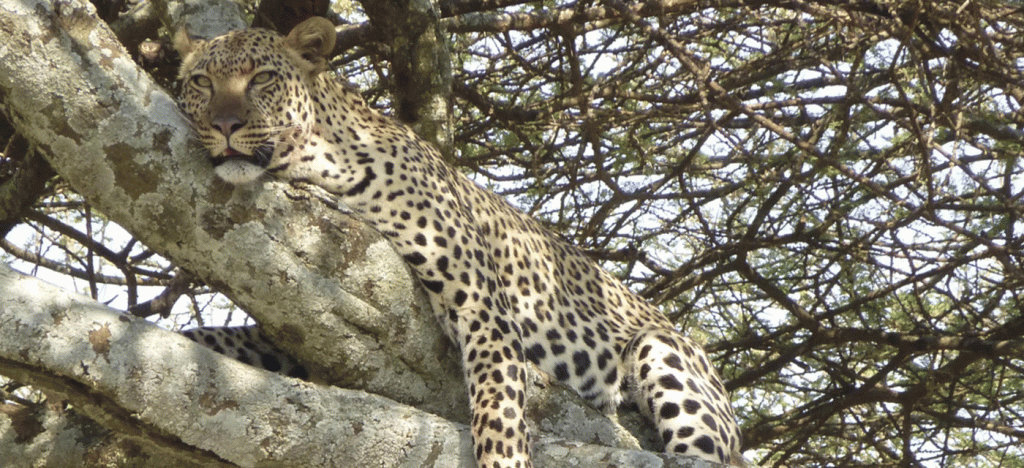
The leopard is one of the most secretive and efficient predators in the Serengeti. Unlike lions or hyenas that rely on group coordination leopards are solitary hunters who depend entirely on stealth, patience and precision. Their camouflage pattern allows them to blend seamlessly into the woodland and grassland environment.
A leopard hunt begins with slow and silent stalking. It carefully observes prey such as impalas, gazelles or young antelopes moving only when cover is available. Every step is controlled to avoid detection. The leopard uses terrain features like bushes, rocks and shadows to approach as close as possible.
When the distance is right the attack is sudden and explosive. The leopard uses powerful forelimbs to grab and destabilize the prey. Unlike cheetahs that rely on long chases leopards aim to end the hunt within seconds. Their goal is efficiency rather than endurance.
After the kill the leopard faces a new challenge protecting its meal. Scavengers like hyenas and lions are constant threats. To secure its food the leopard drags the carcass into trees sometimes lifting prey heavier than half its own body weight. This is one of the most impressive displays of strength in the animal kingdom.
The tree not only protects the kill but also allows the leopard to feed over multiple days. It returns repeatedly while scanning for danger from above and below. This strategy minimizes risk and energy expenditure. Leopard behavior shows how adaptability and stealth can be more effective than brute force. Their hunting style is one of the most refined survival strategies in the Serengeti.
Buffalo Defense Against Lions for Predator vs Prey Dramatic Wildlife Moments in Serengeti
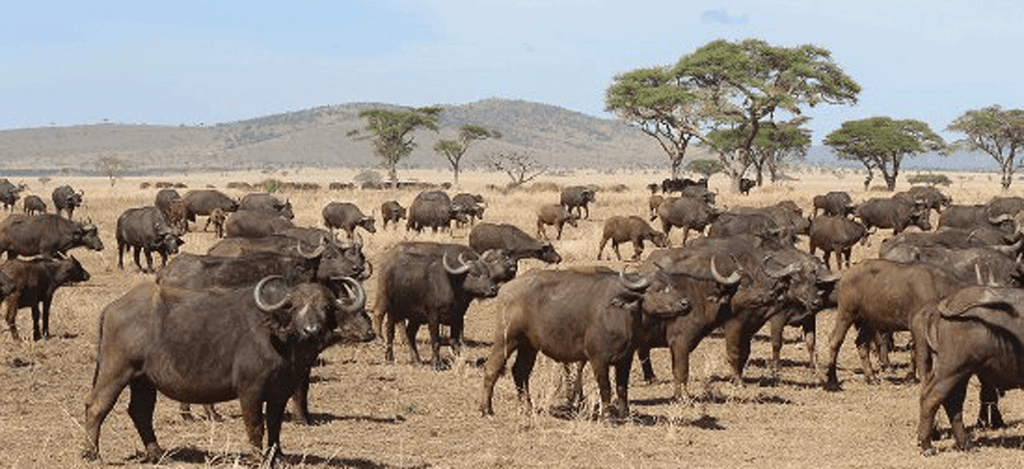
African buffalo are among the most formidable prey species in the Serengeti. Unlike many herbivores that rely mainly on escape buffalo are known for their aggressive and coordinated defense strategies. Their strength, size and unpredictable behavior make them extremely dangerous opponents even for lions.
When a lion pride attempts an attack buffalo herd quickly form tight defensive formations. Adults surround calves and weaker individuals creating a protective barrier. This unity significantly reduces the chances of a successful predator strike.
If lions push forward buffalo often counter-attack instead of fleeing. Large males lead powerful charges using their curved horns as weapons. These counter-attacks can injure or even kill lions making buffalo hunts extremely risky. What makes buffalo defense dramatic is its unpredictability. While some animals flee others stand their ground and fight back aggressively. This mixed response creates chaos during predator encounters.
Lions must therefore rely on careful planning. They usually target isolated individuals or weak members rather than confronting the entire herd. Even then success is not guaranteed as buffalo are capable of regrouping quickly and defending effectively.
This interaction shows that prey animals are not passive victims. In the Serengeti survival often involves resistance, coordination and strength. Buffalo demonstrate that defense can be just as powerful as attack in shaping predator-prey outcomes.
Gazelle Escape Techniques
Gazelles are among the fastest and most agile prey animals in the Serengeti ecosystem. Their survival depends on a combination of speed, awareness and unpredictable movement patterns that help them evade predators such as cheetahs and wild dogs.
When a threat is detected, gazelles react instantly. Their first response is explosive acceleration but what truly improves their survival chances is their ability to change direction unpredictably. Instead of running in a straight line, they use zigzag movements, sudden stops and sharp turns to confuse pursuing predators.
This unpredictability is critical because predators like cheetahs rely on straight-line speed. By constantly changing direction gazelles force predators to adjust their movement repeatedly, reducing efficiency and speed advantage.
Gazelles also benefit from group behavior. When one individual senses danger it triggers an alarm response that spreads quickly through the herd. This mass reaction creates confusion for predators making it harder to isolate a single target. Another survival advantage is awareness. Gazelles have wide fields of vision allowing them to detect movement from multiple directions. This reduces surprise attacks and improves reaction time.
However survival is not guaranteed. Even with advanced escape techniques, predators sometimes succeed through speed, timing or environmental advantage. This interaction highlights how evolution shapes both predator and prey. Gazelles survive not by strength, but through intelligence, agility and constant vigilance.
Scavenger Competition at Kill Sites for Predator vs Prey Dramatic Wildlife Moments in Serengeti
Predator vs Prey Dramatic Wildlife Moments in Serengeti Scavenger competition at kill sites in the Serengeti is one of the most chaotic and competitive survival scenes in the entire ecosystem. After a successful hunt by a predator such as lions or wild dogs the remaining carcass becomes a highly valuable resource that attracts multiple species almost immediately.
The first to feed are usually the dominant hunters, especially lions who often guard their kill aggressively. Lions use intimidation, strength and territorial behavior to keep other animals away. However they cannot always maintain control, especially when larger groups of scavengers begin to gather.
Spotted hyenas are the most persistent challengers. They rarely approach alone instead forming groups that pressure lions into abandoning or sharing the carcass. Their loud vocalizations and coordinated movements create psychological pressure sometimes forcing even a lion pride to retreat temporarily.
Above the scene vultures begin to circle. They rely on visual cues and patience, waiting for an opportunity to descend once dominant predators are distracted or leave. Jackals also join the competition feeding on smaller scraps and moving quickly between gaps in the chaos.
What makes kill sites especially dramatic is the constant shifting of dominance. Control of the carcass can change multiple times within a short period depending on group size, aggression and timing. This interaction is not just about feeding it is about survival efficiency. Every animal is trying to maximize energy intake while minimizing risk. The kill site becomes a temporary battlefield where hierarchy, strategy and opportunity determine access to food.
Ultimately scavenger competition ensures that no resource in the Serengeti goes to waste maintaining ecological balance.
African Wild Dog Coordinated Hunt
African wild dogs are among the most efficient and highly organized predators in the Serengeti. Their hunting strategy is built entirely around teamwork, communication and endurance making them extremely successful compared to many larger predators.
A wild dog hunt begins with group coordination. The pack identifies a target usually a medium-sized herbivore such as an impala or gazelle. Once the prey is selected the pack immediately organizes into roles. Some dogs take the lead in chasing while others move to the sides or ahead to block escape routes.
This coordinated movement is what makes wild dog hunts so effective. Unlike solitary hunters wild dogs operate as a single unit constantly communicating through vocal sounds and visual signals. This allows them to adjust speed and direction in real time during the chase.
Endurance is their greatest advantage. Wild dogs can maintain long chases over extended distances without quickly losing energy. This gradually exhausts the prey reducing its ability to escape. The chase itself is highly dynamic with constant changes in formation and pressure. Prey animals often become overwhelmed by continuous pursuit from multiple directions.
Once the prey is captured feeding begins almost immediately. However wild dogs face a major challenge competition from larger predators such as lions and hyenas. These competitors can steal kills easily forcing wild dogs to eat quickly or abandon their food.
Despite these challenges wild dogs maintain high hunting success rates due to their teamwork and coordination. This predator-prey interaction highlights how cooperation can become one of the most powerful survival strategies in the wild.
Night Hunting in the Serengeti
Nighttime in the Serengeti introduces a completely different level of predator-prey interaction. Darkness changes the rules of survival shifting advantages between hunters and prey animals and creating a hidden world of intense activity.
Predators such as lions and leopards become more active at night because darkness provides cover for stealth and approach. Lions use group coordination to silently move closer to herds while leopards rely on individual stealth and camouflage to ambush prey.
Prey animals on the other hand face increased vulnerability due to reduced visibility. Their ability to detect movement visually is limited making them more dependent on hearing, smell and group awareness for survival. However, night also introduces new survival strategies. Herbivores often gather in tighter groups increasing collective awareness. Some species remain more alert during night time taking turns resting and watching for danger.
The silence of the night makes every sound significant. A broken branch, distant movement or unusual noise can trigger immediate reaction from both predators and prey. What makes night hunting especially dramatic is uncertainty. Visibility is limited meaning every encounter carries higher risk for both sides. Predators must rely on precision while prey must rely on vigilance.
This nocturnal environment creates a hidden layer of survival battles that are less visible but equally intense compared to daytime interactions. Night in the Serengeti is not peaceful it is a shifting landscape of silent tension where survival continues even in darkness.
Crocodile Ambush in Rivers for Predator vs Prey Dramatic Wildlife Moments in Serengeti
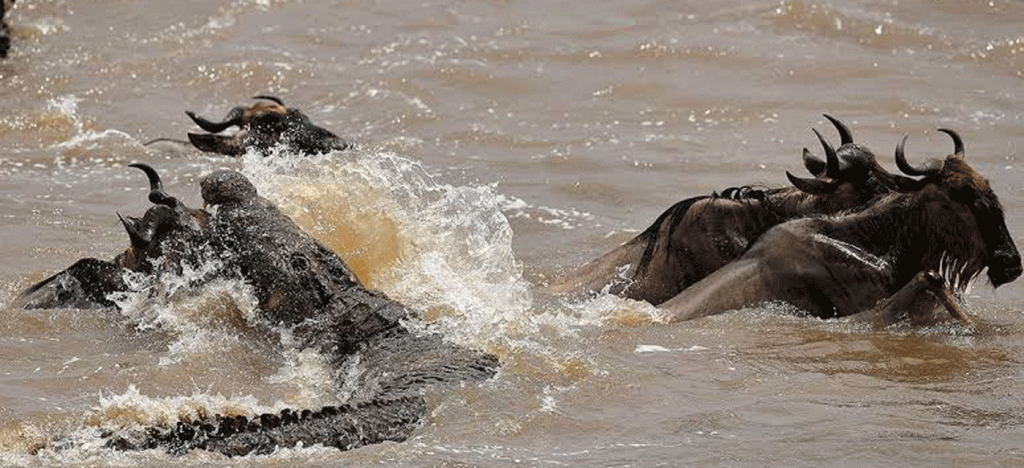
Predator vs Prey Dramatic Wildlife Moments in Serengeti Nile crocodiles are among the most efficient ambush predators in the Serengeti ecosystem especially during river crossings of migrating herds. Their hunting strategy is based entirely on patience, invisibility and explosive power.
Crocodiles often remain completely still underwater blending perfectly with the river environment. Their ability to stay motionless for long periods allows them to wait for the perfect opportunity without detection. Only their eyes and nostrils may be visible above the surface.
When animals such as wildebeest or zebras enter the river crocodiles carefully observe movement patterns. They wait for the right moment when prey is within striking distance and isolated enough to be captured.
The attack itself is extremely fast and powerful. A crocodile launches from underwater with incredible force grabbing prey with its strong jaws. Once captured it drags the animal beneath the water to drown it making escape almost impossible.
What makes crocodile attacks particularly dramatic is their suddenness. There is no warning, no chase and no opportunity for extended escape. The transition from calm water to violent struggle happens in seconds.
However, crocodiles cannot catch every crossing animal. The chaos of mass migration creates confusion and many animals manage to escape due to sheer numbers and timing. This predator-prey interaction highlights the importance of river crossings as one of the most dangerous phases of migration in the Serengeti.
Herd Protection in Zebras and Wildebeest
Herd protection is one of the most important survival strategies used by zebras and wildebeest in the Serengeti. These herbivores rely on group living to reduce individual risk from predators.
In large herds animals benefit from collective vigilance. Many eyes are constantly scanning the environment for danger increasing the chance of early predator detection. This shared awareness allows herds to react quickly to threats.
When predators approach herd behavior becomes highly coordinated. Animals move together in unified direction changes making it difficult for predators to isolate a single target. The movement of the herd creates confusion reducing hunting efficiency for predators like lions and hyenas.
Another key advantage is dilution effect. In a large group the chance of any single individual being targeted decreases significantly. This statistical advantage improves survival rates. However herd protection is not perfect. Predators still succeed by targeting weak young or isolated individuals that fall behind or break formation.
Despite this risk herd living remains one of the most effective survival strategies in open grassland ecosystems. This behavior demonstrates how cooperation among prey species plays a critical role in balancing predator-prey dynamics in the Serengeti.
Predator Competition in the Serengeti for Predator vs Prey Dramatic Wildlife Moments in Serengeti
Predator vs Prey Dramatic Wildlife Moments in Serengeti Predator competition is a constant and intense struggle that happens alongside hunting itself. It is not enough for predators to successfully catch prey they must also protect their kill and compete against other carnivores that are equally determined to survive. This creates a layered survival system where predators are both hunters and competitors at the same time.
Lions, hyenas, leopards and wild dogs often interact in highly competitive ways. Lions are typically the dominant predators and will attempt to take over kills made by other species. Their size and strength allow them to intimidate most competitors but not always without resistance.
Hyenas are the most persistent challengers. They often work in groups to pressure lions sometimes managing to steal portions of a kill or force lions to retreat temporarily. Their intelligence and coordination make them extremely effective in group conflict situations. Leopards, being solitary and cautious, usually avoid direct confrontation. Instead, they drag their kills into trees to prevent theft. This adaptation reduces competition but requires significant energy and strength.
Wild dogs although highly efficient hunters are the most vulnerable in competition. They often lose their kills to larger predators and must rely on speed and quick feeding before competitors arrive. These interactions show that predator life is not only about hunting prey but also about defending resources. Competition shapes behavior, hunting strategies and even movement patterns across the ecosystem.
Ultimately predator competition maintains ecological balance by influencing where and how carnivores hunt ensuring no single species dominates completely.
Migration Pressure and Survival Challenges
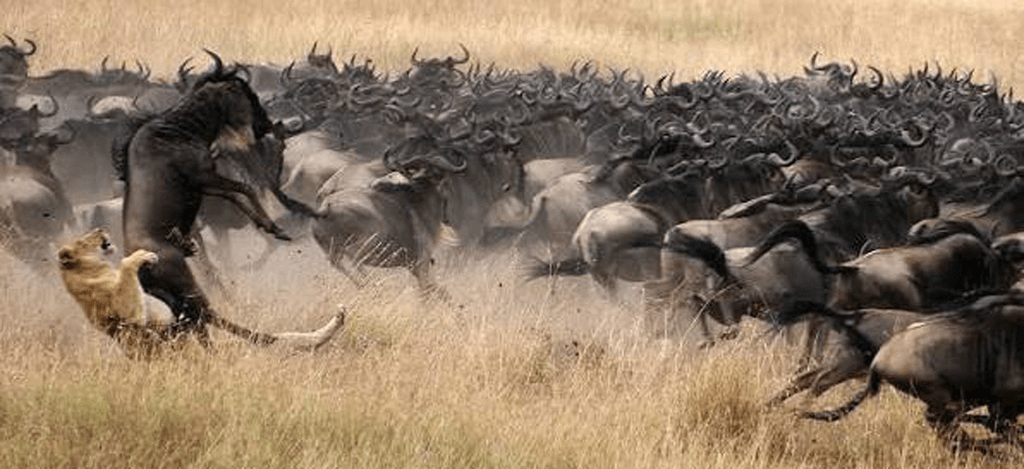
Migration pressure in the Serengeti creates one of the most demanding survival cycles in the natural world. Millions of wildebeest, zebras and gazelles move across vast landscapes in search of fresh grazing and water but this journey exposes them to continuous danger from predators and environmental challenges.
The pressure begins with constant movement. Herds cannot stay in one place for long because food resources become depleted. This forces them into unfamiliar territory where predators are already waiting. The journey is not smooth it is filled with obstacles such as rivers, dry plains and predator-rich zones.
Predators take advantage of this movement. Lions follow migration routes, hyenas track weakened individuals and crocodiles position themselves at river crossings. Every stage of migration becomes a potential hunting opportunity. However migration also provides survival benefits. The large size of the herds reduces individual risk through collective protection. Movement in massive numbers creates confusion for predators making it harder to isolate targets.
Environmental pressure also plays a role. Animals must deal with heat, exhaustion, hunger and dehydration during long journeys. Only the strongest and most adaptable individuals survive the full migration cycle. This constant pressure ensures natural selection within the ecosystem. Weak individuals are removed while stronger ones continue the cycle.
Migration in the Serengeti is not just movement it is a continuous survival test that shapes the entire ecosystem.
Ecosystem Balance Through Predation
Ecosystem balance in the Serengeti is maintained largely through predator-prey relationships. Every hunting event, escape and survival interaction plays a role in regulating animal populations and ensuring ecological stability.
Predators control herbivore populations by targeting weaker or vulnerable individuals. This prevents overgrazing and allows vegetation to regenerate naturally. Without predators herbivore numbers would grow uncontrollably leading to ecosystem degradation.
Prey species in turn influence predator behavior. Their movement patterns, herd formations and survival strategies force predators to adapt constantly. This creates a dynamic system where both sides shape each other’s evolution.
Predation also strengthens genetic quality within prey populations. Only the fastest, strongest and most alert individuals survive long-term passing on stronger traits to future generations. This natural selection process improves species resilience over time. Scavengers also play a key role in maintaining balance. By consuming leftover carcasses they recycle nutrients back into the ecosystem and prevent waste accumulation.
Every interaction in the Serengeti contributes to a complex food web where energy flows continuously between species. The balance between predator and prey ensures that no single species dominates the environment. This system has developed over thousands of years, creating one of the most stable yet dynamic ecosystems on Earth.
Frequently Asked Questions Predator vs Prey Dramatic Wildlife Moments in Serengeti
1. What are the most dramatic predator vs prey moments in the Serengeti?
Some of the most dramatic predator vs prey moments in the Serengeti include lion ambushes, cheetah chases, leopard attacks, hyena hunts, crocodile ambushes during river crossings, buffalo defending their herds and wild dogs conducting coordinated hunts.
2. Which predators are commonly seen hunting in the Serengeti?
The Serengeti is home to several major predators, including lions, cheetahs, leopards, spotted hyenas, African wild dogs and Nile crocodiles. Each species uses different hunting strategies based on its physical abilities and habitat.
3. When is the best time to see predator vs prey interactions in the Serengeti?
Predator activity can be observed throughout the year but wildlife encounters can be particularly exciting during the Great Migration when large numbers of wildebeest and zebras move through predator-rich areas. Early mornings and late afternoons are also productive periods for wildlife viewing.
4. How do lions hunt prey in the Serengeti?
Lions commonly use teamwork, patience and ambush tactics. Pride members may position themselves around a herd and target vulnerable, young or isolated animals rather than attempting to chase an entire group.
5. How do cheetahs catch prey in the Serengeti?
Cheetahs rely primarily on stealth, acceleration and short bursts of high-speed pursuit. They usually approach their target carefully before launching a rapid chase, often targeting gazelles and other smaller antelope.
6. How do gazelles escape predators?
Gazelles use rapid acceleration, sharp turns, zigzag movements and sudden changes in direction to make pursuit more difficult. Their alertness and ability to detect approaching predators also give them valuable reaction time.
7. Why are wildebeest river crossings dangerous?
Wildebeest river crossings are dangerous because animals must navigate strong currents, steep banks, crowding and predators such as Nile crocodiles. The large number of animals crossing simultaneously can also create confusion and difficult conditions.
8. How do crocodiles hunt during the Great Migration?
Nile crocodiles use an ambush strategy. They remain largely hidden in the water and wait for migrating animals to come within striking distance before making a sudden attack.
9. How do buffalo defend themselves against lions?
Buffalo often use group defense by forming protective formations around calves and vulnerable members. Adults may face predators and sometimes counterattack, making buffalo herds difficult and risky targets for lions.
10. Are hyenas hunters or scavengers in the Serengeti?
Spotted hyenas are both skilled hunters and scavengers. They can hunt cooperatively using endurance and coordination while also taking advantage of opportunities to feed on remains from other predators.
11. How do leopards protect their kills?
Leopards often drag their kills into trees where possible. This helps reduce competition from larger predators and scavengers allowing the leopard to return to its food later.
12. Why do predators compete with each other in the Serengeti?
Predators compete because food is a limited resource. Lions, hyenas, leopards and wild dogs may encounter each other around kills creating competition over access to valuable food.
13. How do zebras and wildebeest protect themselves from predators?
Zebras and wildebeest rely heavily on herd behavior. Large groups provide collective vigilance, reduce the likelihood of an individual being isolated and make it harder for predators to select and pursue a single target.
14. What role does predation play in the Serengeti ecosystem?
Predation helps regulate animal populations and contributes to the balance of the ecosystem. By influencing herbivore numbers and behavior, predators indirectly affect vegetation and other parts of the Serengeti food web.
15. Can visitors see predator vs prey interactions on a Serengeti safari?
Yes, visitors may witness predator-prey interactions during a Serengeti safari, although these events are unpredictable and should never be guaranteed. Experienced guides can help identify animal behavior and position vehicles responsibly for wildlife viewing.
16. What makes the Serengeti important for studying predator-prey relationships?
The Serengeti supports large populations of predators and herbivores across interconnected grasslands, woodlands and river systems. This allows visitors and researchers to observe a wide range of natural interactions within a functioning ecosystem.
17. Does the Great Migration increase predator activity?
The movement of huge herds creates seasonal feeding opportunities for predators. Lions, hyenas, cheetahs and other carnivores can take advantage of the abundance of migrating herbivores, particularly when animals become separated or vulnerable.
18. Why are predator vs prey encounters important to the Serengeti?
These interactions are an essential part of the natural food web. Predation influences animal populations, behavior, movement and ecological relationships, helping maintain the dynamic balance of the Serengeti ecosystem.
19. What should travelers expect when watching predators in the Serengeti?
Travelers should expect unpredictable wildlife behavior rather than guaranteed hunts or attacks. The most valuable experience is observing animals naturally, including stalking, resting, feeding, communicating and responding to their surroundings.
20. How can Serengeti Travels help visitors experience wildlife moments?
Serengeti Travels can help travelers explore the Serengeti with safari planning and guided wildlife experiences focused on observing the ecosystem responsibly. A knowledgeable safari guide can also explain predator behavior, prey strategies and the ecological importance of different encounters.
Conclusion
The predator versus prey interactions in the Serengeti represent one of the most complete and powerful natural systems in the world. Every chase, ambush, escape and confrontation is part of a larger cycle that maintains ecological balance and ensures the survival of countless species within this vast ecosystem. For travelers exploring this remarkable wilderness with Serengeti Travels these dramatic encounters provide a deeper understanding of how nature operates in one of Africa’s most iconic landscapes.
Throughout the Serengeti, predators and prey are locked in a continuous evolutionary relationship. Predators refine their hunting techniques through patience, speed, coordination and intelligence. Lions use teamwork and ambush strategies, cheetahs rely on explosive acceleration, leopards depend on stealth and precision, hyenas use endurance and cooperation and crocodiles master underwater ambush techniques. Each predator has developed unique adaptations to increase its chances of survival.
On the other side prey animals are not passive victims. They have evolved equally impressive survival strategies. Wildebeest and zebras rely on herd protection, gazelles use agility and unpredictable movement buffalo defend themselves aggressively and migration patterns provide strength in numbers. These adaptations constantly challenge predators and force them to evolve as well.
This ongoing struggle is not random violence it is an essential part of ecological stability. Predation helps control population sizes, prevents overgrazing and influences which individuals survive and reproduce. At the same time, scavengers recycle nutrients back into the environment, completing the natural cycle of life and death.
The Serengeti demonstrates that balance in nature is not achieved through peace alone, but through continuous interaction and adaptation. It is a living system where survival drives evolution and every species plays a critical role.
Witnessing these dramatic wildlife moments with Serengeti Travels can offer travelers a deeper understanding of nature’s complexity. The experience reveals that the beauty of the Serengeti lies not only in its landscapes but also in the raw unfiltered reality of survival that unfolds across its endless plains every day.