 English
 Deutsch
 Italia
May 25, 2026
Serengeti Animals List: What You’ll See on Safari
Introduction
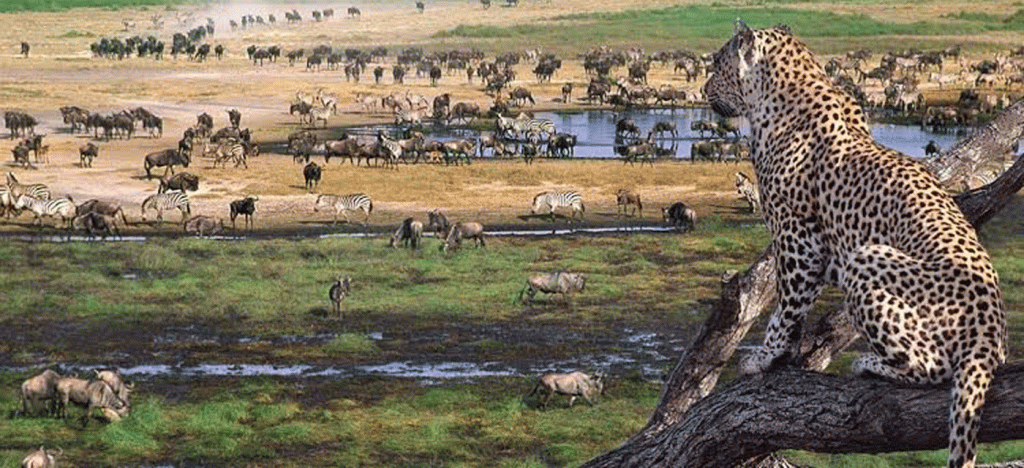
The Serengeti Animals List What You’ll See on Safari offers an exciting look at one of the most famous and biologically rich wildlife ecosystems on Earth. Located in northern Tanzania the Serengeti National Park covers vast open plains, woodlands, river systems and rocky outcrops that provide an ideal habitat for an extraordinary variety of animals. When people think of Africa’s wilderness the Serengeti is often the first place that comes to mind and for good reason.
It is home to the Great Migration one of the largest and most dramatic movements of animals on the planet, where over a million wildebeest, zebras and gazelles move across the plains in search of fresh grazing.
However the Serengeti is not defined by migration alone. It is a complete and balanced ecosystem where predators, herbivores, birds and smaller species all play essential roles in maintaining nature’s cycle of life. From powerful lions resting under acacia trees to elusive leopards hiding in riverine forests from massive elephants shaping the landscape to tiny dik-diks hiding in bushy cover every animal contributes to the survival of the ecosystem.
This Serengeti animals guide is designed to give a clear and detailed understanding of what you can expect to see on safari. It includes well-known species such as the African lion, elephant and cheetah as well as lesser-known but equally fascinating animals like the serval, aardvark, bat-eared fox and rock hyrax. Each species has its own unique behavior, habitat preference and role in the ecosystem.
By understanding these animals a safari becomes more than just sightseeing. It becomes a deeper experience of observation, learning and connection with nature. The Serengeti is not just a destination it is a living world where every sound, movement and encounter tells a story of survival, adaptation and balance in the wild.
Table of contents
- Introduction
- African Lion for Serengeti Animals List: What You’ll See on Safari
- African Elephant for Serengeti Animals List: What You’ll See on Safari
- Leopard
- African Buffalo
- Cheetah
- Giraffe for Serengeti Animals List: What You’ll See on Safari
- Zebra
- Serengeti Animals List: What You’ll See on Safari Wildebeest is among of them
- Hyena
- Hippo
- Nile Crocodile is Serengeti Animals List: What You’ll See on Safari
- Impala
- Thomson’s Gazelle
- Grant’s Gazelle
- Olive Baboon
- Warthog
- Black-backed Jackal
- Serval Cat
- Vulture
- Ostrich
- African Wild Dog is one Serengeti Animals List: What You’ll See on Safari
- Eland
- Topi
- Hartebeest
- Waterbuck
- Reedbuck
- Dik-Dik
- Bushbuck
- African Hare
- Rock Hyrax
- Genet Cat
- Porcupine
- Honey Badger
- Secretary Bird
- Kori Bustard
- Martial Eagle
- African Fish Eagle
- Flamingo
- Marabou Stork
- Crowned Crane
- African Spoonbill
- Helmeted Guineafowl
- Superb Starling
- Lilac-breasted Roller
- Ground Hornbill
- Tawny Eagle
- Black Rhinoceros
- Bat-eared Fox
- Aardvark
- Serval (Rare Sight Variation – Final Entry)
- Conclusion
African Lion for Serengeti Animals List: What You’ll See on Safari
The African lion is the most iconic predator in the Serengeti and one of the main reasons travelers visit this ecosystem. Known as the “king of the jungle,” lions in the Serengeti actually live across open grasslands, woodlands and riverine areas. They are highly social animals that live in groups called prides which usually consist of related females their cubs and a small number of dominant males.
In the Serengeti lion prides are often large compared to other regions because of the abundance of prey such as wildebeest, zebras and buffalo. Lions spend much of their time resting, sometimes up to 18–20 hours a day conserving energy for hunting. Most hunts occur at night or during early morning hours when temperatures are cooler and prey is less alert.
Female lions are the primary hunters working together in coordinated strategies to ambush and isolate weak or young animals from herds. Males usually protect the pride’s territory from rival males which can be very aggressive encounters.
Visitors often see lions resting under acacia trees near kopjes (rocky outcrops) or walking across roads during safari drives. The Serengeti is especially famous for “tree-climbing lions” in certain regions although this behavior is less common than in nearby parks.
Lions communicate through roars that can be heard up to 8 kilometers away, helping them mark territory and locate pride members. Cubs are highly playful and spend their early months learning survival skills through mock hunting.
Seeing lions in the wild is a powerful experience because it reveals both their beauty and raw power. In the Serengeti ecosystem lions play a critical role in maintaining balance by controlling herbivore populations and supporting the natural cycle of life and death on the plains.
African Elephant for Serengeti Animals List: What You’ll See on Safari
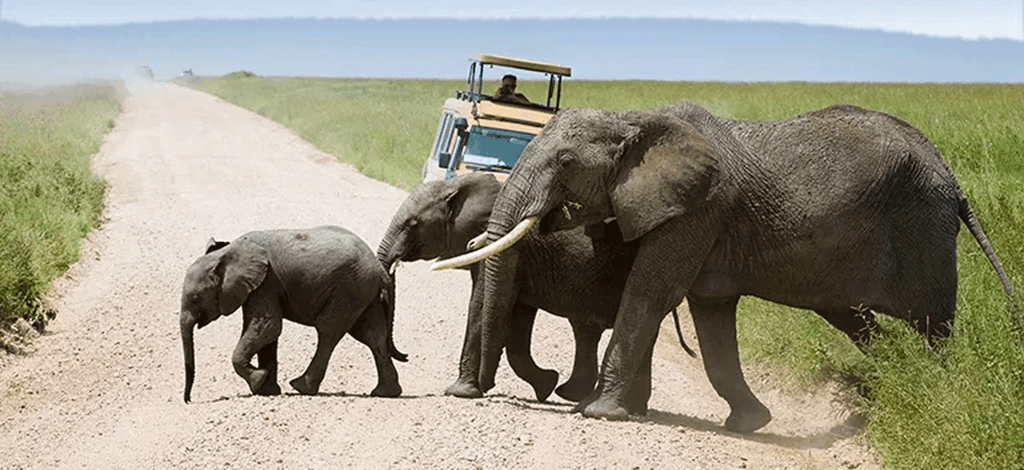
For Serengeti Animals List: What You’ll See on Safari The African elephant is the largest land animal on Earth and one of the most intelligent and emotionally complex creatures found in the Serengeti. These giants are easily recognized by their massive size, long trunks and large fan-shaped ears. In the Serengeti ecosystem, elephants are usually found in family herds led by an experienced matriarch, who guides the group to water, food and safe migration routes.
Elephants are highly social animals that form deep family bonds. Calves are carefully protected by the herd and all females help raise the young. These strong social structures are one of the reasons elephants are considered among the most intelligent animals in the wild.
Elephants communicate using low-frequency sounds called infrasound which can travel several kilometers. This allows different herds to stay in contact even when they are far apart.
Safari visitors often see elephants calmly walking in single file, bathing in muddy pools or dusting themselves with soil to protect against insects and heat. Despite their peaceful appearance elephants can become very protective if they sense danger near their young.
One of the most remarkable aspects of elephants is their memory. They can remember water sources and migration routes over long periods which is essential in the unpredictable savannah environment.
Leopard
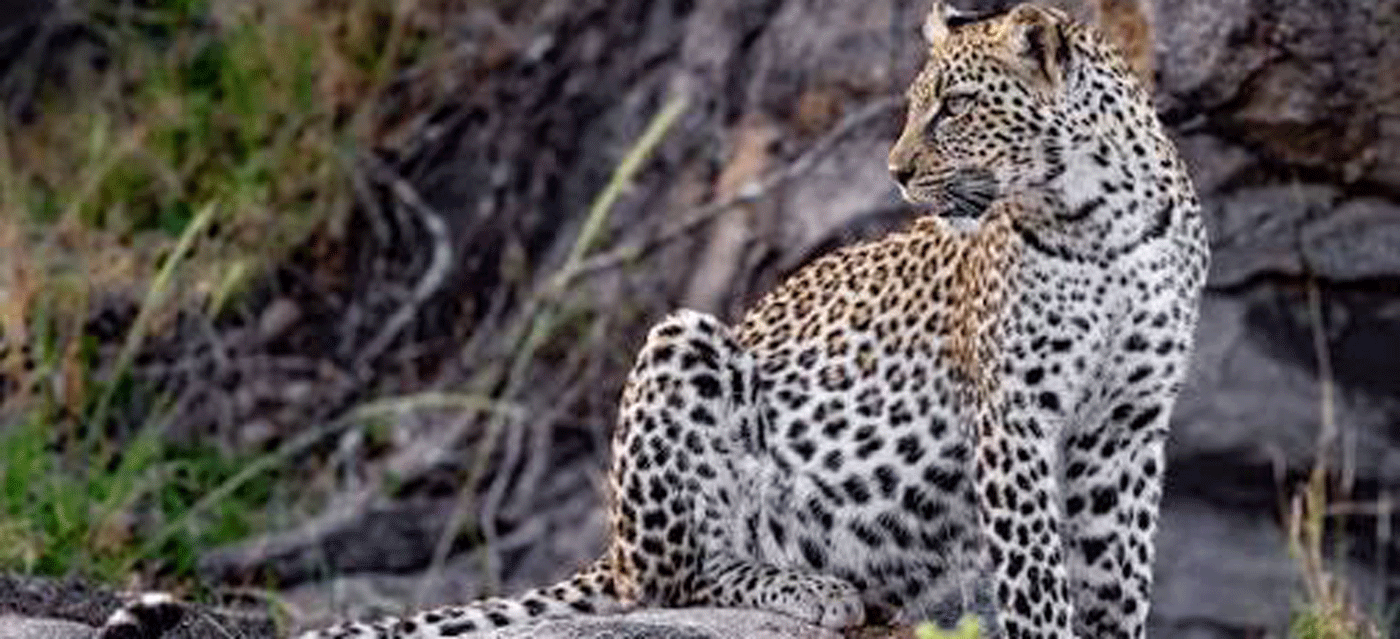
The leopard is one of the most elusive and fascinating predators in the Serengeti. Unlike lions, leopards are solitary animals, preferring to live and hunt alone. Their spotted coat provides excellent camouflage allowing them to blend perfectly into the shadows of trees, rocks and tall grass.
Leopards are highly adaptable and can survive in a variety of habitats within the Serengeti but they are most commonly seen in wooded areas, riverbanks and rocky outcrops known as kopjes. These environments provide both cover for hunting and safe places to rest.
One of the most remarkable behaviors of leopards is their ability to climb trees with ease. They often drag their prey into trees to protect it from scavengers such as hyenas and lions. This makes them one of the strongest climbers among big cats.
Leopards are nocturnal hunters meaning they are most active at night. They rely on stealth and patience stalking prey silently before launching a quick and powerful attack. Their diet includes antelopes, monkeys, birds and smaller mammals.
Because they are so secretive leopard sightings are considered a special highlight on any Serengeti safari. Guides often track them by looking for fresh kills in trees or listening for alarm calls from baboons and impalas.
Female leopards raise their cubs alone hiding them in dense vegetation or rocky shelters. Cubs stay with their mother for up to two years, learning hunting skills before becoming independent. Leopards are symbols of mystery and strength in the wild. Their ability to survive alone in a competitive ecosystem like the Serengeti makes them one of the most impressive predators in Africa.
African Buffalo
The African buffalo is one of the most powerful and unpredictable animals in the Serengeti. At first glance, they may appear like large, slow-moving cattle, but they are extremely strong, defensive and dangerous when threatened. Buffalo are found in large herds that can number from a few dozen to several thousand individuals especially during the dry season when they gather near water sources.
Buffalo herds have a strong social structure, often led by older females who guide the group in search of food and water. They spend most of their day grazing on grasses and move continuously across the plains in search of fresh pasture.
One of the most interesting aspects of buffalo behavior is their defensive strategy. When threatened by predators such as lions the herd forms a tight circle around calves and weaker members facing outward to confront danger. This makes them one of the few prey animals capable of fighting back effectively against large predators.
Despite their strength buffalo are still hunted by lions especially when individuals become separated from the herd or weakened by age or injury. These encounters are often dramatic and intense making buffalo a key species in Serengeti predator-prey interactions.
Buffalo are also known for their unpredictable temperament. Even solitary individuals can charge if they feel threatened which is why safari guides always keep a safe distance. They prefer areas with access to water, such as river valleys and floodplains where grass is abundant. During the rainy season they spread out more widely across the Serengeti plains.
Buffalo play an important ecological role by controlling grass growth and creating pathways for other animals. They are a vital part of the Serengeti food chain and a symbol of strength and survival in the wild.
Cheetah
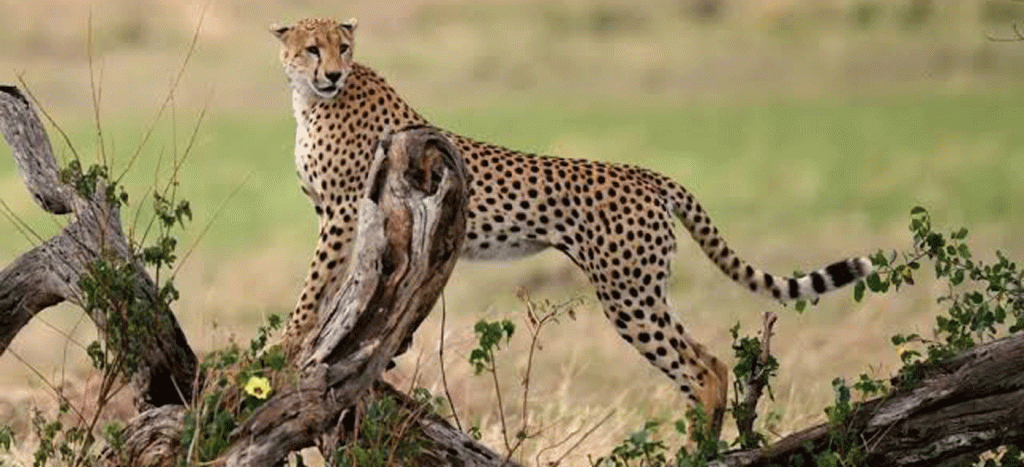
The cheetah is the fastest land animal in the world and one of the most exciting predators to observe in the Serengeti. Built for speed rather than strength, cheetahs have a slender body, long legs and a flexible spine that allows them to accelerate from 0 to 100 km/h in just a few seconds.
Unlike lions and leopards cheetahs rely on open plains for hunting. The southern and central Serengeti are especially good areas for sightings because the flat terrain allows them to use their speed effectively. Their main prey includes Thomson’s gazelles and young wildebeest.
Cheetahs hunt during the day especially in early morning or late afternoon when temperatures are cooler. They use their sharp eyesight to spot prey from a distance and then begin a silent stalk before launching a high-speed chase. However, these chases are short and energy-intensive lasting less than a minute in most cases.
One major challenge cheetahs face in the Serengeti is competition from stronger predators like lions and hyenas. After a successful hunt cheetahs must eat quickly before their kill is stolen.
Female cheetahs are solitary and raise cubs alone. Cubs are vulnerable to predators so mothers often move them frequently to avoid detection. This makes survival in the wild very challenging for young cheetahs. Cheetahs are also unique among big cats because they cannot roar. Instead, they communicate using chirps, purrs and other vocal sounds.
Giraffe for Serengeti Animals List: What You’ll See on Safari
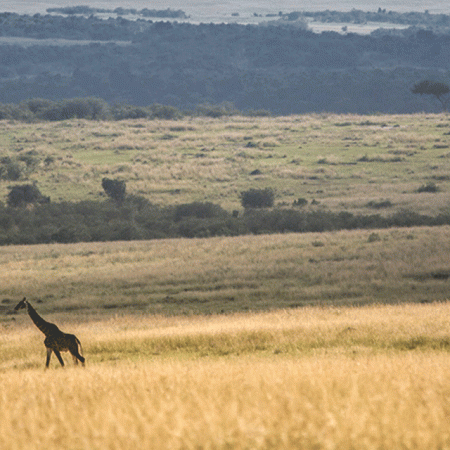
The giraffe is one of the most elegant and easily recognizable animals in the Serengeti. Standing up to 5–6 meters tall it is the tallest land animal in the world. Its long neck and legs are perfectly adapted for feeding on high branches that other herbivores cannot reach especially acacia trees which are common across the Serengeti plains.
Giraffes are generally calm and slow-moving animals. They are usually seen in small groups called towers although loose gatherings can sometimes form larger herds. These groups are not tightly bonded meaning individuals can come and go freely.
Their long necks are not only useful for feeding but also for spotting predators from far away. Despite their height advantage, giraffes are still vulnerable to lions, especially young calves or weakened adults. Giraffes feed for most of the day using their long prehensile tongues to strip leaves from thorny branches. Their tongues are highly resistant to thorns and can extend up to 45 centimeters.
One of the most interesting behaviors of giraffes is their method of drinking water. Because of their long legs and necks they must spread their front legs wide or kneel down making them vulnerable to predators during this time.
In the Serengeti giraffes are commonly seen across woodland and savannah areas. They move gracefully across the plains often silhouetted against sunsets making them one of the most photographed animals on safari. Giraffes communicate using low-frequency sounds and subtle body movements although they are generally quiet animals.
They play an important ecological role by pruning tree canopies which helps maintain balance in vegetation growth. Watching giraffes in the wild offers a sense of calm and beauty representing the peaceful side of the Serengeti ecosystem.
Zebra
The zebra is one of the most iconic animals of the Serengeti easily recognized by its black and white striped coat. These stripes are unique to each individual much like human fingerprints. Zebras are social animals that live in small family groups or large herds especially during migration periods.
In the Serengeti zebras are a key part of the Great Migration often traveling alongside wildebeest in search of fresh grazing lands. Their movement patterns are closely linked to rainfall and grass availability across the ecosystem.
One of the main survival advantages of zebras is their stripes which help confuse predators during group movement. When running in large herds the stripes create a visual illusion that makes it harder for lions and other predators to single out individuals.
Zebras are highly alert animals with strong social bonds. They often stand in groups with one zebra acting as a lookout while others feed. They also communicate using vocal calls, facial expressions and ear movements. Their diet mainly consists of grasses and unlike some other herbivores zebras can digest tougher lower-quality vegetation. This allows them to follow other grazers like wildebeest feeding on areas that have already been partially grazed.
Zebras are frequently targeted by predators, especially lions, hyenas and crocodiles during river crossings. Despite this their numbers remain strong due to their large population and migratory behavior. In the Serengeti zebras are often seen in dramatic scenes during migration crossing rivers filled with crocodiles or running across open plains in massive herds.
They represent survival, movement and adaptation in one of the most dynamic ecosystems in the world.
Serengeti Animals List: What You’ll See on Safari Wildebeest is among of them
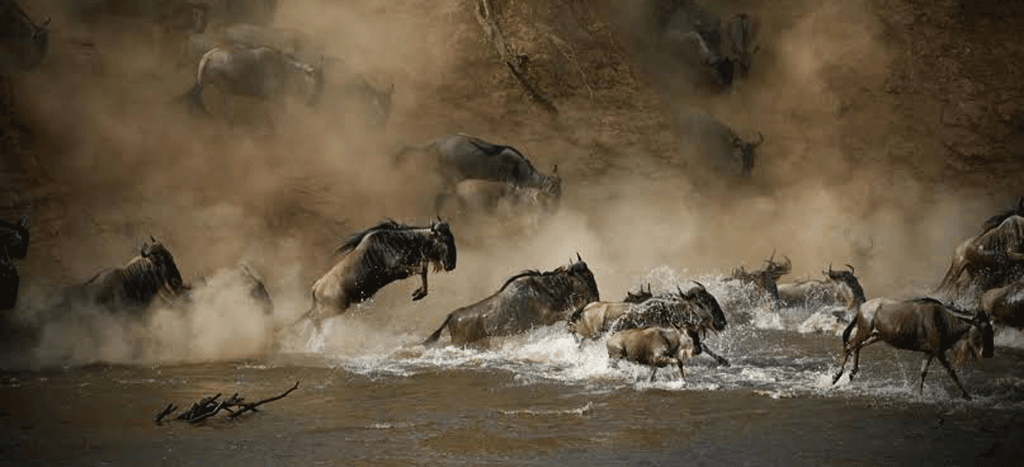
The wildebeest also known as the gnu is the most important species in the Serengeti ecosystem due to its role in the Great Migration. Over 1.5 million wildebeest along with hundreds of thousands of zebras and gazelles move across the Serengeti-Mara ecosystem in a continuous cycle following rainfall and fresh grass.
Wildebeest are built for endurance rather than speed or strength. They have a sturdy body, large shoulders and a distinctive bearded face. Despite their somewhat awkward appearance they are incredibly resilient and essential to the survival of many predators in the Serengeti.
Their migration is one of the most dramatic wildlife events on Earth. It involves constant movement, river crossings, predator encounters and long-distance travel across vast plains. The journey is not a straight path but a circular route driven by seasonal rains.
Wildebeest are highly social and travel in massive herds for protection. Being in large numbers reduces the risk of individual predation, although many are still taken by lions, hyenas and crocodiles.
Calving season which occurs in the southern Serengeti is especially dramatic. Hundreds of thousands of calves are born within a short period, attracting predators and creating intense survival pressure. Wildebeest communicate through grunts and visual signals helping them stay connected within the herd during migration.
They play a vital ecological role by grazing large areas of grassland, which prevents overgrowth and supports other herbivore species. In the Serengeti, wildebeest represent movement, survival and the continuous cycle of life and death. Their migration defines the rhythm of the entire ecosystem making them one of the most important animals in Africa.
Hyena
The spotted hyena is one of the most misunderstood predators in the Serengeti. Often wrongly seen as only scavengers’ hyenas are actually highly skilled hunters with complex social structures. They live in large groups called clans which can include up to 80 individuals led by dominant females.
Hyenas are powerful, intelligent and highly adaptable. They are capable of hunting large prey such as wildebeest and zebras often working together in coordinated group attacks. Their strong jaws can crush bones allowing them to consume almost every part of a carcass.
In the Serengeti, hyenas are active both day and night although they are most commonly heard at night through their distinctive laughing calls which are used for communication within the clan. Hyenas play a dual role in the ecosystem. They are both hunters and scavengers often competing with lions for food. In many cases hyenas will steal kills from other predators if they have the advantage in numbers.
Female hyenas are larger and more dominant than males which is unusual in the animal kingdom. They also control social hierarchy within the clan. Hyenas are extremely intelligent and have strong problem-solving abilities. They can remember individual animals and adapt their hunting strategies based on experience.
Despite their reputation hyenas are essential for maintaining ecological balance by cleaning up carcasses and preventing disease spread. In the Serengeti, hyenas are often seen near kills, waterholes and open plains. Their presence is a sign of a healthy predator ecosystem.
They represent survival, intelligence and adaptability in one of the most competitive environments on Earth.
Hippo
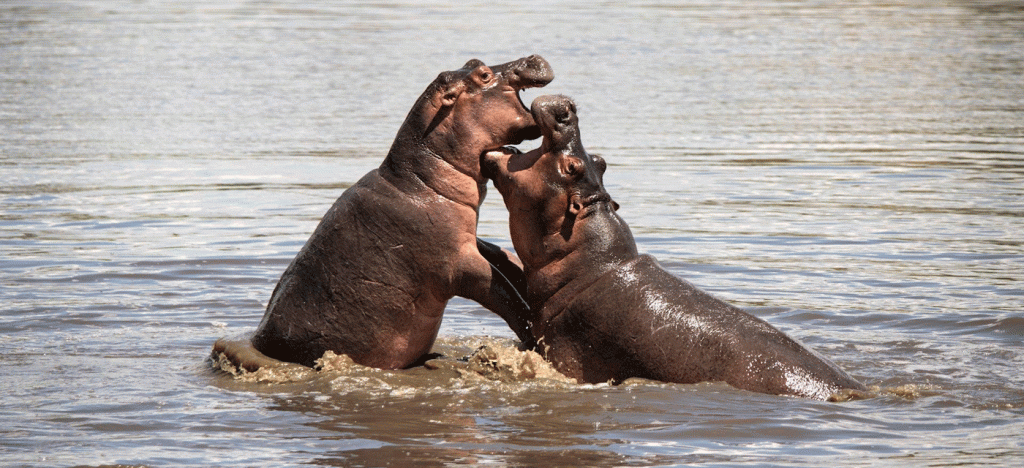
The hippopotamus is one of the most massive and powerful animals found in the Serengeti ecosystem particularly in rivers such as the Grumeti and Mara. Despite their bulky appearance, hippos are highly territorial and can be extremely dangerous especially in water.
Hippos spend most of their day submerged in water to keep cool under the hot African sun. At night they leave the rivers to graze on grass sometimes traveling several kilometers inland before returning before sunrise. They live in groups called pods which can range from a few individuals to over 50 hippos. These groups are often dominated by a large male who defends his stretch of river against rivals.
Hippos communicate through grunts, bellows and even underwater sounds. Their vocalizations help maintain social order within the pod. Although they appear slow and calm hippos are surprisingly fast on land and can run short distances at high speed when threatened. They are responsible for more human fatalities in Africa than many predators due to their territorial nature.
In the Serengeti hippos play an important ecological role by fertilizing water systems with nutrients from their waste which supports fish and plant life. They are also important during migration river crossings where they share water sources with wildebeest and zebras sometimes leading to intense interactions.
Hippos are mostly nocturnal feeders and prefer areas with deep water and muddy banks. Seeing a large group of hippos in a river is one of the most impressive safari sights, especially when they surface, yawn and interact closely in tightly packed groups.
They represent strength, territory and the hidden power of aquatic life in the Serengeti ecosystem.
Nile Crocodile is Serengeti Animals List: What You’ll See on Safari
The Nile crocodile is one of the most ancient and powerful predators in the Serengeti ecosystem. It has existed for millions of years with very little evolutionary change making it one of nature’s most efficient ambush hunters. These reptiles are commonly found in major rivers such as the Grumeti and Mara where they lie motionless for hours or even days waiting for prey.
Crocodiles are perfectly adapted for aquatic life. Their eyes, nostrils and ears are positioned on top of their heads allowing them to stay mostly submerged while still monitoring their surroundings. They are patient hunters that rely on surprise rather than speed over long distances.
During the Great Migration crocodiles become especially active when wildebeest and zebras’ cross rivers. This is one of the most dramatic wildlife events in the world as crocodiles strike with explosive speed dragging prey underwater. Despite their fearsome reputation crocodiles are not constantly active hunters. They conserve energy and can survive long periods without food after a large meal.
They also play an important ecological role by controlling fish populations and cleaning up carcasses in river systems. Crocodiles communicate through low-frequency sounds and body vibrations especially during mating season.
In the Serengeti they are often seen basking on riverbanks with mouths open to regulate body temperature. They represent patience, survival and ancient power in the ecosystem. Watching a crocodile in action is a reminder of how precise and unforgiving nature can be.
Impala
The impala is one of the most common and graceful antelopes in the Serengeti. Known for its elegance and speed the impala plays a crucial role in the food chain as a primary prey species for many predators, including lions, leopards, cheetahs and hyenas.
Impala are medium-sized antelopes with reddish-brown coats and distinctive black markings on their hind legs and tail. They are highly adaptable and can thrive in both woodland and savannah environments.
One of their most impressive features is their ability to leap great distances. Impalas can jump up to 10 meters in length and 3 meters in height, which helps them escape predators and navigate obstacles in the wild. They live in social groups called herds which can include females with young or bachelor groups of males. Dominant males control territories during the breeding season and compete fiercely for mating rights.
Impalas are extremely alert animals. They constantly scan their environment for danger and use alarm calls to warn others in the herd. When threatened they scatter in unpredictable directions confusing predators. They feed mainly on grasses, leaves and shrubs and can switch diets depending on seasonal availability.
In the Serengeti, impalas are commonly seen near woodland edges, riverbanks and open plains. Their abundance makes them a key food source that supports the survival of large predator populations. They represent agility, awareness and survival in a high-risk environment.
Thomson’s Gazelle
Thomson’s gazelle is one of the most important and abundant small antelopes in the Serengeti. It is often referred to as “tommie” by safari guides. These gazelles are a primary prey species for cheetahs and play a critical role in the ecosystem.
They are small lightweight animals with a reddish-brown coat a white belly and a distinctive black stripe along their sides. Their compact body shape and incredible speed make them highly agile and difficult to catch. Thomson’s gazelles are built for quick bursts of speed and sharp directional changes. This helps them escape fast predators like cheetahs which rely on short high-speed chases.
They live in herds that vary in size depending on the season and are often seen alongside wildebeest and zebras during migration. This mixed grouping provides safety in numbers. Gazelles are highly alert and use visual signals such as tail flicking and head movements to communicate danger. They also perform “stotting,” a behavior where they jump high into the air to confuse predators and signal fitness.
Their diet consists mainly of short grasses and herbs making them well adapted to open plains. In the Serengeti Thomson’s gazelles are most commonly seen in southern and central regions where open grasslands dominate. They represent speed, awareness and survival in a predator-rich environment.
Grant’s Gazelle
Grant’s gazelle is a larger and more robust relative of Thomson’s gazelle. It is commonly found in the Serengeti’s open plains and is well adapted to survive in drier environments where water is limited. These gazelles are taller with longer legs and a lighter coat compared to Thomson’s gazelles. They also have distinctive curved horns that are present in both males and females although males have thicker horns.
Grant’s gazelles are highly resilient and can survive long periods without direct access to water by extracting moisture from the plants they eat. This gives them an advantage in more arid parts of the Serengeti. They live in loose herds and often mix with other herbivores such as zebras and wildebeest. This mixed grazing behavior helps increase their safety from predators.
Their main predators include lions, cheetahs, leopards and hyenas. However due to their size and stamina they are slightly less vulnerable than smaller antelopes. Grant’s gazelles are known for their calm behavior compared to more nervous species like Thomson’s gazelles. They rely more on endurance and awareness rather than constant panic responses.
In the Serengeti they are commonly seen in open grasslands and transitional zones between savannah and semi-arid areas. They represent endurance, adaptation and survival in challenging environmental conditions.
Olive Baboon
The olive baboon is one of the most intelligent and socially complex primates in the Serengeti. These animals are highly adaptable and can live in a wide range of habitats, including savannah, woodland and riverine areas. Baboon troops can consist of dozens or even over a hundred individuals. Their social structure is strict and hierarchical with dominant males and strong female family bonds.
They spend most of their time on the ground but sleep in trees or rocky areas at night for safety. Their daily activities include foraging, grooming, playing and social interaction. Olive baboons are omnivorous, meaning they eat a wide variety of foods including fruits, seeds, insects, small animals and even bird eggs. This flexible diet helps them survive in changing environments.
They are extremely intelligent and capable of learning from experience. They use vocal calls, facial expressions and body language to communicate within the troop.
In the Serengeti baboons are often seen along roadsides, near camps and in woodland areas. They are curious animals and sometimes interact closely with safari vehicles. However, they can become aggressive if they feel threatened especially when protecting young members of the troop.
Baboon social life is very dynamic with constant grooming helping to strengthen bonds and reduce tension within the group. They play an important ecological role by dispersing seeds and controlling insect populations.
Olive baboons represent intelligence, social structure and adaptability in the Serengeti ecosystem.
Warthog
The warthog is one of the most recognizable and entertaining animals in the Serengeti due to its unique appearance and behavior. With its large head, curved tusks and sparse body hair the warthog may look rough but it is well adapted for survival in the savannah environment.
Warthogs are usually seen running with their tails held upright like antennas especially when alarmed. This behavior helps family members stay connected visually while escaping predators such as lions, leopards and hyenas. They live in small family groups called sounders typically consisting of a female and her young. Males are often more solitary especially as they grow older.
One of the most interesting behaviors of warthogs is how they feed. They often kneel on their front legs while grazing short grasses and digging for roots, bulbs and tubers using their snouts and tusks. Warthogs use abandoned burrows often those made by aardvarks for shelter. They enter these dens backwards to defend themselves with their tusks if a predator tries to attack.
Despite their defensive abilities warthogs are still vulnerable especially when surprised in open areas. They are highly alert animals and rely on speed rather than strength to escape danger. When running they can reach impressive speeds over short distances.
In the Serengeti warthogs are commonly seen in grasslands, near waterholes and around safari camps.They play a role in the ecosystem by aerating soil through digging and helping control vegetation growth.
Warthogs represent resilience, adaptability and survival in a challenging environment.
Black-backed Jackal
The black-backed jackal is a small but highly intelligent predator and scavenger found throughout the Serengeti. It is one of the most adaptable carnivores in the ecosystem and can survive on a wide variety of food sources.
Jackals are usually seen in pairs which often form long-term bonds. They are territorial animals and communicate using yips, howls and high-pitched calls especially at dawn and dusk. Their diet includes small mammals, birds, insects, fruits and carrion. This flexibility allows them to survive in many different conditions.
Although small jackals are skilled hunters often targeting rodents and insects with precision. They are also opportunistic scavengers and frequently feed on leftovers from larger predators like lions and hyenas. In the Serengeti, jackals are commonly seen near predator kills, open plains and along road edges where food opportunities are high.
They are extremely alert and cautious animals always scanning their surroundings for danger. When threatened, they rely on speed and agility to escape. Jackals play an important ecological role by cleaning up carcasses and controlling small animal populations.
They are often seen following larger predators at a safe distance waiting for feeding opportunities.Black-backed jackals represent intelligence, adaptability and survival in a competitive ecosystem.
Serval Cat
The serval cat is one of the most elegant and specialized small predators in the Serengeti. It is known for its long legs, large ears and spotted coat which make it perfectly adapted for hunting in tall grass environments. Servals are solitary and mostly nocturnal although they can sometimes be seen during early morning or late afternoon. Their long legs give them an advantage in spotting and catching prey above the grass level.
They are highly skilled hunters, feeding mainly on rodents, birds, frogs and insects. Servals use their large ears to detect small movements underground or in dense vegetation. One of the most impressive hunting techniques of the serval is its ability to jump high into the air and pounce on prey with precision. This makes it one of the most efficient small predators in Africa.
In the Serengeti servals are rare to spot because of their secretive nature and excellent camouflage. They prefer areas with dense grass and wetlands. Female servals raise their cubs alone teaching them essential hunting skills from an early age. Servals are silent and cautious animals avoiding larger predators such as lions and hyenas.
They play an important role in controlling rodent populations helping maintain ecological balance. The serval represents stealth, precision and specialized hunting adaptation in the Serengeti ecosystem.
Vulture
Vultures are among the most important scavenger birds in the Serengeti. Although often misunderstood and disliked due to their association with death they play a vital role in maintaining ecological balance by cleaning up carcasses and preventing disease spread.
Several species of vultures are found in the Serengeti, including white-backed vultures, Rüppell’s vultures and lappet-faced vultures. They are highly efficient scavengers with excellent eyesight that allows them to spot carrion from great distances while soaring high in the sky.
When a predator makes a kill vulture often arrive quickly sometimes within minutes. They gather in large numbers and compete aggressively for access to the carcass. Their strong beaks allow them to tear through tough skin and consume meat, bones and other remains that many animals cannot digest. Vultures often rely on social information. When one bird spots food and descends others quickly follow creating large feeding groups.
In the Serengeti vultures are commonly seen circling above predator activity or resting on trees near open plains. They play a critical ecological role by cleaning the environment and reducing the spread of harmful bacteria and disease. Despite their importance vulture populations are declining in many parts of Africa due to poisoning and habitat loss making conservation efforts essential.
Vultures represent survival, efficiency and ecological cleanliness in the Serengeti ecosystem.
Ostrich
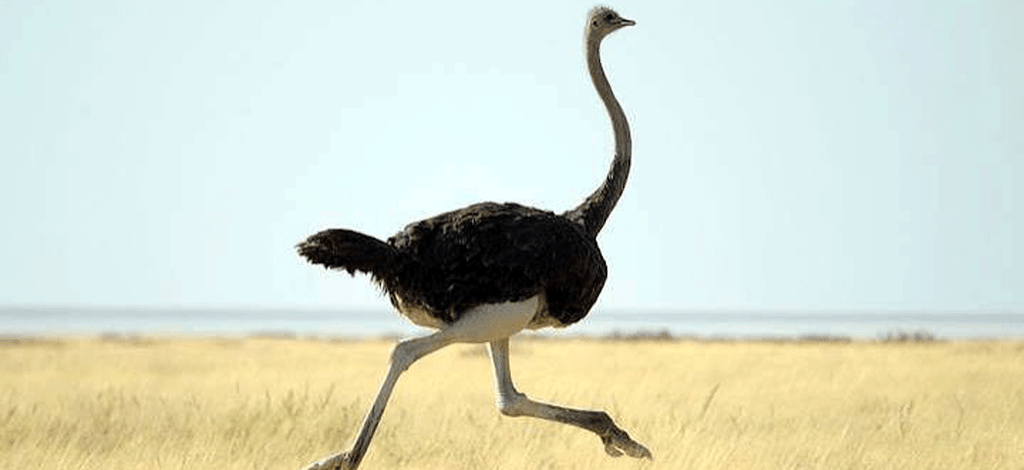
The ostrich is the largest bird in the world and a common sight in the Serengeti plains. Despite being flightless, ostriches are incredibly fast runners and can reach speeds of up to 70 km/h, making them one of the fastest animals on land. They have long legs, a long neck and a powerful stride that allows them to cover large distances quickly. Their size and speed help them escape predators such as lions and hyenas.
Ostriches are usually seen in pairs or small groups although larger gatherings can form in areas with abundant food. They are highly adaptable and can survive in both open grasslands and semi-arid regions. Their diet consists mainly of seeds, grasses and small insects. Ostriches also swallow small stones to help grind food in their digestive system.
Male ostriches are known for their striking black-and-white feathers, while females have more muted brown tones for camouflage. During breeding season, males perform elaborate courtship displays, including wing flapping and ground scraping to attract females. Ostriches are highly alert birds with excellent eyesight allowing them to detect predators from long distances.
In the Serengeti they are often seen running gracefully across open plains or standing tall against the horizon. They represent speed, endurance and survival in open landscapes.
African Wild Dog is one Serengeti Animals List: What You’ll See on Safari
The African wild dog is one of the rarest and most efficient predators in the Serengeti. Also known as the painted wolf due to its unique coat patterns of black, brown, yellow and white this species is highly social and lives in tightly coordinated packs.
Wild dogs are known for their incredible teamwork during hunts. Unlike lions that rely on strength, wild dogs depend on stamina, communication and strategy. They can chase prey over long distances often exhausting animals like impalas and gazelles through relentless pursuit. Their success rate in hunting is among the highest of all large predators in Africa sometimes reaching over 70 percent in favorable conditions.
Wild dog packs are led by a dominant breeding pair and all members cooperate in caring for pups. Regurgitation feeding is common where adults bring food back to the den for young and injured members. In the Serengeti wild dogs are extremely rare to spot due to their wide-ranging behavior and low population density. They require large territories and are sensitive to human disturbance.
They are highly vocal animals, using chirps, squeaks and body movements to coordinate during hunts. Wild dogs face many threats, including habitat loss, disease and competition from larger predators like lions and hyenas. They represent cooperation, endurance and survival through teamwork in the Serengeti ecosystem.
Eland
The eland is the largest antelope species in Africa and can be found in the Serengeti’s open woodlands and grasslands. Despite its massive size, the eland is a calm and slow-moving herbivore that relies on strength rather than speed for survival. Adult males can weigh up to 900 kilograms making them one of the heaviest land antelopes in the world. Both males and females have spiral-shaped horns although those of males are thicker and more pronounced.
Elands are highly adaptable and can survive in dry environments by conserving water efficiently. They obtain much of their moisture from the plants they eat allowing them to go long periods without direct drinking water. They live in loose herds that are not tightly structured and individuals often move between groups. This flexible social system helps them adapt to changing environmental conditions.
Despite their size elands are surprisingly agile and can jump over obstacles and run at moderate speeds when threatened. In the Serengeti elands are often seen grazing peacefully in open plains or resting in shaded areas during the hottest part of the day.
They are generally not aggressive but will defend themselves using powerful kicks if necessary. Elands play an important ecological role by grazing on a wide variety of vegetation helping maintain plant balance in the ecosystem. They represent strength, endurance and peaceful adaptation in the Serengeti.
Topi
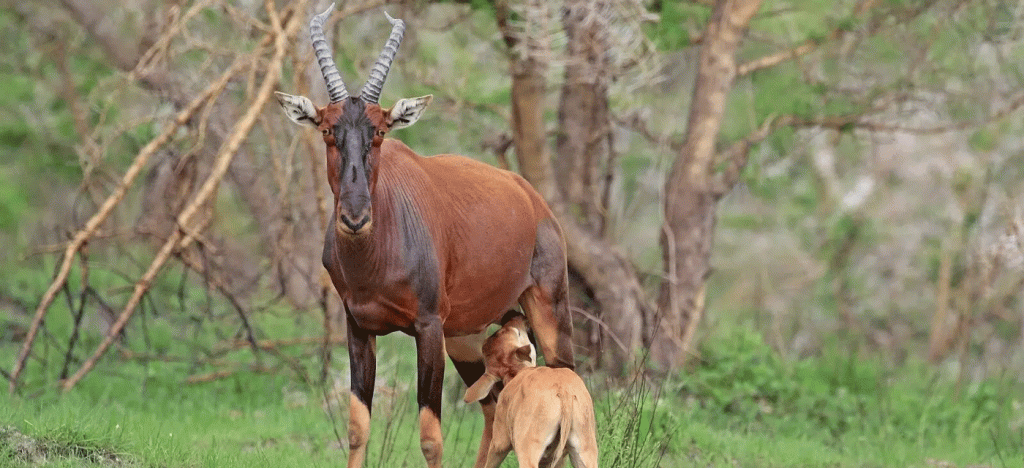
The topi is a highly alert and fast antelope commonly found in the Serengeti plains. It is easily recognized by its reddish-brown body dark markings on its legs and face and slightly curved horns. Topis are among the fastest antelopes in Africa and are well adapted for open savannah life. They are known for their extreme vigilance and often stand on raised areas such as termite mounds to scan for predators.
They live in territorial groups with dominant males defending specific grazing areas during breeding seasons. These territories are often highly competitive, leading to frequent displays and confrontations between males. Topis are highly social animals and often gather in large herds especially in areas with abundant grass. They feed mainly on grasses and are selective grazers preferring fresh nutritious shoots.
In the Serengeti topis are commonly seen in floodplains and open grasslands where visibility is high. One of their key survival strategies is early predator detection. They rely on sharp eyesight and alarm calls to warn others of danger. When threatened topis can run at high speed and maintain long-distance escape movements. They represent alertness, territorial behavior and adaptation to open landscapes in the Serengeti ecosystem.
Hartebeest
The hartebeest is a tall oddly shaped antelope with a sloping back and long face commonly found in the Serengeti’s open plains. Despite its unusual appearance it is a highly efficient grazer adapted for survival in grassland ecosystems. Hartebeests are built for endurance rather than speed. They can maintain a steady running pace over long distances which helps them escape predators such as lions and hyenas.
They live in small herds or territorial groups with males often defending specific areas during mating seasons. Outside of breeding periods groups are more loosely organized. Their diet consists mainly of grasses and they prefer areas where vegetation is not too dense. This makes them common in open savannah regions of the Serengeti. Hartebeests are highly alert animals with good eyesight allowing them to detect predators from far distances.
They are not as fast as some other antelopes but their endurance and stamina make them difficult prey during long chases. In the Serengeti hartebeests are often seen grazing in mixed herds with zebras and wildebeest. They play an important ecological role by grazing older grass helping promote new plant growth. They represent endurance, adaptation and resilience in open grassland environments.
Waterbuck
The waterbuck is a large and sturdy antelope commonly found near rivers, lakes and wetlands in the Serengeti. It is easily identified by its shaggy coat and the distinctive white ring on its rump. Waterbucks are closely tied to water sources and rarely stray far from them. This habitat preference provides both access to drinking water and protection from some predators.
They live in small herds or territorial groups with dominant males defending areas near water. Males are known for their strong territorial behavior and will aggressively defend their space if challenged. Their diet includes grasses and aquatic vegetation which they find in riverine environments. Although waterbucks are large and strong they are still vulnerable to predators such as lions, leopards and crocodiles especially when near water.
One of their defensive strategies is to flee into water when threatened where they feel safer due to their swimming ability and the difficulty predators face in pursuing them. In the Serengeti waterbucks are commonly seen near riverbanks and floodplains. They are generally calm animals but can become aggressive when cornered. Waterbucks represent strength, water dependence and survival in riparian ecosystems.
Reedbuck
The reedbuck is a shy and medium-sized antelope commonly found in the Serengeti’s wet grasslands and riverine areas. It is less frequently seen than other antelope species because it prefers dense vegetation and stays close to water-rich environments where it can find both food and cover.
Reedbucks have a light brown coat and relatively simple slightly curved horns in males. Their body structure is built for quick bursts of speed rather than long-distance endurance. When threatened they rely on sudden explosive running to escape predators such as lions, leopards and hyenas.
They are usually found alone or in small groups unlike many other antelope species that form large herds. This solitary or small-group behavior helps them remain less visible to predators. Reedbucks feed mainly on grasses and fresh shoots near wetlands and floodplains. They are selective grazers and depend heavily on areas with consistent water supply.
One of their most interesting behaviors is their tendency to freeze when danger is detected. If the threat gets closer they suddenly sprint away in zigzag patterns to confuse predators. In the Serengeti reedbucks are most often seen in tall grass near rivers and swampy regions making them difficult to spot during casual game drives.
They play a role in maintaining vegetation balance in wetland ecosystems by grazing selectively. Reedbucks represent caution, stealth and survival in hidden grassland environments.
Dik-Dik
The dik-dik is one of the smallest antelope species in the Serengeti often standing no taller than a domestic cat. Despite its tiny size it is an incredibly alert and well-adapted animal that thrives in bushy and rocky environments. Dik-diks are usually seen in monogamous pairs that form long-term bonds. These pairs are highly territorial and mark their areas using scent glands especially on bushes and grass stems.
Their small size makes them vulnerable to many predators, including birds of prey, snakes, jackals and small carnivores. However, they compensate for this vulnerability with extreme vigilance and speed. Dik-diks rely heavily on camouflage and freezing behavior to avoid detection. When alarmed they produce a high-pitched whistle-like sound before darting into thick vegetation.
They feed mainly on leaves, shoots, fruits and flowers obtaining most of their moisture from plants which allows them to survive in dry areas without regular drinking water. In the Serengeti dik-diks are commonly found in bushy areas and woodland edges where they can hide easily.
They are very shy and tend to avoid open spaces making them more difficult to observe than larger antelope species. Dik-diks represent adaptability, caution and survival in micro-habitats within the Serengeti ecosystem.
Bushbuck
The bushbuck is a solitary and secretive antelope found in the dense vegetation and riverine forests of the Serengeti. It is known for its shy nature and preference for hiding rather than running when threatened. Bushbucks have a dark brown coat with white spots and stripes that help them blend into forested environments. Males have spiral-shaped horns while females are hornless.
Unlike many other antelope’s bushbucks do not form herds. They are mostly solitary except for mothers with young or during mating periods. They are highly adaptable feeders and consume a variety of vegetation, including leaves, shoots, fruits and flowers. This flexible diet allows them to survive in dense and competitive habitats.
When threatened bushbucks often rely on stillness and camouflage rather than immediate flight. If danger gets too close, they can make quick powerful jumps into thick cover. In the Serengeti, bushbucks are most commonly found near riverbanks, forest edges and dense bush areas.
They are often active during early morning and late evening making them less visible during midday game drives. Bushbucks are also known to be strong swimmers and may cross small water bodies when necessary. They represent secrecy, adaptability and survival in dense vegetation environments.
African Hare
The African hare is a small mammal commonly found across the Serengeti’s grasslands and open plains. It is often active during the night and early morning making it a more elusive sight during daytime safari drives. Hares have long ears, powerful hind legs and a slender body built for speed. Their primary defense against predators such as jackals birds of prey and small carnivores is rapid acceleration and zigzag running patterns.
Unlike rabbits’ African hares do not live in burrows but instead rest in shallow depressions in the ground known as forms. This helps them blend into their surroundings and avoid detection. They are solitary animals and typically only come together for mating purposes. Their behavior is highly cautious with constant scanning of the environment for danger.
Their diet consists mainly of grasses, herbs and other low vegetation. They play a small but important role in the ecosystem by serving as prey for a variety of predators. In the Serengeti African hares are more commonly seen during night drives or early morning safaris when they are most active.
When threatened they rely on explosive bursts of speed and unpredictable movements to escape predators. They represent alertness, speed and survival through evasion in the Serengeti ecosystem.
Rock Hyrax
The rock hyrax is a small furry mammal that might look like a rodent but is actually more closely related to elephants and manatees. This surprising connection makes it one of the most biologically interesting animals in the Serengeti. Rock hyraxes are commonly found in rocky outcrops and kopjes where they live in colonies. These rocky habitats provide protection from predators and suitable basking spots for sun exposure.
They are social animals and often gather in groups to keep warm and maintain safety. Within their colonies they communicate using a variety of sounds, including whistles, grunts and shrieks. Despite their small size rock hyraxes have complex social structures and behaviors. They are active during the day and spend much of their time sunbathing on rocks to regulate body temperature.
Their diet consists mainly of grasses, leaves and fruits. They are selective feeders and rely on nearby vegetation around rocky habitats. Rock hyraxes are preyed upon by eagles, snakes and small carnivores. To avoid danger, they rely on vigilance and quickly retreat into crevices when threatened.
In the Serengeti they are often seen resting on sunlit rocks especially in areas with large granite formations. They play a role in the ecosystem by contributing to food chains and helping maintain vegetation balance in rocky environments. Rock hyraxes represent adaptation, social cooperation and survival in rocky microhabitats within the Serengeti ecosystem.
Genet Cat
The genet cat is a small, slender and highly agile nocturnal carnivore found in the Serengeti. Although it is called a “cat,” it is actually more closely related to civets and other small carnivores. It is one of the most secretive yet fascinating animals in the ecosystem.
Genets have a long body short legs and a very long ringed tail that helps with balance while climbing trees and moving through rocky or bushy terrain. Their spotted coat provides excellent camouflage in the moonlit savannah and forest edges.
They are primarily nocturnal, meaning they are most active at night. During this time, they hunt small prey such as rodents, insects, birds and reptiles. They are extremely quick and precise hunters relying on stealth rather than strength. Genets are solitary animals and avoid unnecessary contact with others except during mating periods. They are highly territorial and use scent markings to define their space.
In the Serengeti, genets are often spotted near lodges or camps at night especially where artificial lights attract insects and small prey. They are excellent climbers and can easily move through trees and rocky areas to escape predators or search for food. Despite their beauty genets are rarely seen during daytime safari drives due to their nocturnal behavior.
They represent stealth, agility and nocturnal survival in the Serengeti ecosystem.
Porcupine
The African crested porcupine is one of the most heavily defended mammals in the Serengeti. Covered in long, sharp quills it is designed to deter predators and survive in a wide range of habitats, including grasslands, rocky areas and woodland edges. Porcupines are nocturnal and spend most of the day hidden in burrows, caves or dense vegetation. At night they emerge to forage for roots, tubers, bark and fallen fruits.
Their quills are their primary defense mechanism. When threatened they raise and fan out their quills making themselves appear larger and more intimidating. If a predator gets too close, they can charge backward, driving quills into the attacker.
Despite their defensive nature porcupines are generally calm and non-aggressive unless provoked. They live in small family groups and often share burrows. These underground shelters provide protection from predators and extreme temperatures. In the Serengeti porcupines are rarely seen during the day but may occasionally be spotted during night drives or near camp areas.
They play a role in the ecosystem by digging for food which helps aerate soil and promote plant growth. Porcupines represent defense, resilience and survival through adaptation.
Honey Badger
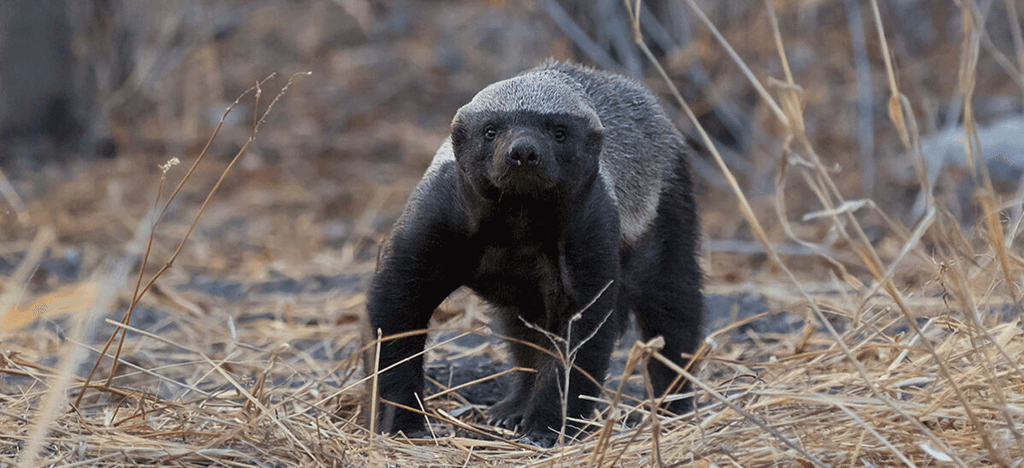
The honey badger is one of the most fearless and aggressive small predators in the Serengeti. Despite its small size it has a reputation for being extremely tough often confronting animals much larger than itself.
Honey badgers have thick loose skin that helps protect them from bites and stings. They are highly intelligent and resourceful animals capable of surviving in diverse environments, including grasslands, savannah and woodland areas. Their diet is very varied and includes insects, rodents, birds, reptiles and even venomous snakes. They are known for their ability to resist snake venom to some extent allowing them to hunt dangerous prey.
Honey badgers are mostly nocturnal and solitary although they may occasionally be seen during the day. They are powerful diggers and can excavate burrows or break into nests to find food. In the Serengeti honey badgers are rarely seen due to their secretive and nocturnal nature but they are widely present throughout the ecosystem.
They are known for their bold behavior and will often stand their ground against predators such as lions or hyenas if threatened. Honey badgers represent fearlessness, toughness and survival against all odds in the Serengeti ecosystem.
Secretary Bird
The secretary bird is one of the most unique birds of prey in the Serengeti. Unlike most raptors, it hunts on foot rather than in the air making it easily recognizable as it walks across the grasslands. It has long legs, a crane-like body and distinctive black crest feathers on the back of its head. These feathers are believed to resemble old-fashioned quill pens which is how it got its name.
Secretary birds are highly skilled hunters, feeding mainly on snakes, insects, rodents and small mammals. They use their powerful legs to stomp prey, including venomous snakes with precision and force. They are typically found in open grasslands and savannah areas where visibility is high and prey is easier to spot.
These birds are usually seen alone or in pairs and are highly territorial. They build large nests in tall trees where they raise one or two chicks at a time. In the Serengeti secretary birds are often seen walking gracefully across open plains scanning the ground for movement. They play an important role in controlling snake and insect populations.
Secretary birds represent precision, strength and unique hunting adaptation in the Serengeti ecosystem.
Kori Bustard
The kori bustard is one of the heaviest flying birds in the world and a common sight in the Serengeti’s open plains. Despite its large size it is capable of flight although it prefers to walk most of the time. Kori bustards have a grayish-brown body with patterned feathers that provide excellent camouflage in dry grasslands. Males are significantly larger than females and perform impressive courtship displays during breeding season.
Their diet is highly varied and includes insects, seeds, small reptiles and occasionally small mammals. They are opportunistic feeders and spend much of their time foraging on the ground. Kori bustards are slow and deliberate walkers relying on camouflage rather than speed to avoid predators. When threatened they prefer to walk away quietly rather than fly.
In the Serengeti they are commonly seen in open grasslands and semi-arid areas where vegetation is sparse. During mating displays, males puff up their feathers, expand their throat sacs and perform dramatic movements to attract females. They are solitary or found in small groups and are generally quiet birds.
Kori bustards represent strength, camouflage and adaptation to open savannah environments.
Martial Eagle
The martial eagle is the largest and most powerful eagle in the Serengeti ecosystem. It is a top aerial predator known for its incredible strength, sharp vision and ability to hunt medium-sized mammals and birds. This eagle has a massive wingspan and dark brown plumage with a striking white belly marked with black spots. It is often seen soaring high above the savannah scanning the ground for movement with extraordinary precision.
Martial eagles are solitary hunters and prefer wide open spaces such as grasslands and woodland edges. They rely on stealth and sudden speed diving rapidly to catch prey unaware. Their diet includes small antelopes, monkeys, hares, large birds and reptiles. They are powerful enough to lift and carry relatively heavy prey into trees for feeding.
In the Serengeti martial eagles are often spotted perched on tall trees or gliding silently above the plains. They are territorial birds and maintain large hunting ranges. Pairs form long-term bonds and build large nests high in trees where they raise their chicks. Martial eagles play an important ecological role by controlling populations of small to medium mammals.
They represent power, dominance and precision in the aerial hunting system of the Serengeti.
African Fish Eagle
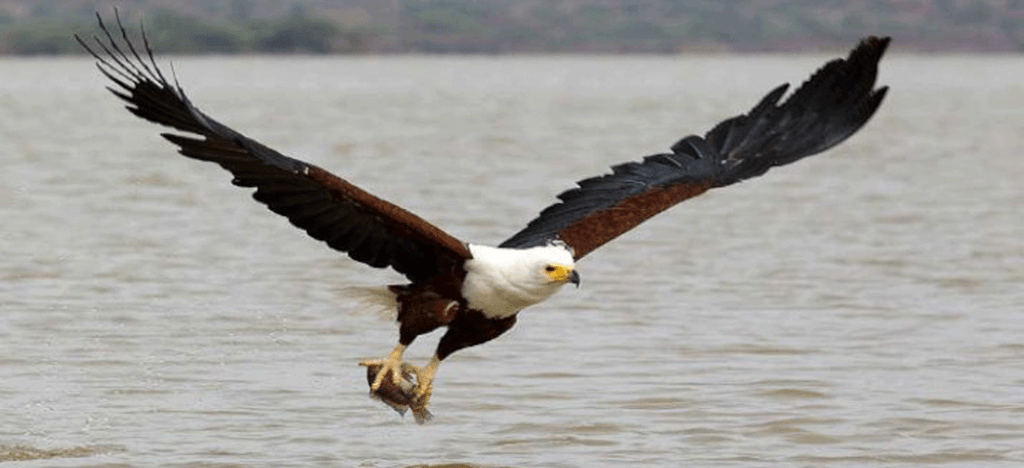
The African fish eagle is one of the most iconic birds near water systems in the Serengeti ecosystem. Known for its striking white head, dark brown body and loud, distinctive call, it is often considered the “voice of African rivers.”
Fish eagles are primarily found near rivers, lakes and wetlands where they hunt fish as their main food source. They are expert hunters using their sharp eyesight to spot fish from high perches before swooping down to catch them with strong talons. Their hunting technique is highly precise. They glide low over water or perch on trees near the shore waiting patiently for the right moment to strike.
In addition to fish, they may also feed on small birds, reptiles and carrion when necessary. Fish eagles are usually seen alone or in pairs and they form strong long-term bonds. They build large nests near water bodies often reused and expanded over many years.
In the Serengeti ecosystem they are commonly found along rivers that support hippos and crocodiles. Their loud echoing call is often heard during early mornings or late afternoons creating a strong sense of wilderness.
They represent freedom, precision and mastery of aquatic hunting environments.
Flamingo
Flamingos are elegant and highly social birds that occasionally appear in parts of the wider Serengeti ecosystem especially in alkaline lakes and seasonal wetlands. They are known for their striking pink coloration, long legs and curved beaks adapted for filter feeding. Their pink color comes from carotenoid pigments found in the algae and small organisms they consume. Without this diet their feathers would appear pale or white.
Flamingos are highly social and live in large colonies that can number in the thousands or even millions during peak breeding seasons. They feed by wading through shallow water using their specialized beaks to filter small organisms from mud and water. In the Serengeti region flamingos are more commonly associated with nearby lakes rather than the central plains but they are still part of the broader ecosystem.
They are strong fliers and can travel long distances between feeding and breeding grounds. Flamingos build mud nests in large colonies where both parents share the responsibility of raising chicks. They represent beauty, unity and adaptation to specialized aquatic environments.
Marabou Stork
The marabou stork is one of the most unusual and easily recognizable birds in the Serengeti. With its large body, bald head and massive wingspan it is often seen near carcasses and scavenging areas. Despite its unattractive appearance the marabou stork plays an important ecological role as a scavenger. It feeds on dead animals, scraps left by predators and organic waste helping keep the environment clean.
Marabou storks often gather in large groups near predator kills sometimes alongside vultures and hyenas. They are highly opportunistic feeders and will consume almost anything edible, including fish, insects and small animals. In the Serengeti they are commonly seen standing still near waterholes, rivers and open plains where scavenging opportunities are high.
They are strong fliers and can soar high in the sky using thermal currents. Marabou storks’ nest in tall trees or cliffs often forming colonies. They represent survival, adaptation and ecological cleanliness in the Serengeti ecosystem.
Crowned Crane
The crowned crane is one of the most beautiful birds in the Serengeti, easily recognized by its golden crown of feathers, gray body and elegant posture. It is often associated with wetlands and grassy floodplains. Crowned cranes are highly social and are often seen in pairs or small groups. They are known for their elaborate courtship dances, which include jumping, bowing and wing-flapping displays.
They feed on a mix of insects, seeds, small animals and plant material. Their diet makes them adaptable to wetland and grassland environments. In the Serengeti, crowned cranes are commonly found in areas with seasonal flooding and tall grasses.
They build nests in wetland vegetation where both parents share incubation duties. These birds are strong fliers and migrate locally depending on water availability. They are generally peaceful and avoid conflict with other species. Crowned cranes represent beauty, balance and harmony in wetland ecosystems.
African Spoonbill
The African spoonbill is a distinctive wading bird commonly found in the shallow waters of the Serengeti ecosystem, especially in rivers marshes and seasonal wetlands. It is easily recognized by its long legs and its unique spoon-shaped bill which gives it its name.
This specialized bill is perfectly adapted for feeding in muddy or shallow water. The spoonbill sweeps its open bill from side to side in water sensing and capturing small aquatic creatures such as insects, crustaceans, fish and mollusks. African spoonbills are usually seen alone or in small groups often feeding alongside other wading birds like herons and egrets. They are calm and methodical feeders spending long periods in shallow water.
Their plumage is mostly white, with black patches on the wings that become more visible during flight. When they take off their long necks extend forward and legs stretch behind creating an elegant silhouette. In the Serengeti, spoonbills are commonly found in wetland areas, floodplains and river edges where water is shallow enough for feeding.
They build nests in trees or reed beds where both parents participate in raising chicks. African spoonbills represent adaptation, precision feeding and ecological balance in wetland environments.
Helmeted Guineafowl
The helmeted guineafowl is a ground-dwelling bird commonly seen throughout the Serengeti plains. It is easily identified by its dark speckled feathers, small head and distinctive bony helmet-like structure on top of its head. These birds are highly social and usually travel in large flocks. Their constant movement across the savannah makes them an important part of the ecosystem.
Helmeted guineafowl are omnivorous, feeding on seeds, insects, small reptiles and plant material. They are especially useful in controlling insect populations including ticks and locusts. They are very vocal birds producing loud calls that help keep the flock together and alert others to danger. In the Serengeti, they are commonly seen crossing roads, foraging in grasslands and moving in groups near bushy areas.
When threatened they prefer to run rather than fly although they can take short flights to escape predators. They often associate with other herbivores like zebras and wildebeest benefiting from shared predator awareness. Helmeted guineafowl represent cooperation, alertness and survival in open savannah environments.
Superb Starling
The superb starling is one of the most colorful and striking birds in the Serengeti. With its vibrant blue-green body, orange belly and white chest band it is easily one of the most visually impressive small birds in the ecosystem. These birds are highly social and are often seen in pairs or small groups. They are very active and can be found hopping on the ground or perching on shrubs and trees.
Superb starlings are omnivores, feeding on insects, fruits, seeds and small invertebrates. They are often seen near campsites and picnic areas where food scraps are available. They are highly vocal birds communicating with sharp calls and chirps that help maintain group cohesion.
In the Serengeti, they are common across savannahs, woodland edges and human-visited areas. They are adaptable and intelligent birds capable of thriving in both wild and semi-disturbed environments. Their bright coloration plays a role in social signaling and mate attraction. Superb starlings represent beauty, adaptability and vibrancy in the Serengeti ecosystem.
Lilac-breasted Roller
The lilac-breasted roller is one of the most visually stunning birds in the Serengeti. It is famous for its bright mix of colors, including lilac, turquoise, green, blue and brown making it a favorite among photographers and safari visitors. This bird is medium-sized and often seen perched on tree branches, poles or shrubs, scanning the ground for insects and small animals.
Its hunting technique involves swooping down to catch prey such as insects, spiders and small reptiles. One of its most impressive behaviors is its aerial display during courtship where it performs acrobatic rolls and dives in the air which is how it gets its name. Lilac-breasted rollers are usually solitary or found in pairs. They are highly territorial especially during breeding season.
In the Serengeti they are commonly found in open savannah and lightly wooded areas where visibility is good. They nest in tree cavities or abandoned holes where both parents care for the chicks. This bird represents beauty, agility and aerial mastery in the Serengeti ecosystem.
Ground Hornbill
The ground hornbill is one of the largest and most powerful terrestrial birds in the Serengeti. Unlike most hornbills that live in trees this species spends most of its time walking on the ground. It has a black body, red facial skin and a large curved bill. Its deep booming call can be heard over long distances especially in the early morning.
Ground hornbills are slow-moving but powerful hunters. They feed on insects, reptiles, small mammals and occasionally birds. Hunt in groups often working together to flush out prey from grass or soil. They are highly social birds and live in cooperative groups where members help raise chicks and defend territory. Breeding is slow with pairs often raising only one chick every few years making population growth very limited.
In the Serengeti ground hornbills are found in open grasslands and savannah regions where they can move freely. They are strong walkers and spend much of their day searching for food on the ground. Ground hornbills represent cooperation, strength and slow but steady survival in the Serengeti ecosystem.
Tawny Eagle
The tawny eagle is a widespread and adaptable bird of prey found throughout the Serengeti. It is medium-to-large in size and has a characteristic golden-brown plumage that blends well with the dry savannah landscape.
This eagle is highly opportunistic and is known for both hunting and scavenging. It feeds on a wide range of prey, including small mammals, birds, reptiles and carrion left behind by larger predators. This flexibility allows it to survive in changing environmental conditions.
Tawny eagles are often seen perched on tall trees, termite mounds or utility poles scanning the ground for movement or food opportunities. They rely heavily on sharp eyesight to detect prey from long distances. In the Serengeti they are commonly observed following predators like lions or hyenas waiting for feeding chances. They also take advantage of migration events when large numbers of animals increase food availability.
These eagles are generally solitary or found in pairs. They are territorial and build large nests high in trees, which are reused and expanded over multiple breeding seasons. Tawny eagles represent adaptability, opportunism and survival in a competitive aerial ecosystem.
Black Rhinoceros
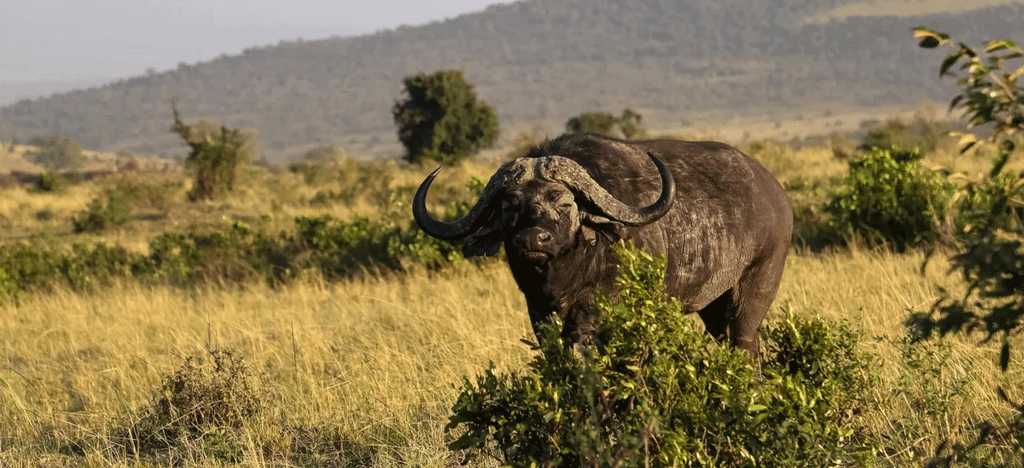
The black rhinoceros is one of the rarest and most critically endangered animals associated with the Serengeti ecosystem. Although sightings are extremely rare in the main Serengeti plains today due to heavy historical poaching conservation areas nearby still protect a small population.
Black rhinos are powerful herbivores with thick, armored skin and two distinctive horns on their snouts. Despite their name they are not actually black in color but appear darker than white rhinos due to mud coating and skin texture. They are browsers rather than grazers, feeding on shrubs, bushes and woody plants. Their pointed upper lip is specially adapted for grasping leaves and branches.
Black rhinos are generally solitary and highly territorial. Males maintain large home ranges and mark territory with dung and urine. They have poor eyesight but excellent hearing and smell making them extremely cautious animals. When threatened they can charge at high speeds despite their size. In the Serengeti ecosystem black rhinos represent one of the most important conservation priorities due to their ecological role and endangered status.
They symbolize strength, rarity and the urgent need for wildlife protection.
Bat-eared Fox
The bat-eared fox is a small nocturnal canid found in the Serengeti grasslands. It is easily identified by its extremely large ears which help regulate body temperature and detect even the smallest sounds of insects underground. Bat-eared foxes are highly specialized insectivores with termites forming the majority of their diet. They are one of the few carnivores that rely heavily on insects rather than larger prey.
They live in small family groups and are often monogamous with strong pair bonds between mates. Family members work together in raising pups and defending territory. These foxes are mostly nocturnal but can sometimes be seen during early morning or late afternoon hours. In the Serengeti they are commonly found in open grasslands where termite mounds are abundant.
They are quick and alert animals, relying on hearing and speed to locate and capture prey efficiently. Bat-eared foxes represent specialization, cooperation and adaptation to insect-based feeding strategies in the Serengeti ecosystem.
Aardvark
The aardvark is one of the most secretive and rarely seen nocturnal mammals in the Serengeti. It is a unique animal with a long snout, large ears and a thick body adapted for digging and nocturnal life. Aardvarks are specialized feeders that primarily consume ants and termites. They use their powerful claws to break into termite mounds and ant nests and their long sticky tongue can rapidly collect insects inside.
They are solitary animals and spend most of the daytime in underground burrows emerging only at night to forage. Their burrows are often reused by other species such as warthogs, porcupines and small carnivores, making them important ecosystem engineers. In the Serengeti aardvarks are extremely difficult to spot due to their nocturnal habits and cautious behavior.
They rely heavily on smell and hearing rather than vision as their eyesight is relatively weak. Aardvarks represent hidden survival, ecological engineering and specialized feeding adaptation in the Serengeti ecosystem.
Serval (Rare Sight Variation – Final Entry)
The serval already introduced earlier deserves a final emphasis as one of the Serengeti’s most elegant and specialized small predators. It is a master of grassland hunting and represents precision and silence in motion. With its long legs oversized ears and spotted coat the serval is perfectly designed for life in tall grass environments. Its hearing is so advanced that it can detect the movement of rodents underground or hidden in dense vegetation.
Servals are solitary and highly territorial. They mark their range using scent and avoid direct contact with other servals except during mating periods. Their hunting technique is one of the most impressive in the feline world. They use a combination of listening, freezing and explosive vertical jumps to capture prey with extreme accuracy.
Their diet includes rodents, birds, frogs, insects and small reptiles. This makes them important for controlling pest populations in the ecosystem. In the Serengeti servals are rare to see during standard daytime safaris because they prefer dense grasslands and are most active during dawn, dusk or night.
Female servals raise their cubs alone teaching them survival skills through gradual hunting lessons. The serval represents precision, silence and specialized survival strategy in the Serengeti ecosystem.
Frequently Asked Questions About Serengeti Animals
What animals can you see on a Serengeti safari?
A Serengeti safari can offer sightings of lions, elephants, leopards, cheetahs, buffalo, giraffes, zebras, wildebeest, hyenas, hippos, crocodiles, gazelles, antelopes, baboons and many bird species. The exact animals you see depend on the season, location and wildlife activity.
What is the most famous animal in the Serengeti?
The wildebeest is one of the Serengeti’s most famous animals because of its central role in the Great Migration. More than a million wildebeest move through the Serengeti-Mara ecosystem each year, accompanied by large numbers of zebras and gazelles.
Can you see the Big Five in the Serengeti?
Yes, the Serengeti is one of the best places in Tanzania to look for the Big Five lion, leopard, elephant, buffalo and rhinoceros. Lions, elephants and buffalo are relatively common, while leopards and black rhinos can be more difficult to find.
Where is the best place to see lions in the Serengeti?
Lions can be seen throughout the Serengeti particularly in areas with abundant prey and water. Central Serengeti including the Seronera area is especially well known for lion sightings because of its permanent water sources and high concentration of wildlife.
Are leopards easy to see in the Serengeti?
Leopards are more difficult to spot than lions because they are solitary, secretive and often rest in trees or dense vegetation. Riverine forests, woodland areas and rocky kopjes can provide good opportunities for leopard sightings.
What is the best time to see the Great Migration?
The best time depends on which part of the migration you want to experience. January to March is associated with calving in the southern Serengeti and Ndutu area while July to October generally offers opportunities to see animals moving through northern Serengeti and crossing the Mara River.
Can you see cheetahs in the Serengeti?
Yes, cheetahs are found in the Serengeti particularly in open grassland where they can use their speed to hunt. Central and southern areas can provide good opportunities to observe cheetahs hunting or resting in the open plains.
What animals are commonly seen during a Serengeti game drive?
Common sightings include zebras, wildebeest, impalas, Thomson’s gazelles, giraffes, buffalo, elephants, lions and various bird species. Depending on the area visitors may also encounter hyenas, cheetahs, leopards, hippos and crocodiles.
Are there elephants in the Serengeti?
Yes, African elephants live in the Serengeti and can be found in grasslands, woodlands and areas close to rivers. They are often seen in family groups, particularly around reliable sources of food and water.
Can you see rhinos in the Serengeti?
Black rhinos are present in the wider Serengeti ecosystem but are extremely rare to see. Their populations have been heavily affected by historical poaching, making conservation and careful protection particularly important.
What antelopes can you see in the Serengeti?
The Serengeti supports many antelope species, including impalas, Thomson’s gazelles, Grant’s gazelles, topi, hartebeest, eland, waterbuck, reedbuck and dik-dik. Their habitats and behavior vary considerably across the ecosystem.
Are hippos found in the Serengeti?
Yes, hippos can be found in rivers and permanent pools within the Serengeti. They spend much of the day in water and usually leave their aquatic habitats at night to feed on grass.
Are crocodiles found in the Serengeti?
Yes, Nile crocodiles inhabit major rivers such as the Grumeti and Mara. They are particularly well known for their presence during wildebeest and zebra river crossings.
What birds can you see in the Serengeti?
The Serengeti is home to a remarkable variety of birds, including ostriches, vultures, secretary birds, kori bustards, martial eagles, African fish eagles, crowned cranes, spoonbills, helmeted guineafowl, superb starlings and lilac-breasted rollers.
What is the smallest animal you can see on a Serengeti safari?
Dik-diks are among the smallest antelopes commonly associated with the Serengeti. Other small mammals include hares, rock hyraxes and various small carnivores such as genets.
Can you see African wild dogs in the Serengeti?
African wild dogs can occur in the broader Serengeti ecosystem but they are rare and wide-ranging so sightings are uncommon. Their low population density and extensive movements make encountering them a special safari experience.
What nocturnal animals live in the Serengeti?
Several Serengeti animals are primarily nocturnal, including genets, porcupines, aardvarks, honey badgers and African hares. Some animals that are active during the day may also become more active around dawn and dusk.
What is the best way to see Serengeti wildlife?
Game drives with an experienced safari guide are one of the best ways to explore Serengeti wildlife. A knowledgeable guide can identify tracks, alarm calls, animal behavior and suitable habitats while helping visitors maintain a safe and respectful distance.
Does Serengeti Travels offer wildlife safari experiences?
Yes, Serengeti Travels helps travelers explore the Serengeti and experience its diverse wildlife, including predators, herbivores, birds and other species across different areas of the ecosystem.
Why is the Serengeti important for wildlife conservation?
The Serengeti protects a vast ecosystem supporting predators, herbivores, birds and smaller species while also providing habitat for the Great Migration. Protecting the ecosystem helps maintain natural food chains, biodiversity and important wildlife populations for future generations.
Conclusion
The Serengeti is one of the world’s greatest wildlife ecosystems offering an unforgettable glimpse into nature’s beauty and complexity. Across its vast plains, woodlands and rivers thousands of animals interact in a delicate balance of survival. From lions and cheetahs hunting their prey to giraffes, zebras and wildebeest grazing across the grasslands every species plays an important role.
What makes the Serengeti special is the strong connection between its wildlife. Predators depend on herbivores for food while grazing animals influence vegetation and scavengers such as hyenas and vultures help keep the ecosystem clean. Even smaller animals, including dik-diks, genets and insects contribute to maintaining ecological balance.
A Serengeti safari is more than simply watching animals. It is an opportunity to observe survival, cooperation, competition and adaptation in their natural environment. Serengeti Travels helps visitors discover these incredible experiences while learning more about the wildlife, habitats and seasonal changes that shape the Serengeti ecosystem.
The park is also an important conservation area, protecting wildlife and habitats for future generations. Visitors may witness extraordinary experiences from a leopard resting in a tree to large herds of wildebeest moving across the plains during the Great Migration.
Ultimately, the Serengeti represents the beauty, resilience and natural rhythm of life. Exploring this remarkable ecosystem with Serengeti Travels allows travelers to experience its wildlife while developing a deeper appreciation for conservation and responsible tourism.