 English
 Deutsch
 Italia
May 26, 2026
Rare Animals of the Serengeti You Might Be Lucky to See
Introduction
The Rare Animals of the Serengeti You Might Be Lucky to See offer a fascinating glimpse into a side of the Serengeti that many visitors never experience. The Serengeti National Park is one of the most famous wildlife destinations in the world, known for its endless plains, dramatic predator action and the Great Migration. However beyond well-known animals such as lions, elephants, giraffes and wildebeest there exists another layer of wildlife that is far more secretive and rarely seen. These hidden species live quietly within the ecosystem but are seldom observed by visitors.
Many of these rare animals are nocturnal, extremely shy or naturally low in population numbers. Others have adapted remarkable camouflage making them nearly invisible in the grasslands. Some roam across very large territories while others live deep within dense vegetation or underground burrows. Because of these behaviors, spotting them requires patience, careful timing and sometimes pure luck.
This article explores 15 of the rarest and most elusive animals you might encounter in the Serengeti. Each species plays an important ecological role from controlling insect populations to maintaining the balance between predators and prey. Together they reveal a more complete picture of the Serengeti ecosystem one that goes far beyond the famous safari highlights.
Understanding these animals also highlights the importance of conservation. Many face threats such as habitat loss, poaching, disease and human-wildlife conflict. Their survival depends on protected areas such as the Serengeti National Park and continued conservation efforts.
For travelers encountering any of these rare species can transform a safari experience into something truly extraordinary. It is a reminder that nature is full of surprises and that some of the most memorable safari moments often come from the least expected sightings.
Table of contents
Black Rhinoceros
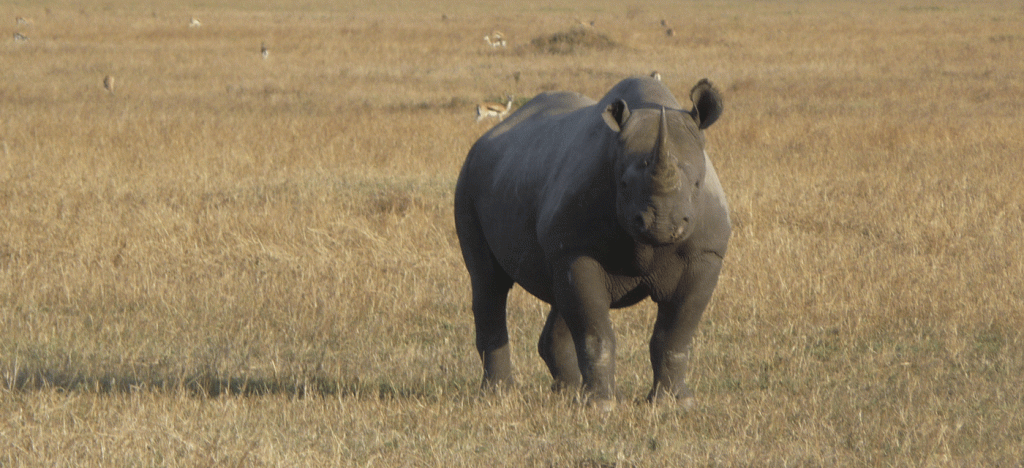
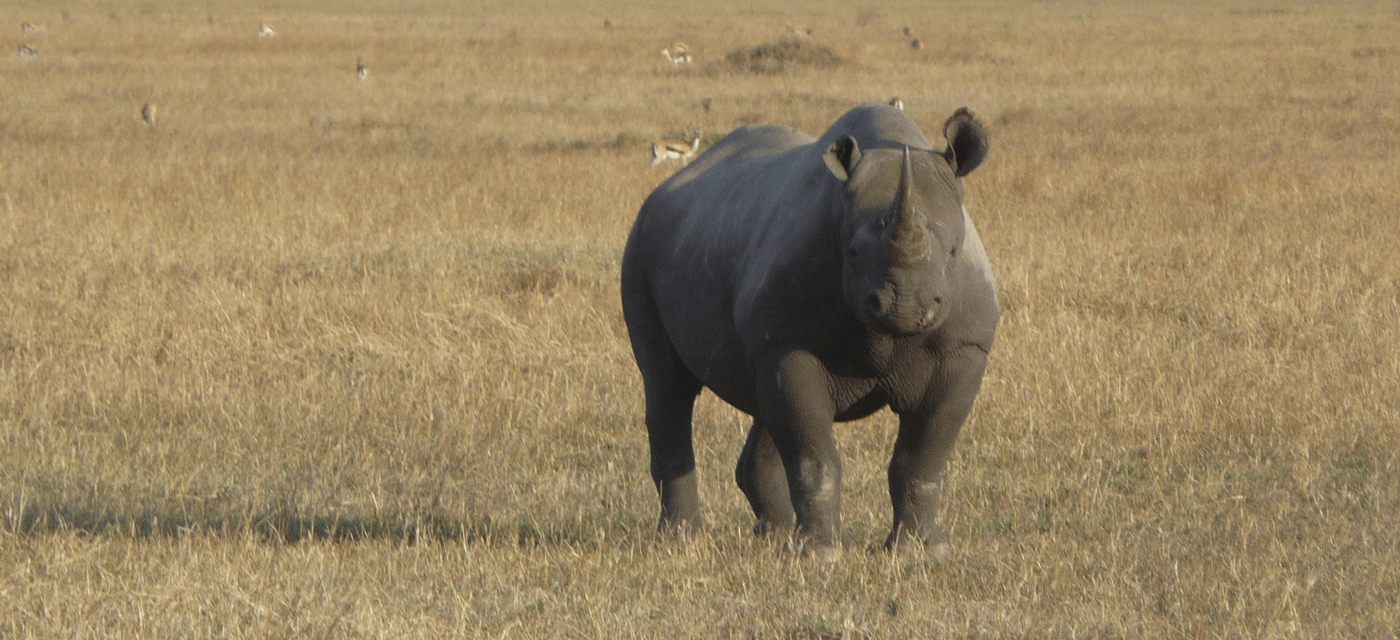
The black rhinoceros is one of the rarest and most heavily protected mammals in the Serengeti ecosystem. Once widely spread across East Africa its population drastically declined due to illegal poaching driven by demand for its horn. Today only a very small highly monitored population remains in protected areas making it one of the most difficult animals to see on safari.
Black rhinos are browsers rather than grazers, meaning they feed on leaves, branches and shrubs instead of grass. Their hooked upper lip is specially adapted for pulling vegetation from thorny bushes. Unlike more social herbivores black rhinos are mostly solitary and territorial which further reduces the chances of encountering groups.
They prefer dense bushland and thick vegetation where they can remain hidden from both predators and humans. This behavior makes them extremely difficult to spot even in areas where they are known to exist. Most sightings depend on ranger tracking and conservation monitoring systems.
Despite their large size and armored appearance black rhinos are surprisingly agile and can charge at high speeds when threatened. However they generally avoid confrontation and rely on camouflage and seclusion. Conservation efforts in the Serengeti include strict anti-poaching patrols, aerial surveillance and GPS tracking. These programs have helped stabilize their population but recovery is still slow due to their low breeding rate.
For visitors seeing a black rhino is more than a wildlife encounter it is a symbol of conservation success and survival against extinction. It represents one of the rarest and most meaningful safari experiences in Africa.
African Wild Dog
African wild dogs are among the rarest predators in the Serengeti and are highly endangered across Africa. They are also known as painted wolves due to their striking coat patterns of black, brown, yellow and white. Each individual has a unique pattern making identification easy for researchers.
They live in highly organized packs that function with strong cooperation. Every pack member plays a role in hunting, caring for pups and protecting the group. Their social structure is one of the most complex among African carnivores.
Wild dogs are endurance hunters. Instead of relying on strength they chase prey over long distances until it collapses from exhaustion. Their success rate is among the highest in the animal kingdom often exceeding that of lions and leopards.
However, they face serious threats. Habitat fragmentation, human conflict and disease transmission from domestic animals have significantly reduced their population. Lions and hyenas also pose a major threat by killing wild dogs and stealing their food.
In the Serengeti wild dogs are highly mobile and can travel across vast territories in a short time. This makes sightings unpredictable and rare. They often avoid areas with high predator density and human activity.
Seeing African wild dogs is considered one of the most exciting safari experiences due to their speed, coordination and energetic behavior. Their hunting scenes are dynamic and unforgettable showcasing one of nature’s most efficient predators.
Pangolin
The pangolin is one of the most mysterious and elusive mammals in the Serengeti. It is fully covered in protective keratin scales making it look almost like a living armor-clad creature. When threatened it curls into a tight ball leaving no exposed body parts for predators.
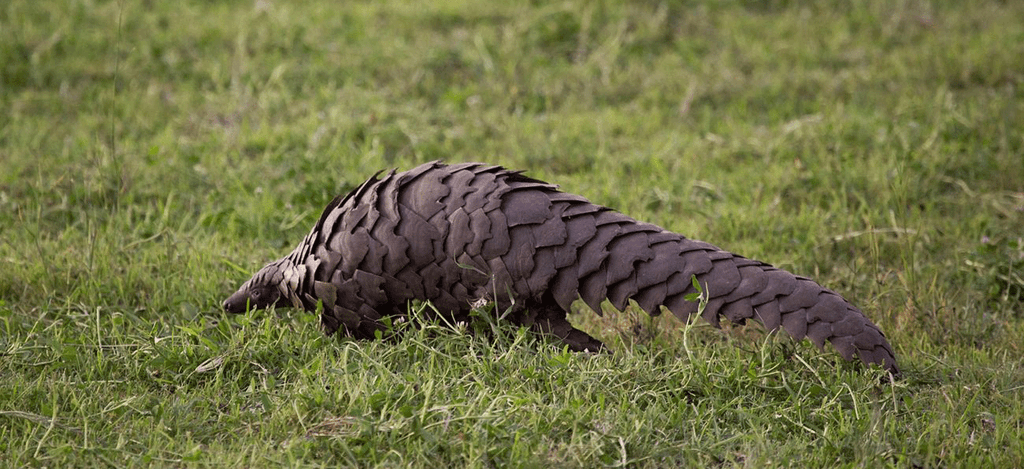
Pangolins are nocturnal and solitary animals. They spend most of their lives alone moving quietly through the savannah in search of ants and termites. Their long sticky tongue can extend far beyond their body length allowing them to extract insects from deep nests. They use powerful claws to dig into termite mounds and ant colonies. This feeding behavior makes them important for controlling insect populations and maintaining ecological balance.
Despite their wide distribution in Africa pangolins are extremely rare to see due to their secretive nature and low population numbers. Their main threat is illegal wildlife trafficking which has severely reduced their numbers in the wild. Even experienced safari guides rarely encounter them and most sightings happen accidentally during night drives in remote areas.
Pangolins are ecologically important because they help regulate insect populations and improve soil health through their digging activities. For safari travelers seeing a pangolin is considered one of the rarest wildlife experiences in Africa often described as a once-in-a-lifetime moment.
Aardvark
The aardvark is a nocturnal mammal that is rarely seen in the Serengeti due to its hidden underground lifestyle. It has a unique appearance with a long snout, rabbit-like ears and a muscular body designed for digging. Aardvarks are specialized insectivores that feed almost exclusively on ants and termites. They use their powerful claws to break into termite mounds and their long sticky tongue to collect insects efficiently.
They spend most of the day in burrows to avoid heat and predators emerging only at night to forage. This nocturnal behavior makes sightings extremely rare during standard safaris. Their burrowing activity plays an important ecological role. It helps aerate the soil and abandoned burrows are often used by other animals such as warthogs, reptiles and small mammals.
Although aardvarks are found across much of Africa they are considered “ghost animals” because they are so rarely seen. Even experienced wildlife observers may go years without encountering one. Spotting an aardvark usually requires a night safari with very skilled guides and a lot of patience. Their secretive behavior and ecological importance make them one of the most fascinating yet elusive animals in the Serengeti.
Serval Cat
The serval is a medium-sized wild cat known for its long legs, large ears and golden spotted coat. It is perfectly adapted for hunting in tall grass and wetland areas of the Serengeti. ls are highly skilled hunters with exceptional hearing. They can detect small movements underground or in dense vegetation. Once prey is located, they use powerful vertical leaps to catch rodents birds and insects with precision.
They are most active during early morning and late afternoon making these the best times for possible sightings. However, their camouflage and shy behavior make them difficult to observe even when nearby. Servals are solitary animals and maintain large territories. They avoid confrontation and human presence preferring quiet undisturbed environments.
Their hunting success rate is one of the highest among wild cats making them extremely efficient predators in their ecological niche. Despite their beauty and elegance, servals are rarely seen because they rely on stealth, camouflage and silence. For safari visitors, encountering a serval is a special experience that highlights the hidden diversity of the Serengeti beyond the famous large predators.
Caracal
The caracal is one of the most secretive and powerful small wild cats in the Serengeti. It is instantly recognizable by its reddish-golden coat, muscular build and long black ear tufts that give it a striking appearance. Despite being widely distributed across Africa, it is rarely seen in the Serengeti due to its highly elusive and mostly nocturnal behavior.
Caracals are exceptional hunters with extraordinary agility. One of their most impressive abilities is catching birds in mid-air. They can leap several feet into the air with incredible precision using strong hind legs to strike prey before it escapes. This makes them one of the most skilled aerial hunters among African cats.
Their diet includes rodents, birds, small antelopes and reptiles. They rely heavily on stealth and patience often stalking prey silently before launching a sudden attack. Their sandy coat provides excellent camouflage in dry grasslands and rocky environments allowing them to remain almost invisible even in open terrain.
Caracals are solitary animals and maintain large territories. They avoid human activity and are most active at night or during early morning hours. Because of this behavior sightings in the Serengeti are extremely rare and often brief.They play an important ecological role by controlling populations of small mammals and birds. However, their secretive lifestyle means they are poorly studied compared to other predators.
For safari visitors seeing a caracal is considered a special and memorable experience. It represents one of the Serengeti’s hidden predators, combining beauty, strength and mystery in one elusive animal.
Bat-Eared Fox
The bat-eared fox is a small and highly unusual carnivore named after its oversized ears which are essential for survival in the Serengeti. These large ears are not just for hearing predators but are also used to detect the faint sounds of insects moving underground, especially termites.
This species is highly specialized in feeding on insects making termites its primary food source. A single bat-eared fox can consume thousands of termites in one night playing an important role in natural pest control within the ecosystem. Bat-eared foxes are social animals that live in family groups. These groups typically include a breeding pair and their offspring. Cooperation within the family is important for raising young and protecting territory.
They are most active during early morning and late afternoon when temperatures are cooler. During the hottest parts of the day, they rest in shaded areas or underground burrows. Despite being relatively common in some African regions they are still difficult to observe in the Serengeti because of their cautious behavior and excellent camouflage. When threatened they quickly disappear into tall grass or run to safety.
Their behavior is highly interesting, especially their grooming habits and social bonding within family groups. They communicate through vocalizations and body movements. For visitors spotting a bat-eared fox offers insight into the smaller less visible wildlife that plays a crucial role in maintaining ecological balance in the Serengeti.
Honey Badger
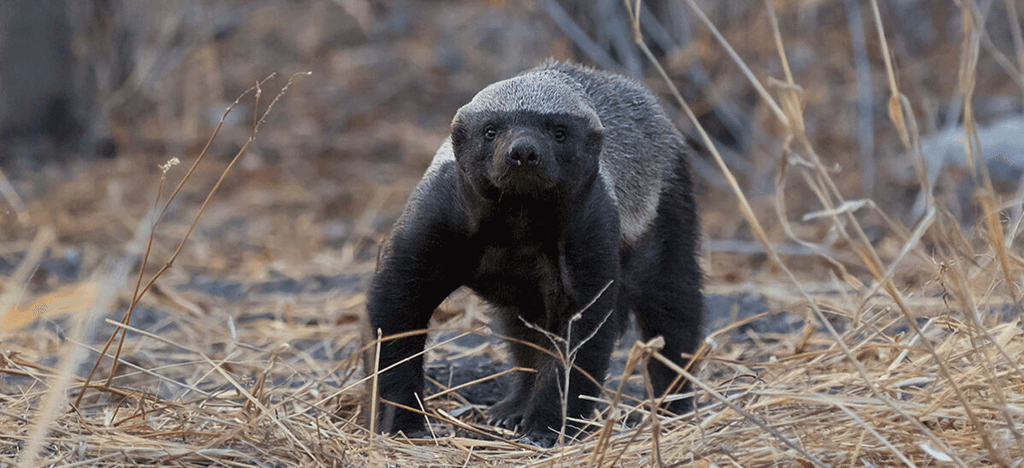
The honey badger is one of the most fearless and resilient animals in the Serengeti. Despite its small size it has a legendary reputation for aggression, intelligence and survival strength. Its thick loose skin allows it to twist and fight even when attacked by larger predators.
Honey badgers are omnivores with a very flexible diet. They eat insects, small mammals, reptiles, fruits and honey. They are especially famous for raiding beehives using their thick skin to withstand bee stings while feeding on honey and larvae.
They are highly intelligent animals capable of problem-solving and adaptation. Honey badgers can dig complex burrows, open containers and escape difficult situations. This intelligence makes them one of the most adaptable small carnivores in Africa. They are mostly nocturnal and solitary which makes sightings very rare. They travel long distances while foraging and avoid human contact whenever possible.
Honey badgers are also known for their bold behavior. They have been observed standing their ground against lions and hyenas, especially when defending food or themselves. This fearless nature has made them one of the most iconic animals in African wildlife. For safari visitors encountering a honey badger is a rare and exciting experience because of its unpredictable movements and secretive habits.
Secretary Bird
The secretary bird is one of the most unique and elegant birds of prey in the Serengeti. Unlike most raptors that hunt from the air the secretary bird spends most of its time walking on the ground. It has long, crane-like legs, an eagle-like body and distinctive feather crests on the back of its head.
This bird is a specialized predator of snakes, insects and small mammals. It uses powerful stomping kicks to kill prey including venomous snakes. Its legs are strong enough to deliver rapid precise strikes that can incapacitate or kill prey instantly.
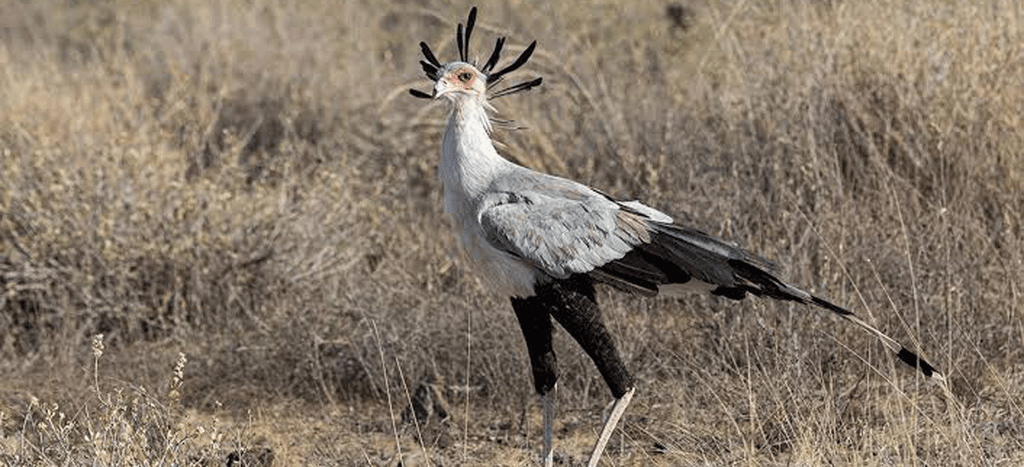
Secretary birds prefer open savannah landscapes where visibility is high. They are often seen walking long distances while searching for food. Despite their size and visibility, they are not commonly seen due to their wide-ranging movements and preference for remote areas.
They build large nests on acacia trees where both parents care for one or two chicks. Their parenting behavior is highly protective and they invest significant energy in raising offspring. Their unique hunting style combined with their graceful appearance makes them one of the most fascinating birds in Africa.
African Civet
The African civet is a nocturnal and highly secretive mammal with a unique appearance that combines features of cats, raccoons and weasels. It has a spotted body, striped legs and a distinctive facial mask. Civets are solitary animals and are strictly active at night. During the day they hide in dense vegetation or abandoned burrows making them extremely difficult to observe in the wild.
They are omnivores with a very varied diet that includes fruits, insects, eggs, small animals and carrion. This flexibility allows them to survive in different habitats across the Serengeti ecosystem. One of their most important ecological roles is seed dispersal. By eating fruit and spreading seeds through their droppings they help regenerate plant life and maintain ecosystem balance.
Civets are rarely seen due to their nocturnal habits and shy behavior. Night safaris provide the best chance of encountering them although sightings remain uncommon. Historically civets were hunted for their musk used in perfume production but they are now protected within national parks. For safari visitors spotting an African civet is a rare and rewarding experience that reveals the hidden nocturnal life of the Serengeti.
Leopard Tortoise
The leopard tortoise is one of the largest tortoise species in Africa and is occasionally seen in the Serengeti although it is not commonly encountered during game drives due to its slow movement and excellent camouflage. Its shell is beautifully patterned with dark spots and golden-yellow markings resembling the coat of a leopard which is where its name comes from.
This tortoise is a strict herbivore, feeding on grasses, flowers, fruits and succulent plants. Its feeding behavior plays an important ecological role because it helps in seed dispersal. As it moves slowly across the landscape it spreads seeds through its droppings contributing to vegetation regeneration and ecosystem balance.
Leopard tortoises are well adapted to dry savannah conditions. They are most active during the rainy season when food is abundant and temperatures are moderate. During dry periods, they become less active and conserve energy by staying in shaded or cooler areas.
Despite their large size they are surprisingly difficult to spot. Their shell coloration blends perfectly with dry grass, rocks and soil making them almost invisible unless they are moving. They are also long-lived animals with lifespans that can exceed 50 years in the wild. Their slow growth and low reproductive rate make their population stable but vulnerable to habitat changes.
For visitors seeing a leopard tortoise adds variety to safari experiences showing that the Serengeti is not only about large predators but also about quiet slow-moving species that play essential ecological roles.
African Wild Cat
The African wild cat is one of the most elusive small predators in the Serengeti and is considered the direct ancestor of the domestic cat. At first glance it closely resembles a house cat, but it is larger, leaner and more powerfully built for survival in the wild. This species is nocturnal and highly solitary making it extremely difficult to observe during safaris. It spends most of its time hunting at night and resting in hidden vegetation during the day.
Its diet consists mainly of rodents, birds, insects and small reptiles. African wild cats play an important ecological role by controlling pest populations especially rodents that could otherwise multiply rapidly. One of the key reasons they are rarely seen is their exceptional camouflage. Their coat pattern blends perfectly with grasslands and bush environments allowing them to remain unnoticed even when they are close to humans.
They are also extremely cautious animals, avoiding open spaces and human activity whenever possible. Even experienced safari guides may go years without spotting one. Despite their resemblance to domestic cats African wild cats are wild predators with strong survival instincts and territorial behavior. Seeing one in the Serengeti is considered a rare and special experience, offering insight into the origins of one of the world’s most familiar animals.
Topi Antelope (Shy Individuals)
Topi antelopes are not globally rare, but in the Serengeti, certain individuals and groups can be surprisingly difficult to approach due to their highly alert and cautious behavior. They are medium-sized antelopes known for their reddish-brown bodies and distinctive dark markings on their legs and face.
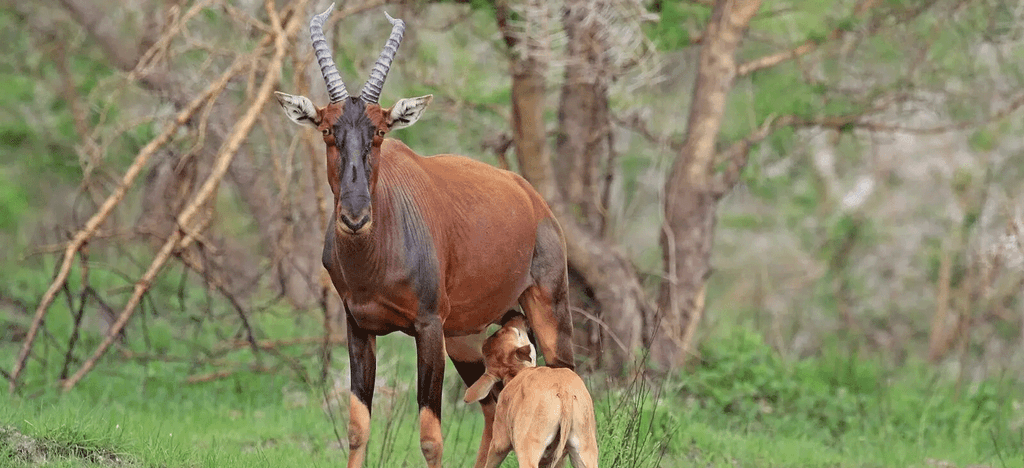
Topis prefer open grasslands and savannah plains where visibility is high allowing them to detect predators from a distance. Their survival strategy is based on vigilance and speed. They are extremely alert animals that constantly scan their surroundings for danger.
When threatened topis can run at high speeds and perform sharp directional changes to escape predators such as lions, cheetahs and hyenas. Their agility makes them challenging prey even for skilled hunters. Some individuals are particularly shy and will keep a large distance from vehicles or disturbances. These cautious animals are less commonly seen in close range during safaris especially in busy tourism zones.
Topis also play an important ecological role as prey species. They help sustain predator populations and maintain balance within the food chain. Their territorial behavior is also interesting. Males defend small territories during mating seasons and perform display behaviors to attract females. Although not considered rare in total population their cautious nature makes close encounters less frequent than expected.
Genet
The genet is a small nocturnal carnivore that is rarely seen in the Serengeti due to its secretive and highly agile nature. It has a slender body, long tail and a beautifully spotted coat making it one of the most elegant small mammals in Africa. Genets are excellent climbers and spend much of their time in trees or dense vegetation. They are highly adaptable hunters that feed on insects, rodents, birds and eggs.
They are strictly nocturnal which means they are active only at night and rest during the day in hidden shelters. This behavior makes sightings extremely rare during regular safaris. Genets are solitary animals and maintain territories that they mark using scent glands. They are highly cautious and avoid human presence often disappearing before they are noticed.
Their agility and stealth allow them to move silently through trees and grasslands. They are often compared to small cats although they belong to a different carnivore family. Even experienced guides rarely encounter genets and most sightings occur accidentally during night drives. For wildlife enthusiasts seeing a genet is a special experience because it reveals the hidden nighttime activity of the Serengeti ecosystem.
African Porcupine
The African porcupine is the largest rodent in Africa and one of the most distinctive mammals in the Serengeti. It is covered in long sharp quills that serve as a powerful defense mechanism against predators. When threatened it raises and rattles its quills to appear larger and more intimidating. If the threat continues it can charge backward into predators embedding its quills as a form of defense.
Porcupines are strictly nocturnal and spend the daytime in burrows, caves or hidden shelters. They emerge at night to forage for roots, tubers, bark and fallen fruits.They play an important ecological role by digging and disturbing soil which helps aerate the ground and supports plant growth. Their feeding behavior also contributes to seed dispersal.
Despite being relatively widespread they are rarely seen due to their nocturnal habits and cautious nature. Most sightings occur during night safaris. Porcupines are generally peaceful animals but become highly defensive when threatened. Their quills make them one of the most well-protected mammals in Africa.
For visitors encountering an African porcupine is a rare and memorable experience that highlights the diversity of Serengeti wildlife beyond the well-known predators.
Frequently Asked Questions About Rare Animals of the Serengeti
1. What are the rarest animals to see in the Serengeti?
Some of the rarest and most elusive animals you might see in the Serengeti include the black rhinoceros, African wild dog, pangolin, aardvark, caracal, African wild cat, genet, honey badger and African civet. These species are difficult to spot because many are nocturnal, solitary, shy or naturally uncommon.
2. Is it possible to see a black rhinoceros in the Serengeti?
Yes, black rhinoceros can be found in the Serengeti, but sightings are rare. They are heavily protected and closely monitored because of their small population and history of poaching. Seeing one requires patience, careful tracking and some luck.
3. Are African wild dogs found in the Serengeti?
African wild dogs have historically occurred in the Serengeti ecosystem, but sightings are uncommon and their presence can vary because they travel across large territories. Their highly mobile behavior makes them one of the most unpredictable predators to encounter.
4. Can you see pangolins in the Serengeti?
Pangolins occur in parts of the Serengeti ecosystem but are extremely difficult to see. They are mainly nocturnal, solitary and highly secretive. A sighting is considered exceptionally rare and usually requires unusual circumstances and expert wildlife observation.
5. What is the hardest animal to spot on a Serengeti safari?
There is no single hardest animal to spot, but pangolins, aardvarks, African wild cats, caracals, genets and African civets are among the most elusive. Their nocturnal habits, camouflage and secretive behavior make them much harder to find than lions, elephants or wildebeest.
6. When is the best time to see rare animals in the Serengeti?
The best time depends on the species. Early mornings and late afternoons can offer opportunities for some secretive animals, while nocturnal species are more active after dark. Wildlife sightings are never guaranteed so spending more time in the park and traveling with experienced guides can improve your chances.
7. Can you see an aardvark during a Serengeti safari?
Aardvarks are present in the Serengeti ecosystem but are rarely encountered. They are mainly active at night and spend much of the day inside underground burrows. Their secretive lifestyle makes them one of the most difficult mammals to observe.
8. Are caracals common in the Serengeti?
Caracals are not commonly seen by safari visitors even though they occur in suitable habitats. Their solitary, secretive and often nocturnal behavior, combined with excellent camouflage makes sightings uncommon.
9. What makes the African wild cat difficult to see?
The African wild cat is difficult to spot because it is solitary, cautious and primarily nocturnal. Its coat also provides excellent camouflage in grasslands and bushland allowing it to remain hidden even when it is relatively close to a safari vehicle.
10. What small animals can you see in the Serengeti besides the Big Five?
The Serengeti is home to many smaller and lesser-known species, including servals, caracals, bat-eared foxes, genets, African civets, honey badgers, porcupines, leopard tortoises and African wild cats. These animals demonstrate that Serengeti wildlife extends far beyond the famous large mammals.
11. Are porcupines found in the Serengeti?
Yes, African porcupines can be found in the Serengeti. They are nocturnal and usually spend the daytime in burrows or hidden shelters. Their distinctive quills provide strong protection against predators but their nighttime lifestyle means they are rarely encountered during normal daytime game drives.
12. Can you see a serval in the Serengeti?
Yes, servals live in the Serengeti and are particularly associated with areas containing suitable grassland and wetter habitats. They are secretive hunters with excellent hearing and camouflage, so spotting one requires careful observation and luck.
13. Why are rare animals important to the Serengeti ecosystem?
Rare animals contribute to the Serengeti ecosystem in many different ways. Predators help regulate prey populations, insect-eating species control insects, herbivores influence vegetation and some animals disperse seeds or disturb soil. Every species contributes to the overall ecological balance.
14. How can Serengeti Travels help visitors find rare animals?
Serengeti Travels provides safari experiences with guides who understand wildlife behavior, animal habitats and seasonal movements. While no guide can guarantee a rare sighting, knowledgeable guiding and careful observation can increase the opportunity to encounter less commonly seen species.
15. What should I do if I see a rare animal in the Serengeti?
If you are lucky enough to encounter a rare animal, remain quiet, follow your guide’s instructions and avoid sudden movements. Give the animal sufficient space and never attempt to approach, feed or disturb it. Responsible wildlife viewing helps protect the animals and their natural behavior.
16. Are rare animals in the Serengeti endangered?
Some rare Serengeti species face significant conservation concerns, while others are difficult to see primarily because of their behavior rather than because they are critically endangered. Threats can include habitat loss, poaching, disease, human-wildlife conflict and other environmental pressures.
17. What makes seeing a rare Serengeti animal special?
Seeing a rare animal is special because these encounters are unpredictable and often require patience, expert observation and luck. A sighting of a pangolin, black rhinoceros, caracal or African wild cat can become one of the most memorable moments of a Serengeti safari.
18. Is the Serengeti only famous for lions, elephants and wildebeest?
No. Although lions, elephants and wildebeest are among the Serengeti’s best-known animals the ecosystem supports an enormous variety of wildlife. Secretive species such as pangolins, aardvarks, genets, civets, caracals and African wild cats reveal another fascinating side of the Serengeti.
Conclusion
The Serengeti is not only a place of famous wildlife spectacles but also a sanctuary for some of the most elusive and fascinating creatures in Africa. While most visitors come hoping to see lions, elephants and herds of wildebeest, Serengeti Travels helps travelers discover the true depth of the ecosystem through encounters with rare and hidden species.
Animals such as the black rhinoceros, pangolin, aardvark, caracal and African wild cat represent the quiet and mysterious side of the wilderness. They may not always appear on a safari checklist, but they are essential to the balance and health of the ecosystem. Each species contributes in its own way, whether by controlling insects, dispersing seeds or maintaining predator-prey dynamics.
What makes these animals special is not only their rarity but also the challenge of finding them. Unlike more visible species, they require patience, careful observation and sometimes pure luck. With Serengeti Travels visitors can explore the Serengeti with experienced guides who understand wildlife behavior and the best areas for spotting less commonly seen animals. This unpredictability is what makes safari experiences in the Serengeti so powerful and unforgettable.
Conservation remains critical for the survival of many of these species. Protecting habitats, reducing poaching and supporting wildlife monitoring programs ensure that future generations can still experience these rare encounters. Ultimately the Serengeti teaches us that true wildlife beauty is not only found in the most famous animals but also in the hidden and lesser-seen species that quietly shape the ecosystem.