 English
 Deutsch
 Italia
May 26, 2026
How the Great Migration Impacts the Serengeti Ecosystem
Introduction
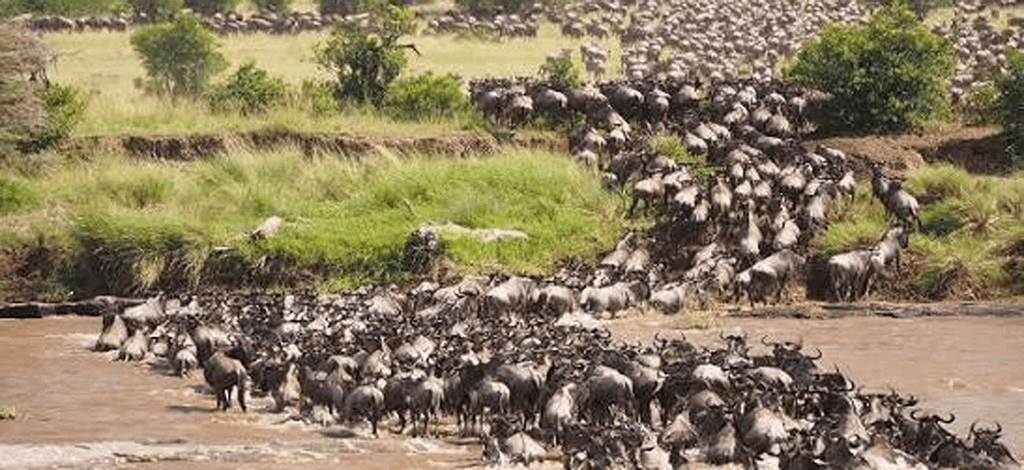
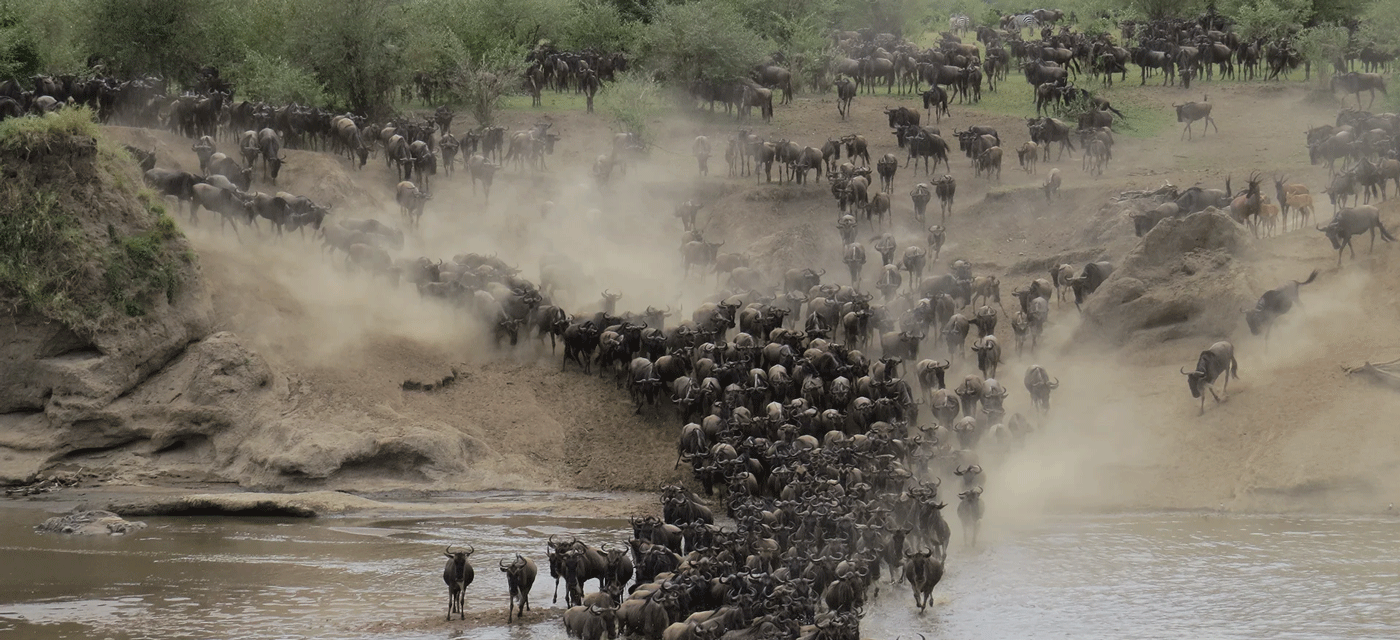
How the Great Migration Impacts the Serengeti Ecosystem is best understood by looking beyond the dramatic river crossings and predator encounters that attract visitors from around the world. The Great Migration in the Serengeti is one of the most powerful natural events on Earth involving the continuous movement of over a million wildebeest, hundreds of thousands of zebras and thousands of gazelles across the vast plains of Tanzania and Kenya.
This remarkable movement is far more than a spectacular wildlife event it is a fundamental ecological process that helps shape and maintain the entire Serengeti ecosystem.
At its core the Great Migration is driven by rainfall and the search for fresh grazing. However this movement creates a wide range of environmental effects that influence soil health, vegetation patterns, predator-prey relationships, water systems and even climate processes. It is not just an animal journey it is a continuous cycle of ecological renewal that helps keep the Serengeti functioning as one of the most productive savanna ecosystems in the world.
Every stage of the migration contributes to ecosystem balance. Grazing animals control grass growth, predators regulate herbivore populations and scavengers recycle nutrients back into the soil. As herds move across the landscape, they transport energy, nutrients and seeds, connecting distant parts of the ecosystem into a unified ecological network.
Understanding the Great Migration is essential for understanding how the Serengeti survives and thrives. Without this natural cycle, the ecosystem could experience significant changes, including reduced biodiversity, altered grassland conditions and disrupted food chains. Exploring How the Great Migration Impacts the Serengeti Ecosystem reveals why this annual movement is a vital force of nature rather than simply a remarkable wildlife event.
Table of contents
- Introduction
- Nutrient Recycling Across the Plains
- Grassland Regeneration and Vegetation Control
- Predator Population Stability
- Water Resource Distribution and Ecosystem Pressure
- Seed Dispersal and Plant Diversity
- Disease Regulation and Population Health
- Food Web Connectivity and Energy Flow
- Soil Compaction and Landscape Engineering
- Carbon Cycling and Climate Regulation
- Biodiversity Support and Species Balance
- Frequently Asked Questions of How the Great Migration Impacts the Serengeti Ecosystem
- Conclusion
Nutrient Recycling Across the Plains
The Great Migration plays a major role in nutrient cycling across the Serengeti ecosystem. As millions of wildebeest, zebras and gazelles move through the plains they continuously graze on grasses and then deposit waste in different locations. This movement spreads essential nutrients such as nitrogen and phosphorus across vast areas that would otherwise remain nutrient-poor.
Without this migration many parts of the Serengeti would experience uneven soil fertility. The constant grazing prevents certain grass species from dominating, while dung and urine enrich the soil and support new plant growth. Over time this creates a dynamic balance between vegetation growth and consumption.
The movement of animals also helps break down plant material faster. When herds trample dry grasses, they accelerate decomposition, which returns organic matter into the soil. This process supports microbial life which is essential for healthy grassland regeneration.
In addition predators benefit indirectly from this nutrient flow. Healthy grasslands support large herbivore populations, which in turn sustain lions, hyenas and other carnivores. Without nutrient redistribution the entire food web would weaken. Overall, the Great Migration acts like a natural fertilizer system, ensuring that the Serengeti remains one of the most productive savanna ecosystems in the world.
Grassland Regeneration and Vegetation Control
One of the most important ecological impacts of the Great Migration is its role in controlling vegetation growth and maintaining open grasslands. The massive herds of wildebeest and zebras graze intensively as they move across the Serengeti, preventing overgrowth of tall grasses and woody plants.
This grazing pressure ensures that short grass species dominate which are more nutritious and easier for herbivores to digest. Without this continuous feeding cycle many areas of the Serengeti would gradually turn into shrubland or woodland reducing the habitat suitable for grazing animals.
The migration also creates a patchwork of grazed and regrowing areas. As herds move on previously grazed zones recover quickly allowing for new grass shoots to emerge. This regeneration cycle increases biodiversity by supporting different plant stages in different regions at the same time.
Trampling is another key factor. When large herds move together they press seeds into the soil improving germination rates. This helps maintain the grassland ecosystem and supports long-term vegetation stability. By controlling vegetation density, the Great Migration indirectly supports visibility for predators as well. Open grasslands make it easier for lions and cheetahs to hunt maintaining natural predator-prey balance.
Predator Population Stability
The Great Migration has a direct influence on the stability and size of predator populations in the Serengeti ecosystem. As millions of herbivores move across the landscape, they provide a predictable and abundant food source for carnivores such as lions, leopards, cheetahs and hyenas.
During peak migration periods predators experience improved hunting success rates. This abundance allows predator populations to grow and maintain healthy breeding cycles. Lion prides for example, can raise more cubs when prey is plentiful increasing long-term population stability.
However, the migration also creates periods of feast and scarcity. As herds move away from certain areas predators must adapt by traveling long distances or switching prey species. This dynamic prevents any single predator species from overpopulating and maintains ecological balance.
Cheetahs benefit especially from the migration because the large herds of gazelles and young wildebeest provide ideal hunting opportunities. Hyenas being highly adaptable scavengers and hunters also thrive during migration peaks. Importantly the migration reduces predator pressure on any single area. Since prey is constantly moving predators must spread out preventing overhunting in one location. This helps maintain long-term ecosystem sustainability.
Water Resource Distribution and Ecosystem Pressure
The Great Migration significantly influences how water resources are used and distributed across the Serengeti ecosystem. As herds travel long distances in search of fresh grazing areas they must also locate reliable water sources such as rivers, springs and seasonal pools.
This movement places temporary pressure on water points especially during dry seasons. Large herds gathering at rivers like the Grumeti and Mara can lead to intense competition for access. However, this pressure also plays an ecological role by preventing overuse of any single water source for extended periods.
The constant movement of animals encourages natural recovery of water-adjacent vegetation. When herds leave an area, grasses and plants near water sources have time to regenerate stabilizing riverbanks and reducing erosion.
Additionally, the migration influences aquatic ecosystems. Large numbers of animals crossing rivers introduce organic matter into the water, which supports fish and insect life. At the same time predators such as crocodiles depend heavily on migration crossings for feeding creating a critical ecological interaction.
Water scarcity during certain migration phases also acts as a natural population control mechanism. Only the strongest animals can complete long journeys helping maintain genetic fitness within the population. In essence the Great Migration shapes how water resources are used, conserved and renewed across the Serengeti ensuring a dynamic balance between land, water and wildlife.
Seed Dispersal and Plant Diversity
The Great Migration plays a crucial role in seed dispersal across the Serengeti ecosystem contributing to plant diversity and landscape regeneration. As herbivores move across vast distances, they carry seeds in their fur, hooves and digestive systems.
Many grass and plant seeds survive digestion and are later deposited in dung often far from the parent plant. This natural transportation system allows plant species to spread across large areas increasing genetic diversity and ecosystem resilience.
The movement of herds also creates microhabitats for seed germination. Trampled soil patches provide ideal conditions for seeds to take root as the soil is loosened and enriched with organic matter. This increases the chances of successful plant growth.
Different grazing patterns encourage a wide variety of plant species. Some grasses recover quickly after grazing while others thrive in less disturbed areas. This diversity ensures that the Serengeti remains a rich and balanced ecosystem. Seed dispersal by migration also helps the ecosystem recover from environmental changes such as drought or fire. Plants can recolonize affected areas more quickly due to constant seed movement across the landscape.
Disease Regulation and Population Health
The Great Migration plays an important role in regulating disease dynamics within the Serengeti ecosystem. When millions of animals move continuously across the landscape they reduce the risk of localized disease outbreaks that could otherwise spread rapidly in a stationary population.
If herbivores remained in one area for long periods, parasites, bacteria and viruses would accumulate in the soil and vegetation. However constant movement disrupts these cycles. Grazed areas are abandoned for weeks or months allowing pathogens to decline naturally without hosts.
The migration also promotes healthier animal populations through natural selection. Only individuals strong enough to complete long-distance travel survive and reproduce. This reduces the spread of weak genetics and helps maintain overall herd health. Predators also benefit indirectly from this system. Healthy prey populations reduce the likelihood of disease transmission between species maintaining balance in the food web.
Additionally, dung dispersion over large areas prevents concentrated contamination. This reduces parasite loads in grazing zones and improves grassland quality over time. Overall, the Great Migration acts as a natural disease control system that supports long-term ecosystem health and stability in the Serengeti.
Food Web Connectivity and Energy Flow
The Great Migration is a key driver of food web connectivity in the Serengeti linking multiple trophic levels through continuous energy flow. At the base of the system are grasses which are consumed in massive quantities by migrating herbivores such as wildebeest, zebras and gazelles.
These herbivores convert plant biomass into animal energy which then supports large predator populations. Lions, cheetahs, hyenas and crocodiles depend heavily on the seasonal abundance created by migration.
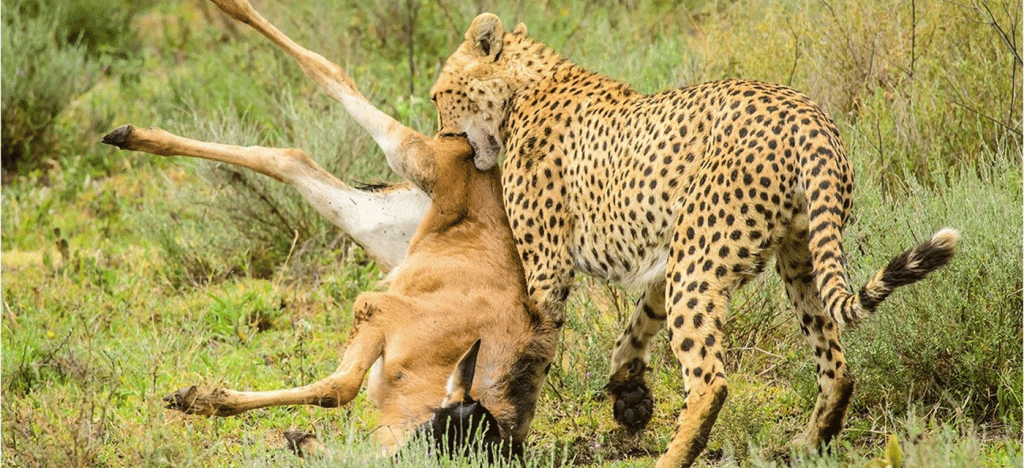
Scavengers such as vultures and jackals also benefit from leftover carcasses ensuring that nearly every part of a kill is recycled back into the ecosystem. This efficient energy transfer reduces waste and maximizes ecological productivity.
The migration also connects distant parts of the Serengeti ecosystem. As herds move, they transport energy in the form of body mass, waste and even nutrients from one region to another. This creates a continuous flow of biological material across the landscape.
Without migration energy flow would become fragmented and many species would lose access to critical resources. The system would become less dynamic and less resilient. In this way the Great Migration acts as a biological bridge that keeps the Serengeti food web fully connected and functioning.
Soil Compaction and Landscape Engineering
The movement of millions of animals during the Great Migration physically shapes the Serengeti landscape through soil compaction and natural “engineering.” As large herds travel across the plains, their hooves compress the soil, creating both positive and negative ecological effects.
Moderate trampling helps mix organic material into the soil improving nutrient distribution and enhancing grass growth. It also breaks up hard crusts on the surface allowing water to penetrate more easily during rainfall. However in heavily used migration corridors soil can become compacted, reducing water infiltration and temporarily limiting plant growth. This creates natural pathways that are repeatedly used year after year.
These movement corridors are essential for guiding migration routes and maintaining predictable wildlife movement patterns. Over time they become ecological highways that shape how animals interact with the landscape. Trampling also helps embed seeds into the soil, increasing germination rates and supporting vegetation regeneration. This contributes to long-term grassland stability.
Thus, the Great Migration functions as a natural landscape engineer, continuously reshaping soil structure, water flow and vegetation patterns across the Serengeti.
Carbon Cycling and Climate Regulation
The Great Migration contributes significantly to carbon cycling within the Serengeti ecosystem. Grasslands store large amounts of carbon in both plant biomass and soil organic matter and grazing by migrating herbivores influences how this carbon is processed and stored.
When herbivores feed on grasses they stimulate regrowth. Fresh grass shoots absorb carbon dioxide more efficiently increasing carbon uptake from the atmosphere. This process enhances the ecosystem’s role as a carbon sink. Dung and urine deposited by migrating herds also contribute to soil carbon content. As organic matter decomposes it enriches the soil and supports microbial activity which plays a key role in carbon storage.
Trampling accelerates the breakdown of plant material, allowing carbon to enter the soil system more quickly. This supports long-term carbon sequestration in grassland soils. However, respiration from large animal populations also releases carbon back into the atmosphere. This creates a balanced carbon cycle where uptake and release remain in dynamic equilibrium.
Biodiversity Support and Species Balance
The Great Migration is a cornerstone of biodiversity in the Serengeti ecosystem. By maintaining large populations of herbivores, it supports a wide range of predators, scavengers, insects and plant species. The constant movement of animals creates diverse habitats across the landscape. Some areas experience heavy grazing while others are left to recover. This variation supports different plant communities and increases overall biodiversity.
Predators benefit from abundant and predictable prey availability which allows multiple carnivore species to coexist. For example lions dominate large kills while cheetahs specialize in hunting smaller, faster prey. Scavengers also rely on migration events to survive feeding on remains left by predators. This ensures that energy flows through multiple ecological pathways.
Insects such as dung beetles play a crucial role in breaking down waste, improving soil quality and supporting nutrient cycling. Without the migration many species would decline due to lack of food and habitat diversity. The system would become less complex and less resilient. In essence the Great Migration maintains ecological balance by supporting high levels of biodiversity across multiple interconnected species groups.
Frequently Asked Questions of How the Great Migration Impacts the Serengeti Ecosystem
How does the Great Migration impact the Serengeti ecosystem?
The Great Migration supports the Serengeti ecosystem by influencing nutrient cycling, grassland regeneration, predator populations, seed dispersal, disease regulation, biodiversity and food web connectivity.
Why is the Great Migration important to the Serengeti?
The migration is a fundamental ecological process that helps maintain the balance and productivity of the Serengeti. The continuous movement of herbivores allows resources to be consumed and renewed across different areas.
How does the Great Migration improve soil fertility?
Wildebeest, zebras and gazelles spread nutrients through dung and urine as they move across the plains. Trampling also helps return organic material to the soil and supports decomposition.
How does migration affect Serengeti grasslands?
Large herds control vegetation growth through grazing, helping maintain open grasslands. Previously grazed areas can then recover as the animals move to new locations.
How does the Great Migration support predators?
The migration provides predators such as lions, cheetahs, leopards and hyenas with abundant prey. Moving herds also encourage predators to spread across different areas rather than concentrating their hunting pressure in one location.
Does the Great Migration help distribute seeds?
Yes. Migrating herbivores transport seeds in their fur, hooves and digestive systems. Seeds are later deposited in dung, helping plants spread and supporting vegetation regeneration.
How does the Great Migration affect disease in the Serengeti?
Continuous animal movement can reduce the concentration of pathogens and parasites in individual grazing areas. Areas left behind can recover as animals move elsewhere.
How does the migration affect water resources?
Migrating herds create temporary pressure on rivers, springs and seasonal pools. Their movement also allows vegetation around water sources to recover after herds leave.
How does the Great Migration support biodiversity?
The migration maintains large herbivore populations that provide food for predators, scavengers and other species. Different grazing patterns also create varied habitats that support diverse plant and animal communities.
Does the Great Migration contribute to carbon cycling?
Yes. Grazing stimulates fresh grass growth, while dung, urine and decomposing plant material contribute organic matter to the soil. These processes influence carbon storage and cycling within the Serengeti grasslands.
What would happen to the Serengeti without the Great Migration?
Without the migration the ecosystem could experience reduced biodiversity, changes in grassland conditions, disrupted food chains and less effective nutrient distribution
Conclusion
The Great Migration is far more than a movement of animals it is the central ecological engine that sustains the Serengeti ecosystem. Through continuous grazing, movement and interaction with the environment, migrating herds shape nearly every aspect of the landscape, from grassland structure and soil fertility to predator behavior and nutrient cycling. Serengeti Travels helps travelers discover this remarkable natural process while gaining a deeper understanding of the Serengeti ecosystem.
As shown in the analysis the migration supports nutrient redistribution, seed dispersal, disease regulation, carbon cycling and biodiversity maintenance. It prevents ecological stagnation by constantly shifting where resources are consumed and renewed. This dynamic process ensures that no single area of the Serengeti is overused for too long, allowing natural recovery and regeneration.
The migration also strengthens the food web by providing a predictable and abundant food source for predators and scavengers. At the same time it maintains balance by forcing predators to adapt, move and regulate their populations in response to prey availability. This interaction keeps the ecosystem stable and resilient.
Beyond wildlife interactions the Great Migration plays a crucial role in shaping physical landscapes and global ecological processes such as carbon storage and climate regulation. It is a reminder that ecosystems are not static but constantly evolving systems driven by movement and interaction.