 English
 Deutsch
 Italia
May 18, 2026
Group Safari in Serengeti National Park
Introduction
A Group Safari in Serengeti National Park is one of the most popular and practical ways for travelers to experience Tanzania’s world-famous wildlife destination. It involves joining other travelers in a shared safari vehicle, following a planned itinerary and exploring the vast Serengeti landscapes under the guidance of a professional safari guide. This type of safari is ideal for travelers looking for an affordable, organized and social way to experience one of Africa’s greatest natural wonders.
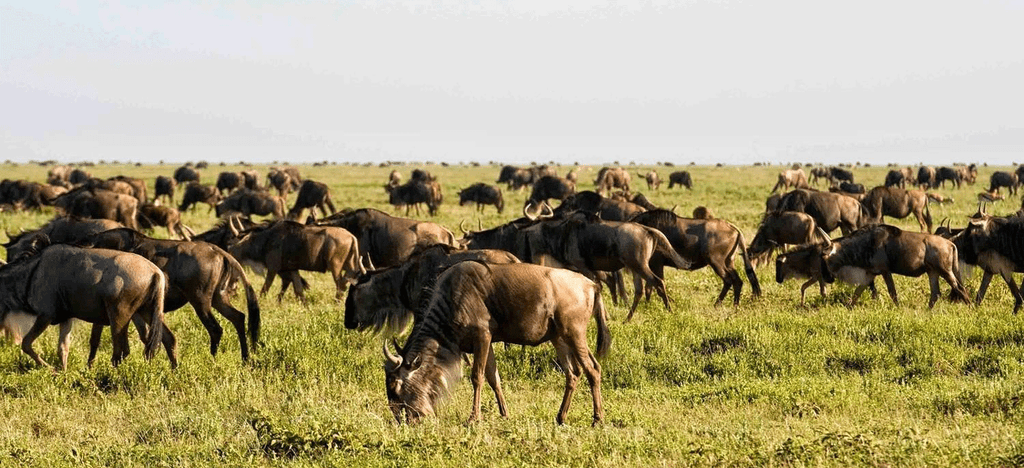
Serengeti National Park is famous for its endless savannah plains, diverse wildlife and the spectacular Great Migration. Each year, millions of wildebeest, zebras and gazelles move across the ecosystem in search of fresh grazing followed by predators such as lions, cheetahs, hyenas and crocodiles. This remarkable natural cycle creates unforgettable wildlife encounters and attracts travelers from around the world.
One of the main advantages of a group safari is affordability. Travelers share the costs of the safari vehicle, fuel, guide services and sometimes accommodation making the experience more accessible to solo travelers, students and budget-conscious visitors. A group safari also provides a structured itinerary, so travelers do not need to manage transportation, routes, accommodation or other logistics themselves.
Beyond saving money group safaris create valuable social experiences. Travelers from different countries can share game drives, stories, photography opportunities and memorable moments while discovering the Serengeti together. Overall, a group safari combines affordability, adventure, wildlife viewing and cultural interaction making it a rewarding way to explore one of Tanzania’s most iconic destinations.
Table of contents
- Introduction
- Cost Sharing Advantage
- Budget-Friendly Travel Option
- Access to Professional Safari Guides
- Fixed Itinerary Structure
- Social Travel Experience
- Shared Wildlife Viewing Experience
- Opportunity for Friendship Building
- Educational Experience
- Safety in Numbers
- Accommodation and Final Safari Experience
- Conclusion
Cost Sharing Advantage
One of the most important reasons travelers choose a group safari in Serengeti National Park is the cost-sharing advantage. Safari travel in Tanzania can be expensive when done privately because all major expenses such as vehicle hire, fuel, park entry fees and professional guide services must be paid by a single traveler or a small private group. In a group safari however these costs are divided among several participants which significantly reduces the total price per person.
A standard 4×4 safari vehicle used in Serengeti is built for durability and wildlife viewing often equipped with a pop-up roof and large windows. Hiring such a vehicle privately can be costly but when shared by 4 to 7 people the cost becomes much more affordable. The same applies to fuel expenses which can be high due to long distances covered inside the park. By sharing these costs travelers can enjoy the same routes and wildlife experiences at a fraction of the price.
In addition to transportation savings group safaris often include shared costs for professional safari guides. These guides are highly trained and knowledgeable about animal behavior, migration patterns and park geography. When their fee is shared among group members it becomes more budget-friendly while still providing expert guidance.
Accommodation is another area where cost sharing becomes beneficial. Many group safaris include stays in budget lodges or tented camps. Instead of paying for private luxury accommodation, travelers share pre-arranged facilities that are clean, safe and comfortable. Meals are also often included in the package reducing additional spending.
This cost-sharing model makes Serengeti National Park accessible to a wider range of travelers, including students, solo travelers, backpackers and international tourists on limited budgets. Without group safaris many people might not be able to afford a Serengeti experience at all.
Despite being more affordable group safaris do not compromise the quality of wildlife viewing. Travelers still visit top destinations such as Central Serengeti, Seronera Valley and migration routes depending on the season. They also still see iconic wildlife such as lions, elephants, giraffes, zebras and cheetahs. In summary the cost-sharing advantage of group safaris makes them one of the most practical and popular ways to explore Serengeti National Park combining affordability with a full safari experience.
Budget-Friendly Travel Option
A group safari in Serengeti National Park is widely recognized as one of the most budget-friendly ways to experience Tanzania’s world-famous wildlife destination. For many travelers cost is a major factor when planning an African safari and group safaris provide an ideal balance between affordability and quality experience.
Unlike private safaris, where travelers must pay for exclusive use of a vehicle, guide, fuel and logistics group safaris allow these expenses to be shared among several participants. This reduces the overall financial burden significantly. As a result, travellers can enjoy multiple days inside Serengeti National Park without exceeding their travel budget.
Budget-friendly does not mean low quality. Most group safari packages are carefully designed to include essential services such as park entry fees, accommodation, meals and game drives. This means travelers do not need to worry about organizing each part of the journey separately. Everything is pre-arranged making it easier to manage expenses and avoid unexpected costs during the trip.
Accommodation in group safaris is usually in budget lodges, public campsites or mid-range tented camps. These options are comfortable, safe and strategically located near wildlife areas, allowing travelers to maximize game viewing time. Meals are typically provided as part of the package which further reduces additional expenses.
Another key advantage is that group safaris often offer fixed pricing. This helps travelers plan their budget in advance without worrying about fluctuating costs. Many safari operators also provide different package levels allowing travelers to choose based on their financial capacity.
For solo travelers this option is especially valuable. Booking a private safari alone can be extremely expensive but joining a group allows them to experience the same national park at a much lower cost. It also eliminates the need to pay single supplements that are often required in private tours.
Even with lower costs, travelers still enjoy full access to Serengeti’s major attractions. They experience game drives in prime wildlife areas witness predator-prey interactions and may even see the Great Migration depending on the season. In conclusion, the budget-friendly nature of group safaris makes Serengeti National Park accessible to a wide range of travelers while still delivering a complete and memorable wildlife experience.
Access to Professional Safari Guides
One of the strongest advantages of a group safari in Serengeti National Park is access to highly professional and experienced safari guides. These guides play a crucial role in shaping the entire safari experience ensuring that travelers not only see wildlife but also understand it in depth.
Professional safari guides in Serengeti are trained in wildlife behavior, ecology, navigation and conservation. They possess deep knowledge of the park’s geography, including animal migration routes, predator territories and seasonal wildlife patterns. This expertise allows them to take travelers to the best locations for wildlife viewing at the right time of day.
In a group safari the cost of hiring such an experienced guide is shared among all participants. This makes it possible for budget travelers to benefit from high-quality guiding services that might otherwise be expensive in a private safari setting.
Guides also act as educators during the safari. They explain animal behavior such as why lions hunt in groups how elephants communicate or how cheetahs stalk prey. They also provide information about bird species, plant life and the overall ecosystem of Serengeti. This educational aspect transforms the safari from simple sightseeing into a meaningful learning experience.
Another important role of safari guides is navigation and safety. Serengeti is a vast and sometimes challenging environment, and guides ensure that travelers follow safe routes while maximizing wildlife sightings. They are also trained to handle unexpected situations such as animal encounters or vehicle issues.
In group safaris guides also act as coordinators. They manage different personalities within the group, balance sightseeing preferences and ensure that everyone gets a fair viewing opportunity. This requires strong communication and leadership skills. The presence of a knowledgeable guide also increases the chances of spotting rare wildlife. Experienced guides know where animals are likely to be found based on time of day, weather and seasonal movement. This greatly enhances the overall safari success rate.
In summary access to professional safari guides is one of the most valuable aspects of group safaris in Serengeti National Park. It ensures safety, education and a much richer wildlife experience for all travelers.
Fixed Itinerary Structure
A group safari in Serengeti National Park operates on a fixed itinerary structure, which means that the schedule, routes and daily activities are planned in advance and followed by all participants in the group. This structure is one of the defining characteristics of group safaris and plays a key role in ensuring smooth coordination, efficiency and fairness among travelers.
The fixed itinerary usually includes specific arrival and departure dates, scheduled game drives, designated rest stops and pre-arranged accommodation. Each day is carefully organized to maximize wildlife viewing opportunities while covering key regions of Serengeti such as Central Serengeti, Seronera Valley and sometimes northern or western migration corridors depending on the season.
This structure is especially beneficial because Serengeti is a vast national park and without planning travelers could easily miss important wildlife areas. The fixed schedule ensures that all major highlights are included within the safari duration. For example morning game drives are often scheduled during peak animal activity hours while afternoon drives may focus on different regions or sunset viewing.
Another important advantage of a fixed itinerary is time efficiency. Since everything is pre-planned there is no need for daily decision-making about where to go or what to do. This reduces confusion and ensures that the group makes the most of their time inside the park. It also helps safari guides organize routes more effectively based on wildlife movement patterns and road conditions.
However, the fixed structure also means that flexibility is limited. Travelers cannot easily change destinations or extend time at a specific wildlife sighting. For example, if a rare animal such as a leopard is spotted the group must balance time so that the rest of the schedule is not delayed.
Despite this limitation most travelers appreciate the structure because it reduces stress and ensures a well-organized experience. Everything from meals to accommodation check-ins is coordinated in advance allowing travelers to focus entirely on enjoying the safari.
Social Travel Experience
The social travel experience is one of the most enjoyable and memorable aspects of a group safari in Serengeti National Park. Unlike private safaris where travelers explore alone or with their own companions group safaris bring together individuals from different countries, cultures and backgrounds to share a common adventure.
From the beginning of the safari, travelers are introduced to each other and begin sharing the journey together. During game drives excitement builds when wildlife is spotted and group members often communicate, point out animals and share binoculars or cameras. This creates a sense of teamwork and collective discovery that enhances the overall experience.
The social interaction continues throughout the day. Travelers exchange stories about their home countries, past travel experiences and personal interests. These conversations often lead to cultural learning where participants gain new perspectives about different parts of the world. This cultural exchange adds depth to the safari beyond wildlife viewing.
Evenings are especially important for social bonding. After a long day of game drives travelers gather at lodges or camps for dinner and relaxation. These moments allow people to reflect on the day’s experiences, share photographs and discuss animal sightings. The atmosphere is usually friendly and relaxed often filled with laughter and storytelling.
Group safaris also reduce the feeling of isolation that some solo travelers may experience in remote wilderness areas. Instead of traveling alone participants always have companions to share the excitement of the journey. However the social experience also requires respect and understanding. Since people come from different backgrounds, they may have different personalities, communication styles and expectations. A successful group safari depends on cooperation and mutual respect among all participants.
Safari guides often play an important role in managing group dynamics. They ensure that communication flows smoothly and that all travelers feel included in discussions and activities.
Shared Wildlife Viewing Experience
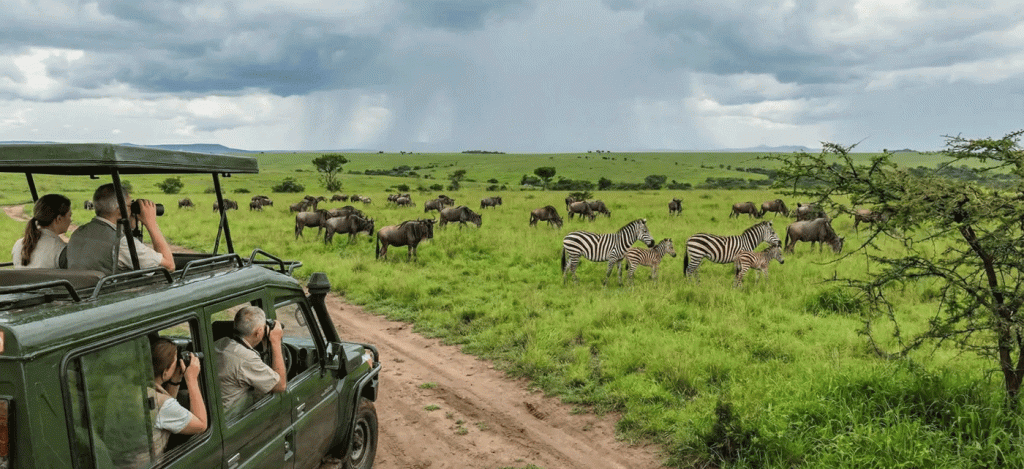
Shared wildlife viewing is one of the central features of a group safari in Serengeti National Park. Instead of experiencing wildlife alone all participants in the safari vehicle observe animals together creating a collective sense of excitement and discovery.
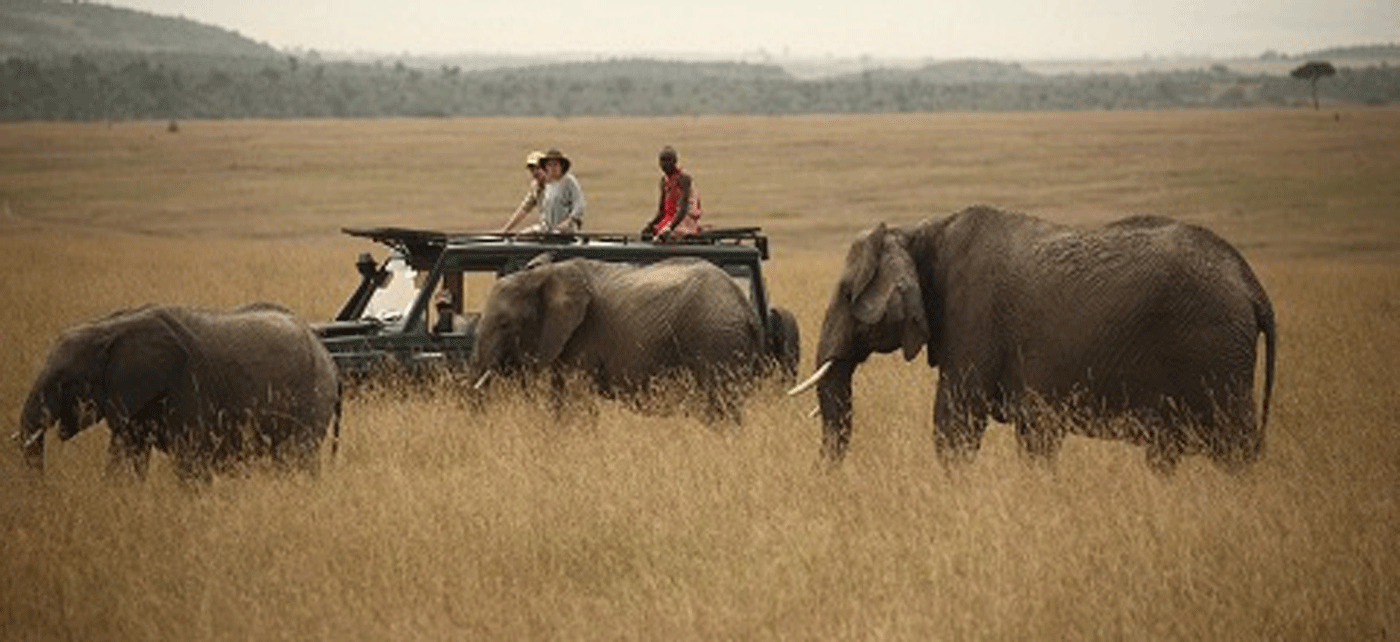
When an animal is spotted whether it is a lion resting under a tree a herd of elephants crossing the plains or a cheetah hunting the guide carefully positions the vehicle so that all travelers can see clearly. This shared moment often leads to immediate reactions of excitement, photography and discussion among group members.
One of the biggest advantages of shared viewing is the opportunity to experience wildlife behavior in real time with others. Travelers can observe predator-prey interactions, herd movements and animal communication while discussing what they are seeing. This makes the experience more interactive and engaging compared to private viewing.
Group safaris also increase the chances of spotting wildlife because multiple sets of eyes are scanning the landscape. Travelers often help each other identify animals that might otherwise be missed such as camouflaged leopards in trees or distant herds on the horizon. Safari guides enhance the shared viewing experience by providing explanations about animal behavior, migration patterns and ecological relationships. This helps the group understand not just what they are seeing but why it is happening.
However shared viewing also means that time at each wildlife sighting must be managed carefully. The guide must balance the interests of all participants ensuring that everyone has a fair opportunity to observe and take photographs. This sometimes limits how long the group can stay at a single location. Despite this the diversity of wildlife in Serengeti ensures that there are many opportunities throughout the day. From sunrise game drives to sunset sightings travelers experience a continuous flow of wildlife encounters.
In summary, shared wildlife viewing in group safaris creates a dynamic, interactive and educational experience that enhances the enjoyment of Serengeti’s rich biodiversity.
Opportunity for Friendship Building
A group safari in Serengeti National Park offers a unique opportunity for friendship building among travelers from different parts of the world. Since participants spend several days together in close proximity, they naturally develop connections through shared experiences, conversations and adventures.
From the beginning of the safari travelers are placed in the same vehicle and begin spending long hours together during game drives. These shared experiences create a strong sense of familiarity and comfort. When exciting wildlife sightings occur such as lions hunting or elephants crossing rivers the emotional reaction is shared among the group strengthening bonds between participants.
Mealtimes and evenings at lodges or camps also contribute significantly to friendship building. After a day of exploration, travelers gather to eat, relax and discuss the highlights of the safari. These informal settings encourage storytelling, laughter and cultural exchange allowing people to learn more about each other’s backgrounds and travel experiences.
Many travelers find that group safaris help them overcome social barriers. People who begin the journey as strangers often leave as friends after spending several days together in the Serengeti wilderness. In some cases these friendships continue long after the safari ends with travelers staying in contact or even planning future trips together.
Solo travelers especially benefit from this aspect as group safaris provide companionship in an otherwise remote and unfamiliar environment. Instead of traveling alone they share experiences with others making the journey more enjoyable and emotionally fulfilling. However, friendship building also depends on group compatibility. Since people have different personalities and travel expectations mutual respect and patience are important for maintaining a positive group environment.
Safari guides also support this process by encouraging teamwork and creating opportunities for group interaction during the safari experience.
Educational Experience
A group safari in Serengeti National Park is not only a wildlife adventure but also a deeply educational experience. One of the most valuable aspects of traveling with a professional guide in a group setting is the opportunity to learn about wildlife, ecosystems, conservation and the natural behavior of animals in their real environment.
During game drives safari guides provide detailed explanations about the animals that travelers encounter. For example when a pride of lions is spotted the guide may explain how lions hunt in groups, how they communicate and how they organize their social structure. Similarly, when elephants are seen travelers learn about their family bonds, migration behavior and intelligence. These explanations help visitors understand that wildlife is not just about seeing animals but about understanding how they live and interact within their ecosystem.
Group safaris also provide education about Serengeti’s unique ecosystem. The park is part of a larger system that includes the Ngorongoro Conservation Area and Maasai Mara in Kenya. Guides explain how seasonal migration works why animals move across vast distances and how rainfall patterns influence movement. This helps travelers understand the connection between climate, vegetation and wildlife survival.
Another important educational aspect is conservation awareness. Serengeti National Park is a protected area and guides often explain the importance of preserving wildlife habitats and preventing human-wildlife conflict. Travelers learn about anti-poaching efforts, conservation programs and the role tourism plays in supporting wildlife protection.
Birdwatching is also part of the educational experience. Serengeti is home to hundreds of bird species and guides help travelers identify them while explaining their behavior and ecological importance. In a group safari learning becomes interactive. Travelers can ask questions share observations, and discuss what they see with both the guide and other group members. This creates a dynamic learning environment where knowledge is exchanged continuously.
Safety in Numbers
Safety is an important consideration when traveling in remote wildlife areas and a group safari in Serengeti National Park provides the advantage of safety in numbers. Traveling with a group an experienced guide and a well-equipped safari vehicle significantly reduces risks and ensures a more secure travel experience.
Serengeti is a vast wilderness area with unpredictable wildlife movements. Although encounters with dangerous animals are rare when following park rules it is still important to have professional guidance. In a group safari trained guides are responsible for ensuring that all wildlife viewing is conducted at a safe distance and in accordance with park regulations. This helps prevent risky situations and ensures that travelers remain safe at all times.
Being in a group also provides psychological comfort. Travelers feel more secure knowing they are not alone in a remote environment. This is especially important for solo travelers or those visiting Africa for the first time. The presence of other travelers and a professional guide creates a supportive environment where help is always available if needed.
Safari vehicles used in group tours are specially designed for safety and durability. They are equipped for rough terrain and long-distance travel inside the park. Guides are trained to handle unexpected situations such as vehicle breakdowns or sudden weather changes, ensuring that the group remains safe and comfortable.
In addition staying in organized lodges or camps included in group safaris adds another layer of safety. These accommodations are managed by professionals who understand wildlife surroundings and provide secure environments for travelers. Group coordination also enhances communication and emergency response. If any issue arises the guide can quickly manage the situation with the support of the group and safari company systems.
However, safety in group safaris also depends on traveler cooperation. Following instructions, respecting wildlife rules and staying inside the vehicle during game drives are essential for maintaining safety.
Accommodation and Final Safari Experience

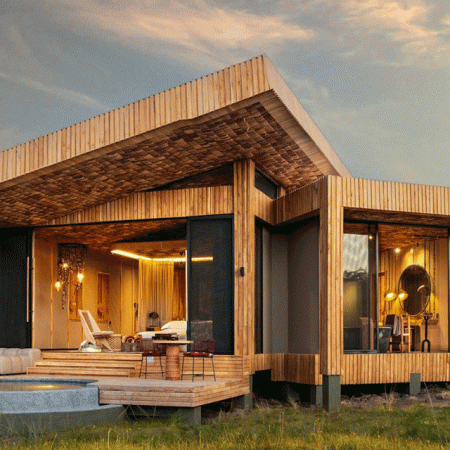
Accommodation plays a crucial role in shaping the overall experience of a group safari in Serengeti National Park. Since most group safaris are pre-arranged packages, accommodation is carefully selected to balance comfort, affordability and proximity to wildlife areas. Travelers usually stay in budget lodges tented camps or designated public campsites depending on the safari package.
Budget lodges and tented camps are the most common options in group safaris. These facilities are designed to provide basic comfort while keeping travelers close to nature. Rooms or tents are usually equipped with essential amenities such as beds, bathrooms and dining areas. Although they are not luxurious, they offer a safe and comfortable environment after long game drives.
One of the biggest advantages of these accommodations is location. Many camps and lodges are situated inside or near Serengeti National Park allowing travelers to start early morning game drives without long travel times. This increases the chances of witnessing wildlife activity during peak hours.
Meals are typically included in group safari packages and are served in shared dining areas. This further enhances the group experience, as travelers eat together and discuss the day’s wildlife sightings. It also reduces the need for individual meal planning making the safari more convenient.
Evenings at the accommodation sites are peaceful and memorable. After a full day of exploring the savannah, travelers relax under the African night sky, listen to natural sounds and share stories about their experiences. These moments often become some of the most memorable parts of the safari.
The final safari experience is a combination of wildlife, landscape, accommodation and group interaction. As the safari comes to an end travelers reflect on the animals they have seen, the places they have visited and the people they have met. Many leave with a strong emotional connection to Serengeti and unforgettable memories of the journey.
Frequently Asked Questions About Group Safari in Serengeti National Park
1. What is a group safari in Serengeti National Park?
A group safari in Serengeti National Park is a shared safari experience where travelers explore the park together in the same safari vehicle with a professional guide. It usually follows a fixed itinerary and helps reduce costs by sharing transportation, guide services and other safari expenses.
2. Is a group safari in Serengeti National Park cheaper than a private safari?
Yes. A group safari is generally more affordable because travelers share the costs of the safari vehicle, fuel, guide services and other arrangements. This makes it a popular option for solo travelers and visitors traveling on a limited budget.
3. Who is a group safari in Serengeti best suited for?
Group safaris are suitable for solo travelers, students, backpackers, couples and budget-conscious travelers who enjoy meeting new people. They are particularly useful for travelers who want an organized safari without paying the full cost of a private vehicle.
4. How many people usually join a group safari?
The group size depends on the safari operator and vehicle arrangement. Many group safaris accommodate several travelers in one 4×4 safari vehicle while maintaining enough space for comfortable wildlife viewing.
5. Can I see the Great Migration on a group safari?
Yes. A group safari can include areas where the Great Migration is taking place, depending on the season and itinerary. The best location for viewing the migration changes throughout the year so travelers should choose an itinerary that matches their travel dates.
6. Are professional guides included in group safaris?
Yes. Group safari packages normally include a professional safari guide who helps with navigation, wildlife identification, animal behavior and information about the Serengeti ecosystem. Sharing the guide’s cost among travelers makes professional guiding more affordable.
7. Do group safaris follow a fixed itinerary?
Yes. Most group safaris follow a planned itinerary with predetermined travel dates, accommodation, game drives and destinations. This makes the trip easier to organize but usually provides less flexibility than a private safari.
8. Can I change the itinerary during a group safari?
Usually, significant itinerary changes are limited because the schedule must accommodate everyone in the group. However the safari guide may make reasonable adjustments based on road conditions, wildlife movements and other practical circumstances.
9. What accommodation is used on a group safari in Serengeti?
Accommodation depends on the package and budget. Group safaris may use budget lodges, tented camps or campsites. The accommodation is generally selected to provide convenient access to wildlife areas while keeping the overall safari cost affordable.
10. Are meals included in a group safari?
Many group safari packages include meals although exactly what is provided depends on the package. Travelers should check the inclusions with their safari operator before booking.
11. Is a group safari safe in Serengeti National Park?
Yes, when travelers follow park regulations and their guide’s instructions. Professional guides are familiar with wildlife behavior park routes and safety procedures and help ensure that wildlife encounters are conducted responsibly.
12. Can solo travelers join a group safari?
Yes. Group safaris are an excellent option for solo travelers because they provide companionship while reducing the cost of the safari. Solo travelers can also meet people from different countries and potentially make new friends during the trip.
13. What are the main advantages of a group safari in Serengeti?
The main advantages include lower costs, professional guiding, organized transportation, planned accommodation, shared wildlife experiences and opportunities to meet other travelers. These benefits make group safaris a practical way to explore the Serengeti.
14. What are the disadvantages of a group safari?
The main limitation is reduced flexibility. Travelers usually need to follow the group’s itinerary and share time at wildlife sightings. If you want complete control over the schedule, route and game-drive duration, a private safari may be more suitable.
15. Why choose Serengeti Travels for a group safari?
Serengeti Travels offers organized safari experiences designed to combine wildlife viewing, professional guiding, affordability and convenience. Travelers can enjoy the Serengeti while sharing safari costs and experiences with other participants.
Conclusion
A Group Safari in Serengeti National Park with Serengeti Travels offers a complete and rewarding travel experience that combines wildlife adventure, affordability, education and social interaction. It is one of the most practical ways to explore Tanzania’s most famous national park while sharing unforgettable moments with travelers from different parts of the world.
During the safari, travelers discover the spectacular beauty of the Serengeti’s endless plains while searching for diverse wildlife, including lions, elephants, leopards, cheetahs, buffalo and other fascinating species. Depending on the season and safari route, guests may also witness the Great Migration one of Africa’s most remarkable natural spectacles. Professional guides from Serengeti Travels provide valuable information about animal behavior, the Serengeti ecosystem, conservation and local communities making every game drive both exciting and educational.
One of the biggest advantages of a group safari is affordability. Sharing the costs of the safari vehicle, fuel, guide services and other travel arrangements allows visitors to enjoy an authentic Serengeti adventure at a more accessible price than a private safari. This makes group safaris particularly suitable for solo travelers, students, couples and budget-conscious adventurers.
The social experience is another important benefit. Guests can meet fellow travelers, exchange stories, enjoy game drives together and create friendships along the way. Although group safaris generally follow planned itineraries and require flexibility, they offer convenience, organization and reliable support. With Serengeti Travels handling the arrangements, travelers can concentrate on enjoying the wildlife, landscapes and unforgettable experiences of Serengeti National Park.