 English
 Deutsch
 Italia
May 14, 2026
Big Five Animals and Where to Find Them in Serengeti National Park
Introduction
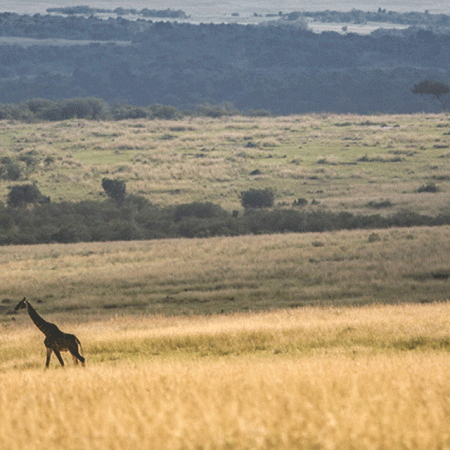
Big Five Animals and Where to Find Them in Serengeti National Park offers an exciting introduction to one of Africa’s greatest wildlife experiences. Serengeti National Park protects vast grasslands, river valleys, rocky kopjes, woodlands and forests that support an incredible variety of wildlife. The park also hosts the Great Migration, when millions of wildebeests, zebras and gazelles cross the ecosystem in search of fresh grazing and water.
Beyond the migration Serengeti attracts travelers who want to encounter the legendary Big Five: lions, leopards, elephants, buffaloes and rhinos. These animals play important roles in maintaining the balance of the ecosystem. Lions regulate herbivore populations, elephants shape vegetation, buffaloes influence grassland habitats and leopards help control prey species. Rhinos represent one of the park’s rarest and most protected animals.
Serengeti offers different opportunities to find each species because its habitats vary across the park. Seronera provides excellent year-round wildlife viewing and supports many predators. Northern Serengeti offers remote landscapes and strong opportunities to see wildlife around river areas. Western Serengeti contains woodland and riverine habitats that can support elusive leopards. Southern Serengeti attracts large herbivore herds during the calving season which also brings predators into the area.
Finding the Big Five requires patience, careful observation and an experienced safari guide. Guides track footprints, follow animal movements and watch alarm calls to locate hidden wildlife. Although lions, elephants and buffaloes appear regularly, leopards and rhinos require greater patience. A Serengeti safari therefore combines adventure, wildlife discovery and conservation in one unforgettable experience.
Table of contents
- Introduction
- The African Lion in Serengeti National Park
- Where to Find Lions in Serengeti
- The African Leopard in Serengeti National Park
- Where to Find Leopards in Serengeti
- The African Elephant in Serengeti National Park
- Where to Find Elephants in Serengeti
- The African Buffalo in Serengeti National Park
- Where to Find Buffaloes in Serengeti
- The Black Rhinoceros in Serengeti National Park
- Where to Find Rhinos in Serengeti
- Best Time to See the Big Five in Serengeti
- Safari Tips for Finding the Big Five
- The Importance of Big Five Conservation
- Conclusion
The African Lion in Serengeti National Park
The King of the Serengeti
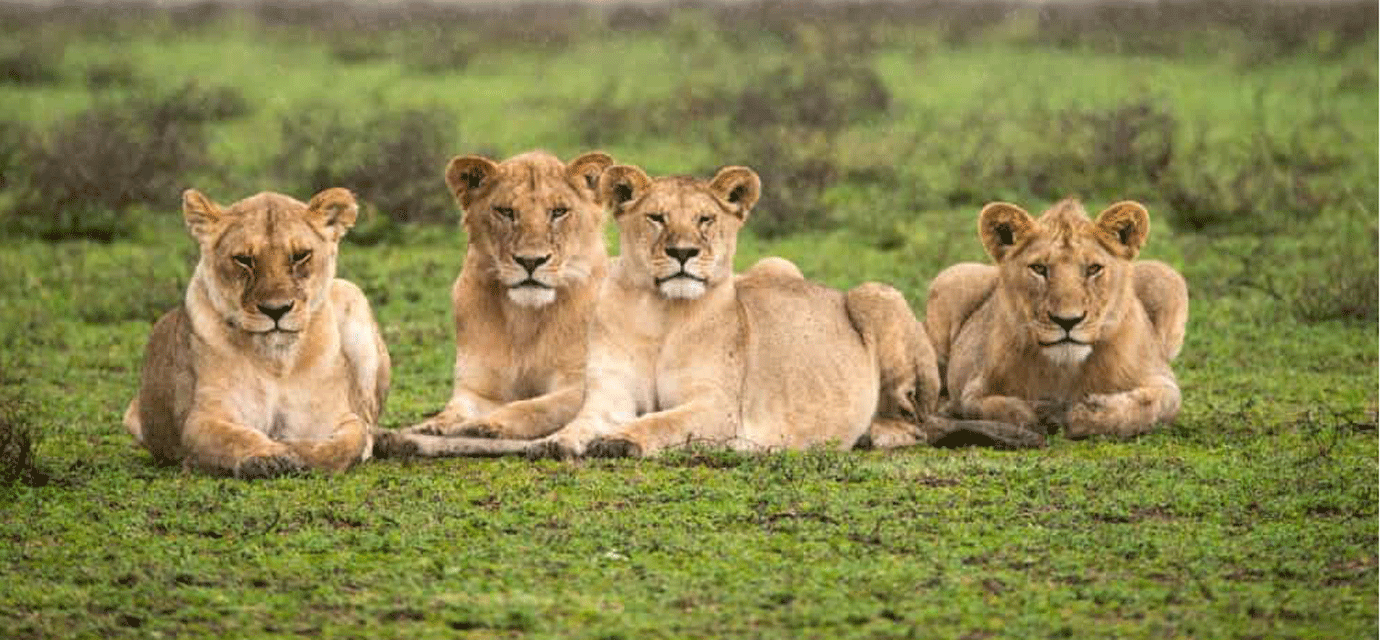
The African lion is perhaps the most famous animal in Serengeti National Park. Known as the King of the Jungle lions symbolize strength, courage and dominance. Serengeti supports one of the largest lion populations in Africa making it one of the best places in the world to observe these magnificent predators in the wild.
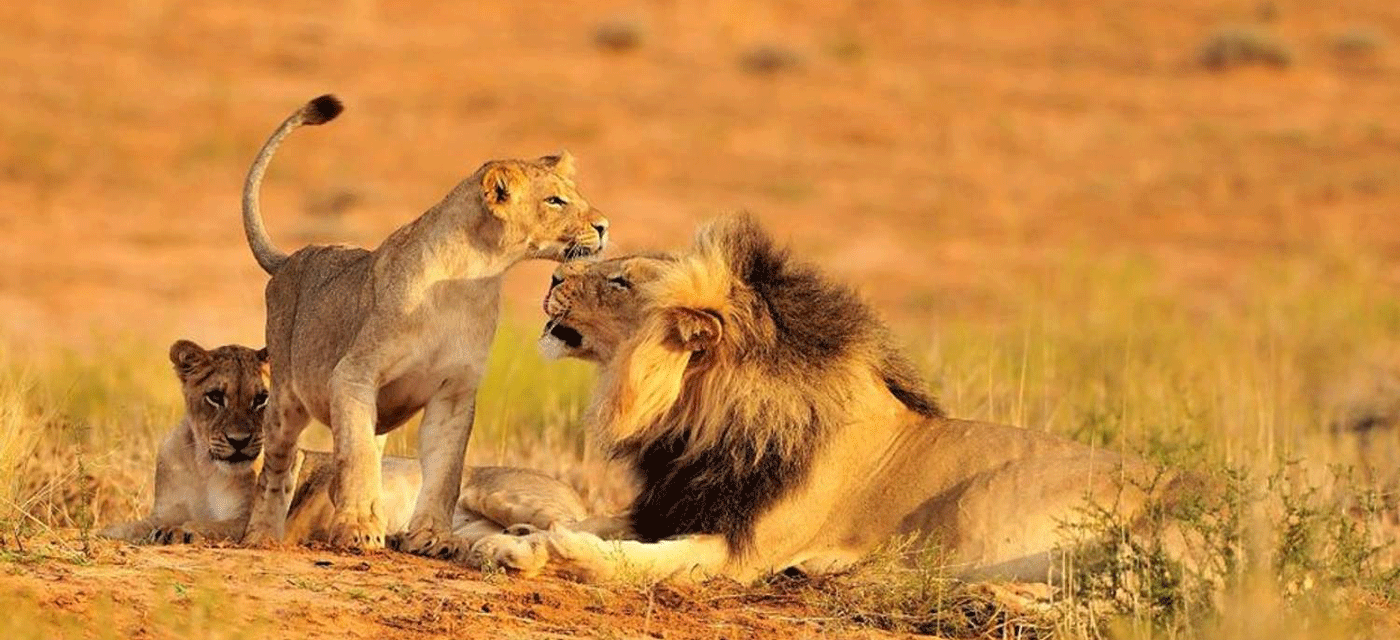
Lions are social cats that live in groups called prides. A pride usually consists of related females, cubs and a coalition of males. Female lions are responsible for most hunting activities, while males protect the pride’s territory from rivals. In Serengeti prides can sometimes include more than twenty individuals depending on prey availability and territory size.
Unlike many other predators lions are highly visible during safaris. They spend much of their day resting under trees, on rocky kopjes, or in tall grass to conserve energy. During cooler hours such as early morning and evening, they become more active and may hunt wildebeests, zebras, buffaloes or gazelles.
One of the most thrilling experiences in Serengeti is hearing lions roar at night. A lion’s roar can travel several kilometers across the plains and serves as a warning to competitors while strengthening pride bonds. Safari camps throughout the park often allow visitors to hear these powerful sounds after dark creating unforgettable memories of the African wilderness.
Where to Find Lions in Serengeti
Central Serengeti (Seronera Area) The Seronera region is the best place to find lions throughout the year. This area has permanent water sources, abundant prey and scattered kopjes that lions use as resting points and lookout positions. Many prides inhabit the region permanently making sightings extremely common.
Visitors often see lions sleeping on rocky outcrops or lying beneath acacia trees during midday heat. Early morning game drives may reveal prides returning from hunts or cubs playing near dens.
Southern Serengeti Plains During the wildebeest calving season from January to March, lions move into the southern plains because thousands of vulnerable newborn animals provide easy hunting opportunities. Predator activity becomes intense during this period.
Western Corridor The Grumeti region in western Serengeti also supports healthy lion populations due to dense prey concentrations near river systems. Lions in this area sometimes hunt buffaloes and large herbivores.
Northern Serengeti Northern Serengeti is another excellent lion habitat, especially during the migration months when massive herds arrive near the Mara River. Lions position themselves strategically along migration routes to ambush prey.
Lion Hunting Behavior Lions rely on teamwork during hunts. Females often coordinate attacks by surrounding prey before launching short bursts of speed. Hunting success depends on stealth, timing, wind direction and cooperation.
Nighttime is the most active hunting period because cooler temperatures allow lions to move more efficiently. During safaris visitors sometimes encounter lions feeding on fresh kills during morning drives.
Large prey such as buffaloes require coordinated attacks and can be dangerous even for lions. Buffaloes occasionally injure or kill lions during defensive fights showing that survival in the Serengeti is never guaranteed.
Lion Conservation Challenges Although lions remain relatively widespread in Serengeti, they face threats across Africa from habitat loss, human conflict, disease and declining prey populations. Serengeti National Park provides critical protection for these predators but conservation efforts must continue to ensure long-term survival.
Anti-poaching patrols, scientific monitoring and tourism revenue all contribute to lion conservation in Tanzania. Researchers in Serengeti continue studying lion behavior, social structures and ecosystem interactions to better protect them.
The African Leopard in Serengeti National Park
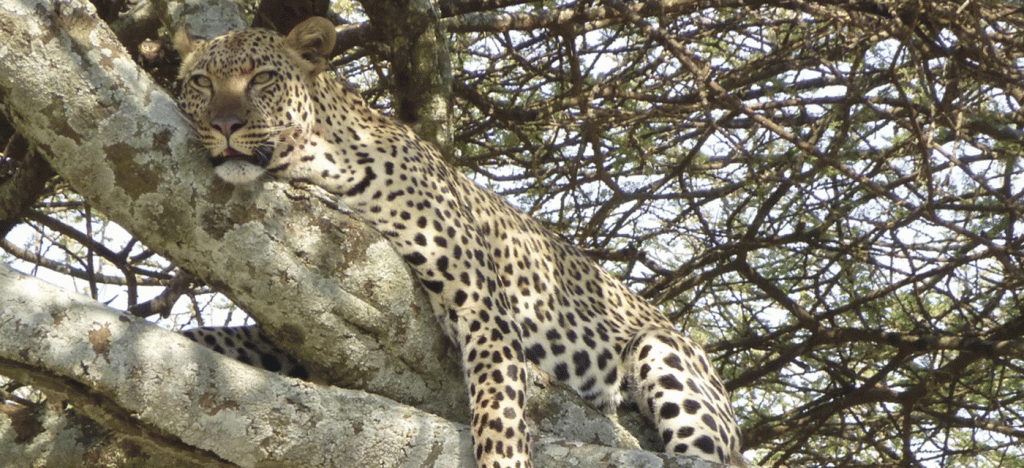
The Secretive Big Cat The leopard is one of the most elusive members of the Big Five. Unlike lions, leopards prefer solitude and secrecy. Their beautiful spotted coats provide excellent camouflage in trees, grass and shadows making them difficult to detect even when nearby.
Leopards are incredibly powerful animals capable of dragging heavy prey into trees to protect it from scavengers such as hyenas and lions. They are also highly adaptable predators that feed on antelopes, monkeys, birds, reptiles and smaller mammals.
Many safari visitors consider seeing a leopard one of the greatest achievements because sightings are less predictable than lion encounters. A single leopard resting gracefully on a tree branch can become the highlight of an entire safari.
Where to Find Leopards in Serengeti
Seronera River Valley The Seronera region is famous for leopard sightings. Riverine forests and large trees provide ideal habitats for these cats. Leopards frequently rest on branches during daylight hours after hunting at night.
Safari guides often search along riverbanks where leopards hide among thick vegetation. Visitors should scan trees carefully because leopards blend perfectly with the environment.
Western Corridor Dense vegetation near the Grumeti River also supports leopard populations. The thick forests provide cover for stalking prey and protection from larger predators.
Northern Serengeti Leopards can also be found in northern Serengeti where woodland habitats support abundant prey species.
Leopard Behavior Leopards are mainly nocturnal hunters. They use stealth instead of strength or teamwork. Unlike lions, they hunt alone and depend heavily on surprise attacks.
One remarkable characteristic is their ability to climb trees with prey much heavier than themselves. Hanging carcasses in trees are often signs that a leopard is nearby.
Leopards are extremely territorial. Males defend large territories that may overlap with smaller female territories. Scent marking, scratches on trees and vocalizations help establish boundaries.
Challenges Facing Leopards Leopards face threats from habitat destruction, illegal hunting and conflict with humans outside protected areas. In Serengeti conservation programs help maintain stable populations by preserving natural habitats and prey availability.
Because leopards are naturally elusive population monitoring requires camera traps and scientific research rather than simple observation.
The African Elephant in Serengeti National Park
Giants of the Savannah African elephants are the largest land animals on Earth and among the most intelligent creatures in the animal kingdom. Seeing a giant elephant walking across the Serengeti plains is one of the most emotional safari experiences.
Elephants live in family groups led by experienced females called matriarchs. These herds include mothers, calves, sisters and relatives who cooperate closely for protection and survival. Adult males often live separately or form temporary bachelor groups.
Elephants communicate using sounds, body language, touch and low-frequency vibrations that can travel long distances through the ground. Their social intelligence and emotional bonds are remarkably advanced.
Where to Find Elephants in Serengeti
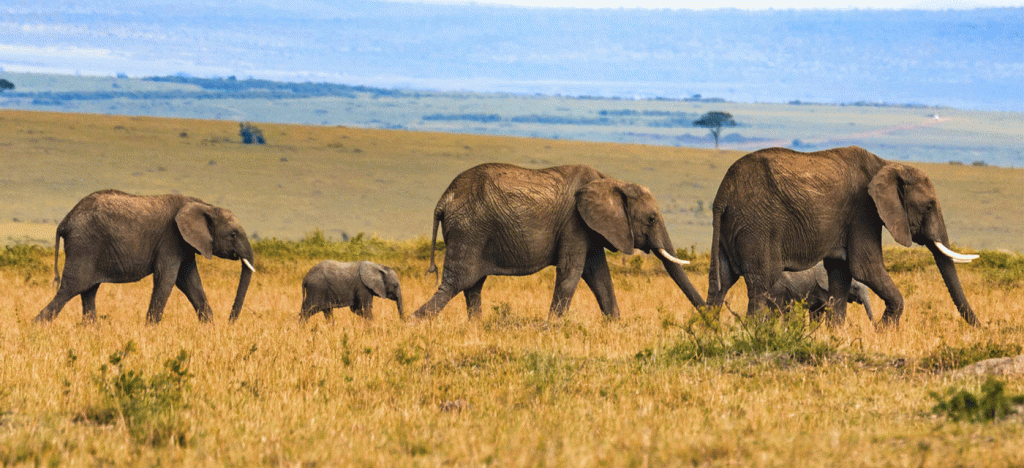
Northern Serengeti Northern Serengeti contains many elephant herds because of woodland habitats and water availability. The area near the Mara River is especially productive.
Western Corridor The Grumeti region is another excellent place to find elephants. Dense vegetation and river systems provide food and shade.
Central Serengeti Elephants occasionally move through Seronera though sightings may vary seasonally.
Elephant Feeding and Behavior Elephants spend most of their day feeding. They consume grasses, leaves, bark, roots and fruits. Their feeding habits influence the entire ecosystem by opening woodlands and creating habitats for other species.
Calves remain close to mothers for several years and learn survival skills from older herd members. Protective behavior among elephants is extremely strong especially when young calves are threatened.
Visitors often witness playful calves, mud bathing, dust throwing and affectionate interactions within family groups.
Elephant Conservation African elephants were heavily targeted by ivory poaching for decades. Tanzania lost many elephants during severe poaching crises in the past, but stronger anti poaching efforts have helped populations recover in protected areas like Serengeti.
Conservation organizations continue fighting illegal ivory trade while promoting community awareness and wildlife protection.
The African Buffalo in Serengeti National Park
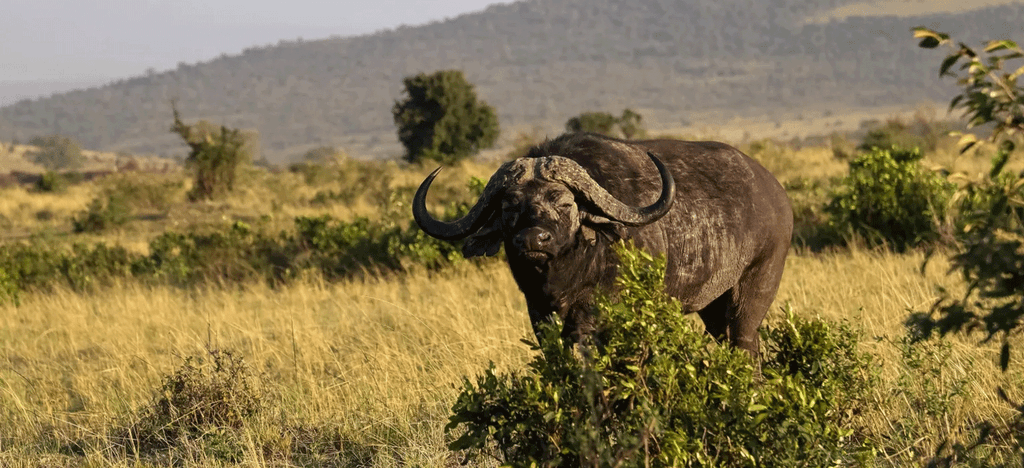
Africa’s Most Dangerous Herbivore The African buffalo is one of the most underestimated animals in Africa. Although it is an herbivore, it is extremely powerful, unpredictable and capable of defending itself aggressively against predators.
Buffaloes live in large herds that may include hundreds or even thousands of individuals. Herd living increases protection from lions and other predators.
Their strong social bonds make them formidable opponents. When lions attack buffaloes often work together to defend calves or injured members. There are many recorded cases where buffaloes successfully chased lions away.
Where to Find Buffaloes in Serengeti
Central Serengeti Large buffalo herds frequently roam the grasslands and woodlands around Seronera.
Western Serengeti Buffaloes are common near river systems and swampy areas.
Northern Serengeti The northern woodlands also support healthy buffalo populations.
Buffalo Behavior Buffaloes spend most of their time grazing on grass. They require regular access to water and often remain near rivers or wetlands.
Old male buffaloes sometimes leave herds and become solitary. These individuals are known as “dagga boys” and are considered especially dangerous because of their unpredictable temperament.
Buffaloes have strong memory and awareness of threats. Injured buffaloes are particularly feared by hunters and predators alike.
Buffaloes and Predators Lions are the main predators of buffaloes in Serengeti. However, hunting buffaloes is risky because adult buffaloes are large, strong and aggressive.
During dramatic encounters, buffalo herds may surround lions, charge aggressively or rescue captured calves. Such interactions provide some of the most intense wildlife scenes in Africa.
The Black Rhinoceros in Serengeti National Park
The Rarest Member of the Big Five The black rhinoceros is the rarest and most difficult Big Five animal to see in Serengeti National Park. Once widespread across Africa black rhino populations declined dramatically because of poaching for their horns.
Today strict conservation measures protect the remaining rhinos in Serengeti. Seeing one during a safari is considered a very special and fortunate experience.
Black rhinos are smaller than white rhinos and have hooked upper lips adapted for browsing shrubs and bushes. They are usually solitary and highly territorial.
Where to Find Rhinos in Serengeti
Moru Kopjes. The Moru Kopjes area in central Serengeti is the most famous rhino habitat within the park. This protected region offers rocky shelters, vegetation and security monitoring.
Because rhinos are heavily protected, sightings may require patience and guidance from experienced safari guides.
Rhino Behavior. Black rhinos are often shy but can become aggressive when threatened. Their eyesight is relatively poor but they possess excellent hearing and smell.
Rhinos feed mainly on shrubs, leaves and branches. They usually prefer dense vegetation where they can remain hidden during the day.
Rhino Conservation is one of the greatest wildlife protection challenges in Africa. Poaching for rhino horns nearly eliminated populations in many regions.
In Serengeti anti poaching teams work continuously to protect remaining rhinos through patrols, surveillance and monitoring programs.
Conservation success depends on strong law enforcement, tourism support, international cooperation and public awareness.
Best Time to See the Big Five in Serengeti
Dry Season The dry season from June to October is generally considered the best time for wildlife viewing. Animals gather near water sources, vegetation becomes shorter and visibility improves.
Predator sightings are particularly strong during this period because prey concentrations increase around rivers and permanent water areas.
Green Season The green season from November to May offers beautiful landscapes, fewer tourists and excellent photography opportunities.
January to March is especially famous for wildebeest calving in southern Serengeti. This attracts many predators, including lions, leopards and hyenas.
Migration Influence The Great Migration strongly affects predator movements throughout Serengeti. Lions, leopards and other carnivores often follow migrating herds because they provide abundant food opportunities.
Safari Tips for Finding the Big Five
Choose Experienced Guides Professional safari guides understand animal behavior, tracks, sounds and movement patterns. Their experience greatly improves chances of successful sightings.
Morning and Evening Game Drives Wildlife is most active during cooler hours. Early morning and late afternoon drives provide the best opportunities to see predators hunting or moving.
Be Patient Nature is unpredictable. Sometimes finding elusive animals such as leopards or rhinos requires patience and persistence.
Bring Binoculars and Cameras Binoculars help detect distant animals hidden in grass or trees. Cameras with zoom lenses allow better wildlife photography.
Respect Wildlife Always follow park regulations and maintain safe distances from animals. Respectful tourism helps protect wildlife and ensures natural behavior.
The Importance of Big Five Conservation
The survival of the Big Five depends heavily on conservation efforts. Serengeti National Park represents one of Africa’s greatest conservation achievements but threats still exist.
Habitat loss, poaching, climate change and human population growth continue affecting wildlife across Africa. Conservation requires cooperation between governments, local communities, researchers, tourism operators and international organizations.
Tourism revenue generated by safaris supports anti-poaching operations, ranger salaries, scientific research, infrastructure and community development. Sustainable tourism therefore plays a critical role in preserving Serengeti’s wildlife heritage.
Education is equally important. When people understand the ecological value of wildlife they become more willing to protect natural ecosystems for future generations.
Frequently Asked Questions About the Big Five in Serengeti National Park
What are the Big Five animals in Serengeti National Park?
The Big Five in Serengeti National Park are the African lion, leopard, African elephant, African buffalo and black rhinoceros. These iconic animals attract travelers from around the world.
Where is the best place to see the Big Five in Serengeti?
Central Serengeti, especially the Seronera area, offers excellent opportunities to see several of the Big Five throughout the year. Northern, western and southern Serengeti also provide strong wildlife-viewing opportunities depending on the season.
Can I see all the Big Five on one Serengeti safari?
Yes, it is possible to see all five during one Serengeti safari, but sightings are never guaranteed. Lions, elephants and buffaloes are generally easier to find, while leopards and black rhinos require more patience.
Where can I see lions in Serengeti National Park?
You can find lions throughout Serengeti with particularly good opportunities in Seronera, the southern plains, Western Corridor and Northern Serengeti. Lions often rest near kopjes, under trees and in tall grass.
Where can I see leopards in Serengeti?
Seronera River Valley is one of the best areas for leopard sightings. Leopards also occur in Western and Northern Serengeti, especially around woodland and riverine habitats.
Where can I see elephants in Serengeti?
Northern and Western Serengeti offer excellent opportunities to see elephants. Elephant herds can also move through Central Serengeti depending on seasonal conditions and water availability.
Where can I see buffaloes in Serengeti?
Buffaloes occur across Serengeti National Park. Central Serengeti, Western Serengeti and Northern Serengeti are productive areas where visitors can often find large herds near grasslands, rivers and wetlands.
Where can I see black rhinos in Serengeti?
Moru Kopjes in Central Serengeti is the most well-known area for finding black rhinos. Because rhinos are rare and carefully protected, sightings require patience and an experienced guide.
What is the hardest Big Five animal to see in Serengeti?
The black rhinoceros is generally the most difficult of the Big Five to see in Serengeti. Leopards can also be challenging because they are solitary, secretive and well camouflaged.
What is the best time to see the Big Five in Serengeti?
June to October generally provides excellent wildlife viewing because dry conditions concentrate animals around water sources and improve visibility. January to March also offers exciting predator sightings during the wildebeest calving season.
Can I see the Big Five during the Great Migration?
Yes. The Great Migration can improve opportunities to see predators such as lions and leopards because large concentrations of wildebeest and other herbivores provide abundant prey. Migration locations change throughout the year.
What time of day is best for seeing the Big Five?
Early morning and late afternoon are usually the most productive times for wildlife viewing. Cooler temperatures encourage animals to become more active increasing opportunities to observe predators and other wildlife.
How can I improve my chances of seeing the Big Five?
Choose an experienced safari guide, take morning and afternoon game drives, remain patient and use binoculars to scan trees, grasslands and distant areas. Experienced guides can interpret tracks, animal behavior and alarm calls.
Are black rhinos dangerous in Serengeti?
Black rhinos are wild animals that can become defensive when threatened. Visitors should always maintain a safe distance and follow their guide’s instructions and Serengeti National Park regulations.
Why are the Big Five important to the Serengeti ecosystem?
The Big Five play important ecological roles. Lions and leopards regulate prey populations, elephants influence vegetation, buffaloes affect grassland habitats and rhinos contribute to the balance of browsing species.
How does tourism help Big Five conservation?
Responsible safari tourism generates revenue that can support wildlife protection, anti-poaching operations, scientific research, ranger programs and community development. Choosing responsible operators such as Serengeti Travels can help support sustainable tourism.
Can Serengeti Travels help me see the Big Five?
Yes. Serengeti Travels can organize Serengeti safari experiences with knowledgeable local guides who understand wildlife behavior seasonal movements and the best areas for wildlife viewing.
Conclusion
Serengeti National Park is one of the few places on Earth where visitors can experience the full beauty and power of the African Big Five in their natural environment. Lions rule the open plains with unmatched dominance, leopards move silently through forests and trees, elephants shape the landscape with their immense presence, buffaloes demonstrate strength through unity and black rhinos symbolize both rarity and hope for conservation. With Serengeti Travels travelers can explore these remarkable animals through carefully planned safari experiences led by knowledgeable local guides.
Each animal offers a unique safari experience. Watching a lion pride at sunrise, spotting a leopard resting on a tree branch, standing near a massive elephant herd, observing buffaloes facing predators or catching a rare glimpse of a black rhino creates memories that last a lifetime.
The Serengeti is more than a tourist destination. It is a living ecosystem where millions of animals interact in one of the most spectacular natural dramas on the planet. The Big Five represent iconic African wildlife while also reminding visitors of the importance of conservation and coexistence between people and nature.
For travelers seeking adventure, photography, education or a deeper connection with the wild the Serengeti delivers an experience unlike any other. Every game drive brings uncertainty, excitement and discovery. No two safaris are ever the same because nature constantly changes.
The future of the Big Five depends on continued habitat protection, strong anti-poaching efforts, sustainable tourism and global support for wildlife conservation. By visiting responsibly with operators such as Serengeti Travels travelers can enjoy Tanzania’s wildlife while supporting responsible tourism and conservation.
A journey through Serengeti National Park is ultimately a journey into the heart of wild Africa, where the roar of lions, footsteps of elephants, stealth of leopards, power of buffaloes and resilience of rhinos continue to inspire the world.