 English
 Deutsch
 Italia
December 16, 2025
Amazing Facts About the Great Wildebeest Migration in Tanzania
Introduction
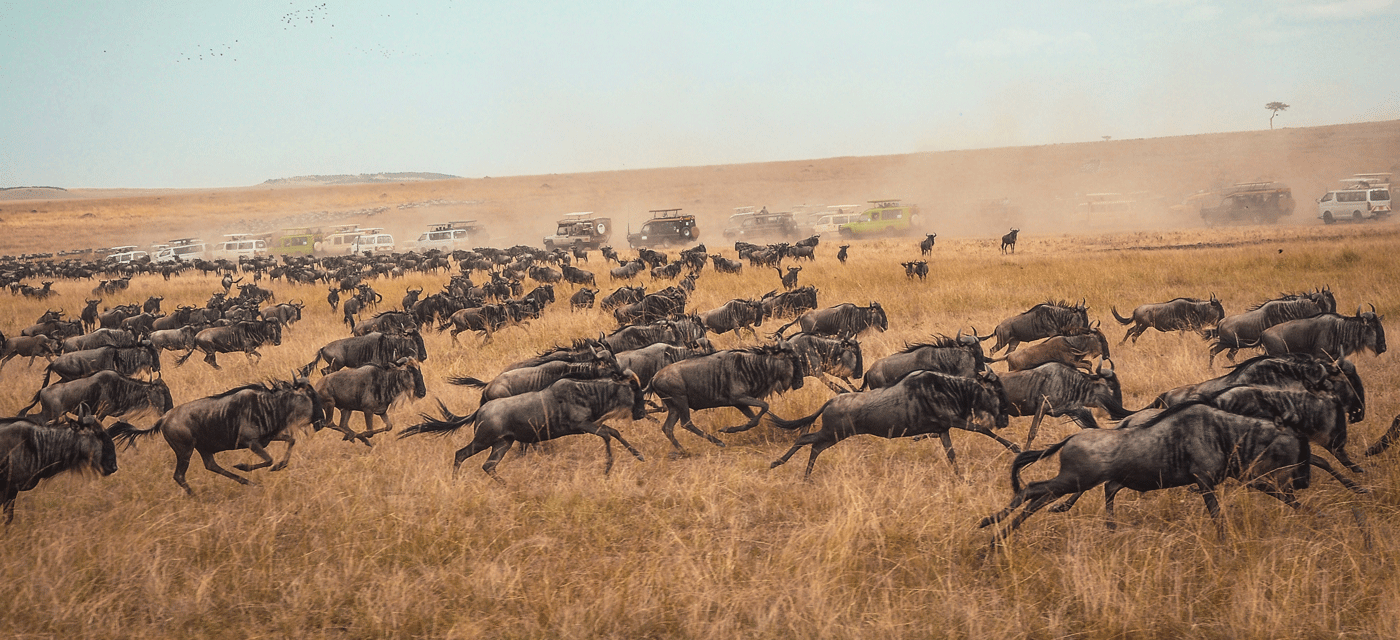
Amazing Facts About the Great Wildebeest Migration in Tanzania reveal one of the most extraordinary wildlife spectacles on Earth. Every year roughly 1.3 million wildebeest move through the Serengeti-Mara ecosystem, following seasonal rainfall and the fresh grass that grows after the rains. They travel alongside hundreds of thousands of zebra and gazelle, creating a constantly moving landscape of hooves, dust, predators and dramatic survival moments. UNESCO describes the Serengeti migration as the largest remaining unaltered animal migration in the world, stretching across Tanzania and Kenya.
The migration does not follow a simple timetable that repeats perfectly every year. Instead, rainfall, grass quality, water availability and local environmental conditions influence where the herds gather and when they move. This makes the migration a dynamic natural process rather than a single event that happens in one location on one date.
For travelers visiting Tanzania the migration offers far more than spectacular photographs. It provides an opportunity to witness calving, courtship, predator interactions, enormous herds crossing open plains and seasonal movements that have shaped the Serengeti ecosystem for generations.
The most remarkable part is that the wildebeest do not migrate simply because they want to travel. They move because their survival depends on finding nutritious grass and reliable water. Their movements also influence countless other animals, plants and ecological processes across the Serengeti.
Table of contents
- Introduction
- The Great Migration Involves More Than One Million Wildebeest
- The Wildebeest Follow Rain and Fresh Grass
- The Migration Forms a Huge Annual Loop
- Calving Season Creates One of the Most Incredible Wildlife Events
- Newborn Calves Become Mobile Remarkably Quickly
- River Crossings Are Dramatic but Not the Entire Migration
- Wildebeest Are Essential to the Serengeti Ecosystem
- Zebras and Gazelles Travel Alongside the Wildebeest
- Predators Follow the Migration Too
- The Migration Crosses an International Border
- The Migration Can Travel Hundreds of Kilometers Each Year
- The Herds Can Cover the Landscape Like a Moving River
- Wildebeest Migration Is Not Exactly the Same Every Year
- The Serengeti Landscape Helps Make the Migration Possible
- The Migration Has Survived Major Environmental Changes
- Wildebeest Have a Powerful Influence on Grassland Health
- The Migration Supports Thousands of Other Wildlife Interactions
- Every Migration Season Offers a Different Experience
- The Migration Is One of the Last Great Terrestrial Mammal Journeys
- The Great Migration Is a Story of Survival, Movement and Renewal
- Conclusion
The Great Migration Involves More Than One Million Wildebeest
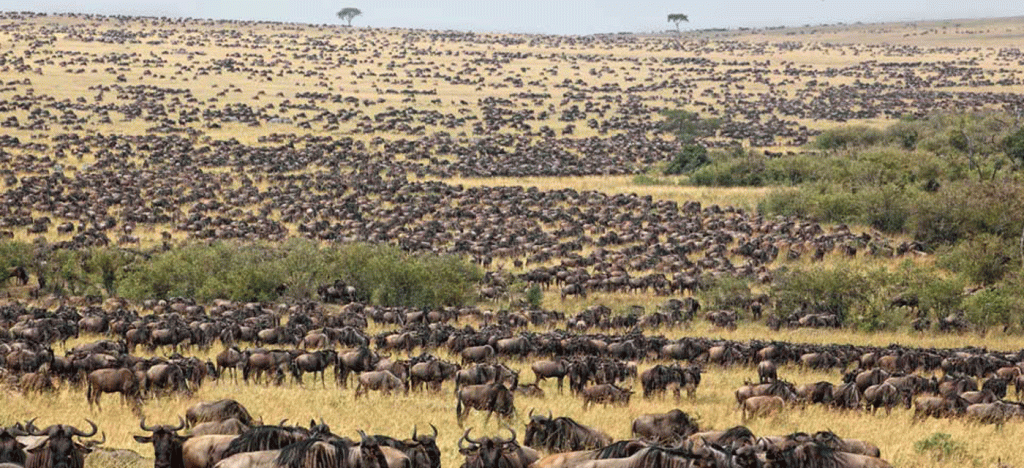
One of the first amazing facts about the Great Wildebeest Migration is its enormous scale. The migratory Serengeti-Mara population contains approximately 1.3 million wildebeest making it one of the greatest concentrations of migrating large mammals anywhere on Earth. The Convention on the Conservation of Migratory Species identifies the Serengeti-Mara migratory population as the largest of four major wildebeest populations in the broader ecosystem.
Imagine standing on a Serengeti plain and watching thousands of animals stretch toward the horizon. The herd can appear almost endless because individual animals merge into a moving mass across the grasslands. When the animals begin moving together their combined movement creates an unforgettable spectacle that combines sound, dust, motion and wildlife activity.
The scale becomes even more impressive when you include the zebra and gazelle that travel through the same ecosystem. These animals do not necessarily move in exactly the same formation or at precisely the same time but they participate in the broader seasonal movement created by changing resources.
The wildebeest population also plays an important ecological role because such a large number of grazing animals consumes enormous quantities of vegetation. Tanzania National Parks has reported that the western white-bearded wildebeest population can consume thousands of tonnes of grass each day.
This enormous grazing pressure helps shape the grassland. As wildebeest move they prevent vegetation from accumulating excessively in some areas while spreading nutrients through their waste. Their sheer abundance therefore transforms the migration from a simple animal journey into a major ecological force.
The Wildebeest Follow Rain and Fresh Grass
The migration does not happen because someone tells the wildebeest where to go. The animals respond to changing environmental conditions, especially rainfall and the availability of fresh grazing. Seasonal rain stimulates new grass growth, giving the herds access to the nutritious vegetation they need to survive and reproduce.
This connection between rainfall and movement explains why the migration never follows an absolutely predictable calendar. Rain can arrive earlier, later or in different amounts from one year to another. When the landscape changes, the animals respond. Instead of following an artificial schedule they follow the resources that nature provides.
During the wet season the southern Serengeti and surrounding short-grass plains can provide excellent grazing conditions. Females take advantage of these nutritious grasses during the calving period when they require substantial energy to produce milk and care for newborn calves. As the dry season develops, grass becomes less abundant or less nutritious in areas that previously supported large herds. The wildebeest gradually move toward areas that can provide better grazing and access to water.
Scientists studying wildebeest movement use modern technology including GPS tracking to understand how individual animals respond to environmental changes. Smithsonian researchers use movement data to investigate habitat connectivity and determine which areas remain important for the animals throughout the year.
This behavior makes the migration a powerful example of how animals respond to their environment. The wildebeest do not simply wander across Tanzania. Their movements connect rainfall, grass growth, water availability, reproduction, predator activity and seasonal changes across one enormous ecosystem.
The Migration Forms a Huge Annual Loop
Another fascinating fact is that the Great Migration does not simply travel from Tanzania to Kenya and stop there. The herds participate in a continuous seasonal movement through the Serengeti-Mara ecosystem. Over the course of the year they move through different areas as rainfall and grazing conditions change.
The southern Serengeti becomes especially important during the calving season. After the rains produce fresh grass, large numbers of pregnant females gather across the short-grass plains. As conditions change, the herds gradually move westward and then northward.
The Western Corridor becomes important as the animals search for new grazing. Later many herds continue toward the northern Serengeti and the Maasai Mara in Kenya, where water and grass can remain available during parts of the dry season.
The animals eventually turn south again when environmental conditions become favorable. This creates a broad circular movement rather than a one-way journey.
The exact route can change from year to year. Rainfall patterns determine where the animals find the best resources meaning one herd may remain in an area longer than expected while another moves earlier. This variability creates some of the excitement associated with a migration safari.
UNESCO describes the migration as an approximately 1,000-kilometer annual circular trek involving more than one million wildebeest and hundreds of thousands of other ungulates.
For visitors this means the migration can provide remarkable wildlife experiences throughout the year. The famous river crossings attract attention, but the migration also includes calving, grazing, breeding, predator encounters and long-distance movement across Tanzania’s spectacular landscapes.
Calving Season Creates One of the Most Incredible Wildlife Events
The calving season represents one of the most remarkable stages of the Great Wildebeest Migration. During the wet season, large numbers of females gather on the southern Serengeti plains and give birth when nutritious grass becomes available. This timing helps mothers obtain the energy they need while providing young calves with access to valuable food resources.
Tanzania National Parks reports that more than 250,000 wildebeest calves are born each year with a large proportion born during a concentrated period on the short-grass plains.
The concentration of births creates an extraordinary transformation across the plains. Instead of seeing only mature animals visitors can encounter huge numbers of newborn calves moving alongside their mothers. The young animals quickly become mobile which helps them keep pace with the constantly moving herd.
The timing also creates intense predator activity. Lions, cheetahs, hyenas and other predators recognize that large numbers of young animals provide feeding opportunities. As a result, the calving season can produce dramatic predator-prey interactions across the southern Serengeti.
However the calving season represents more than a dramatic tourism experience. It plays a fundamental role in maintaining the migration’s population. Successful reproduction allows the herd to replace animals lost through predation, disease, accidents and natural mortality.
Researchers have also investigated how wildebeest synchronize reproduction. Smithsonian scientists found evidence that male rutting calls can influence female reproductive timing helping explain how large numbers of females can become reproductively synchronized.
This remarkable reproductive strategy helps transform the southern Serengeti into a nursery for one of Africa’s greatest migrating herds.
Newborn Calves Become Mobile Remarkably Quickly
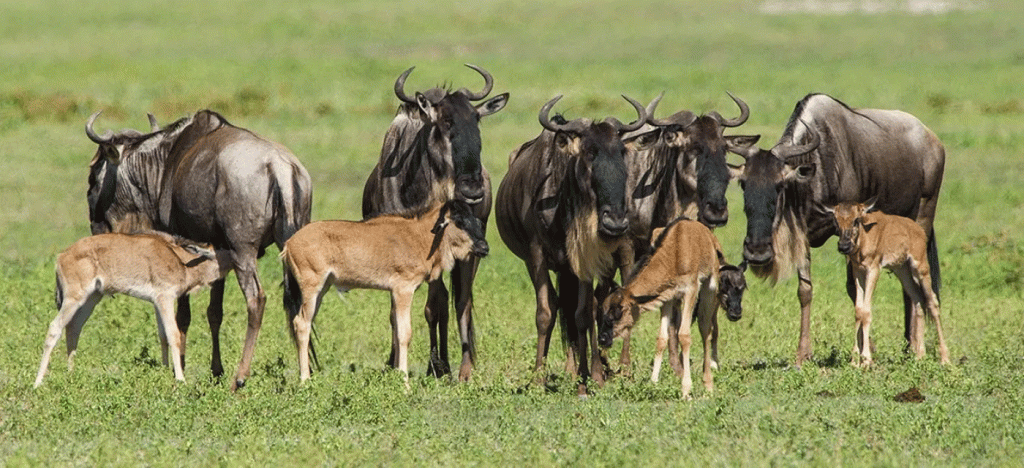
One of the most surprising facts about the migration involves the speed at which newborn wildebeest become mobile. Unlike many young mammals that remain dependent on hiding places for long periods wildebeest calves must become active quickly because their mothers continue moving with the herd.
Tanzania National Parks reports that newborn calves can become mobile within only a few minutes after birth and can keep up with the herd soon afterward.
This rapid development provides an important survival advantage. The migration constantly moves between feeding areas and mothers cannot remain stationary indefinitely. A calf that could not move would struggle to remain with its mother and the larger herd.
The first days of a calf’s life therefore involve an extraordinary combination of growth, movement, feeding and avoiding predators. The young animal must quickly recognize its mother, follow her movements and stay close to the herd.
The large number of calves also attracts predators. Lions, hyenas, cheetahs and other carnivores can exploit the abundance of inexperienced young animals. This creates one of the strongest examples of the relationship between reproduction and predation in the Serengeti.
Yet the presence of predators does not mean the calving season is simply a period of loss. The huge number of births ensures that enough young wildebeest survive to maintain the population.
Visitors who explore the southern Serengeti during the calving season can witness mothers caring for calves, herds feeding across green plains and predators searching for opportunities. These scenes demonstrate how closely reproduction, movement and survival connect within the ecosystem.
The remarkable speed of newborn calves also explains why the herd can continue its journey even after thousands of births occur across the plains.
River Crossings Are Dramatic but Not the Entire Migration
Many people associate the Great Migration almost exclusively with dramatic river crossings. These crossings can become spectacular wildlife moments particularly when large herds approach the Mara River in northern Serengeti and northern Tanzania. However, river crossings represent only one part of a much larger annual migration.
The herds spend many months grazing, calving, breeding, resting and traveling across the Serengeti. The river crossing becomes important when seasonal movements take the animals toward areas where they need access to new grazing and water.
The Mara River provides an important dry-season refuge. The Convention on Migratory Species identifies it as the only permanently flowing river in the Serengeti-Mara ecosystem and notes its importance to the migrating population.
When herds approach a river they may gather along the banks for considerable periods before moving. Individual animals can hesitate, change direction or follow others into the water. The result can create dramatic scenes as large groups suddenly begin moving.
The crossing also exposes the animals to genuine natural hazards. Strong currents, steep banks, exhaustion and predators can make river crossings dangerous. Crocodiles may wait in the water while lions and other predators can take advantage of animals that become separated from the herd.
For safari travelers patience becomes essential. A herd may remain near a river for hours or move away before crossing. No guide can guarantee the exact moment of a crossing because the animals make their own decisions.
Understanding this reality makes the experience even more meaningful. The Great Migration is not a scheduled performance. The animals determine what happens and visitors experience the natural event as it unfolds.
Wildebeest Are Essential to the Serengeti Ecosystem
The migration matters far beyond the wildebeest themselves. These animals act as ecological drivers across the Serengeti because their grazing, movement, reproduction and waste influence many other species.
Smithsonian researchers describe wildebeest as an ecological keystone species because they affect biodiversity, food webs, wildfire intensity, grassland structure and tree growth.
As the herds graze the y consume vegetation and alter the structure of the grassland. Their movement also distributes nutrients through dungreturning organic material to the soil. The grazing activity can influence which plants grow and how much vegetation remains available as fuel for fires.
Wildebeest also provide an important food source for predators. Lions, hyenas, cheetahs, crocodiles and other carnivores take advantage of the abundance of migrating herbivores. When large herds arrive in an area predators can respond to the increased availability of prey.
This creates a huge ecological network. Rain produces grass. Grass supports wildebeest. Wildebeest support predators and other scavengers. Their grazing changes vegetation while their waste returns nutrients to the soil. These interactions continue throughout the year.
The migration therefore represents much more than animals walking across a beautiful landscape. It functions as a moving ecological process that connects different parts of the Serengeti.
Scientists continue to study these relationships because changes in wildebeest numbers or migration routes could affect many other species. Protecting the migration consequently means protecting the broader ecosystem that depends on these seasonal movements.
This ecological importance explains why maintaining open migration corridors remains essential for the future of the Serengeti-Mara ecosystem.
Zebras and Gazelles Travel Alongside the Wildebeest
The Great Migration does not belong exclusively to wildebeest. Zebras and gazelles also participate in the wider seasonal movement across the Serengeti-Mara ecosystem. Their presence adds even more diversity to the enormous herds that travelers encounter during a safari.
Different herbivores use the grassland in different ways. Wildebeest often favor particular types of grass while zebras can feed on vegetation that has different characteristics. This creates opportunities for multiple grazing species to share the same ecosystem.
The movement of these herbivores also supports predators. When large numbers of prey animals gather together, lions, cheetahs, hyenas and other carnivores gain opportunities to hunt.
The combination of species creates some of the Serengeti’s most impressive wildlife scenes. A single landscape can contain thousands of wildebeest, zebra groups, gazelles, birds, predators and other animals.
Smithsonian research notes that wildebeest migration forms part of one of the last great terrestrial mammal migrations on Earth and that the animals move across thousands of kilometers during their lives.
The presence of several herbivore species also demonstrates how interconnected the Serengeti ecosystem is. Rainfall affects grass. Grass influences herbivore movement. Herbivore movement influences predator distribution. Predators, scavengers and decomposers then contribute to the wider food web.
For safari visitors this means that following the migration does not simply mean searching for wildebeest. It means entering a constantly changing ecosystem where many species interact.
A migration safari can therefore deliver much more than one famous wildlife sighting. The movement of wildebeest becomes the foundation for an entire chain of experiences across the Serengeti.
Predators Follow the Migration Too
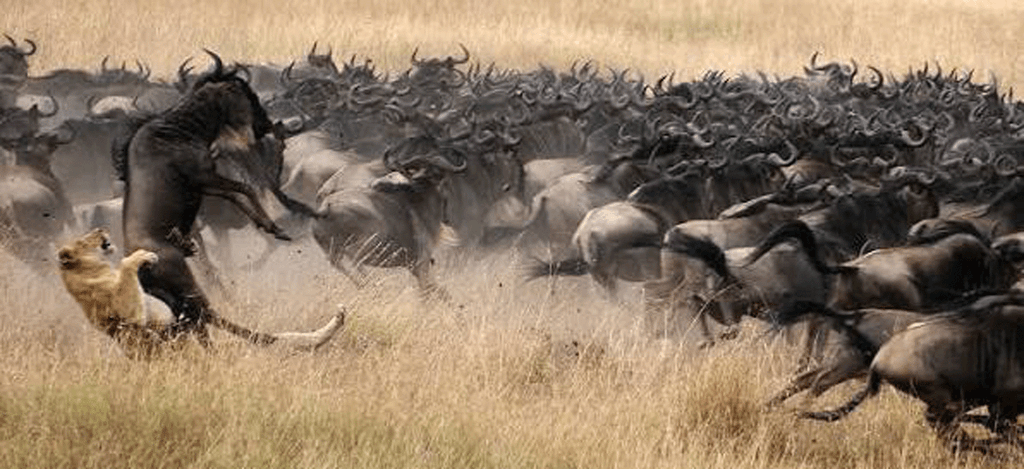
Where large numbers of herbivores gather predators often find opportunities. The Great Wildebeest Migration therefore creates seasonal changes in predator activity across different parts of the Serengeti.
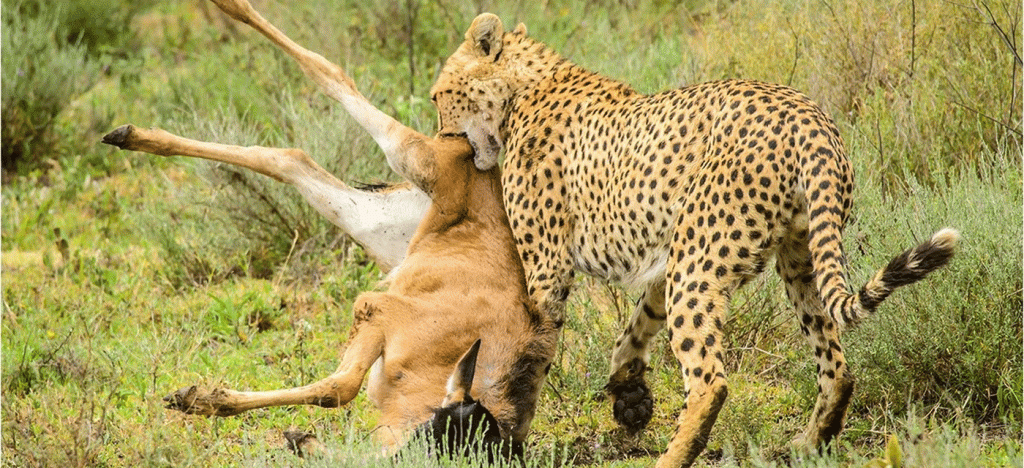
Lions, cheetahs, hyenas and crocodiles all interact with migrating wildebeest in different ways. Some predators hunt individuals on the plains while crocodiles can exploit animals attempting river crossings. Scavengers then benefit from remains left behind by successful hunts or natural deaths.
This predator-prey relationship creates a constantly changing wildlife drama. When wildebeest move into an area predators may encounter a greater concentration of potential prey. When the herds move away predators must adapt to other food sources or follow the changing distribution of prey.
The migration therefore influences where wildlife activity occurs throughout the ecosystem. Predators also play an important ecological role by removing vulnerable or weakened animals. This contributes to the natural functioning of the food web and demonstrates how every species participates in maintaining ecological balance.
During the calving season predators encounter particularly vulnerable young animals. During river crossings predators can encounter different opportunities. On open plains, lions and cheetahs may use different hunting strategies depending on vegetation and herd density.
For travelers these interactions can produce memorable sightings but the natural behavior of the animals remains unpredictable. A safari vehicle may spend hours watching a herd without witnessing a hunt while another vehicle may encounter intense predator activity unexpectedly.
That unpredictability forms an important part of the migration’s appeal. Nature does not follow a script and every day in the Serengeti can reveal a different relationship between predators and prey.
The Migration Crosses an International Border
The Great Wildebeest Migration is a transboundary natural phenomenon. The animals move between Tanzania and Kenya as part of their annual cycle crossing an international boundary without recognizing political borders. Most of the migration occurs within the Serengeti-Mara ecosystem which connects Tanzania’s Serengeti landscapes with Kenya’s Maasai Mara. UNESCO recognizes the migration as an annual circular journey spanning both countries.
From the animals’ perspective the border does not exist. They respond to rainfall, grass, water and environmental conditions. Their movement demonstrates why conservation cannot stop at political boundaries when wildlife depends on large connected ecosystems. The northern Serengeti becomes particularly important during the dry season. Some herds move toward the Mara River and continue into Kenya’s Maasai Mara, while others remain within Tanzania depending on local environmental conditions.
This international movement also creates opportunities for travelers to experience different landscapes during different parts of the year. Tanzania remains central to the migration because the southern and central Serengeti provide crucial breeding, feeding and movement areas.
Protecting the entire migration therefore requires cooperation across borders. Scientists and conservation organizations study movement patterns to understand which habitats and corridors remain essential to the animals.
The international nature of the migration also makes it a powerful symbol of the importance of connected wildlife landscapes. A wildebeest does not need a passport to follow the rain which reminds us that ecological systems operate according to nature rather than human boundaries.
The Migration Can Travel Hundreds of Kilometers Each Year
The Great Migration involves an enormous amount of movement. Sources describe the annual journey as roughly 800 to 1,000 kilometers depending on how the route is measured and the conditions experienced during a particular year. UNESCO describes the annual circular trek as approximately 1,000 kilometers.
The animals do not complete this journey in a straight line. They move across a large landscape, sometimes changing direction as rainfall and grazing conditions change. This means that migration should not be imagined as one enormous column traveling along one permanent road. Instead, herds spread across different areas, regroup, separate and change direction throughout the year.
Their movement demonstrates extraordinary endurance. Wildebeest must walk long distances while feeding, avoiding predators, reproducing and raising young. They also have to cope with heat, changing water availability and difficult terrain. The journey becomes particularly challenging when seasonal conditions change rapidly. Grass that provided excellent nutrition several weeks earlier may become less productive encouraging the herd to move.
Scientists continue to study how individual animals make movement decisions within such enormous groups. GPS tracking has helped researchers investigate where animals travel and how landscape changes can affect their routes. For travelers this long-distance movement creates opportunities to experience different regions of the Serengeti at different times of year. A visitor who returns during another season may encounter the same migration in a completely different landscape.
The journey’s scale demonstrates one of the most important truths about the migration: movement itself is essential to survival.
The Herds Can Cover the Landscape Like a Moving River
When thousands of wildebeest move together their collective behavior creates an extraordinary visual effect. From the ground the animals can appear to form a living river flowing across the plains. From a raised viewpoint the scale becomes even more impressive as the herd spreads across the landscape.
Historical observations describe enormous herds moving almost as a single mass with thousands of animals traveling together across the Serengeti. The animals do not move with perfect coordination yet their collective behavior creates a remarkably organized flow. Individuals respond to nearby animals, environmental conditions, predators and opportunities for grazing.
This collective movement helps explain why a migration sighting can feel completely different from an ordinary wildlife encounter. Seeing a few wildebeest grazing provides a glimpse of the species. Watching tens of thousands move across a plain reveals the scale of the ecosystem itself.
The sound can also become part of the experience. Thousands of hooves striking dry ground create a rhythmic atmosphere while the animals communicate through vocalizations and body movements. Dust can rise behind the herd especially during dry conditions. The combination of dust, movement, sound and enormous numbers can make the landscape appear almost alive.
Yet the herd remains composed of individual animals each responding to its own immediate environment. Mothers remain close to calves, groups form and separate and individuals constantly adjust their positions. This combination of individual behavior and collective movement makes the migration one of nature’s most fascinating examples of large-scale animal movement.
Wildebeest Migration Is Not Exactly the Same Every Year
A common misunderstanding about the Great Migration is that visitors can predict its exact location months in advance. In reality, the migration responds to environmental conditions so its timing and location can change from year to year. Rainfall represents one of the most important influences. If rain arrives early herds may move sooner. If rainfall delays they may remain in an area longer. If storms create fresh grass in an unexpected location some animals may change their route.
The Smithsonian describes wildebeest as animals that move to escape resource limitations and respond to seasonal availability of forage. This variability makes long-term migration planning different from visiting a fixed wildlife attraction. Travelers can choose a season associated with a particular migration stage but nature ultimately determines the exact experience.
For example travelers who visit the southern Serengeti during the typical calving period may find large concentrations of wildebeest and newborn calves. Travelers visiting northern Serengeti during the dry season may encounter herds around the Mara River region. However no responsible safari operator should promise an exact herd location weeks or months ahead.
This unpredictability actually protects the authenticity of the experience. The migration remains a natural phenomenon rather than a scheduled show. Experienced safari guides monitor local conditions, recent sightings, animal movements and seasonal patterns to improve the chances of finding the herds. Even with careful planning, however wildlife always retains the final decision.
The best migration experience therefore combines preparation with flexibility.
The Serengeti Landscape Helps Make the Migration Possible
The Great Migration depends on a huge and varied landscape. The Serengeti includes open grasslands, woodlands, rivers, rocky kopjes, seasonal water sources and different soil types. Each environment provides different resources at different times of the year. UNESCO identifies rainfall, temperature, topography, geology, soils and drainage systems as important factors that contribute to the Serengeti’s variety of habitats.
The southern short-grass plains provide important grazing and calving areas. Other regions provide longer grass, woodland, permanent water or dry-season refuge. The animals move between these environments according to seasonal conditions. This habitat diversity makes the Serengeti more than a single type of grassland. It functions as a connected ecological system where different areas become important at different times.
The migration demonstrates why protecting individual wildlife locations is not enough. Animals need access to the complete network of habitats that supports them throughout the year. A wildebeest may feed in one location during the wet season and travel hundreds of kilometers to find suitable conditions during the dry season. If the animals cannot move between these areas, they may lose access to critical resources.
Researchers therefore place considerable importance on habitat connectivity. Smithsonian scientists use tracking technology to identify important movement corridors and understand how landscape changes influence wildebeest behavior. The Serengeti’s open landscape allows the migration to continue on a remarkable scale. Protecting that openness remains fundamental to maintaining the ecological processes that make the migration possible.
The Migration Has Survived Major Environmental Changes
The Great Migration has a long ecological history and its present form reflects generations of interaction between wildlife, vegetation, climate and human activity. Historical research shows that wildebeest numbers have changed significantly over time. Smithsonian reporting describes a dramatic increase from relatively low numbers during the 1960s to more than one million animals later in the twentieth century.
These changes demonstrate that wildlife populations can respond strongly to environmental and conservation conditions. The migration also faces modern pressures. Human development can fragment landscapes, while fences and other barriers can interfere with traditional movement routes. Smithsonian researchers have documented concerns about how barriers can alter seasonal movements and reduce habitat connectivity.
Because wildebeest depend on movement, restricting access to important grazing and water areas can create significant ecological consequences. Conservation therefore focuses not only on protecting individual animals but also on preserving the landscapes through which they travel.
The Serengeti-Mara ecosystem demonstrates the importance of maintaining large connected habitats. When animals can move naturally they can respond to changing rainfall and food availability. When people divide landscapes with barriers animals may lose access to resources that once supported them. The survival of the migration depends on continuing conservation efforts across Tanzania and Kenya.
This makes every migration sighting more meaningful. Visitors are not simply watching animals move through a beautiful landscape. They are witnessing an ecological process that depends on the continued protection of one of Africa’s great connected wildlife ecosystems.
Wildebeest Have a Powerful Influence on Grassland Health
Wildebeest do not simply consume grass their grazing can influence the entire structure of the savanna. Scientists describe them as a keystone species because their presence affects vegetation, biodiversity, fire regimes, food webs and other ecological processes. As wildebeest graze they reduce vegetation in areas where large herds concentrate. This can influence how much plant material remains available as fuel for fires. Their grazing also creates opportunities for other plant species and herbivores.
Their dung returns nutrients to the soil. As microorganisms and insects break down this organic material, nutrients re-enter the ecosystem and support future plant growth. The migration therefore creates a moving cycle of consumption and renewal. Animals feed on grass, process nutrients, move onward and leave behind material that contributes to soil fertility.
This relationship demonstrates why the migration cannot be separated from the Serengeti’s grasslands. The animals depend on the ecosystem but they also help shape it. The same principle applies to predators. Large numbers of wildebeest provide food for carnivores and scavengers which then contribute to other parts of the food web.
Scientists continue to investigate these connections because understanding the ecological role of wildebeest can help conservationists protect the broader ecosystem. For visitors, the lesson is simple the Great Migration is not just about watching animals travel. Every hoofstep contributes to a much larger natural process.
The herds act as moving ecological engineers, constantly interacting with vegetation, soil, predators, prey, insects, birds and other organisms across the Serengeti.
The Migration Supports Thousands of Other Wildlife Interactions
Where the wildebeest move other animals respond. Birds follow grazing herds because insects and disturbed vegetation can provide feeding opportunities. Predators track prey concentrations. Scavengers search areas where animals have died. Other herbivores may share grazing landscapes.
This creates a constantly changing network of wildlife interactions. The migration also contributes to the Serengeti’s tourism economy. Smithsonian research notes that wildebeest play an important role in supporting tourism in Tanzania and Kenya. Tourism brings visitors who want to experience the migration but the ecological importance of the event extends far beyond tourism. The movement of the herds supports biological relationships that operate throughout the ecosystem.
For safari travelers this means a migration trip can include much more than wildebeest. A single day may reveal zebra, gazelle, elephants, giraffes, lions, cheetahs, hyenas, birds of prey, crocodiles and many smaller species.
The migration can therefore function as a gateway into the broader Serengeti ecosystem. A traveler who arrives expecting to see only river crossings may discover that the most memorable moment comes from something completely different: a huge herd crossing an open plain, a mother staying close to her calf, lions watching from a kopje or thousands of animals gathering near water. These experiences demonstrate how one ecological event can influence an enormous variety of wildlife.
The migration’s greatest power may therefore lie not in one spectacular moment but in the countless interactions it creates across the Serengeti throughout the year.
Every Migration Season Offers a Different Experience
The Great Migration changes character as the year progresses. The southern plains can provide spectacular calving experiences while the Western Corridor can offer encounters with large moving herds. Northern Serengeti can become particularly important during the dry season especially around the Mara River.
Because rainfall influences the animals’ movements no two seasons are completely identical.
The calving period can produce intense wildlife activity because thousands of newborn animals appear across the plains. Later the herds move toward areas where they can continue finding suitable grazing. During the northern phase travelers may encounter enormous groups preparing to cross rivers. The famous crossings can create extraordinary wildlife scenes but they remain unpredictable because the animals determine when and where they cross.
Eventually, the cycle turns southward again. This seasonal variation means travelers can choose a safari period according to the type of experience they want to pursue. Those interested in newborn calves may focus on the southern Serengeti during the calving season. Those fascinated by river crossings may consider the northern Serengeti during the period when herds commonly reach the Mara River region.
However visitors should always understand that these are seasonal patterns rather than guarantees. The migration follows nature not tourism schedules.
That unpredictability gives every safari its own character. A traveler can return to the Serengeti several times and experience completely different scenes because rainfall, herd distribution, predator behavior and local conditions continually change.
The Migration Is One of the Last Great Terrestrial Mammal Journeys
Scientists describe the Serengeti-Mara wildebeest movement as one of the last great terrestrial mammal migrations on Earth. Smithsonian research emphasizes that wildebeest undertake extraordinary long-distance movements while scientists continue to study exactly how individuals navigate and respond to their changing environment.
Modern landscapes have become increasingly fragmented in many parts of the world. Roads, settlements, fences, agriculture and other developments can restrict wildlife movement. Migratory animals face particular challenges because they need access to multiple habitats rather than one protected area. The Serengeti-Mara ecosystem remains exceptional because it still supports large-scale seasonal movement across a vast connected landscape.
The migration therefore provides scientists with an opportunity to study natural animal movement on an enormous scale. GPS collars, aerial observations, historical records and ecological surveys help researchers understand where animals travel and how they respond to environmental changes.
These studies also help conservationists identify important corridors and areas that require protection. For travelers, witnessing this migration offers something increasingly rare the opportunity to observe a major wildlife population moving across a landscape according to natural environmental rhythms.
The spectacle feels ancient because its basic ecological logic is simple. Rain produces grass. Grass supports herbivores. Herbivores move when resources change. Predators follow prey. Nutrients return to the soil. Yet behind that simplicity lies an extraordinarily complex ecosystem that scientists continue to investigate.
The Great Migration Is a Story of Survival, Movement and Renewal
Perhaps the most amazing fact about the Great Wildebeest Migration is that it combines nearly every major element of wildlife survival into one enormous annual cycle. The animals search for food and water. Females give birth. Calves learn to move. Predators hunt. Herds cross rivers. Grasslands recover. Nutrients return to the soil. Rain changes the landscape. The animals respond and begin moving again.
The entire process creates a cycle of survival and renewal. The migration also demonstrates the importance of ecological connectivity. Wildebeest need access to different habitats at different times and the health of those habitats influences their ability to survive.
Researchers continue to study the migration because understanding how these animals respond to environmental change can help protect them and the ecosystems they influence. Smithsonian conservation programs use GPS tracking and other technologies to study movement and identify important habitats and corridors.
For anyone planning a Tanzania safari the migration provides an opportunity to experience this extraordinary process firsthand. Whether you witness newborn calves in the southern Serengeti, massive herds crossing the plains, predators following the herds or seasonal movement in northern Tanzania, every encounter forms part of the same remarkable story.
The Great Migration reminds us that wildlife does not exist in isolated moments. Animals, landscapes, rainfall, vegetation, predators and people all connect within one living system. That connection makes the Serengeti migration much more than a spectacular safari attraction. It is one of the world’s great examples of nature operating at an immense scale.
Frequently Asked Questions About the Great Wildebeest Migration in Tanzania
1. How many wildebeest take part in the Great Migration?
Approximately 1.3 million wildebeest participate in the Serengeti-Mara migration, making it one of the largest concentrations of migrating large mammals on Earth.
2. Why do wildebeest migrate in Tanzania?
Wildebeest migrate mainly in response to seasonal rainfall, fresh grass and water availability. Their movements help them find nutritious grazing and suitable conditions for survival and reproduction.
3. Does the Great Migration happen only in Tanzania?
No. The Great Migration is a transboundary movement between Tanzania and Kenya. The herds move through the Serengeti-Mara ecosystem according to seasonal environmental conditions.
4. How far do wildebeest travel during the Great Migration?
The annual journey covers roughly 800 to 1,000 kilometers, although the exact distance varies depending on how the route is measured and environmental conditions each year.
5. When is the wildebeest calving season?
Calving occurs during the wet season, when large numbers of females gather on the southern Serengeti plains where fresh, nutritious grass is available.
6. How many wildebeest calves are born each year?
Tanzania National Parks reports that more than 250,000 wildebeest calves are born each year, with many births occurring during a concentrated period on the short-grass plains.
7. How quickly can newborn wildebeest calves walk?
Newborn wildebeest calves can become mobile within only a few minutes after birth and can keep up with the herd soon afterward.
8. Are river crossings the main part of the Great Migration?
No. River crossings are only one stage of the migration. The annual cycle also includes calving, grazing, breeding, predator interactions and long-distance movement across the Serengeti.
9. Which predators follow the wildebeest migration?
Lions, cheetahs, hyenas and crocodiles interact with migrating wildebeest. Predators can take advantage of large concentrations of prey, particularly during calving and river-crossing periods.
10. Do zebras and gazelles join the Great Migration?
Yes. Zebras and gazelles participate in the wider seasonal movement through the Serengeti-Mara ecosystem alongside wildebeest.
11. Is the Great Migration exactly the same every year?
No. The timing and location can change because rainfall, grass availability, water and other environmental conditions vary from year to year.
12. What is the best time to see the Great Wildebeest Migration in Tanzania?
The best period depends on the experience you want. The southern Serengeti is associated with calving, while the northern Serengeti becomes important during the dry season and the period when herds may reach the Mara River. Exact timing can vary each year.
13. Why is the Great Migration important to the Serengeti ecosystem?
Wildebeest influence grassland structure, nutrient cycling, food webs, biodiversity and fire patterns. Their movement also provides food for predators and supports numerous ecological interactions.
14. Can travelers see the Great Migration throughout the year?
Yes. Different stages occur in different areas throughout the year, including calving, grazing, breeding, river crossings and the return movement. However, wildlife locations and timing remain dependent on environmental conditions.
15. Can Serengeti Travels help travelers experience the Great Migration?
Yes. Serengeti Travels provides Tanzania safari journeys designed to connect travelers with the landscapes, wildlife and seasonal movements associated with the Great Wildebeest Migration.
Conclusion
The Amazing Facts About the Great Wildebeest Migration in Tanzania reveal why this annual phenomenon continues to fascinate travelers, scientists, photographers and conservationists around the world. More than one million wildebeest move through the Serengeti-Mara ecosystem, responding to rainfall, fresh grass, water availability, breeding opportunities and seasonal environmental changes.
The migration includes far more than the famous river crossings. It encompasses calving on the southern plains, long-distance movement through the Serengeti, grazing across changing landscapes, predator interactions, breeding and the return journey that completes the annual cycle.
Most importantly the migration demonstrates how deeply animals connect with their environment. Wildebeest depend on grasslands but their grazing also influences those grasslands. Predators depend on wildebeest, while scavengers and other wildlife benefit from the wider food web. Rainfall influences grass growth, grass influences movement and movement shapes the entire ecosystem.
For travelers seeking an unforgettable Tanzania safari the Great Migration offers extraordinary possibilities throughout the year. The exact experience depends on seasonal conditions but every stage provides its own remarkable wildlife story. From the first newborn calf standing on the southern plains to enormous herds moving across the northern Serengeti the migration showcases nature at its most powerful, unpredictable and interconnected.
A journey into the Serengeti is therefore not simply a search for wildlife. It is an opportunity to witness one of Earth’s greatest natural movements and understand why protecting the Serengeti-Mara ecosystem remains so important for generations to come. Serengeti Travels helps travelers experience this remarkable natural spectacle through carefully planned Tanzania safari journeys, connecting visitors with the landscapes, wildlife and seasonal movements that make the Great Wildebeest Migration truly unforgettable.