 English
 Deutsch
 Italia
October 21, 2025
Serengeti Airports and Airstrips: Complete Guide for Safari Travelers
Introduction
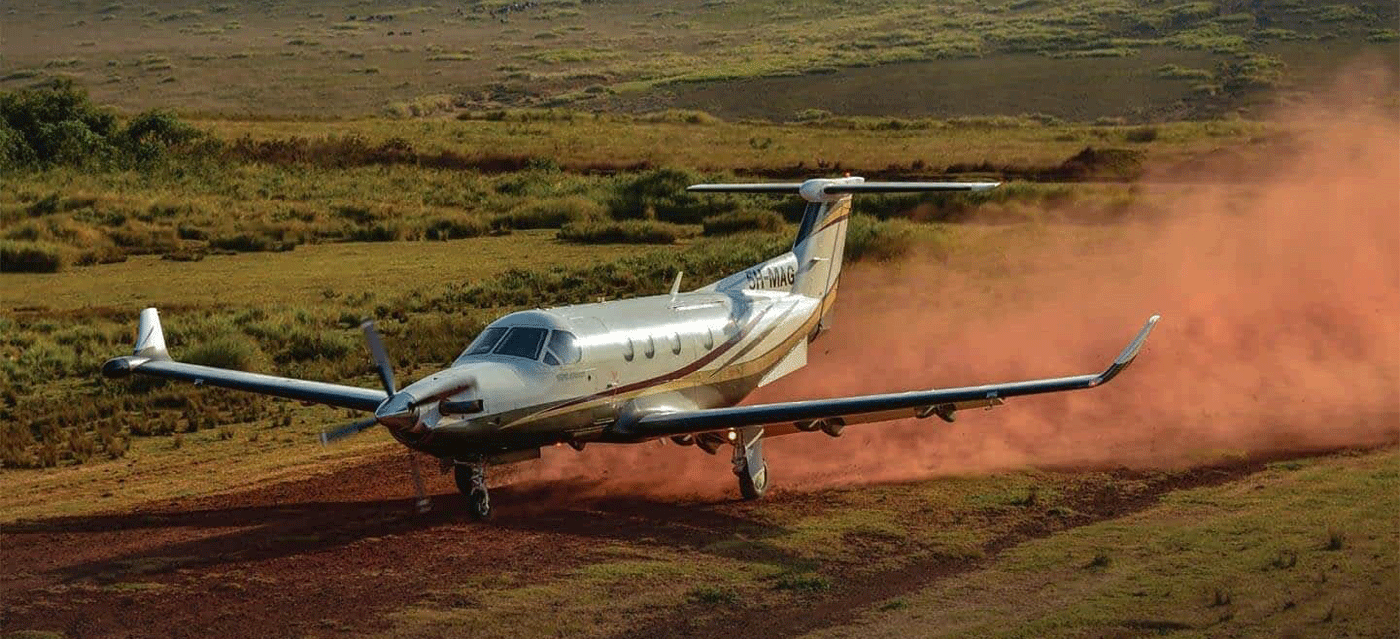
Serengeti Airports and Airstrips: Complete Guide for Safari Travelers gives you everything you need to understand how air travel connects you with Tanzania’s most famous wildlife destination. The Serengeti covers an enormous area so flying provides one of the fastest and most convenient ways to reach different safari regions. Instead of spending many hours traveling by road from Arusha or another northern Tanzania destination, you can board a small safari aircraft and land close to your lodge or camp. From there, your guide can collect you and begin your wildlife adventure almost immediately.
Many travelers refer to the Serengeti’s aviation facilities as airports but most actually function as small bush airstrips. These facilities do not resemble major international airports. You will usually find a simple runway, a small waiting area and safari vehicles rather than large terminals, baggage carousels, restaurants and multiple airport services. This simple setup allows aircraft to reach remote parts of the ecosystem where conventional airports would not operate efficiently.
Serengeti National Park has several important airstrips distributed across different regions. Seronera serves the central Serengeti, while Kogatende and Lamai provide access to the north. Ndutu serves the southern Serengeti and surrounding migration areas, while Lobo provides access to the eastern sector. Western destinations include airstrips such as Fort Ikoma, Grumeti and other private or lodge-related landing areas.
Choosing the right airstrip depends mainly on your accommodation, safari route, travel dates and wildlife interests. When you understand how these airstrips work you can plan a fly-in safari that reduces unnecessary driving and gives you more time to experience Serengeti wildlife, landscapes and seasonal events.
Table of contents
- Introduction
- What is the main airport in the Serengeti?
- How many airstrips are in the Serengeti?
- What is the difference between a Serengeti airport and an airstrip?
- Which airstrip is best for the central Serengeti?
- Which airstrip should I use for northern Serengeti?
- Which airstrip is best for the Serengeti calving season?
- Can I fly directly to the Serengeti from Zanzibar?
- How much does it cost to fly to the Serengeti?
- What happens after landing at a Serengeti airstrip?
- What luggage can I take on a Serengeti flight?
- Is flying or driving better for reaching the Serengeti?
- Can I fly between different Serengeti airstrips?
- What is the best way to choose a Serengeti airstrip?
- Conclusion
What Is the Difference Between a Serengeti Airport and an Airstrip?
The terms airport and airstrip often appear together when travelers search for flights into the Serengeti but they describe different types of aviation facilities. An airport generally provides larger infrastructure for passenger and aircraft operations while an airstrip usually refers to a smaller runway designed for aircraft operating in remote locations. In the Serengeti, most safari travelers use bush airstrips rather than conventional airports.
A typical Serengeti airstrip provides a runway where small safari aircraft can land and take off. You may not find a large terminal building or extensive passenger facilities. Instead you normally leave the aircraft near the runway and meet your guide or lodge representative. Your safari vehicle then takes you toward your accommodation or begins your game drive.
Seronera represents one of the most important aviation gateways in the Serengeti and often appears in flight schedules as Seronera Airstrip. Other airstrips serve specific geographical areas and accommodation zones. Kogatende and Lamai provide access to northern Serengeti, Ndutu serves the southern area and Lobo connects travelers with the eastern part of the park.
This distinction matters because booking a flight to “Serengeti” does not always mean that the aircraft will land at one central airport. Your ticket normally specifies a particular airstrip. That airstrip should match the location of your camp or lodge.
Understanding this difference can prevent unnecessary transfers. If you book accommodation in northern Serengeti but fly into a central airstrip you may spend several additional hours traveling by vehicle. Choosing the appropriate airstrip can make your safari more efficient and allow you to spend more time enjoying the wilderness.
Main Serengeti Airports and Airstrips
The Serengeti contains a network of airstrips that allows safari aircraft to connect travelers with different parts of the ecosystem. This network makes it possible to reach remote camps without depending entirely on long road journeys. Each airstrip serves a particular geographical area although some destinations may support several nearby camps and lodges.
Seronera functions as one of the most important central gateways. Travelers staying around the Seronera Valley and central Serengeti commonly use this airstrip. Northern Serengeti has Kogatende and Lamai which provide access to camps around the Mara River and northern plains. Lobo provides access to the eastern Serengeti while Ndutu serves the southern Serengeti and the wider Ndutu ecosystem.
The western Serengeti has additional aviation points, including Fort Ikoma, Grumeti and private lodge-related airstrips. These locations can significantly reduce road transfers for travelers staying in western camps and conservation areas.
The air network also allows travelers to move between different safari regions. Instead of returning to Arusha after exploring one part of the Serengeti you can sometimes fly from one airstrip to another. This option works particularly well for longer itineraries that combine northern, central, southern or western Serengeti.
Your safari operator should select the most practical airstrip based on your accommodation. Two camps that both advertise themselves as “Serengeti” properties can sit many hours apart by road. Choosing the correct landing point therefore becomes an important part of itinerary planning.
Before booking, confirm the exact airstrip, flight routing, transfer arrangements, baggage allowance and accommodation location. These details help you avoid unnecessary transfers and create a smoother safari experience.
Seronera Airstrip: The Central Serengeti Gateway
Seronera Airstrip provides one of the most important aviation gateways into Serengeti National Park. Its central location makes it particularly convenient for travelers who want to explore the Seronera Valley and surrounding central Serengeti landscapes. The area supports a wide range of camps and lodges making Seronera one of the most frequently used landing points for safari travelers.
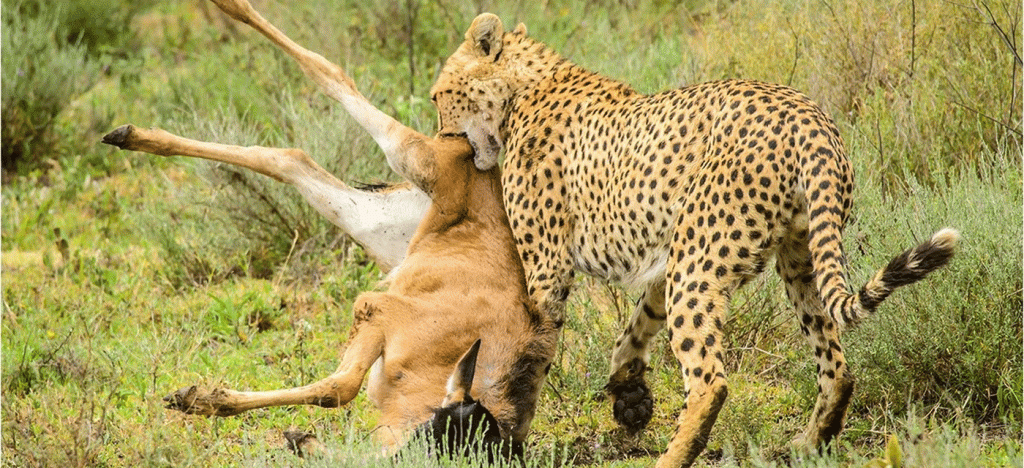
The central Serengeti offers wildlife viewing throughout the year which makes Seronera useful for travelers visiting in different seasons. The area contains open grasslands, rocky kopjes, river systems and woodland habitats that support large numbers of wildlife. Lions, leopards, cheetahs, elephants, giraffes, buffaloes, zebras, wildebeest and many other species live throughout this region.
Flying into Seronera can save considerable time compared with driving from Arusha. After your aircraft lands your safari guide can meet you and begin the transfer to your accommodation. Depending on the location of your camp and arrival time your first game drive can sometimes begin immediately after landing.
Seronera also works well as a connecting point for travelers who want to explore different Serengeti regions. You can arrive in central Serengeti, spend several nights exploring the area and then continue toward northern or southern regions by road or aircraft.
The exact flight schedule depends on your travel date and airline. Safari flights may also make intermediate stops before reaching Seronera. You should therefore check the complete itinerary rather than assuming that every flight operates nonstop.
When booking your safari provide the exact name of your accommodation. Your operator can then determine whether Seronera represents the most convenient airstrip and arrange the appropriate vehicle transfer.
Kogatende Airstrip: Gateway to Northern Serengeti
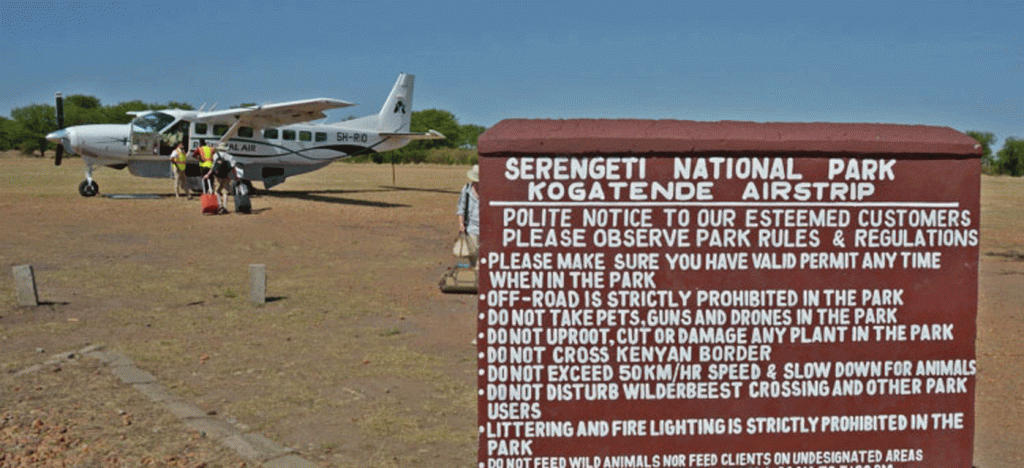
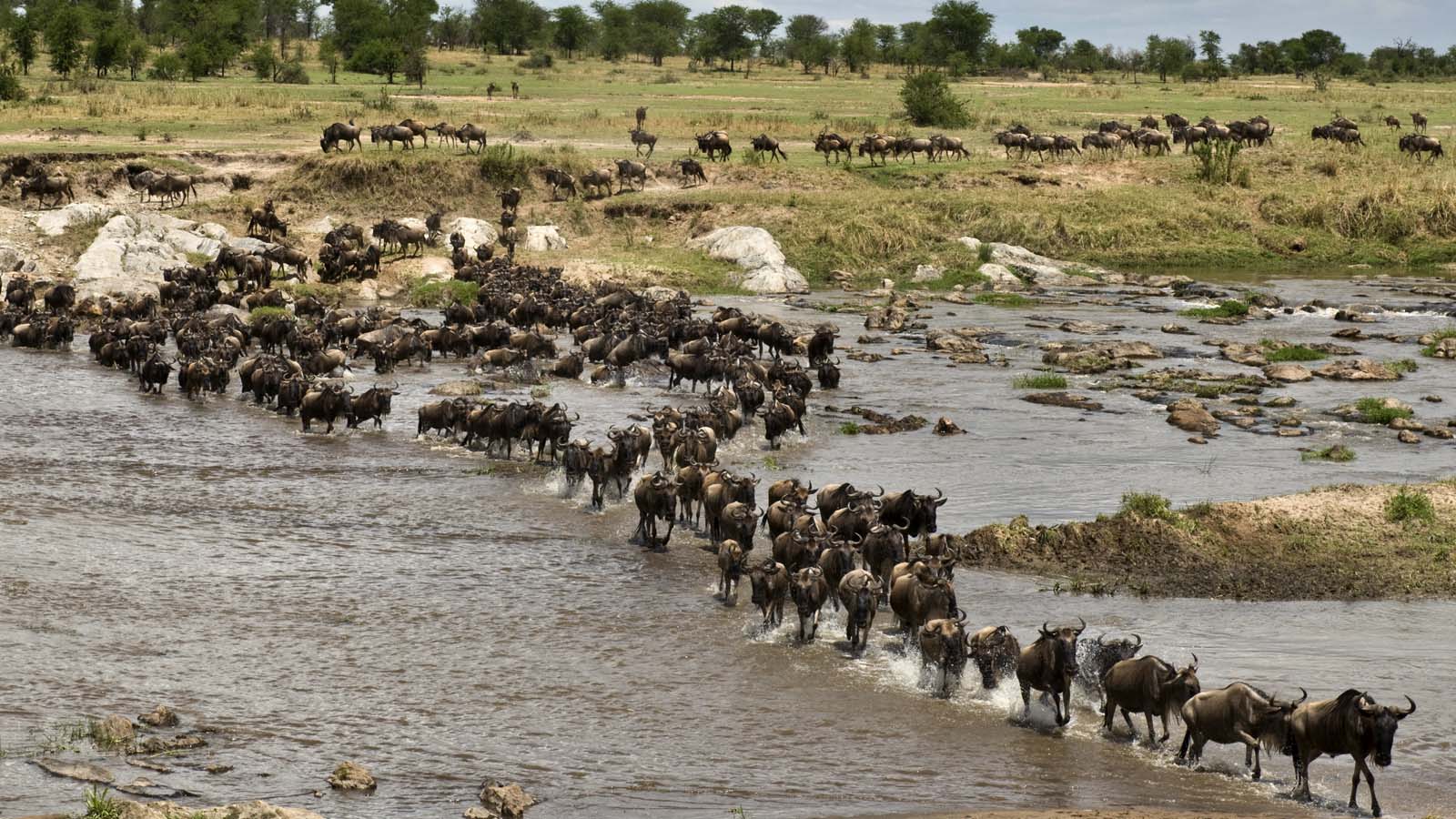
Kogatende Airstrip provides an important gateway into northern Serengeti. The airstrip serves travelers staying around the northern plains and Mara River region and becomes particularly useful for safari itineraries focused on the Great Wildebeest Migration during the months when large herds move through the northern Serengeti.
Northern Serengeti offers a different atmosphere from the central region. The landscape contains open plains, rocky areas, woodland and river environments. The Mara River provides one of the most recognizable features of the northern ecosystem while seasonal wildlife movements can create exceptional safari opportunities.
Flying into Kogatende can significantly reduce travel time. A road journey from central Serengeti toward the far north can consume several hours especially when road conditions require slower travel. A flight places you much closer to your northern accommodation.
After landing your guide or camp representative normally meets you at the airstrip. You can then continue toward your lodge or start a game drive. The distance between Kogatende and your camp depends on the property’s location.
Kogatende works particularly well for travelers who want to focus their itinerary around northern Serengeti. However you should not assume that the Great Migration will appear at Kogatende simply because you travel during migration season. Wildebeest movements respond to rainfall, fresh grass, water availability and other environmental factors.
Your safari operator can help you choose between Kogatende and Lamai according to your accommodation and planned activities. Both airstrips provide access to the northern region but the most convenient option depends on your exact camp location.
Lamai Airstrip: Access to Northernmost Serengeti
Lamai Airstrip provides another important gateway to northern Serengeti. The airstrip serves travelers staying around the Lamai area and offers convenient access to camps positioned close to the northern boundary of the Serengeti ecosystem.
The location becomes particularly useful for travelers who want to explore northern wildlife areas without spending a large portion of their safari driving from central Serengeti. Instead the aircraft brings you closer to your accommodation allowing your safari vehicle to concentrate more time on wildlife viewing.
Lamai also provides access to areas around the Mara River where seasonal wildlife movements can create dramatic safari experiences. During parts of the migration cycle, large numbers of wildebeest and other animals move through the northern Serengeti. However migration locations change constantly so your itinerary should focus on the wider ecosystem rather than expecting animals to remain at one specific location.
The correct airstrip depends heavily on your accommodation. Some northern camps may find Lamai more convenient while others may work better with Kogatende. Your safari operator should check the actual driving distance and available flight schedules before confirming your booking.
Lamai also works well for travelers who want a quieter safari experience. Northern Serengeti generally receives fewer visitors than some central areas and its remote location creates a strong sense of wilderness.
After landing you normally meet your safari representative near the airstrip. The transfer can then take you directly toward your camp or begin a game drive depending on your itinerary and arrival time.
If you plan a northern Serengeti safari provide your exact accommodation details when booking your flight. This information allows the airline and safari operator to select the most practical landing point.
Lobo Airstrip: Gateway to Eastern Serengeti
Lobo Airstrip provides access to the eastern part of Serengeti National Park and serves travelers staying around the Lobo region. The airstrip offers another example of how the Serengeti aviation network reduces long road journeys between remote safari areas.
The Lobo region provides diverse habitats and supports a variety of wildlife. Travelers can explore open plains, rocky landscapes and woodland areas while searching for large mammals and predators. The region also provides opportunities for travelers who want to experience a less concentrated safari environment away from the busiest central areas.
Flying into Lobo can make sense when your accommodation sits nearby. Instead of landing at Seronera and spending several hours driving east you can arrive much closer to your camp. This approach gives you more time for game viewing and reduces unnecessary transfers.
Lobo can also form part of a multi-region safari. You may arrive through one Serengeti airstrip, explore one region and then fly or drive toward Lobo. The exact possibilities depend on the airline schedule and your safari itinerary.
As with other Serengeti airstrips your accommodation should determine your choice. Do not select Lobo simply because it appears on a map. Ask your safari operator to confirm the current flight schedule, road-transfer distance and operational suitability.
The small size of bush airstrips also means that travelers should expect a simple arrival experience. You will normally leave the aircraft, collect your luggage and meet your safari representative rather than entering a large terminal.
Lobo therefore works best as part of a carefully coordinated safari itinerary. When your accommodation lies in the eastern Serengeti the airstrip can provide a practical way to reduce road travel and maximize your wildlife-viewing time.
Ndutu Airstrip: Gateway to the Southern Serengeti
Ndutu Airstrip provides convenient access to the southern Serengeti and the wider Ndutu ecosystem. Travelers often choose this area when they want to experience the Great Wildebeest Migration during the calving season, particularly around January, February and March.
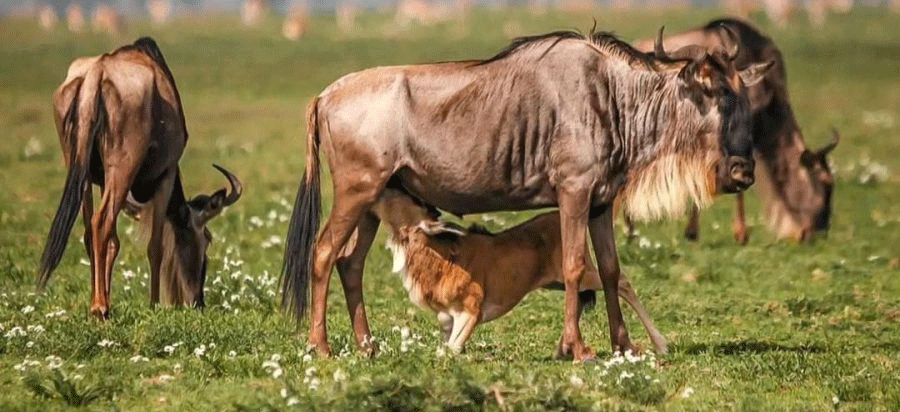
The southern Serengeti contains expansive short-grass plains that attract large numbers of wildebeest when seasonal conditions support fresh grazing. During the calving period the area can provide opportunities to observe newborn animals and increased predator activity. However natural conditions determine exactly where wildlife gathers so travelers should treat migration locations as dynamic rather than fixed.
Flying into Ndutu can save significant travel time. Instead of driving from Arusha or central Serengeti you can land closer to the southern safari area and begin exploring almost immediately.
Several camps operate around the Ndutu ecosystem and your accommodation location should determine the most convenient landing point. Your safari operator can coordinate the airstrip, camp transfer, game drives and onward travel.
Ndutu also works well for travelers who want to combine southern Serengeti with Ngorongoro Conservation Area. Depending on your itinerary you can explore Ndutu before continuing toward the Ngorongoro Crater or other northern Tanzania destinations.
The southern Serengeti remains a dynamic environment. Rainfall influences grass growth, water availability, and wildlife movements, so you should avoid expecting a specific animal concentration at a particular location simply because you visit during a recognized migration period.
A fly-in safari toward Ndutu works best when your operator combines current wildlife information with your accommodation and flight schedule. This approach allows you to maximize your time in the southern ecosystem while minimizing unnecessary road travel.
Fort Ikoma, Grumeti and Western Serengeti Airstrips
Western Serengeti contains several airstrips that serve safari camps, lodges and conservation areas. Fort Ikoma, Grumeti and Singita-related landing points provide access to western destinations without requiring travelers to travel from central Serengeti by road.
The western Serengeti offers a distinctive safari environment. The landscape includes grasslands, woodland, rivers and areas surrounding the Grumeti River. Wildlife viewing can remain excellent throughout the year while seasonal movements can bring additional concentrations of animals into different parts of the region.
Flying directly toward the western Serengeti can make your itinerary more efficient. Travelers staying near Fort Ikoma, Grumeti or private conservation areas can avoid long road transfers from Seronera.
The correct airstrip depends on your accommodation. Private lodges and camps may use specific landing areas that operate according to their own access arrangements. Your safari operator should therefore confirm the correct airstrip before booking the flight.
Western Serengeti airstrips also provide useful options for travelers who want to combine national park experiences with private conservation areas. These itineraries can create different safari experiences while reducing the need to return to Arusha between each stage.
When you fly into the western Serengeti your guide or lodge representative normally meets you at the landing area. From there you continue by safari vehicle toward your camp or begin your game drive.
Because western Serengeti destinations can sit far from central Seronera selecting the correct airstrip becomes especially important. A well-planned flight can reduce transfer time and give you more hours to explore.
If your itinerary includes western Serengeti, ask your operator to confirm the exact landing point, transfer duration, baggage requirements and onward flight arrangements before finalizing your booking.
How Serengeti Safari Flights Work
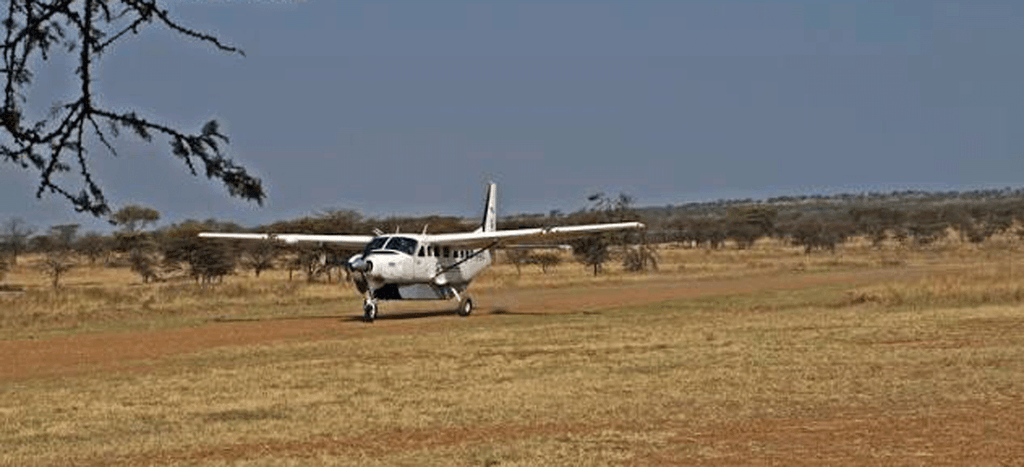
Serengeti safari flights operate differently from international flights. Small aircraft connect remote airstrips across the ecosystem often carrying a relatively small number of passengers. Instead of operating like large commercial airlines with fixed nonstop routes between major airports safari airlines may make several stops to collect and deliver passengers.
Your flight may therefore include intermediate airstrips before reaching your final destination. This system allows airlines to connect several camps and safari regions efficiently.
You normally check in before departure at the airport or airstrip. The airline determines the required check-in time so you should follow the instructions provided with your booking. After check-in the aircraft crew manages the boarding process.
When you arrive in the Serengeti you normally step directly onto the airstrip rather than entering a conventional terminal. Your guide or lodge representative usually waits nearby. After collecting your luggage you continue by safari vehicle.
Your arrival time can influence the rest of your safari day. If you land early, your guide may take you on a game drive before lunch. If you arrive later you may transfer directly to camp and begin wildlife viewing the following morning.
Safari flights can also connect different destinations within Tanzania. Depending on the schedule, you may fly from Arusha, Zanzibar, Dar es Salaam, Kilimanjaro, Mwanza or another safari destination toward the Serengeti.
Because flight schedules can change travelers should confirm their exact departure time shortly before travel. Weather, aircraft operations, passenger numbers and seasonal schedules can influence aviation arrangements.
Your safari operator can coordinate your flights with accommodation and ground transfers so that each part of the journey connects smoothly.
Baggage Rules for Serengeti Flights
Baggage planning becomes particularly important when you fly into the Serengeti. Safari aircraft operate with limited space and weight restrictions so they cannot accommodate the same amount of luggage that you might take on an international flight.
Safari airlines often recommend or require soft-sided luggage because flexible bags fit more easily into aircraft storage compartments. Large hard-shell suitcases can create practical problems because they occupy more space and may not fit easily into the aircraft.
Your airline determines the specific baggage allowance. Travelers should check the current rules directly with the airline before departure because allowances can change depending on the aircraft, route and fare.
If you plan to carry professional photography equipment, large lenses, tripods or other heavy items inform your safari operator before booking. Your equipment may affect your total baggage weight.
Travelers who exceed the standard allowance may face additional charges or operational restrictions. Some safari operators can arrange luggage storage in Arusha while you travel into the Serengeti with a smaller safari bag.
Keep essential personal items accessible. Your passport, travel documents, camera, binoculars, medication, valuables and other important items should remain with you rather than inside luggage that may be separated during transfers.
Pack lightweight clothing suitable for changing temperatures. Early mornings can feel cool while afternoons can become warm. Layering provides more flexibility than carrying large amounts of clothing.
Before leaving for the Serengeti, confirm the airline’s current baggage allowance and whether your fare includes additional charges. Good baggage planning helps prevent delays and ensures that your flight operates smoothly.
How Much Does It Cost to Fly to the Serengeti?
The cost of flying to the Serengeti varies according to your departure point, destination airstrip, airline, travel dates, season, routing and availability. You should therefore avoid relying on one fixed price when planning your safari.
A flight from Arusha to Seronera can have a different price from a flight between Zanzibar and northern Serengeti. Similarly a flight involving multiple airstrips can have a different fare from a simple one-way journey.
The type of aircraft and route can also influence pricing. Safari airlines operate scheduled flights and may also provide charter services giving travelers different options depending on their itinerary.
You should also ask about additional charges. Passenger fees, taxes, baggage charges and private airstrip fees can influence the final cost. Your safari quotation should clearly explain what the advertised flight price includes.
When comparing a fly-in safari with a road safari look beyond the transport price alone. Flying may cost more than traveling by road but it can save many hours of travel and allow you to spend more time inside the Serengeti.
For a short safari that saved time can make a major difference. A traveler with only three or four days may prefer to spend those days exploring wildlife areas rather than using substantial time on long road transfers.
Longer itineraries can combine both methods. You might drive from Arusha through Tarangire and Ngorongoro before entering Serengeti then fly from Seronera to Zanzibar. This arrangement gives you the scenic experience of a road safari while using aviation to save time later.
Always request a complete quotation before paying. Your operator should identify flights, transfers, accommodation, park fees, meals and other safari services separately so that you understand the total cost.
Best Airstrip for Different Serengeti Safari Areas
The best Serengeti airstrip depends on your accommodation and safari region. Seronera generally provides convenient access to central Serengeti. Kogatende and Lamai serve northern Serengeti, while Ndutu provides access to the southern Serengeti and migration areas. Lobo serves the eastern region, while Fort Ikoma and Grumeti provide access to western areas.
Your accommodation should therefore come first when selecting an airstrip. Once you choose your camp or lodge your safari operator can determine which landing point offers the shortest and most practical transfer.
For a central Serengeti safari, Seronera often provides an efficient arrival point. For northern Serengeti, Kogatende or Lamai may reduce road transfers. For a southern calving-season itinerary, Ndutu can provide convenient access to the plains. For western camps, Fort Ikoma or Grumeti can place you closer to your accommodation.
You can also combine several airstrips during one safari. For example, you could fly into Seronera, spend several nights exploring central Serengeti, travel north by safari vehicle and fly out from Kogatende.
This approach creates a one-way safari itinerary that avoids unnecessary backtracking.
The best choice also depends on your travel season. A traveler visiting during the northern migration period may prioritize accommodation near Kogatende or Lamai while a traveler visiting during the southern calving period may choose accommodation around Ndutu.
However wildlife movements change naturally. You should not select an airstrip solely because you expect animals to remain in one location.
Your safari operator can combine current wildlife information, accommodation availability, flight schedules and road conditions to determine the most practical arrangement.
Flying Versus Driving to Serengeti
Flying and driving provide different ways to experience the journey into Serengeti. Driving takes longer, but it allows you to experience the landscapes and destinations between Arusha and the national park. Flying saves time and provides direct access to remote safari areas.
A road safari can include Tarangire National Park, Lake Manyara, Ngorongoro Conservation Area and Serengeti. This route creates a classic northern Tanzania safari experience because travelers gradually move through different landscapes and ecosystems.
Flying provides a different advantage. Instead of spending many hours traveling between Arusha and Serengeti, you can reach the park much faster and dedicate more time to wildlife viewing.
Travelers with limited vacation time often find this particularly useful. A three-day safari can benefit from flying because the itinerary can concentrate almost entirely on Serengeti rather than spending substantial time on road transfers.
Flying also works well for travelers combining Tanzania safari with Zanzibar. You can finish your safari in Serengeti and continue by aircraft toward the coast, creating a smooth safari-and-beach itinerary.
Road travel can remain preferable for travelers who want to explore multiple northern Tanzania destinations. It also provides opportunities to stop at viewpoints and experience the changing landscapes.
Many travelers combine both methods. They drive into Serengeti and fly out or fly into Serengeti and continue overland toward Ngorongoro and Arusha.
Your choice should depend on your available time, budget, safari goals, accommodation and preferred travel style.
Best Time to Fly Into Serengeti
You can fly into Serengeti throughout the year but your preferred travel period should depend on the wildlife experiences you want to pursue. Serengeti remains a year-round safari destination and different seasons create different opportunities.
The January-to-March period can attract travelers interested in the calving season around the southern Serengeti and Ndutu ecosystem. During this period fresh grass supports large concentrations of wildebeest and other grazing animals.
The dry months can provide excellent wildlife viewing because animals often gather around remaining water sources, while vegetation becomes less dense in many areas. Northern Serengeti can attract migration-focused travelers during parts of the year when wildebeest move through the region.
The central Serengeti remains useful throughout the year because resident wildlife continues to occupy the ecosystem regardless of the migration’s exact location.
Weather can influence road transfers and flight operations. During rainy periods some roads can become challenging while flight schedules can also experience operational adjustments.
Flight schedules can change seasonally so you should confirm availability for your exact travel dates before finalizing accommodation.
If you plan to travel during a popular migration period, book early. Accommodation near major wildlife areas can fill quickly and convenient flights may have limited availability.
The best approach involves combining your travel dates, wildlife objectives, preferred accommodation and airstrip location. This strategy gives you a realistic itinerary instead of relying on a fixed assumption about where wildlife will appear.
What Happens After Landing at a Serengeti Airstrip?
Landing at a Serengeti airstrip provides a completely different experience from arriving at a major international airport. The aircraft normally touches down on a simple bush runway surrounded by natural landscapes.
After landing, passengers usually leave the aircraft and collect their luggage. Your safari guide, camp representative or lodge driver then meets you near the airstrip.
Your next step depends on your itinerary. If your accommodation sits nearby you may transfer directly to camp. If you arrive during game-drive hours, your guide may begin a wildlife drive before taking you to the lodge.
Some camps sit only a short distance from their nearest airstrip while others require longer transfers. This difference explains why choosing the correct airstrip matters.
You should remain with your guide after landing and follow the instructions provided by the safari team. You have entered a wild environment where animals can move near roads and airstrips.
Do not walk away from the designated area without your guide’s permission. Even though the airstrip may look open and quiet the surrounding landscape remains part of a natural wildlife ecosystem.
Your arrival can become part of the safari experience itself. Instead of entering a conventional terminal, you may step directly into an environment where you can see open plains, birds, antelope or other wildlife nearby.
This simple arrival process represents one of the unique features of fly-in safaris. Within minutes of leaving the aircraft, you can begin exploring the Serengeti.
Important Tips for Booking Serengeti Flights
Start your planning by choosing the safari region and accommodation. Once you know where you want to stay, identify the closest practical airstrip.
Provide your exact accommodation name to the airline or safari operator. This information helps them determine the correct landing point and arrange your transfer.
Check the flight schedule carefully. Some safari flights operate through multiple airstrips so the aircraft may make intermediate stops before reaching your destination.
Confirm baggage restrictions before packing. Safari aircraft have limited capacity and excess baggage can create complications.
Check the total cost rather than looking only at the basic ticket price. Ask whether taxes, passenger charges, airstrip fees, baggage costs and transfers are included.
Give yourself enough time between connecting flights. If you arrive internationally in Tanzania and then connect to a safari flight avoid creating an unnecessarily tight connection.
If you travel from Zanzibar, Dar es Salaam or another destination confirm whether the airline provides a direct connection or requires a transfer.
Keep your important documents and valuables with you throughout the journey.
You should also give your safari operator your complete itinerary. Knowing where you will stay before and after the Serengeti allows the planner to coordinate flights and road transfers efficiently.
Finally confirm your flight shortly before departure. Safari schedules can change because of weather, aircraft operations, passenger numbers and other logistical factors.
Good planning turns a complicated combination of flights, airstrips, vehicles and accommodation into one smooth safari journey.
Fly-In Serengeti Safaris From Arusha, Zanzibar and Other Destinations
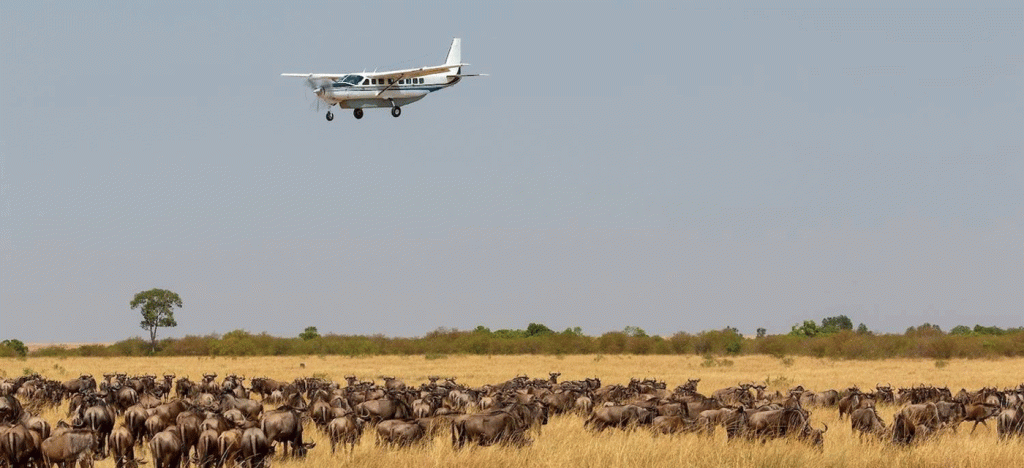
Travelers can reach Serengeti from several Tanzanian destinations depending on airline schedules. Arusha serves as one of the main safari gateways, while flights can also connect Serengeti with Zanzibar, Dar es Salaam, Kilimanjaro, Mwanza and other locations.
Travelers arriving through Kilimanjaro International Airport can transfer to Arusha before continuing toward Serengeti by road or air. Those who spend time in Zanzibar can sometimes fly directly toward the Serengeti reducing the need to return to mainland Tanzania by ferry or separate domestic flight.
This network makes Tanzania particularly suitable for combined safari-and-beach holidays. You can spend several days exploring Serengeti, fly toward Zanzibar and then continue your vacation on the coast.
You can also create a one-way safari. For example you might begin in Arusha, fly into Seronera, travel north through the Serengeti and fly out from Kogatende.
Your itinerary can also include road transportation. You might fly into Serengeti and then drive toward Ngorongoro or drive from Arusha into Serengeti before flying onward to Zanzibar.
The exact route depends on your travel dates and airline schedule. Some flights make intermediate stops, so check the complete routing before booking.
A safari company can coordinate these connections for you. This approach reduces the risk of booking separate flights that do not connect with your lodge or ground transfers.
When you provide your arrival city, travel dates, accommodation and final destination, your safari planner can design an itinerary that connects flights, airstrips, vehicles and accommodation.
Why Serengeti Airstrips Make Fly-In Safaris Efficient
Serengeti airstrips make safari travel more efficient because they connect travelers directly with remote areas of the ecosystem. The park covers an enormous landscape and long road transfers can consume valuable safari time.
A small aircraft can reposition travelers between distant regions much faster than a safari vehicle. This advantage becomes particularly important for short itineraries.
A traveler with three days in Serengeti can fly into the most convenient airstrip, spend the majority of the itinerary exploring wildlife and fly out without spending an entire day traveling by road.
Airstrips also allow safari operators to create more flexible itineraries. You can enter through central Serengeti, continue north and depart from another airstrip without retracing your route.
This flexibility becomes especially valuable for migration-focused safaris. Your itinerary can follow the broader seasonal movement of wildlife rather than forcing you to return to one central location.
Air travel also reduces physical fatigue. Long road journeys can become tiring particularly when travelers have already completed international flights.
However flights do not replace safari vehicles. Once you land you still need a guide and vehicle to explore the park. The aircraft provides efficient long-distance transportation while the safari vehicle provides access to wildlife areas.
This combination creates an effective safari system. You can fly between major regions and then explore each destination slowly by road.
For travelers who value time, flexibility and access to remote camps Serengeti’s airstrip network can become an important part of the safari experience.
Planning a Fly-In Safari With Serengeti Travels
Planning a fly-in Serengeti safari requires careful coordination between flights, accommodation, airstrips, transfers, park access and game drives. Serengeti Travels can help travelers combine these elements into one practical itinerary.
The process begins with your travel dates and safari goals. If you want to experience central Serengeti, northern migration areas, southern calving grounds or western conservation areas the itinerary should reflect that objective.
Your accommodation then determines the most practical airstrip. Once the airstrip becomes clear, the safari planner can check available flights and coordinate the vehicle that meets you after landing.
Serengeti Travels can also combine fly-in and road safari arrangements. You might begin with a road journey through Tarangire and Ngorongoro before flying into Serengeti. Alternatively you might fly directly into Serengeti and later continue toward Zanzibar.
This flexibility allows travelers to create private, budget, mid-range or luxury safari experiences according to their preferences.
Your safari operator should also explain baggage requirements, flight schedules, accommodation transfers, park fees, meals and other included services before you confirm the booking.
Because flight schedules can change, the operator should verify the latest information before issuing final travel instructions.
A well-planned fly-in safari removes unnecessary complications. Instead of arranging a flight independently and then searching for transportation at a remote airstrip your entire journey can operate as one connected itinerary.
With the right combination of aircraft, airstrip, safari vehicle, accommodation and guide you can maximize your time inside the Serengeti and focus on what matters most: exploring one of Africa’s greatest wildlife ecosystems.
Frequently Asked Questions About Serengeti Airports and Airstrips
What is the main airport in the Serengeti?
The Serengeti does not have one large conventional airport. Instead, it has several bush airstrips with Seronera Airstrip serving as one of the main gateways to the central Serengeti.
How many airstrips are in the Serengeti?
The Serengeti has a network of airstrips serving different regions, including Seronera, Kogatende, Lamai, Lobo, Ndutu, Fort Ikoma and Grumeti.
What is the difference between a Serengeti airport and an airstrip?
An airport generally has larger passenger and aircraft facilities while an airstrip usually consists mainly of a runway with limited passenger facilities. Most travelers flying into the Serengeti use small bush airstrips.
Which airstrip is best for the central Serengeti?
Seronera Airstrip is generally the most convenient option for travelers staying in the central Serengeti, particularly around the Seronera Valley.
Which airstrip should I use for northern Serengeti?
Kogatende and Lamai are important airstrips for northern Serengeti. The best choice depends on your exact camp or lodge location.
Which airstrip is best for the Serengeti calving season?
Ndutu Airstrip provides convenient access to the southern Serengeti and Ndutu ecosystem, making it a useful choice for travelers visiting during the January to March calving season.
Can I fly directly to the Serengeti from Zanzibar?
Depending on the airline and travel dates, flights can connect Zanzibar with the Serengeti. Travelers should confirm the current routing and whether the flight operates directly or includes intermediate stops.
How much does it cost to fly to the Serengeti?
Flight prices vary according to the departure point, destination airstrip, travel dates, season, airline and routing. Additional charges such as baggage, taxes or airstrip fees may also affect the final cost.
What happens after landing at a Serengeti airstrip?
After landing you normally collect your luggage and meet your safari guide, camp representative or lodge driver. You then transfer to your accommodation or begin a game drive depending on your itinerary.
What luggage can I take on a Serengeti flight?
Safari aircraft have limited space and weight restrictions. Airlines often recommend soft-sided luggage, and travelers should confirm the current baggage allowance directly with their airline before flying.
Is flying or driving better for reaching the Serengeti?
Flying saves time and provides quick access to remote safari areas, while driving allows you to experience destinations such as Tarangire and Ngorongoro along the way. The best option depends on your time, budget and safari goals.
Can I fly between different Serengeti airstrips?
Yes. Safari flights can connect different regions of the Serengeti, allowing travelers to create one-way itineraries and avoid unnecessary backtracking.
What is the best way to choose a Serengeti airstrip?
Choose the airstrip based primarily on your accommodation and safari region. Your safari operator can check the flight schedule, transfer distance and most practical landing point for your itinerary.
Conclusion
Serengeti Airports and Airstrips: Complete Guide for Safari Travelers shows why aviation plays such an important role in exploring Tanzania’s largest and most famous wildlife ecosystem. Serengeti does not depend on one large conventional airport. Instead a network of bush airstrips connects different parts of the park and surrounding conservation areas.
Seronera provides a major gateway into central Serengeti, while Kogatende and Lamai connect travelers with the northern region. Ndutu provides convenient access to the southern Serengeti and calving-season areas while Lobo serves the eastern sector. Western destinations such as Fort Ikoma and Grumeti provide access to additional safari areas and conservation properties.
The most important planning principle remains simple: choose your airstrip according to your accommodation and safari region. The closest or most practical airstrip can significantly reduce road transfers and give you more time for game drives.
You should also confirm your airline’s current baggage rules, flight schedule, routing, passenger charges and airstrip arrangements before departure. Safari flights operate differently from international flights and small aircraft require travelers to follow specific operational requirements.
For travelers with limited time flying can create an efficient Serengeti experience. You can reach remote areas quickly, spend more time exploring wildlife and connect different regions without returning to Arusha between every stage.
Serengeti Travels can help coordinate these elements into a complete safari itinerary, whether you prefer a fly-in safari, road safari or combination of both.
With the right airstrip, accommodation, flight schedule and safari plan your journey into Serengeti can become smoother, faster and more rewarding from the moment your aircraft touches down on the African plains.